
When you hear "influencer marketing," you might picture giant corporations paying celebrities millions for a single post. But for small businesses, the real magic happens on a much more relatable scale. The essence of influencer marketing for small businesses is partnering with creators who have built genuine, dedicated followings to share your brand's story. Think of it less like a billboard and more like a trusted friend’s recommendation—and that’s why it works so well.
This guide will walk you through everything you need to know to launch a successful campaign, from setting goals and finding the right creators to measuring real business impact.
Why Influencer Marketing for Small Businesses is a Game-Changer
For a small business, influencer marketing isn't just another buzzword; it's a powerful way to build real connections and see tangible results. It levels the playing field, allowing you to compete with bigger brands not on budget, but on trust and authenticity.
You're not just shouting into the void with traditional ads. Instead, you're tapping into a pre-built community that already trusts the creator you're working with. When that creator recommends your product, it feels like a personal referral, instantly lending your brand credibility. This is a game-changer, especially if you're a new or niche business trying to cut through the noise.
Building Real Connections and Trust
The secret sauce to influencer marketing for small businesses is authenticity. People are tired of slick, corporate ads. They’re much more open to hearing from creators they already know and like. When you partner with the right person, your message is delivered by a voice that truly connects with your ideal customer.
This is where you need to get smart. Instead of just guessing who might be a good fit, using a platform like REACH Influencers helps you pinpoint creators whose audience demographics and personal brand align perfectly with yours. The platform's powerful discovery tools and analytics ensure you connect with partners who can drive real engagement.
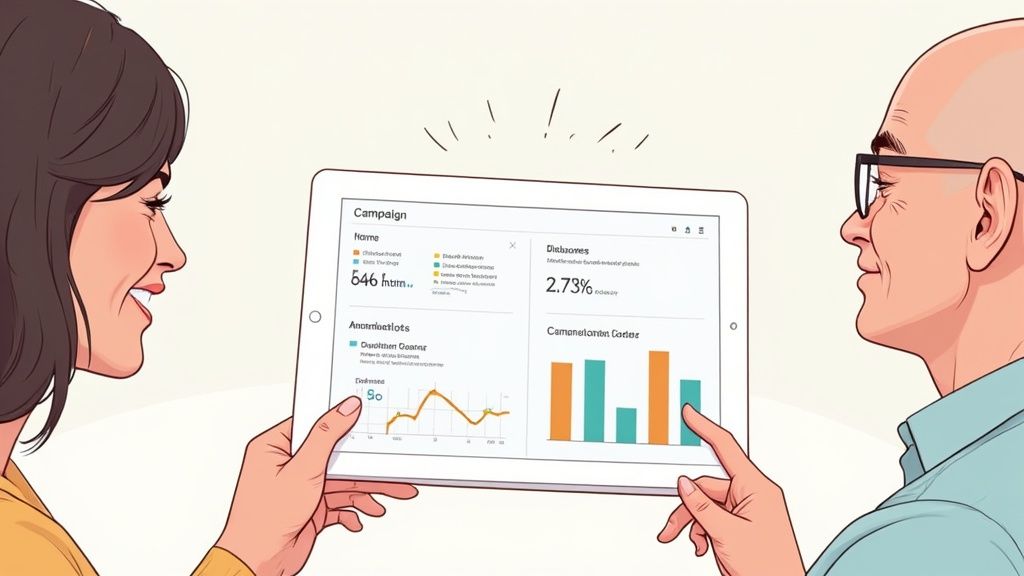
The right tools give you a single place to manage campaigns and see exactly what’s working.

A centralized dashboard like this means you can track reach, engagement, and sales in real-time. No more wrestling with clunky spreadsheets to prove your marketing is paying off.
You Can’t Argue with the ROI
The numbers speak for themselves. The influencer marketing industry sees an average return of $5.78 for every dollar spent. Even more telling, a whopping 86% of consumers say they’ve bought something after seeing it recommended by an influencer.
This isn’t an experimental tactic anymore; it’s a core marketing strategy that drives serious revenue. For small businesses, it’s one of the most cost-effective channels out there, delivering a return on investment that’s hard to beat. If you want to dive deeper, these influencer marketing statistics paint a very clear picture of the opportunity.
Defining Your Influencer Marketing Goals and Budget
Before you even think about scrolling through Instagram to find influencers, you need to know what you're trying to achieve. A successful influencer campaign starts with a crystal-clear vision, not a bottomless bank account. Simply saying you want "more sales" is too vague—we need to get specific to build a strategy that actually works.
So, what does success look like for your business? The answer is different for everyone. Maybe you're trying to:
- Boost brand awareness: Get your name in front of a whole new, highly relevant audience.
- Drive website traffic: Funnel potential customers to your new product page or a killer blog post.
- Increase email sign-ups: Build your email list by having creators promote a valuable lead magnet.
- Generate direct sales: Use unique discount codes to see exactly how much revenue an influencer is driving.
Nailing down a specific, measurable goal is the foundation. It dictates which creators you'll work with and how you'll track whether your investment paid off.
Setting a Realistic Budget
Okay, let's talk money. The best part about influencer marketing for small businesses is that you don't need a massive budget to see real results. How much you spend will depend entirely on your goals, the types of creators you're targeting, and what you're asking them to do.
I see so many small businesses make the mistake of thinking they need thousands of dollars to get started. That’s just not true. Some of the most powerful partnerships I've seen began with simple product gifting—trading your awesome product for an honest review or a post.
For instance, a local coffee shop could send a bag of its new single-origin roast and a branded mug to a few local food bloggers. The upfront cost is tiny, but the authentic content you can get from it is priceless. As you think about your budget, it's also smart to explore affiliate marketing strategies, as they offer a different way to compensate creators based on performance.
Sample Budget Allocation for a Small Business Campaign
To give you a clearer picture, here’s how a small business might break down a modest $1,500 campaign budget. This isn't a rigid formula, but it shows how you can spread your funds to cover all the essential bases.
| Expense Category | Example Allocation ($1,500 Budget) | Purpose |
|---|---|---|
| Influencer Compensation | $900 | Direct payment for 2-3 micro-influencers for dedicated posts. |
| Product Gifting (COGS) | $250 | Cost of products sent to influencers for review and content creation. |
| Shipping & Handling | $50 | Costs associated with getting your products to the creators. |
| Ad Boosting | $200 | Putting a small ad spend behind the best-performing influencer posts. |
| Contingency Fund | $100 | An emergency buffer for unexpected costs or opportunities. |
Remember, this is just one example. You could easily shift more of the budget to product gifting and less to direct compensation if you're working with smaller nano-influencers who are happy to collaborate for product alone. The key is to be intentional with every dollar.
Making Every Dollar Count
The data shows that marketers are still all-in on this channel. While 75.6% of marketers now have a dedicated influencer budget, a whopping 47% increased their spending by 11% or more last year.
But for small businesses, the game is about efficiency, not just spending more.
Gifted collaborations, for example, generate 12.9% more engagement than paid ones. That's a huge advantage when you're working with a tight budget. Diving into the latest influencer marketing benchmarks can give you even more insights to shape your spending.
The goal here is to maximize your return. Start small with a budget you're comfortable with. Test the waters. Whether it's sending free products to a few nano-influencers or running a tiny paid campaign with one micro-influencer, the most important thing is making sure every dollar is pulling its weight for your brand.
How to Find the Right Influencers for Your Small Business
The real secret to making influencer marketing for small businesses work isn't about chasing huge follower counts. It’s about finding the right partners. Honestly, the most powerful collaborations often come from creators with smaller, tight-knit communities who've earned genuine trust. That’s where you should be looking.
Forget the celebrity names for a minute. Your brand’s best-kept secrets are micro-influencers (10k-50k followers) and nano-influencers (1k-10k followers). These are the creators who foster authentic connections and deliver much higher engagement, making them a perfect fit when you need to make a real impact without a Hollywood-sized budget.
Why Smaller is Mightier
The numbers don't lie. Nano-influencers have the highest average engagement rate at a whopping 2.71%, with micro-influencers following closely at 1.81%. But what's even more impressive is how cost-effective they are.
While nano-influencers have a median CPM of $211 and micros $119, their incredible engagement makes them an amazing value. Think about it: for the cost of one big-name macro-influencer, you could partner with a dozen smaller creators. That means more content, more perspectives, and a much better return on your investment.
This infographic really helps put it into perspective, showing how different campaign goals line up with specific influencer strategies.
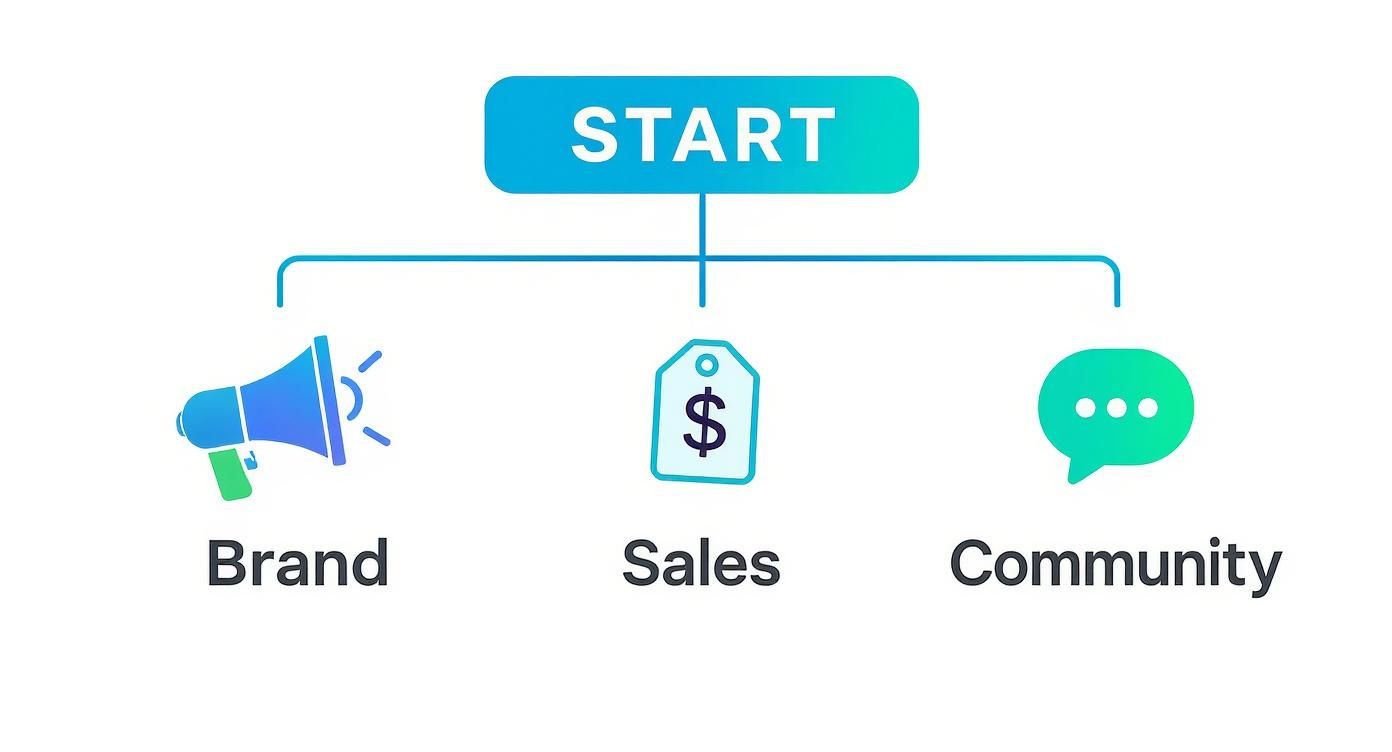
Whether you’re aiming for brand awareness, direct sales, or just building a stronger community, there’s a clear path to picking the right kind of partner.
Actionable Discovery Strategies
You have to go deeper than just searching hashtags. To find those hidden gems who truly get your brand, you need a smarter, more strategic approach.
Start by looking right under your nose:
- Your Own Customers: Who’s already buying your products and singing your praises? Dive into your customer list—you might be surprised to find some have influential social media accounts.
- Your Current Followers: Scan the people who already follow you. They’re a warm audience and clearly have a soft spot for what you do.
- Your Competitors' Mentions: See which creators are already talking about brands in your space. This is a great sign they are active and trusted voices in your niche.
For a more supercharged search, you'll need the right tools. Platforms like REACH Influencers have powerful discovery engines that let you filter creators with incredible precision. You can narrow your search by niche, audience location, engagement rate, and even past collaborations. This helps you build a solid, targeted list of ideal partners in a fraction of the time it would take to do it manually.
For a deeper dive into these methods, check out our guide on how to find Instagram influencers.
Your Practical Vetting Checklist
Finding a list of potential creators is only step one. The real work is in the vetting process—this is what protects your brand and sets your partnership up for success. Before you even think about sending that first DM, run every single candidate through this quick checklist.
A great influencer partnership is about alignment, not just audience size. A creator whose values and aesthetic match your brand will produce far more authentic and effective content than a larger creator who is a poor fit.
Use these questions to guide your review:
- Audience Quality: Take a close look at their followers. Do they seem like real people who are genuinely engaged? Or do you see red flags like generic comments ("Nice pic!") and unusually low comment-to-like ratios?
- Content Authenticity: Scroll through their past sponsored posts. Does the content feel natural and integrated, or does it stick out like a sore thumb? You want creators who weave products into their content, not just post ads.
- Value Alignment: Does their overall vibe and personal brand mesh with what your business stands for? Read through their recent posts and captions to get a feel for their tone and values.
- Professionalism: Are they responsive to comments and active within their community? A creator who engages with their audience is far more likely to be a reliable and professional partner for you.
Crafting Your Outreach and Building Partnerships
https://www.youtube.com/embed/PvJibnR7TN0
Alright, you've got your list of dream creators. Now comes the part where many businesses drop the ball: the outreach. It’s so easy to blast out a generic, copy-paste message, but that’s a one-way ticket to the trash folder. If you want to succeed, you have to think about building a real relationship, and that journey starts with a personal, compelling pitch.
Forget the mass email approach. Your mission is to cut through the noise in a very crowded inbox. The best way to do that? Show them you've actually done your homework. Mention a specific post of theirs you loved or connect one of their core values to your brand's mission. This small touch proves you see them as a potential partner, not just another name on a spreadsheet.
Crafting the Perfect Pitch
Your first message needs to be short, sweet, and focused on what’s in it for them. Creators are entrepreneurs, and they’re constantly evaluating opportunities. So, frame your idea as a genuine partnership, not just another ask.
Kick things off by introducing your brand and clearly explaining why you think they’re the perfect person for the job. Get specific. What was it about their content that made you reach out? Then, lay out your proposed collaboration. Be upfront about whether you're offering a gifted product in exchange for a few Stories or a paid partnership for a dedicated Reel.
The best outreach I’ve seen is warm, personal, and gets straight to the point. Creators are busy people; they appreciate when you respect their time. A pitch that emphasizes creative freedom and shows you genuinely love their work is way more appealing than a cold email full of demands.
If you’re struggling with what to say, don't worry. You can find some fantastic starting points in our collection of influencer outreach email templates. Use them as inspiration to craft a pitch that sounds like you.
Demystifying Influencer Agreements
Once a creator says "yes," it's time to get everything in writing. A simple agreement is your best friend—it protects both of you and makes sure there are no surprises later on. This doesn't need to be some scary, 20-page legal document drafted by a team of lawyers.
In fact, a straightforward contract is a sign of a professional partnership. It just needs to clearly outline the key details of your collaboration so everyone is on the same page.
Your Essential Contract Checklist:
- Clear Deliverables: Be super specific. Is it one Instagram Reel and three Stories? A 60-second TikTok video? Write it down.
- Content Rights: Who owns the content? Can you use their photos on your website or in your social ads? Define this upfront.
- Key Messaging: Are there any mandatory hashtags (like #ad or #sponsored), brand handles to tag, or key benefits you need them to mention?
- Timeline and Deadlines: Agree on dates for when you’ll see the draft content and when it will go live.
- Compensation: State the exact payment amount, how you'll pay (e.g., PayPal, bank transfer), and when (e.g., 50% upfront, 50% on completion).
Putting this simple framework in place from the get-go sets the stage for a smooth, successful, and stress-free campaign for everyone involved.
Managing Your Campaign and Measuring What Matters
Alright, your partnerships are locked in. Now for the fun part: bringing your campaign to life. This is where we shift from planning to doing, from spreadsheets to actual content. Success here isn't just about a great-looking Instagram post; it’s about seeing a real, tangible impact on your business.
A smooth workflow is everything. It all starts with a clear creative brief for each influencer. Think of this not as a strict script, but as a friendly guide. It should lay out the key messages, campaign goals, any mandatory hashtags (like #ad or #sponsored), and a few simple do's and don'ts. The real magic happens when you give creators the freedom to talk to their audience in their own voice, so don't try to control every word.
When the content comes back for approval, always give constructive feedback. Instead of a flat "I don't like it," try something like, "This is great! Could we maybe highlight this specific product feature a bit more?" This small change shows you respect their craft and almost always leads to better, more authentic content.
Looking Beyond Likes and Comments
Let's be honest: likes and comments feel good, but they don't pay the bills. The real test of your campaign's success comes down to tracking the Key Performance Indicators (KPIs) that connect directly back to the goals you set in the beginning. This is exactly how you prove your return on investment (ROI).
Don't get distracted by those surface-level numbers. Instead, focus on metrics that actually tell the story of your business growth. Platforms like REACH Influencers are designed for this, pulling all your important data into one simple dashboard. It cuts out the guesswork and lets you see what’s truly driving results.
The biggest mistake I see small businesses make is not tracking their campaigns properly. If you can't measure it, you can't improve it. Setting up your tracking from day one isn't just a good idea—it's essential for proving your campaign's worth.
To make life easier, look into platforms that can help with everything from finding creators to analyzing your results. You can find some great options in guides to the best influencer marketing tools.
Key KPIs for Small Business Influencer Campaigns
So, what should you actually be tracking? Here’s a quick breakdown of the metrics that will give you a clear picture of how your campaign is performing and what its real value is.
| Metric (KPI) | How to Track It | What It Measures |
|---|---|---|
| Conversion Rate | Unique discount codes (e.g., "CREATOR15") or affiliate links. | The percentage of the audience that took action, like making a purchase. |
| Website Traffic | UTM parameters on links shared by influencers (trackable in Google Analytics). | The number of new visitors the influencer sent directly to your site or landing page. |
| Cost Per Acquisition (CPA) | Total campaign spend divided by the number of new customers acquired. | The exact cost to get a single new customer through your influencer campaign. |
| Engagement Rate | (Likes + Comments + Shares) / Follower Count. | How actively an audience is interacting with the influencer's content about your brand. |
Focusing on these KPIs gives you a data-backed story to tell. You're no longer guessing—you know what's working. For a deeper dive, our guide on https://reach-influencers.com/how-to-measure-influencer-marketing-roi-2/ walks you through the formulas and specific tips. When you have these concrete numbers, you can confidently show the financial impact of your partnerships and make smarter bets on your next campaign.
Conclusion: Start Your Influencer Marketing Journey Today
You’ve got the playbook. You understand what it takes to build an influencer marketing program that actually works for a small business. The secret isn't a massive budget; it's about starting smart. Focus on building real relationships with the right creators and obsess over the numbers that actually move your business forward—not just the ones that look good on paper.
When you nail down your goals, find partners who genuinely love what you do, and keep a close eye on your return, you’re not just running a campaign. You’re building a powerful, long-term growth engine for your brand. Honestly, the biggest mistake I see businesses make is waiting for the “perfect” time to start.
Don't chase perfection. Chase progress. Your first campaign won't be flawless, but it will be a goldmine of data that makes every single campaign after it better.
Take what you've learned here and start putting together that first campaign today. A great way to get moving without getting overwhelmed is to use a platform designed for this. Something like REACH Influencers can handle the heavy lifting—from finding creators to sending payments—so you can focus on the strategy. This is how influencer marketing for small businesses stops being an idea and starts creating real, lasting success.
Frequently Asked Questions (FAQ)
Diving into influencer marketing can bring up a lot of questions. It's totally normal. To help you feel more confident, I've rounded up some of the most common things small business owners ask when they're just starting out.
What’s the Real Cost of Influencer Marketing for a Small Business?
This is the big one, and the honest answer is: it varies. There’s no fixed price because the cost is shaped entirely by what you want to achieve and who you partner with.
For small businesses, the mindset should be about value, not just upfront cost. You can absolutely get started with a budget of a few hundred dollars. You can even launch a campaign with no cash at all by focusing on product gifting.
Your best friends here are nano- and micro-influencers. They're often happy to collaborate for gifted products or a reasonable fee. The trick is to begin with a budget you're comfortable with and let the results guide you on when to scale up.
Don't look at it as an expense—it's an investment. A small, smart campaign with the right micro-influencer can easily deliver a return that makes the initial cost look tiny.
Which Influencers Are the Right Fit for My Business?
Forget about the big-name celebrities with millions of followers. The most powerful influencer marketing for small businesses almost always comes from working with micro-influencers (10,000–50,000 followers) and nano-influencers (1,000–10,000 followers).
Why? Because these creators have built tight-knit, dedicated communities that genuinely trust what they say. This trust translates into much higher engagement and content that feels real. When a micro-influencer recommends your product, it lands like a tip from a good friend, not a slick advertisement.
How Can I Tell If My Campaign Is Actually Working?
Success is so much more than counting likes and comments. To know for sure if your campaign is paying off, you need to track the numbers that connect directly to your business goals.
Keep your eyes on these key performance indicators (KPIs):
- Conversion Rate: This is your bread and butter. Give each influencer a unique discount code and track every single sale that comes from it.
- Website Traffic: Use UTM links in their posts. This lets you see exactly how many people an influencer sends to your website.
- Cost Per Acquisition (CPA): Do the math. Figure out precisely how much you spent to get each new customer from your campaign.
These hard numbers give you a clear, undeniable picture of your return on investment.
Ready to launch your first campaign with confidence? REACH Influencers simplifies every step, from finding the perfect creators to tracking your ROI. Discover how our platform can help your small business grow today.