
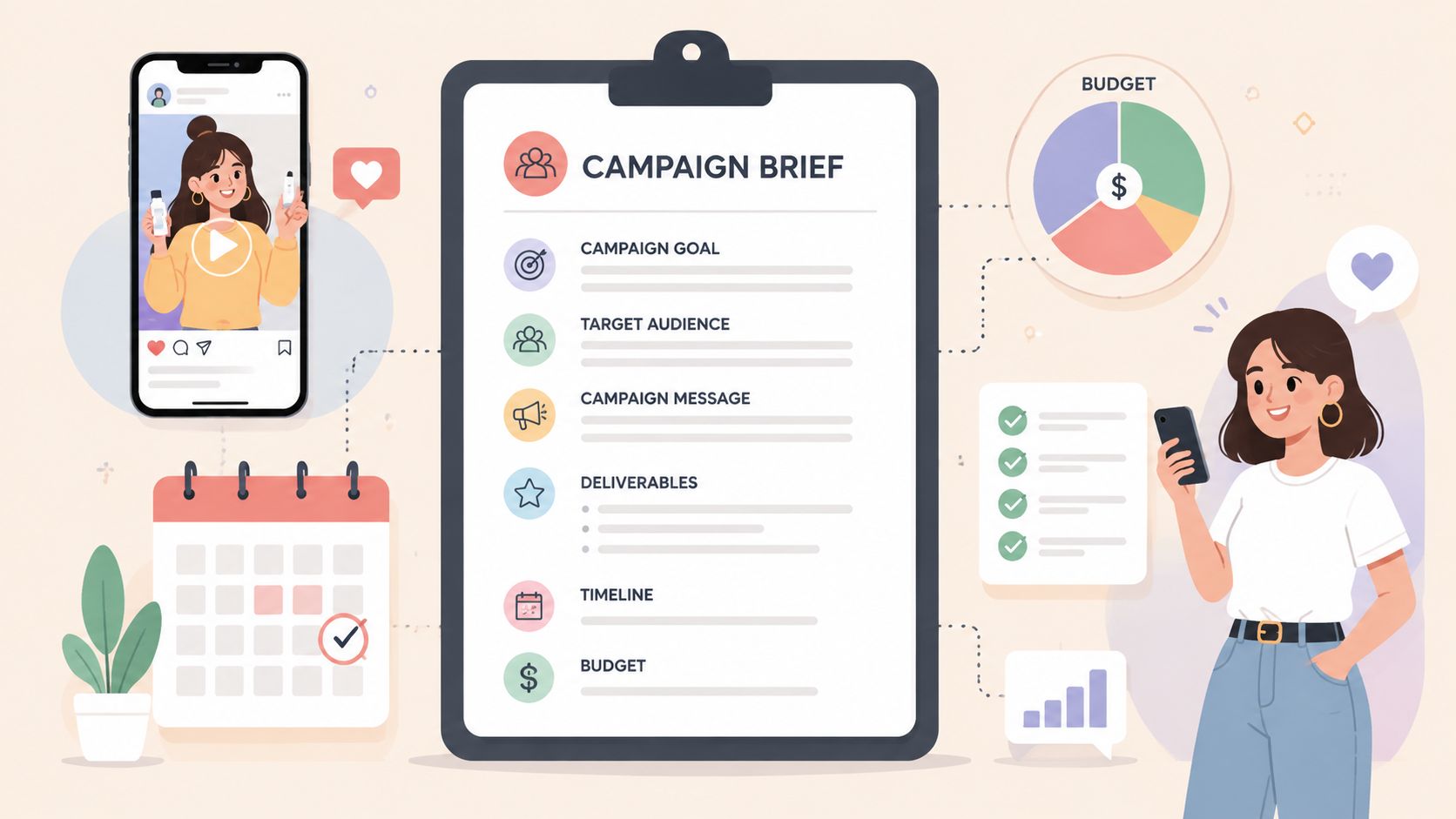
A messy influencer campaign usually doesn't fail because the idea was bad. It fails because the team had five versions of the plan, creators got different instructions in email and DMs, nobody locked the approval path, and launch week turned into cleanup.
That's why a good campaign brief template matters. Not as paperwork. As control. When the brief is strong, it becomes the working document that tells marketers, creators, legal reviewers, and stakeholders what's being made, who owns what, when it's due, and how success will be judged.
The difference is practical. A weak brief says, “Promote the product on social.” A useful brief tells a creator what format to deliver, what claim language to avoid, what CTA to use, what assets are approved, what the deadline is, and who signs off before publishing.
Why Your Campaigns Need a Bulletproof Brief
A campaign is often not recognized as off track until small errors start stacking up. A creator posts with the wrong offer. The paid media team can't reuse the content because usage rights weren't clarified. Product marketing wants edits after approvals were supposedly done. Suddenly the campaign manager is chasing answers across Slack, email, spreadsheets, and platform DMs.
That kind of chaos is common because many brands still treat the brief like a creative summary instead of an operating document. But the job of a brief has changed. The historical shift in campaign brief templates has moved toward more operational detail and cross-channel accountability. Recent guidance highlighted by Assemble notes that briefs now need real launch dates, campaign duration, budget breakdowns, and success metrics because they function as the central coordination tool for campaigns that span multiple channels at once, including social, email, search, events, and direct mail (Assemble campaign brief guidance).
That shift matters even more in influencer work. Creator campaigns have more moving parts than they appear to from the outside. You're not just briefing “content.” You're briefing messaging, compliance, format, review timing, talent coordination, and distribution rules.
A brief should stop confusion before it starts
A bulletproof brief does three things well:
- Sets one direction: Everyone works from the same goal instead of inventing their own version.
- Removes guesswork: Creators know what to make, internal teams know what to review, and managers know what to track.
- Creates accountability: Owners, deadlines, approval points, and deliverables are visible from the start.
Practical rule: If a team member has to ask “Wait, who's handling that?” your brief was too vague.
The best briefs also reduce tension with creators. Clear expectations make a brand look organized. Ambiguous instructions make a brand look difficult. Experienced creators notice the difference immediately.
The brief is the campaign before the campaign
A lot of junior marketers think campaign management starts when outreach begins. It doesn't. It starts when the brief gets written. By that point, you've already decided what good execution looks like, what constraints exist, and what trade-offs you're willing to accept.
A brief won't make a weak strategy strong. But it will expose weak strategy early, while you still have time to fix it.
The Anatomy of a Winning Campaign Brief
A strong campaign brief template doesn't need to be bloated, but it does need to be complete. Standard industry guidance consistently uses the same core structure: objective, campaign summary, project roles, target audience, marketing strategy, deliverables, schedule, budget, and metrics/KPIs, which is what turns a vague idea into an executable plan with measurable outputs (Meltwater campaign brief template overview).
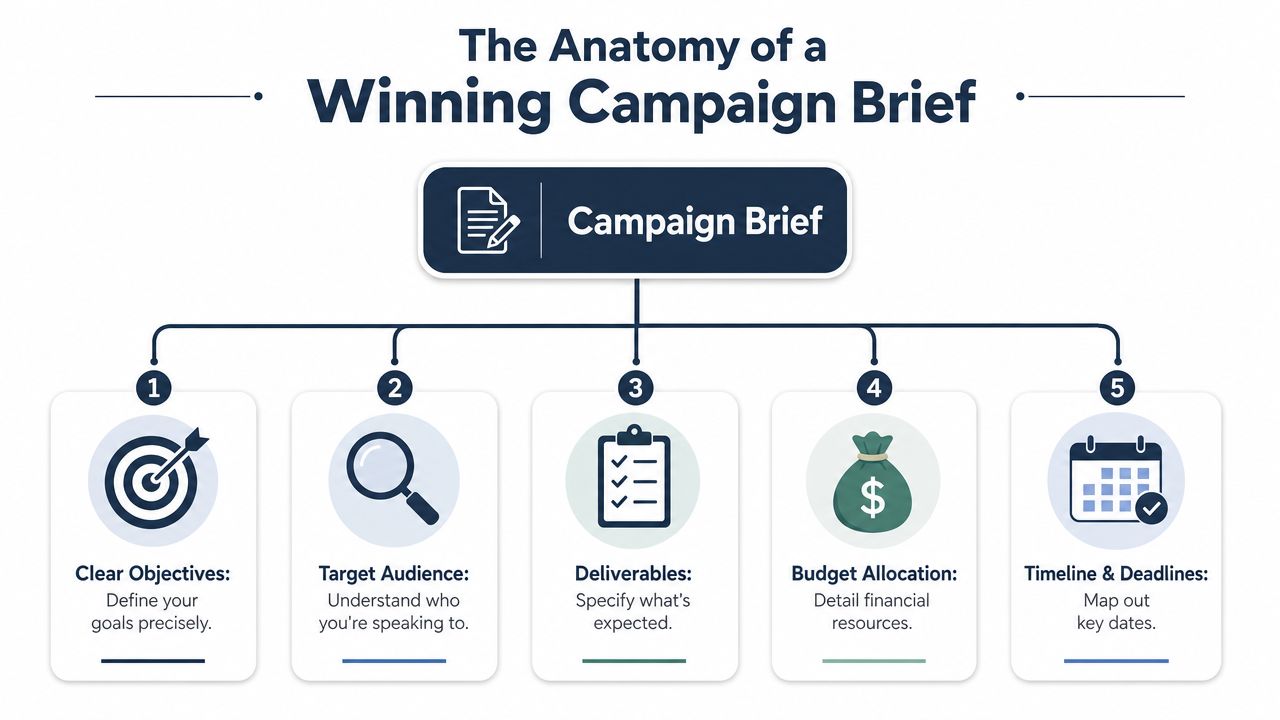
The non-negotiable sections
Here's what each section does in practice.
| Section | What it answers | Why it matters |
|---|---|---|
| Objective | What business outcome are we supporting? | Prevents random tactics and keeps the campaign anchored |
| Campaign summary | What are we launching and why now? | Gives quick context without forcing people into long docs |
| Project roles | Who owns strategy, approvals, creator comms, and reporting? | Stops handoff gaps and duplicate work |
| Target audience | Who needs to see this campaign? | Shapes creator selection, messaging, and platform choice |
| Marketing strategy | What's the approach across channels? | Keeps content tied to the larger campaign plan |
| Deliverables | What exactly must be produced? | Reduces ambiguity for creators and internal reviewers |
| Schedule | When are drafts, approvals, launch, and wrap-up? | Protects launch timing |
| Budget | What resources are allocated? | Keeps scope realistic |
| Metrics and KPIs | How will success be tracked? | Makes reporting useful instead of subjective |
A free template should start with those fields. Then adapt based on the campaign, not the other way around.
What a professional brief signals to creators
Creators don't just evaluate your fee. They evaluate your process. A clean brief tells them your team is serious, prepared, and less likely to create revision chaos later.
That's why audience detail matters. If you haven't done the audience homework yet, reviewing a solid social media consumer insights guide can help you sharpen who the campaign is really for before you lock the creator list and content direction.
The best briefs don't try to sound impressive. They try to be impossible to misunderstand.
Keep the brief complete but scannable
A common mistake is treating completeness and brevity like opposites. They're not. You can include all essential sections and still keep the document tight.
A good working standard is this:
- Put execution-critical information in the brief
- Move research-heavy background into linked documents
- Write every field so a new team member could understand it quickly
If your brief reads like a strategy deck, it's too long. If it leaves creators guessing, it's too thin.
How to Write Each Section of Your Brief
A usable campaign brief template is built in sequence. If you write the fields out of order, the later sections often drift. Teams start with content ideas, then reverse-engineer a goal after the fact. That's how campaigns become busy without becoming effective.
The better approach is to build the brief from top to bottom. A high-quality campaign brief template should encode hierarchy and traceability. Start with one business goal, convert it into measurable marketing goals, then lock in tracking metrics so every action maps back to the same outcome and scope drift is easier to catch before launch (New Jersey Innovation Institute campaign brief template).
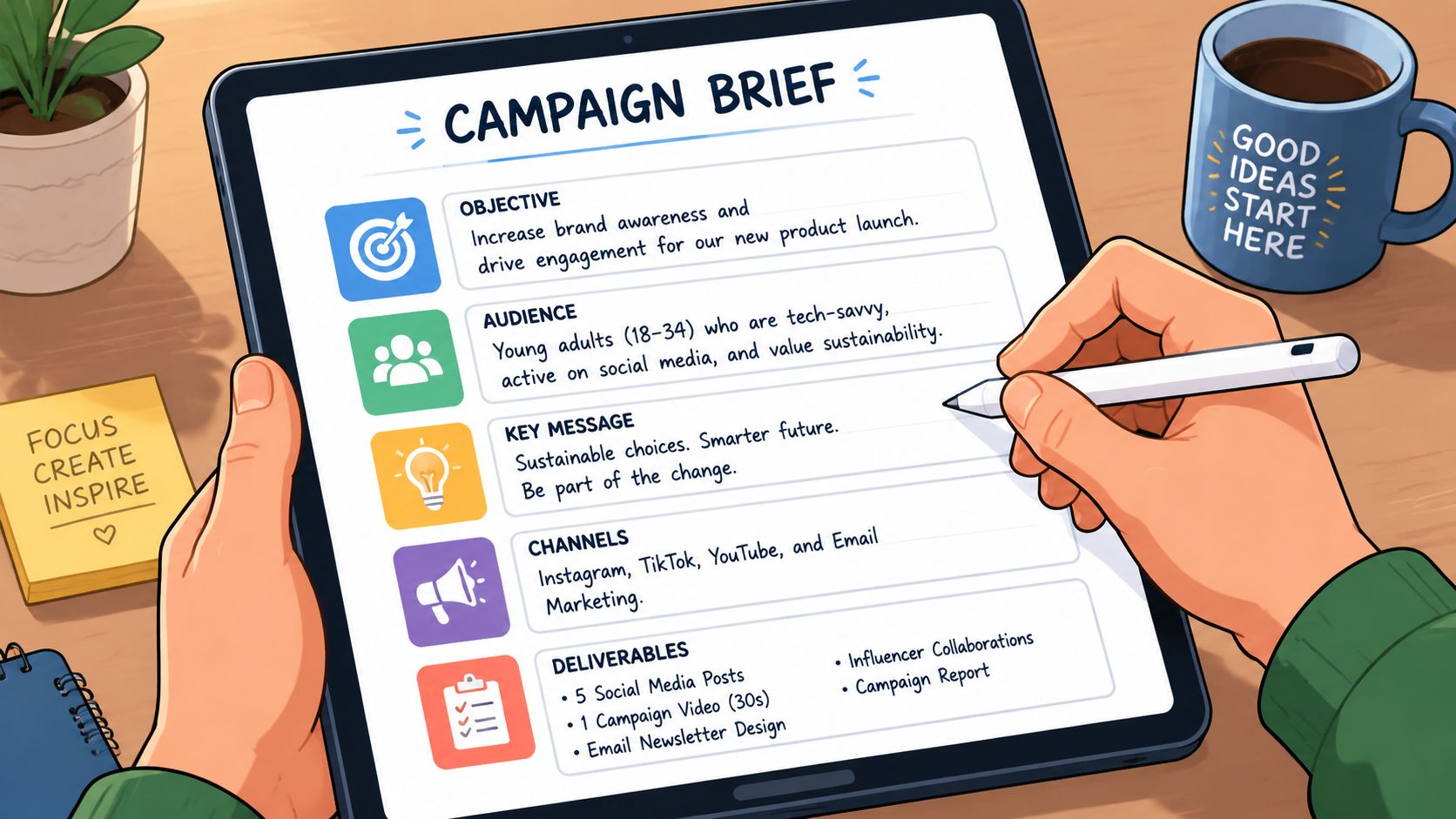
Start with the business goal
Write one business goal first. One.
Bad entry: “Build awareness, drive traffic, grow community, and generate sales.”
Good entry: “Support the launch of the new product line by driving qualified interest from first-time buyers.”
That line gives the rest of the brief something to attach to. Without it, every stakeholder starts adding their own agenda.
Turn that goal into measurable marketing goals
Now translate the business goal into campaign goals the marketing team can influence. Keep these specific enough to guide channel and creator decisions, but don't pad the brief with vanity language.
Use prompts like these:
- Who needs to take action
- What should they understand or do
- Which platforms matter most
- What result will tell us this worked
If your campaign also feeds adjacent channels, it helps to review frameworks from outside influencer marketing. For example, this guide to effective referral programs is useful because it shows how strong campaign mechanics depend on clear incentives, messaging, and handoff logic. The same principle applies here.
Write the audience like a selection filter
Your audience section shouldn't read like a broad persona slide. It should help the team choose creators and shape briefs.
Include:
- Core audience definition: Who the campaign is for in plain language
- Relevant context: Purchase intent, lifestyle, or product use case
- Channel behavior: Where this audience engages with creators
- Things to avoid: Audiences that look large but don't fit the campaign
Bad entry: “Women interested in wellness.”
Better entry: “People already exploring daily wellness routines who respond to educational creator content and want practical product context, not hard-sell messaging.”
Define deliverables so nobody has to interpret them
Many briefs fail at this point. “One TikTok and some stories” is not a deliverable spec. It's a placeholder.
A good deliverables section covers:
Format and platform
State whether it's TikTok video, Instagram Reel, Story sequence, YouTube integration, or still image content.Required content elements
List key talking points, brand mentions, CTA language, product inclusion, visual requirements, and prohibited claims.Submission expectations
Clarify draft format, revision process, and final asset delivery.
For deeper examples of what clear creative instructions look like, this guide on how to write a creative brief is worth reviewing.
A creator brief should answer the question, “What do you need from me to make this approvable on the first pass?”
Add the timeline after deliverables, not before. If you set dates before you define what's being made, your schedule will be fiction.
Budget, approvals, and tracking are not admin details
A lot of teams rush through these fields because they feel operational. That's exactly why they matter.
Use this checklist:
- Budget: State what the budget covers. Talent, production, paid usage, whitelisting, gifting, or platform fees if relevant.
- Approvals: Name the approver, what they're reviewing, and how many review rounds are allowed.
- Tracking: Lock in links, codes, reporting owners, and success criteria before launch.
A short walkthrough can help if your team is building this process for the first time:
If any of those fields are left open, the campaign manager ends up making policy decisions mid-campaign. That's when delays show up.
Tailoring Your Brief for TikTok Instagram and YouTube
A generic brief falls apart once you brief creators across multiple platforms. The content format changes. The audience expectation changes. The approval risk changes. What feels like “good guidance” on one channel can feel restrictive or incomplete on another.
That's why creator campaigns need a more selective approach. Current guidance suggests treating the brief as a decision document, not an encyclopedia. For creator work, that means capturing the elements that materially affect execution, including strategic priority, content constraints, usage rights, and channel-specific requirements, while moving broader background elsewhere (GoodUnited campaign brief guide).
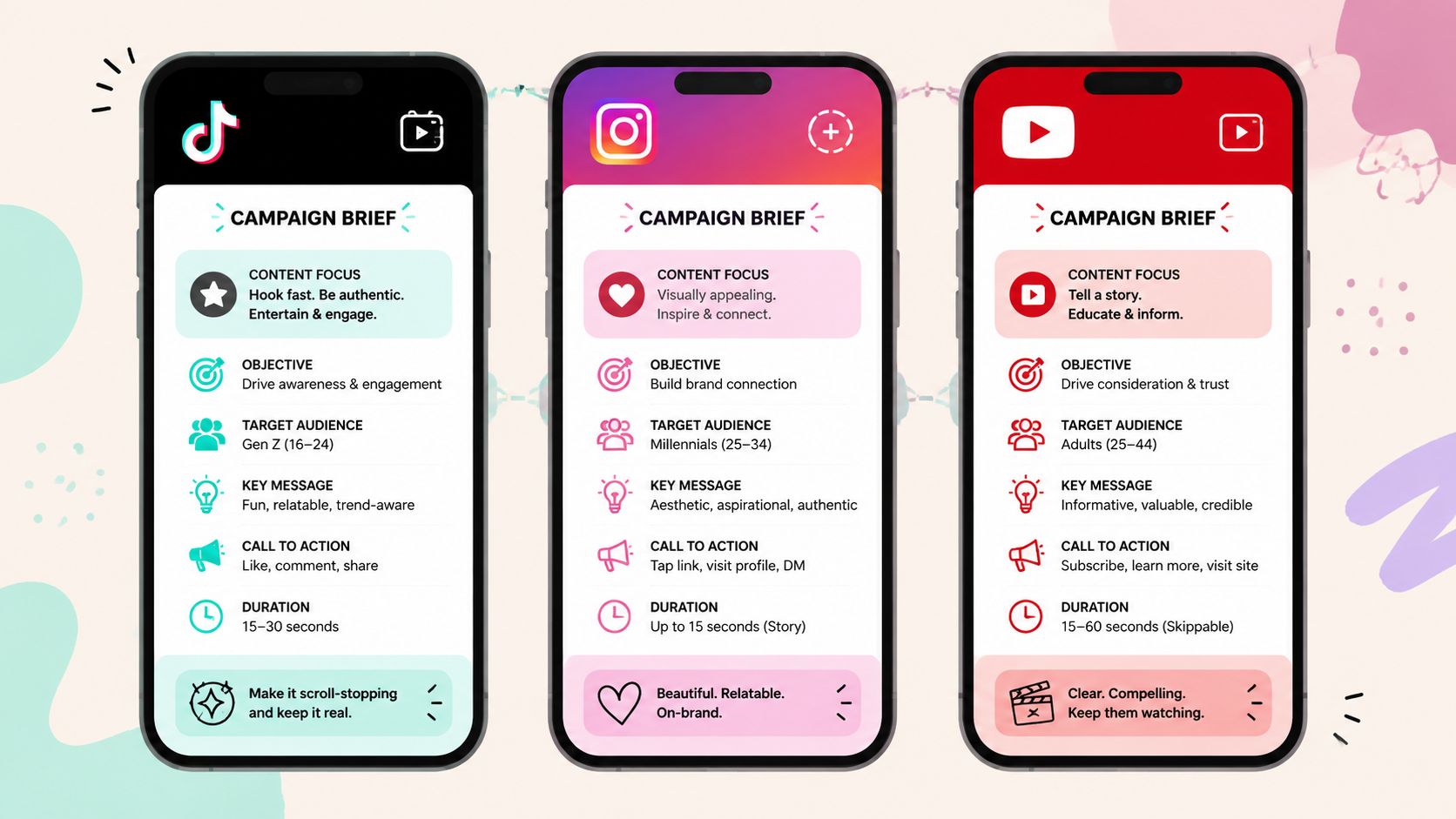
TikTok needs momentum and guardrails
TikTok briefs should focus on what affects performance and compliance, not on over-scripting every line. Usually that means:
- Hook direction: What needs to happen early so the content gets to the point fast
- Product context: How the product should appear naturally
- Creative guardrails: Claims to avoid, required disclosures, visual no-go areas
- Trend sensitivity: Whether the creator can adapt the concept to a current format or sound
If you're building TikTok-specific workflows, a dedicated resource on TikTok campaign management can help clarify how briefing, approvals, and tracking differ from broader social campaigns.
Instagram needs format clarity
Instagram usually looks simpler than it is. Briefs often blur Reels, Stories, and static content together, then everyone realizes too late that the CTA and asset requirements were different.
For Instagram, specify:
| Format | What to clarify in the brief |
|---|---|
| Reels | Visual tone, pacing, talking points, on-screen text rules |
| Stories | Number of frames, swipe or link behavior, sticker usage, CTA placement |
| Static posts | Caption expectations, image style, product framing, tag requirements |
Instagram creators often care a lot about visual fit. If your brand has strong design rules, say that directly. Don't bury it in a brand deck nobody reads.
YouTube needs narrative guidance
YouTube briefs should leave more room for creator voice while being stricter about integration structure. Long-form content gives creators space, but it also increases the risk that key brand points get delayed, softened, or skipped.
Keep the YouTube brief narrow. State where the product should appear, what points must be covered, and what usage rights apply. Leave the storytelling to the creator.
For YouTube, clarify the integration type, mention timing expectations, required links, sponsorship language, and whether the brand needs pre-approval of rough cuts or only final segments.
The right amount of detail depends on the channel. The wrong amount is whatever leaves the creator guessing.
Four Common Briefing Pitfalls to Avoid
Most bad briefs don't fail because they're missing a section. They fail because the critical information is too soft to use. The most useful briefs are execution-oriented, not descriptive. Guidance from AMA and HubSpot emphasizes owner information, deliverables, deadlines, communication protocols, and approval paths, while HubSpot favors a compact one-page format that stays scannable and reduces ambiguity during handoff (AMA creative brief toolkit).
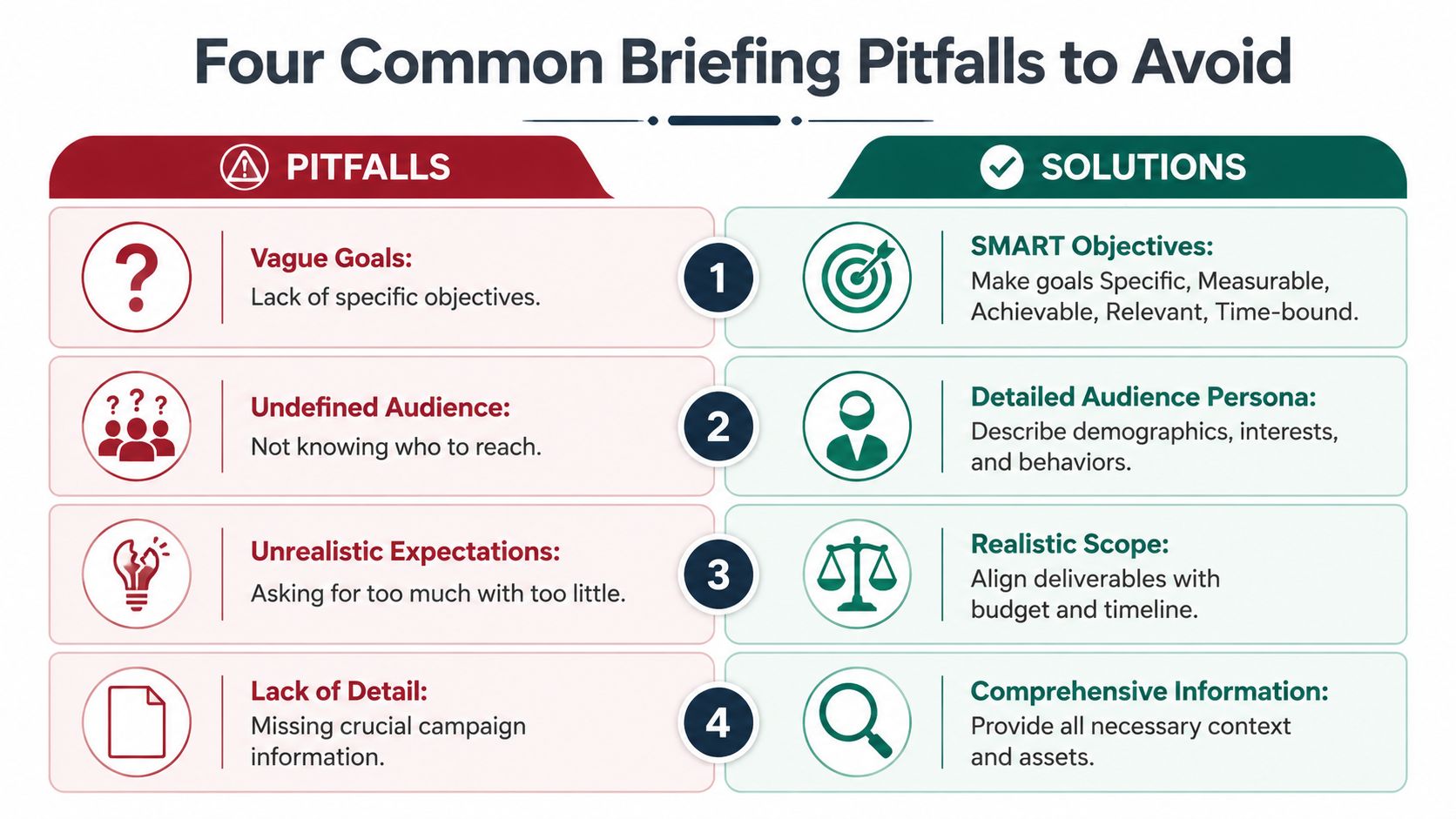
Pitfall one is vague success criteria
If the brief says “build awareness” and stops there, the team has no way to choose the right creators, content mix, or reporting method.
Fix it by defining what success looks like in campaign terms. Even if the exact targets live in a separate planning sheet, the brief should state the priority clearly.
Pitfall two is missing usage rights and constraints
This one creates pain later. A team loves the creator content, then realizes it never clarified whether the brand can reuse it in paid or owned channels.
Write down content rights, licensing assumptions, brand safety requirements, and prohibited claims before the campaign starts. Don't rely on verbal alignment.
Pitfall three is unrealistic timelines
Some briefs implicitly assume impossible turnaround times. Draft due Monday. Review Tuesday. Publish Wednesday. Then legal weighs in, the creator has a conflict, and the schedule collapses.
Use a simple reality check:
- Count review steps first
- Confirm stakeholder availability
- Leave room for revisions
- Match scope to the available timeline
Field note: Tight briefs help fast campaigns. Tight timelines without a clear brief create expensive confusion.
Pitfall four is no approval path
Teams often define the asset but not the workflow. Who reviews first. Who has final say. What happens if feedback conflicts. How many rounds are allowed. If that chain isn't clear, approvals become a negotiation instead of a process.
A scannable brief solves this better than a long one. You want enough detail to remove doubt, but not so much text that nobody can find the decision points.
Bring Your Brief to Life with REACH
A campaign brief template is the starting point. It isn't the finish line. The document can define the plan, but it can't run the campaign on its own.
That's the operational gap many teams feel once the brief is approved. Someone still has to turn goals into tasks, map deliverables to creators, track drafts, manage feedback, monitor due dates, and keep approvals moving. That's also why content operations matter just as much as planning. A clean content approval workflow prevents the brief from dying in an email thread after kickoff.
The strongest teams treat the brief as a living blueprint. They don't just write it, save it, and forget it. They use it to drive creator communication, deadlines, approvals, and reporting from one place. When that happens, the brief stops being a document and starts acting like the operating system for the campaign.
If you're tired of managing campaigns through scattered spreadsheets, inbox threads, and creator DMs, take a look at REACH. It's built for what happens after the strategy is approved, with tools to turn your brief into a real workflow, keep deliverables organized, centralize communication, track content across channels, and move campaigns from kickoff to final payment without the usual chaos.