 Skip to content

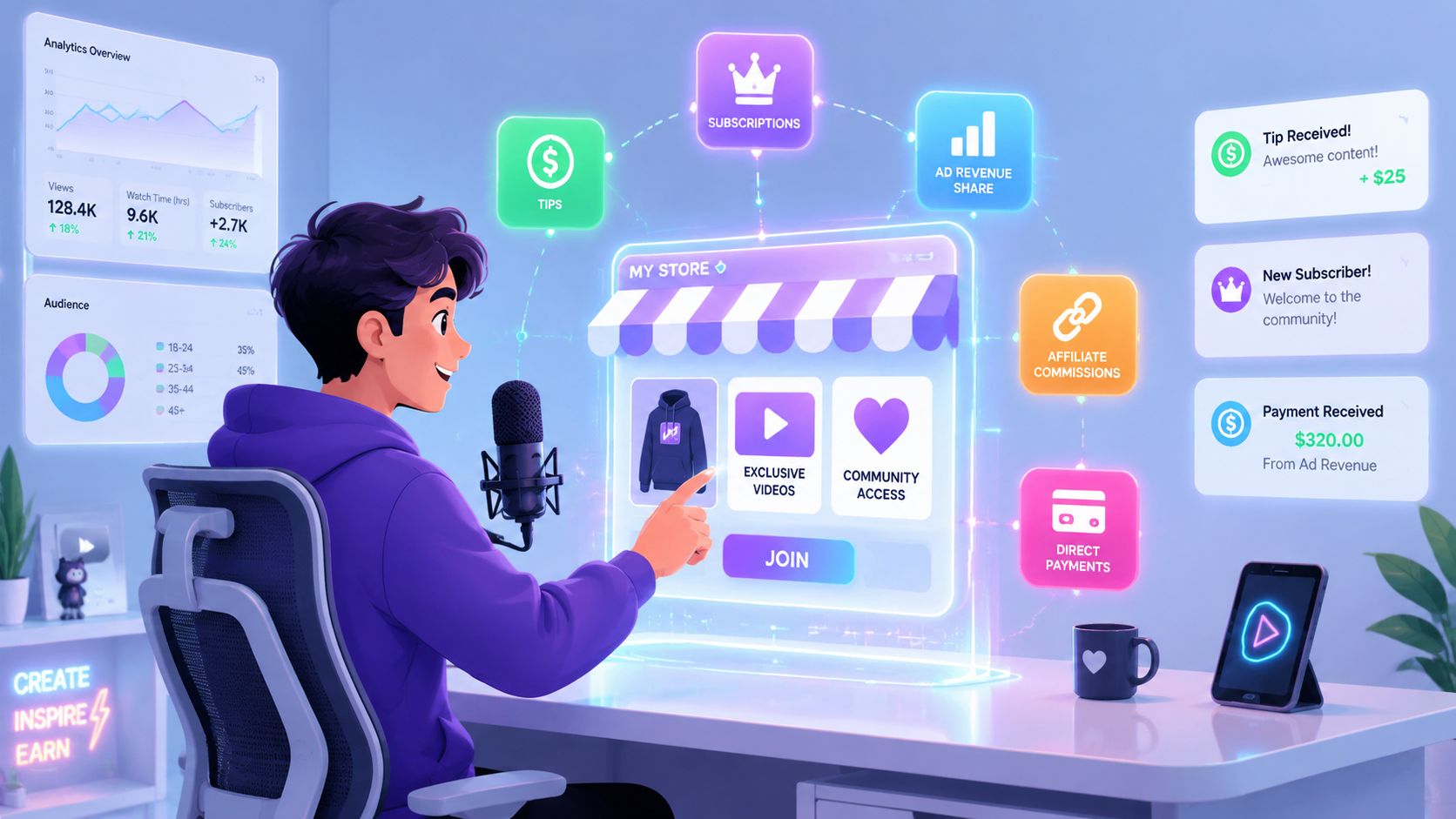
Only a small share of creators build high, predictable income. The gap usually comes down to operations, not audience size.
A creator can have demand and still run a messy business. Payments sit in one tool. Membership access lives in another. Brand invoices happen over email. Campaign deliverables are tracked in a spreadsheet until something slips. Revenue gets fragmented fast, and so does visibility into what is working.
That is why the right creator monetization platform matters. It does more than process a sale. It gives creators one place to manage offers, access, fulfillment, payment status, and the business admin that turns sporadic income into repeatable revenue.
The overlooked part of monetization is coordination. Direct fan revenue and brand work often run on separate systems, even though both rely on the same audience, calendar, and cash flow. When those systems do not connect, creators spend time reconciling payments, checking entitlements, chasing approvals, and cleaning up fulfillment errors instead of building the next offer or campaign.
Platforms built for this job act as the operating layer behind the brand. Tools such as creator economy platforms for payments, campaigns, and business operations help centralize those moving parts so creators can run a business with fewer manual handoffs and fewer missed revenue opportunities.
What Is a Creator Monetization Platform
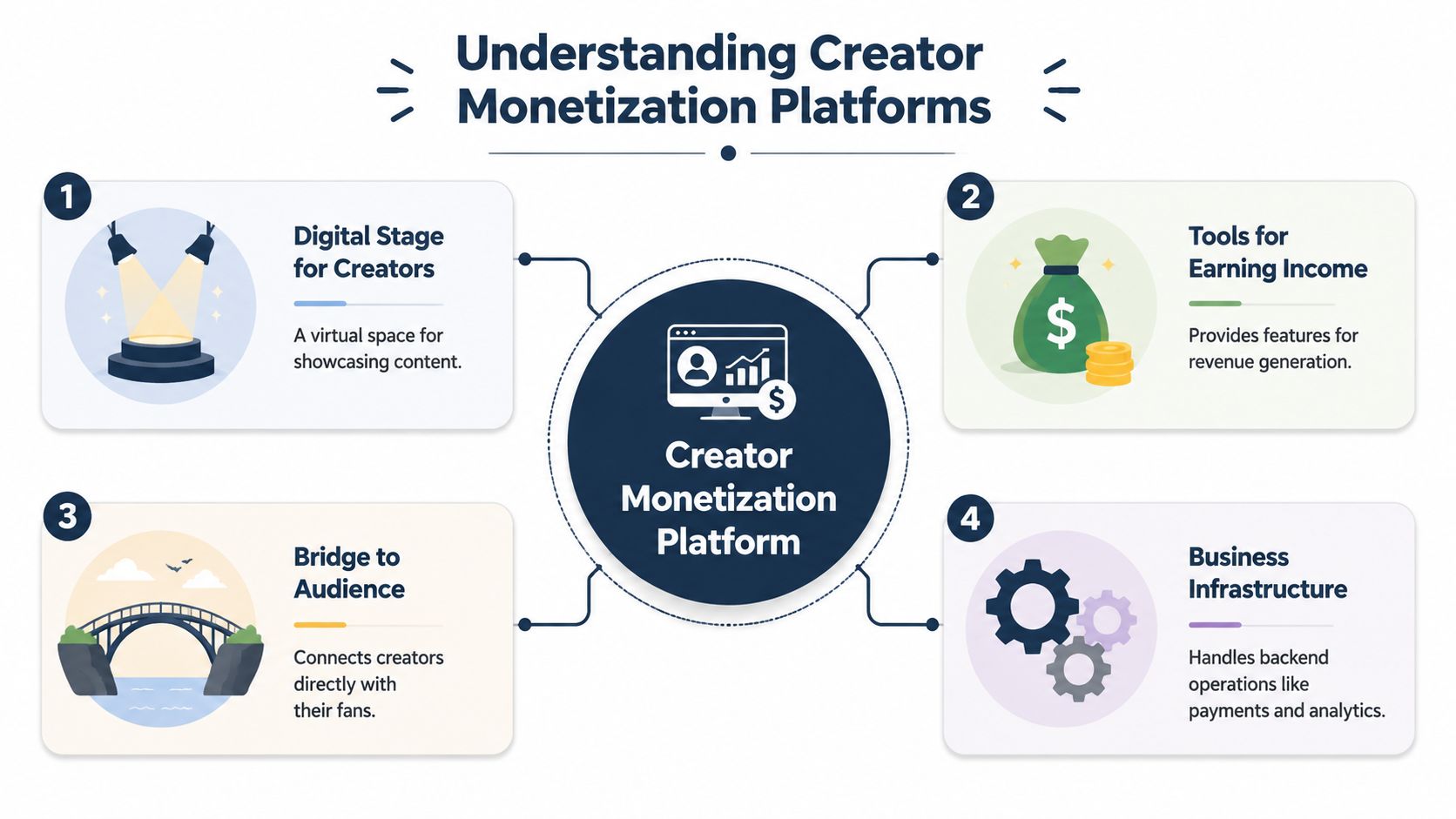
A creator business usually breaks at the handoff points. Money comes in through one tool, access gets managed in another, and brand work lives in inboxes and spreadsheets. A creator monetization platform fixes that by giving creators one system to sell, track, and fulfill revenue across their business.
It handles the commercial side of audience relationships. That can include memberships, digital products, paid communities, one-off purchases, tips, services, and brand campaign payments. The point is not just to collect revenue. The point is to keep revenue tied to the buyer, the offer, the delivery, and the payment status so the business stays manageable as more income streams are added.
More than a payment button
A lot of tools help creators charge for something. Fewer help them run the operation behind it.
A real monetization platform needs to keep four records aligned:
- Audience identity, so each buyer is tied to a real customer record
- Entitlements, so the right person gets the right access at the right time
- Payment state, so subscriptions, renewals, failed charges, payouts, and invoices are visible
- Fulfillment, so products, content, community access, events, or campaign deliverables are delivered
That matters because creator revenue is rarely clean. A single business might have recurring members, one-time buyers, affiliate revenue, UGC packages, and brand deals running at the same time. As shown in this creator platform architecture example, the system has to keep identity, access, and payments separate enough to handle different offers without creating admin chaos.
A simple test helps. If a tool collects payment but leaves the creator to manually confirm access, chase failed renewals, match invoices to campaigns, or reconcile payouts across platforms, it is a checkout tool, not the operating system for the business.
Why the category matters
As noted earlier, creator income is still uneven. The creators who build durable revenue usually do not win because they found a new payment button. They win because they can manage multiple revenue lines without losing control of delivery, reporting, or cash flow.
That is the practical value of a platform in this category. It gives creators one place to manage monetization alongside the business admin that comes with it. For teams comparing options across payments, campaigns, and operations, this guide to creator economy platforms for payments, campaigns, and business operations is a useful starting point.
Platforms such as REACH fit that role well because the job is broader than storefront setup. The core requirement is command and visibility. Who owes what, who has access, which campaign is awaiting approval, which invoice is unpaid, and where revenue is coming from. That is what turns monetization into a business system instead of a patchwork of tools.
Key Creator Monetization Models Explained
The strongest creator businesses rarely depend on one revenue type. They stack a few models that match audience intent. Some fans want ongoing access. Some want a quick purchase. Some brands want campaign work. Trying to force all of that through one offer usually leaves money on the table.
Recent creator data shows how far this shift has gone. 88% of community builders monetize through memberships, 53% sell courses, 51% offer coaching or services, 37% sell digital products, 22% earn affiliate revenue, and only 18% rely on sponsorships (creator monetization statistics from Circle). That's a useful reality check for anyone still treating brand deals as the default model.
Recurring revenue and direct audience funding
Memberships work well when the creator publishes consistently and can sustain a relationship, not just a content drop. Think private communities, premium newsletters, bonus episodes, or gated training. This model is resilient because it ties revenue to retention, not reach.
Courses and digital products sit nearby but behave differently. A course can sell well on authority and a clear outcome. A template pack, guide, or download can work even if the audience is smaller, as long as the problem is specific.
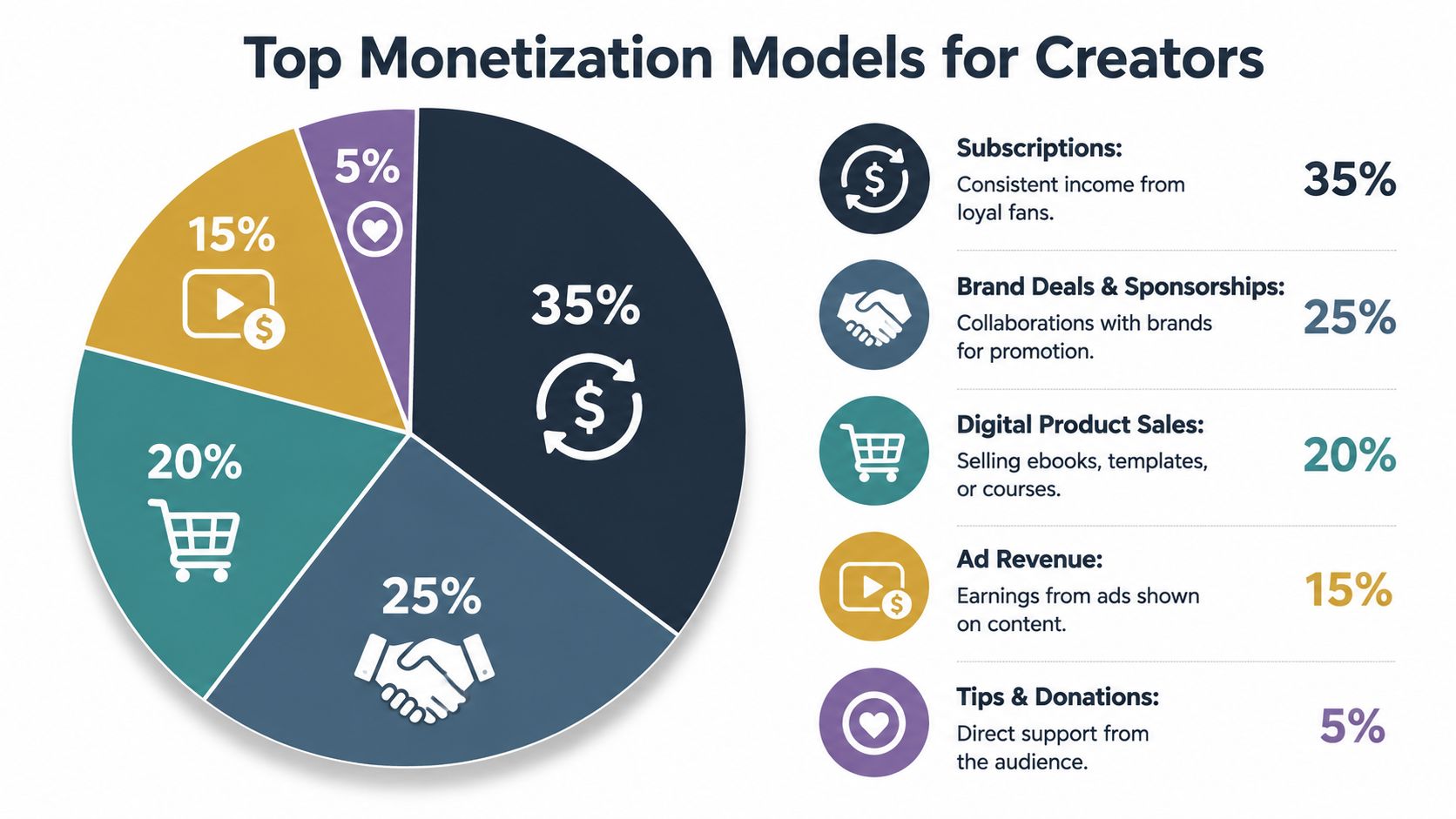
A quick walkthrough of the space helps:
- Memberships: Best for creators who publish on a rhythm and can reward ongoing loyalty.
- Courses: Strong for educators, operators, and niche experts with a teachable framework.
- Digital products: Useful for creators who can package knowledge into reusable assets.
- Coaching or services: High-touch, high-value, but harder to scale.
- Affiliate revenue: Works when the audience trusts recommendations and the creator's content naturally supports product discovery.
- Sponsorships and brand deals: Still valuable, but more volatile because creators don't control timing, budgets, or renewals.
For creators trying to compare options in social-first environments, this breakdown of how to monetize social media is a practical companion.
Brand revenue still matters, but it shouldn't carry the whole business
Sponsorships can be lucrative, but they introduce risk. Revenue depends on external approval, campaign timing, and platform trends. Direct audience revenue is slower to build, yet it's usually more stable once the offer is dialed in.
This embedded overview is worth watching if you're pressure-testing your mix of monetization models:
A healthy creator business usually mixes controlled revenue and opportunistic revenue. Memberships, products, and services are controlled. Sponsorships are opportunistic.
The mistake isn't taking brand money. It's building a business where every month resets to zero unless another sponsor says yes.
Core Features to Evaluate in Any Platform
Most creators compare features the wrong way. They look at the front end first. Landing pages, community tabs, product shelves, and branding controls matter, but they don't tell you how the platform behaves under stress.
The first test is payment reliability. Research on content monetization platforms argues that time-to-first-payment is a critical onboarding metric because creators who get paid quickly have a stronger reason to stay active (platform onboarding and payout reliability research). In practice, that means the platform's payout flow is not a back-office detail. It's central to creator retention.
Questions that expose weak platforms
Ask these before you commit:
- How are payments handled: Can the platform support one-time purchases, recurring billing, and campaign payouts without forcing manual workarounds?
- What happens after purchase: Does access update automatically, or do you have to grant permissions by hand?
- How visible is revenue data: Can you see failed payments, upcoming renewals, and buyer history in one place?
- Does it support collaboration: If you work with editors, managers, moderators, or brand partners, can each person do their part without sharing logins?
- How painful is compliance: Tax forms, invoices, approvals, and payment records should not live in separate folders.
A practical comparison lens
A simple way to judge a creator monetization platform is to look at what it removes from your workflow.
| What you need to manage | Weak platform behavior | Strong platform behavior |
|---|---|---|
| Recurring payments | Collects payment but gives poor renewal visibility | Tracks active, failed, and canceled billing clearly |
| Access control | Requires manual updates | Syncs payment status with entitlements |
| Brand work | Lives outside the monetization stack | Connects deliverables, approvals, and payment records |
| Reporting | Scattered across exports | Central dashboard with usable business context |
| Exceptions | Breaks when you add custom offers | Supports mixed models without rebuilding the setup |
Watch for this: A platform can look creator-friendly and still fail the business test if every exception forces you back into spreadsheets.
Creators often underestimate edge cases. Refunds. Split offers. comped access. late sponsor approvals. payout questions. The right platform doesn't eliminate complexity, but it contains it.
How Platforms Fit into Campaign Workflows
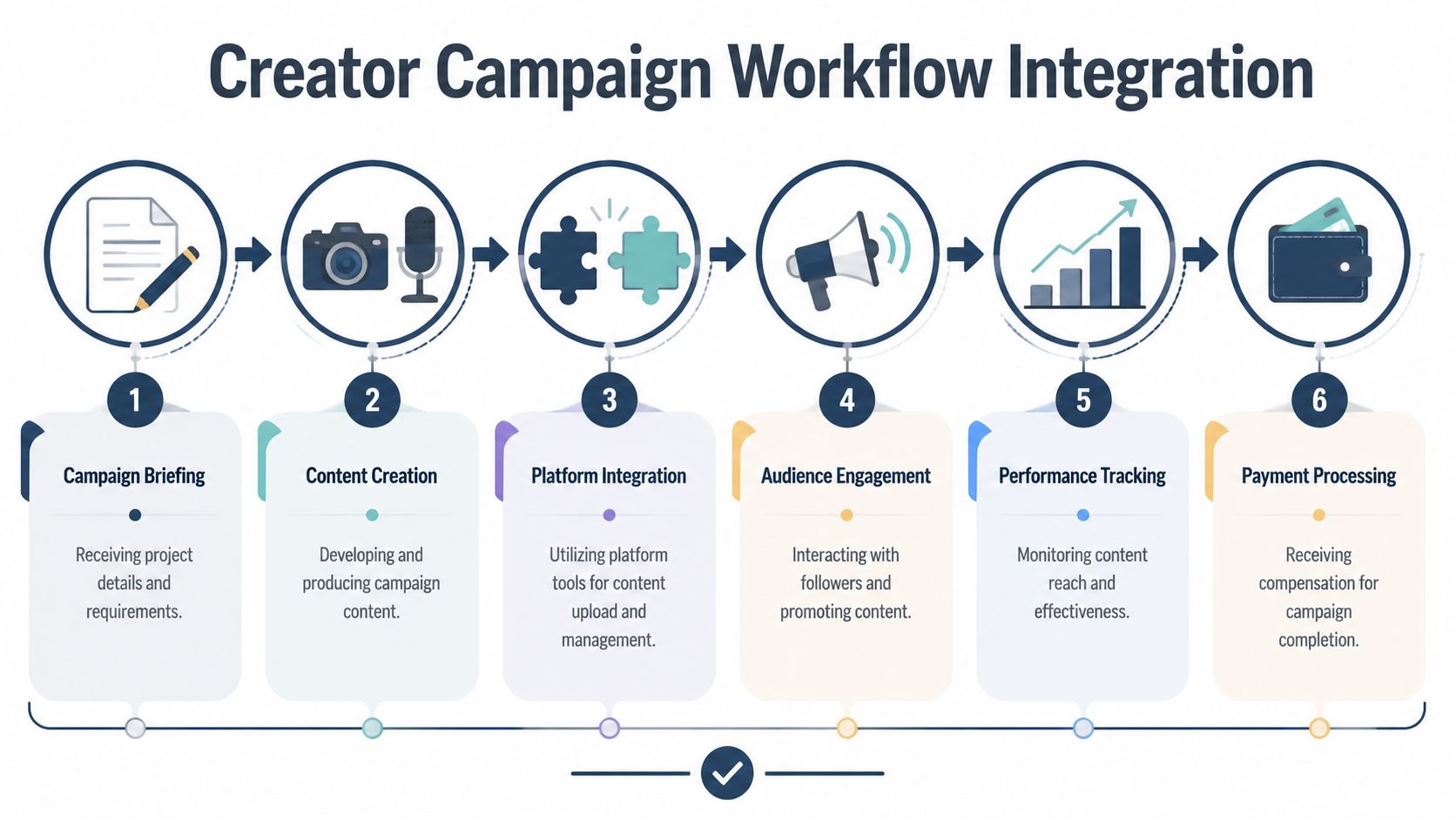
A creator can have a strong offer and still run a disorganized business. That's common with brand campaigns. Payment is only the final event. Before that comes briefing, negotiation, content production, revisions, approvals, posting, tracking, and proof of delivery.
Most monetization conversations fall short. They focus on revenue models, not the system needed to execute them.
The infrastructure gap
Industry guidance has made this point clearly. Creators need an integrated monetization stack because the primary challenge isn't just earning. It's running the business without fragmenting operations, audience data, and retention across disconnected tools (Stripe guidance on content monetization platforms).
That gap shows up fast in campaign work:
- A brand sends a brief in email
- Negotiation happens in DMs
- Deliverables get tracked in a spreadsheet
- Feedback lands in comments on a cloud doc
- Payment sits in another system
- Tax paperwork arrives at the end, when nobody wants to deal with it
Nothing in that chain is unusual. That's the problem.
Why campaign operations affect monetization
If a creator loses time chasing approvals or reconciling payments, that drag lowers the value of every deal. It also makes direct revenue harder to maintain because the creator's attention is split between delivery and administration.
A better setup treats campaigns like operational workflows, not one-off messages. The important pieces are straightforward:
- Clear intake so the brief, terms, and content requirements start in one place.
- Deliverable tracking so nobody wonders what's due, what's late, or what's approved.
- Central communication so decisions don't disappear in text threads.
- Payment automation so invoices, approvals, and payout status connect to the work completed.
For teams that handle recurring brand work, a dedicated system for influencer payment automation can reduce the friction between campaign completion and actual payout.
Disorganized workflows don't just waste time. They weaken trust. Creators remember which brands and agencies make payment easy, and which ones make every deal feel like cleanup.
The command center idea matters here. A creator monetization platform shouldn't only answer "How will I get paid?" It should also answer "How will this work move from agreement to delivery to payment without creating extra admin each time?"
Choosing the Right Creator Monetization Platform
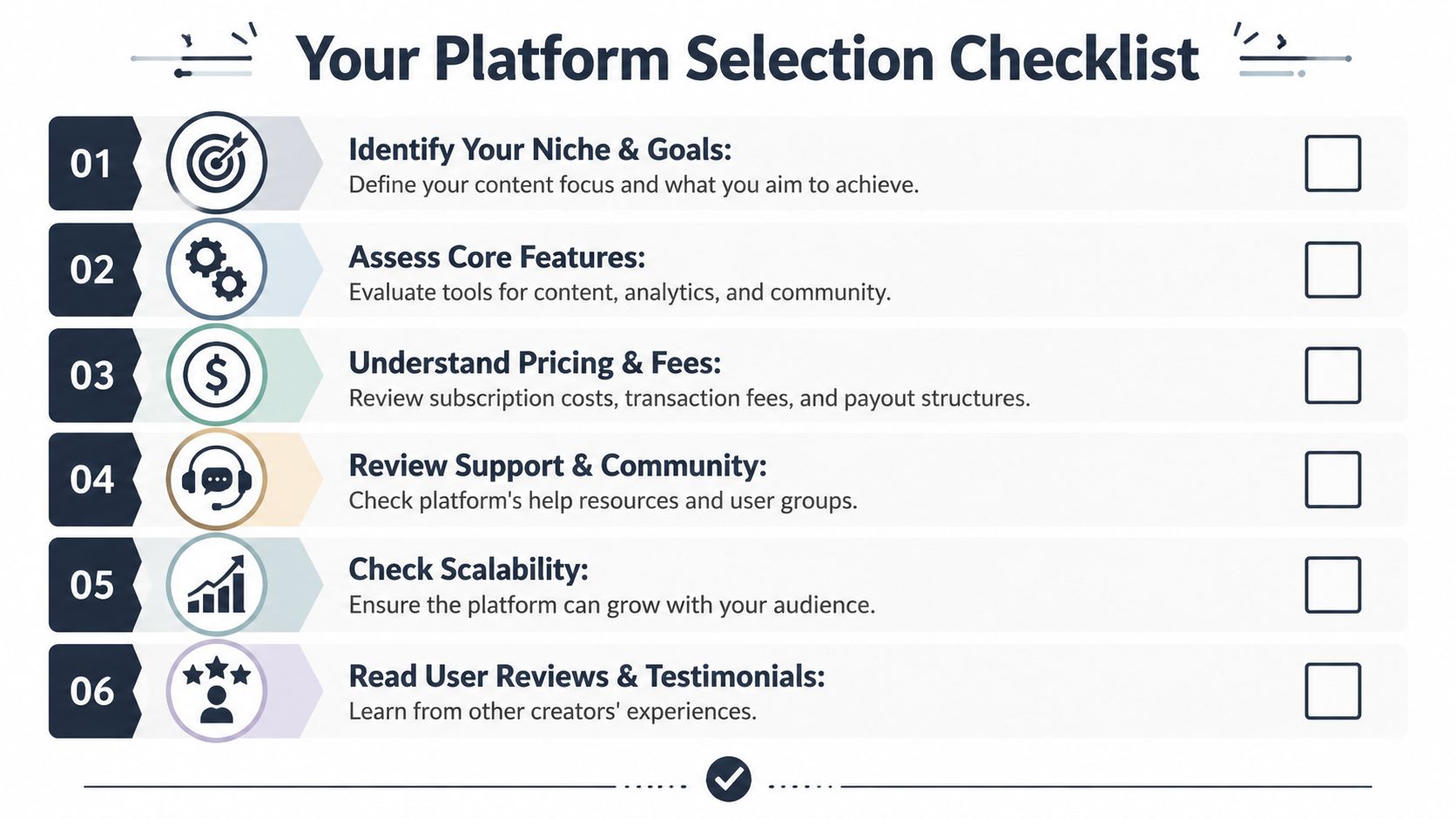
There isn't one best creator monetization platform for everyone. A newsletter operator, a course creator, a livestreamer, and a lifestyle influencer running brand partnerships don't have the same business model. The right choice comes from fit, not popularity.
A practical selection process starts with business shape. Not features. Not trends. Business shape.
Start with your revenue reality
Use this short framework.
If your income comes mostly from fans
Prioritize platforms that are good at recurring billing, gated access, and simple fulfillment. You need retention visibility more than flashy discovery. Memberships, communities, and digital products fit here.
If your income comes mostly from expertise
Look for a platform that supports courses, cohorts, digital downloads, and service packaging. Coaching, office hours, workshops, and premium resources all require clear delivery logic. The checkout matters, but the fulfillment flow matters more.
If your income comes mostly from brand campaigns
You need operational controls. Deadlines, approvals, communication history, content review, and payout coordination become as important as the invoice itself. Generic storefront tools usually won't solve that well.
Build a stack, not a mess
Most creators need more than one tool. That's normal. The goal isn't to force every function into a single app. The goal is to avoid a stack where tools fight each other.
A workable stack should answer these questions:
- Where does audience ownership live: Email list, community platform, CRM, or native social platform?
- Where does money flow: Direct checkout, membership system, campaign payout system, or a mix?
- Where is work managed: Especially important if brand deliverables are part of the business.
- Where is history stored: Purchases, contracts, messages, access status, and tax records need a home.
The red flags that usually show up later
Creators often notice these too late:
| Selection mistake | Why it hurts |
|---|---|
| Choosing based on surface design alone | Clean UI won't fix broken operations |
| Using one tool per revenue stream with no coordination | Reporting and fulfillment become fragmented |
| Ignoring payout and support processes | Cash flow and trust suffer fast |
| Picking a platform that can't handle edge cases | Growth creates manual exceptions everywhere |
Selection lens: Choose the platform that reduces repeated decisions. If you have to re-explain the same buyer state, campaign status, or access rule every week, your stack isn't supporting you.
The right creator monetization platform is the one that matches how you earn now and still makes sense when you add the next revenue stream.
Creator Monetization FAQs
How is AI changing creator monetization
A new trend for 2026 is creators selling access to AI agents trained on their knowledge, which shifts monetization from content access to expertise access and raises questions about pricing, ownership, and trust (AI creator monetization trend).
The opportunity is obvious. A creator can package knowledge into something interactive instead of publishing another static asset. The hard part is governance. What data trained the agent? How often is it updated? What happens when the AI gives outdated or risky advice? Those aren't side questions. They're product questions.
Should creators rely on a single platform
Usually, no. Platform concentration creates policy risk, revenue risk, and audience access risk. If one company controls distribution, payments, and discovery, a single change can affect the whole business.
That doesn't mean creators should scatter everywhere. It means they should keep core revenue relationships as direct as possible. Email lists, first-party customer records, owned communities, and direct checkout paths are safer than depending entirely on platform-native monetization.
What metrics matter most
Track the metrics that show business health, not vanity.
A practical set includes:
- Revenue by stream so you know which model is carrying the business
- Repeat purchase or renewal behavior so you can judge durability
- Time to payout because payment friction changes creator behavior fast
- Offer conversion quality which is less about traffic volume and more about whether the right audience buys
- Operational load meaning how much manual work each revenue stream creates
If one offer earns money but creates endless admin, it's weaker than it looks.
What's the biggest mistake creators make with monetization
They add new revenue streams without upgrading infrastructure. A tip jar becomes a membership. A membership becomes a course. Then brand deals get layered on top. Revenue grows, but the operating system doesn't.
That's when creators start spending prime work hours on reconciliation, chasing approvals, fixing access issues, and answering payment questions. The business looks diversified from the outside, but inside it's fragile.
Can brand work and audience revenue coexist well
Yes, when each has a defined role. Audience revenue provides stability and direct customer insight. Brand work can add larger, periodic revenue opportunities. Problems start when sponsored work crowds out the creator's owned offers or when campaign operations consume too much time.
The best setups keep direct revenue as the foundation and treat partnerships as an additional layer, not the whole floor.
If you're tired of running campaigns through spreadsheets, scattered DMs, and disconnected payment steps, REACH is built for the operational side of creator revenue. It helps brands, agencies, and creator teams manage campaign workflows, track deliverables, organize communication, handle payments, and stay on top of compliance from one place. If your monetization stack works in theory but breaks in execution, REACH is worth a closer look.