 Skip to content


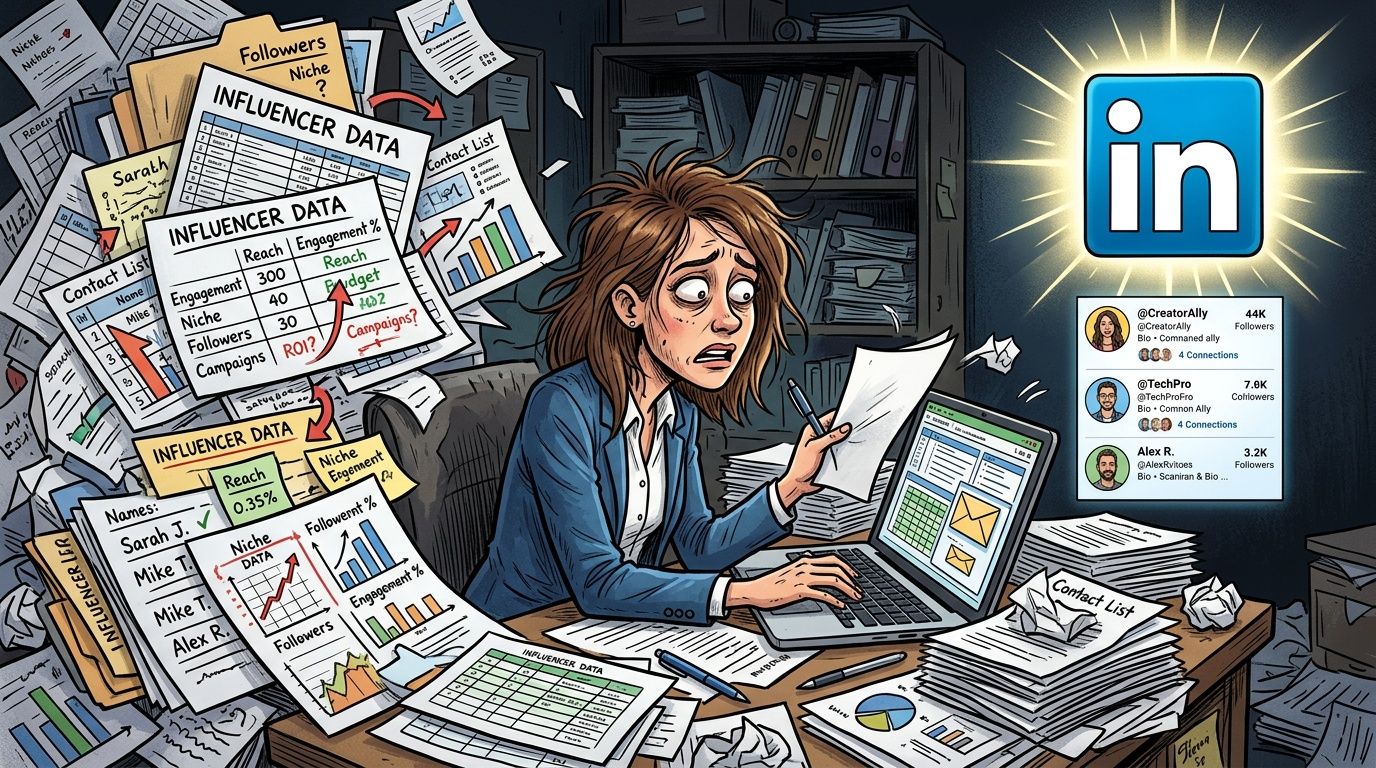
Your LinkedIn influencer campaign probably didn't break because you picked the wrong creator. It usually breaks later.
The shortlist lives in one spreadsheet. Outreach sits in an SDR's inbox. Legal has the contract. Content approvals happen in Slack. Someone forgets a posting date. Someone else can't find the latest brief. Then reporting day arrives and the only thing anyone can confidently show is likes.
That's the actual problem with influencers in linkedin for B2B teams. Discovery gets all the attention, but management decides whether the program produces pipeline or confusion.
Why Influencers in LinkedIn Are a B2B Goldmine
A B2B buyer opens LinkedIn between meetings, sees a post from a trusted RevOps operator about forecasting mistakes, sends it to the team Slack, and your category is now part of an internal buying conversation before your sales team ever gets a reply. That is why influencers in linkedin matter. They shape how buyers define the problem, which vendors feel credible, and what objections show up later in the process.
According to Hootsuite's LinkedIn demographics summary, LinkedIn includes 10 million C-level executives, 180 million senior-level influencers, and 63 million decision-makers. For B2B teams, that concentration changes the economics of influencer work. You are not chasing broad attention. You are trying to earn trust inside accounts that can buy, stall, or expand a deal.
Why this audience is different
LinkedIn influence works differently from consumer creator programs because the audience arrives with job context. Titles are visible. Industry conversations are public. Comment sections often reveal real pain points, buying intent, and peer validation in a way other channels rarely do.
That creates a specific advantage for B2B marketers. A credible practitioner can move a market with a clear point of view on implementation risk, vendor selection, hiring priorities, or operating trade-offs. In SaaS and enterprise services, that kind of influence often matters more than polished creative.
It also connects cleanly to revenue teams. If your brand team is building awareness while sales is trying to start conversations in the same accounts, Improve your B2B sales teams' LinkedIn outreach to make that attention easier to convert into pipeline activity.
Goldmine does not mean easy money
The upside is real. The mess is real too.
A strong LinkedIn influencer program can create warm traffic, better branded search, stronger retargeting pools, more webinar signups, and cleaner sales conversations because prospects have already heard the narrative from someone they trust. But none of that happens from discovery alone. The hard part starts after the shortlist is approved.
Teams run into the same operational problems fast. Briefs drift. Approvals slow down. Posting dates move. Sales wants attribution that marketing cannot defend. Finance asks why one creator drove meetings and another drove comments. Without a system, good creator partnerships turn into one-off activity that looks promising and scales badly.
That is why B2B teams need a campaign operating model, not just a creator list. A structured influencer marketing for B2B teams process keeps briefs, deliverables, approvals, payments, and performance in one place. Tools like REACH help teams stay organized when multiple stakeholders are involved and the goal is pipeline, not vanity metrics.
Practical rule: On LinkedIn, audience access gets you in the room. Process determines whether the program produces repeatable revenue.
How to Discover Your Ideal LinkedIn Influencers
Instead of starting the discovery process forward, the majority of teams begin in reverse. They search a broad keyword, sort mentally by follower count, and message the loudest names first.
That approach usually fails because LinkedIn authority is narrow. The creator who influences a VP of Data isn't necessarily the same person who influences a Head of RevOps or a technical founder. For influencers in linkedin, fit beats fame.
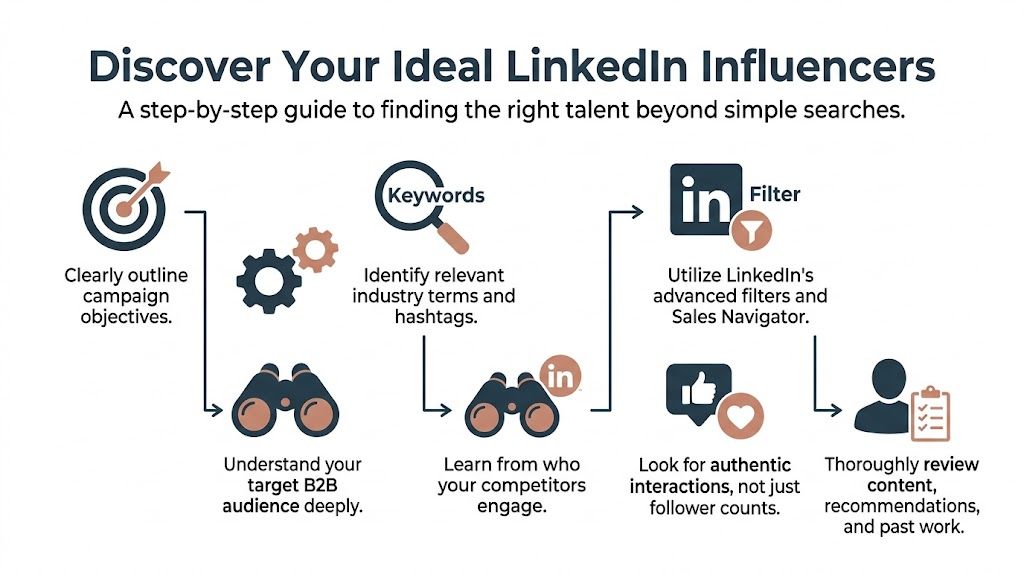
Taplio and Rivery's curated roundups point to the same pattern. The market is highly segmented, with authority becoming more role-based and category-specific across areas like analytics, data science, and leadership, as shown in Taplio's data influencer list. That means your longlist should be built around domain credibility and audience relevance first.
Start with the buying committee, not the platform
Before you look for people, define who must be influenced.
Ask:
- Who signs off: Procurement rarely responds to thought leadership the same way a department lead does.
- Who shapes the shortlist: Internal champions often consume more content than final approvers.
- Who blocks deals: Security, finance, data, and operations leaders may need different creator voices.
If you don't map this first, your discovery work gets messy fast. You'll collect people who are impressive but commercially irrelevant.
A simple longlist works better when you tag each creator by role fit. For example:
| Creator fit | Good for | Weak fit when |
|---|---|---|
| Practitioner expert | Educating hands-on evaluators | You need board-level credibility |
| Executive voice | Framing strategic urgency | Buyers need technical proof |
| Consultant or advisor | Explaining process change | Audience wants product-specific detail |
| Niche employee advocate | Reaching one department deeply | You need broad category awareness |
Use content signals, not vanity signals
The best LinkedIn creators for B2B usually leave a different trail than generic “growth” accounts.
Look at:
- Post topics: Are they repeatedly strong in one area, or posting on everything?
- Comment quality: Do senior practitioners ask them smart follow-up questions?
- Audience composition: Are the people engaging in the roles you sell to?
- Content posture: Are they teaching, or just performing authority?
This video is a useful supplement if you want a visual walkthrough of discovery workflows and creator evaluation on LinkedIn.
Build a longlist that can survive scrutiny
I prefer a longlist with notes, not just names. For each candidate, capture their niche, likely audience, repeated themes, brand safety observations, and whether they feel more educational or promotional.
That step saves time later because weak fits reveal themselves quickly. If a creator's audience comments mostly with generic praise, they may have reach but not buying influence.
For teams that want a more systematic sourcing process, using social listening for influencer discovery is a good framework because it pushes discovery beyond simple profile search.
The right LinkedIn influencer is often the person your buyers already trust in comment threads, not the person with the most visible personal brand.
A Framework for Vetting and Qualifying Influencers
A longlist is easy to build. A shortlist that survives internal review is harder.
Many influencer programs drift into opinion because of this. Someone on the team likes a creator's style. Someone else points to follower count. A founder wants a recognizable name. None of those are enough on their own.
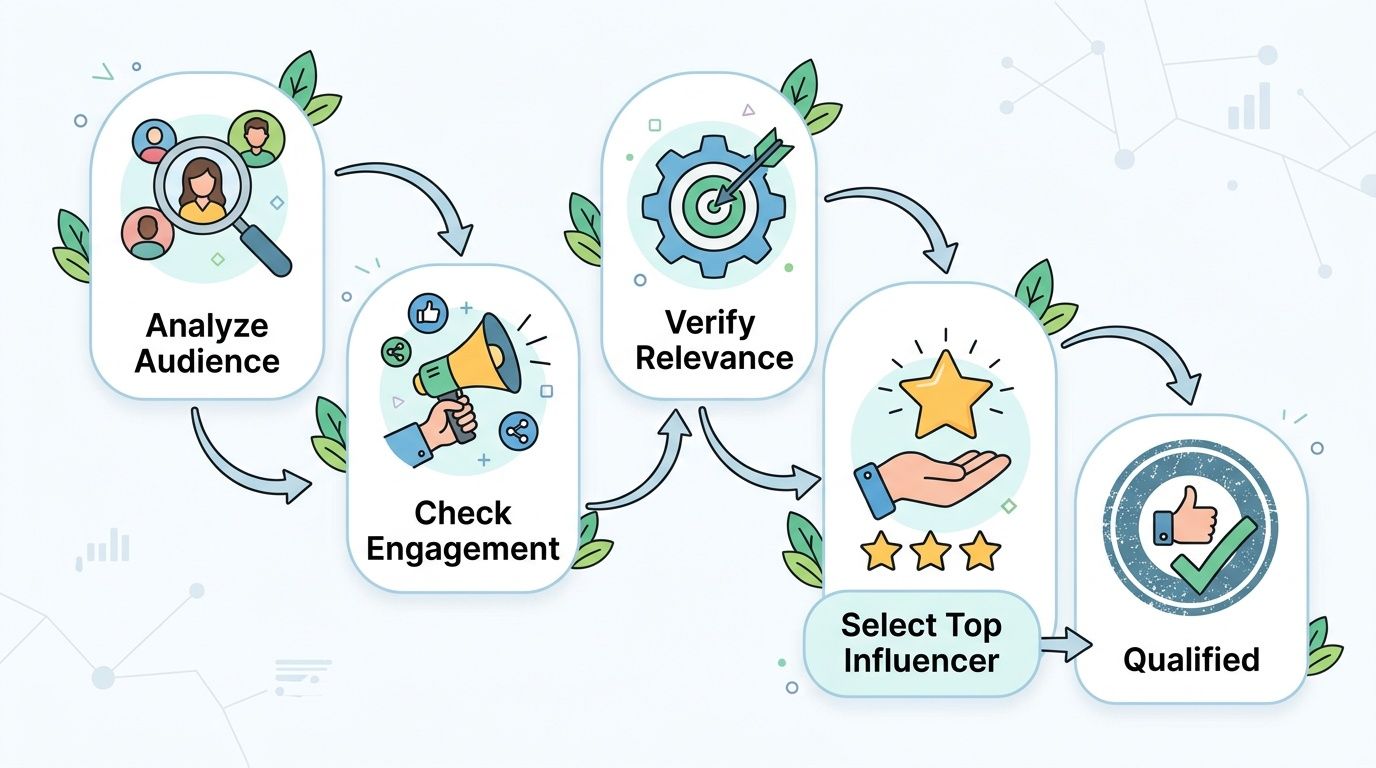
The five checks that matter
Maven Analytics recommends a progression of topic authority, then participation, then consistency, and notes that comments can be used to test message-market fit before scaling posts in its guide to data influencers. That's useful for brands too, because it gives you a practical way to assess whether someone has earned trust or just built visibility.
I use a vetting pass that looks like this:
Topic authority
Can this person stay sharp inside one meaningful niche? Broad posting often looks active but weakens authority.Participation quality
Read their comments and replies. Good creators don't just publish. They participate like practitioners.Consistency over time
You want a stable pattern, not a short spike of activity followed by silence.Audience relevance
Check whether the people engaging look like your target roles, adjacent stakeholders, or a general creator crowd.Commercial maturity
Review past sponsored work. If every partnership feels forced, your campaign probably will too.
Red flags worth taking seriously
Not every bad fit is dramatic. Most are subtle.
- Comment sections full of fluff: “Great post” repeated by peers isn't the same as thoughtful engagement from target buyers.
- Identity drift: If someone talks about leadership one day, AI the next, then personal wellness, the audience may be too broad for your use case.
- Clumsy sponsorships: Over-scripted brand content usually underperforms on LinkedIn because the audience notices immediately.
- Thin replies: If a creator can't defend their ideas in the comments, trust breaks fast.
If a creator only looks credible from a distance, don't shortlist them. Vetting happens in the replies.
A simple scoring view
A practical way to avoid internal debate is to score creators on a short rubric. Keep it human. Don't overengineer it.
| Criteria | What good looks like |
|---|---|
| Topical depth | Repeated expertise in one relevant category |
| Buyer fit | Engagement from roles tied to your deals |
| Conversation quality | Real questions, specific replies, useful debate |
| Content discipline | Reliable posting and professional tone |
| Partnership readiness | Clear communication and sensible brand fit |
The point isn't mathematical precision. The point is to stop choosing partners on instinct alone.
Crafting Outreach That Builds Real Partnerships
A creator finally replies after two follow-ups. Then your team scrambles. Legal wants changes, product adds three talking points, nobody has agreed on budget, and the creator starts to look like the problem.
Usually, the problem started with outreach.
On LinkedIn, you are asking someone to put their personal credibility behind your message. Posts from people outperform posts from brand pages on reach and engagement, as Botdog notes in its LinkedIn statistics roundup. That changes the standard for outreach. Generic partnership emails rarely work because credible creators protect their audience carefully.
Good outreach reads like the first step in a working relationship, not a spray-and-pray pitch. It gives enough context to earn a reply, but not so much corporate copy that the message feels outsourced.
What good outreach actually does
A solid first message needs to answer three questions fast:
- Why them: Mention a specific post, comment exchange, or perspective that made them relevant.
- Why now: Tie the campaign to a real topic, launch, or market conversation.
- What happens next: Make the ask easy to evaluate with scope, timing, and a clear next step.
If your team needs a tighter structure for first-touch messages and follow-ups, these effective cold email strategies are worth borrowing. The principles carry over well to influencer outreach because they reward clarity, relevance, and restraint.
Do this, not that
Weak outreach: “Hey, love your content. We'd love to collaborate with you on a campaign for our new solution. Are you interested?”
Better outreach: “Your recent posts on data governance drove thoughtful discussion from analytics leaders, which overlaps with the buyers we want to reach. We're planning a campaign focused on implementation lessons, and your point of view fits that angle well. If useful, I can send a short brief with deliverables, timeline, review steps, and budget range.”
The difference is not style. It is risk reduction.
The second version helps the creator assess fit quickly. It also helps your team later, because you have already introduced the campaign shape, review process, and commercial intent. That matters more than marketers like to admit. In B2B, weak outreach creates downstream mess: confused expectations, longer approval cycles, and avoidable drop-off before the first draft is even submitted.
Outreach is the first campaign workflow test
I treat outreach as an operations checkpoint. If the initial message is vague, the campaign usually stays vague. If the creator asks basic questions and your team cannot answer them clearly, approvals and posting coordination will get messy fast.
A simple outline keeps that from happening:
- Campaign context
- Why this creator
- Expected deliverables
- Timeline
- Review process
- Compensation and next steps
That outline also makes scaling easier. Once you are managing several LinkedIn creators at once, consistency matters more than clever copy. Teams that use standardized outreach briefs and template variations tend to avoid the usual chaos of buried email threads, missing approvals, and unclear ownership. If you want a starting point, these influencer outreach email templates are useful for building a repeatable process.
Strong partnerships start with a message that respects the creator's audience and your own internal reality. That is how outreach stops being hopeful prospecting and starts becoming campaign management.
Managing Campaigns and Proving LinkedIn ROI
A LinkedIn influencer campaign usually starts feeling messy right after the outreach is done. One creator wants edits in DMs. Another sends a draft in Google Docs. Legal has questions about one claim. Sales wants the post live before a target account meeting. Finance asks whether the invoice matches the agreed deliverables.
That is the part most articles skip.
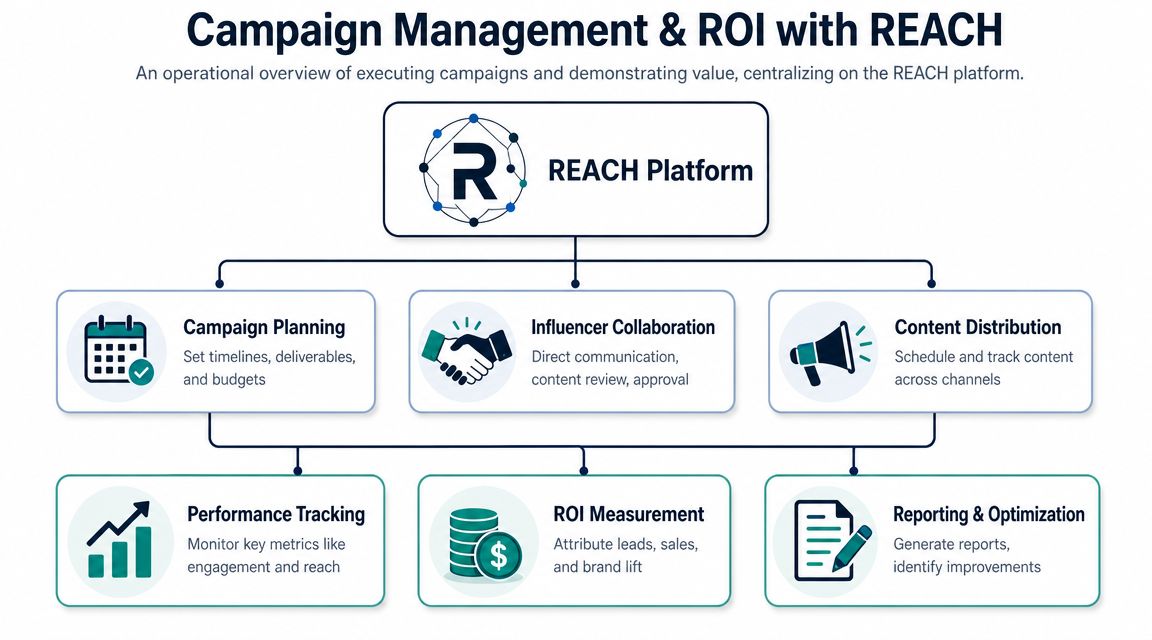
With influencers in linkedin, performance depends less on sourcing and more on execution control once the campaign is live. B2B teams are coordinating message accuracy, stakeholder reviews, posting timing, buyer engagement, and proof of impact across a long sales cycle. A spreadsheet can hold names and deadlines. It cannot manage the full operating process without things slipping.
What to manage during the campaign
Consumer creator programs can absorb a bit of improvisation. B2B campaigns usually cannot. The content often touches positioning, product nuance, proof points, and objections that show up later in a sales conversation.
The teams that run this well manage five things in parallel:
- Brief precision: Give creators a clear angle, approved claims, and audience context without forcing them into brand copy.
- Review scope: Set who can request edits, what counts as a compliance issue, and when feedback is due.
- Publishing cadence: Coordinate post timing so creators reinforce a theme instead of competing for the same audience on the same day.
- Engagement ownership: Decide who monitors comments and who jumps in when technical questions or objections appear.
- Attribution capture: Log inbound responses, account engagement, and sales mentions while the campaign is active.
Campaign discipline pays off at this stage. REACH helps teams run the work after creator selection by keeping setup, communication, approvals, deliverables, payments, and reporting in one system. That structure matters because operational chaos is usually what breaks ROI reporting later.
Measure signals that match B2B reality
In its article on LinkedIn influencers marketing, NoGood argues that LinkedIn influencer content often centers on personal branding instead of how influence works inside a buying committee, and recommends tracking signals beyond likes, including profile visits from target roles, downstream site traffic, and pipeline influence. That is the right standard for B2B.
I use three measurement layers:
| Metric layer | What to look for |
|---|---|
| Attention | Relevant comments, profile visits, saves, shares from the right audience |
| Buying interest | Site visits to high-intent pages, demo inquiry mentions, sales conversation triggers |
| Commercial impact | Influenced opportunities, pipeline movement, repeat touches across the buying group |
A post does not need breakout reach to be valuable. If the right director comments, three target accounts visit a product page, and an AE hears “I saw that creator's post” on a call, the campaign is doing useful work.
Measurement rule: Don't judge LinkedIn influencer campaigns by paid social standards. Judge them by whether they create trust signals that sales can use.
Format choices affect performance
Format changes who pays attention and what they do next. In a dataset cited by Botdog, analysts noted that video uploads on LinkedIn increased year over year, alongside a rise in CEO posting, which helps explain why personal distribution is getting more attention. If video is part of your creator mix, this guide on strategies for posting video on LinkedIn is useful for handling execution details.
The reporting question stays the same across every format. Did the campaign move the right buyers closer to a sales conversation? If you can answer that clearly, the program is being managed well.
From Chaos to Control in Your Influencer Program
A LinkedIn influencer program starts to break the moment interest turns into execution. One creator needs legal review. Another misses a draft deadline. Sales asks which target accounts engaged. Finance wants payment details. The campaign can still work, but only if someone has built an operating system for it.
B2B marketing teams rarely fail here because the strategy is weak. They lose control because the work gets scattered across spreadsheets, DMs, email threads, shared docs, and half-finished reports. By the time performance signals show up, the next wave of outreach has already gone out, and the same mistakes get repeated.
The fix is process discipline.
Treat your program like a channel, not a one-off creator experiment. Keep discovery criteria, approval notes, briefs, deliverables, timelines, and reporting in one place. Assign clear ownership for each stage. Decide upfront what sales feedback matters, what counts as proof of buying interest, and how often the team will review results. That structure is what turns influencer activity into a repeatable B2B motion.
I have seen this shift firsthand. Once the team stops managing creators through inboxes and scattered approvals, campaign quality gets more consistent. Follow-up gets faster. Reporting gets easier to trust. That is usually the difference between a program that looks busy and one that actually contributes to pipeline.
REACH supports that operating model by centralizing outreach, briefs, deliverables, payments, and reporting. For teams running LinkedIn influencer campaigns at any real volume, that kind of structure removes a lot of preventable chaos and makes performance easier to manage.