 Skip to content

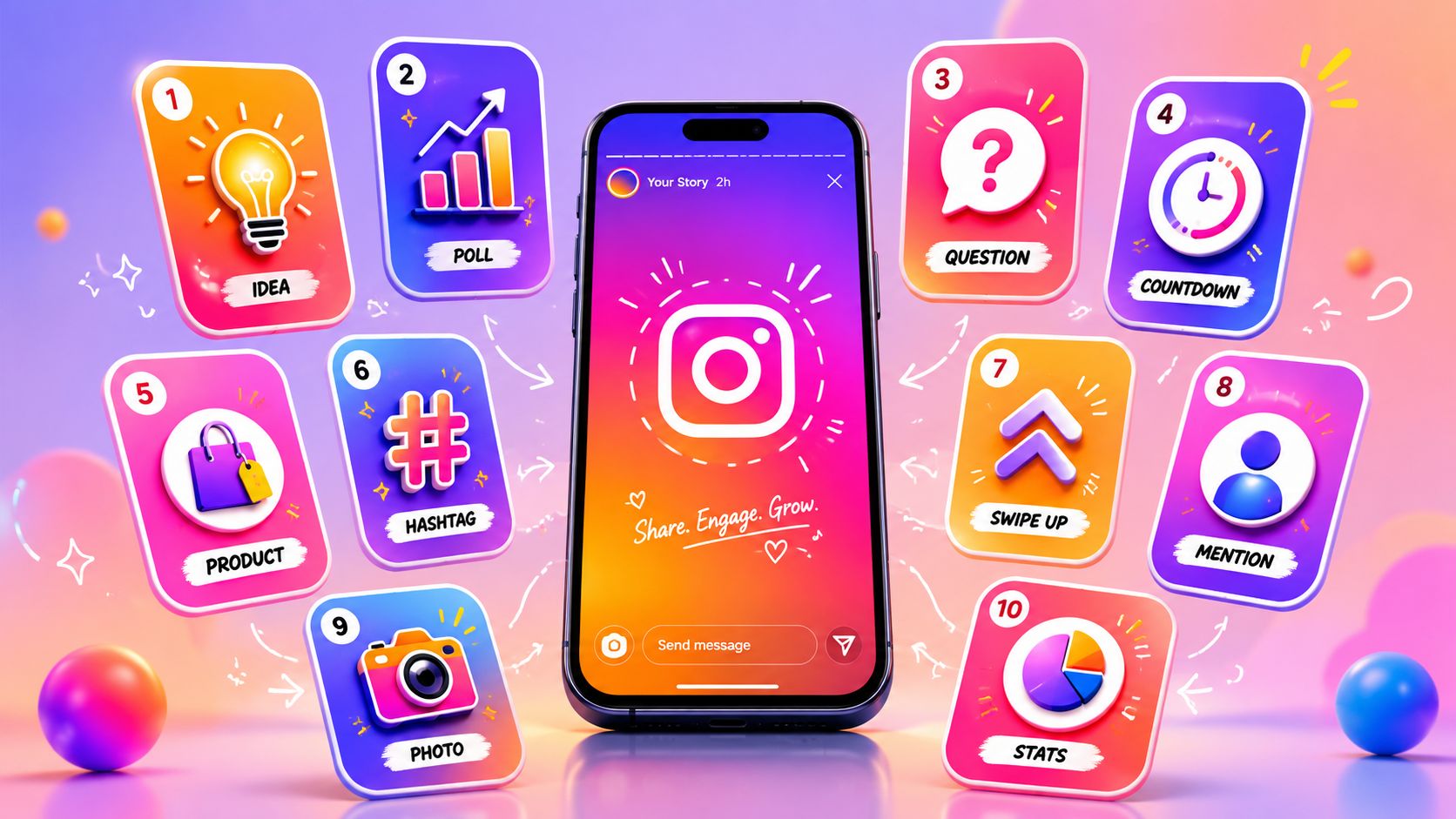
You open Instagram, tap “Your Story,” and stall. The blank screen isn't the core problem. The core problem is that most Instagram Stories inspiration feels disconnected from campaign goals, client reporting, and the daily work of shipping content.
For brands and agencies, tired polls and random behind-the-scenes clips don't just waste time. They create noise instead of momentum. You need Stories that help sell a campaign, prove results, build trust with creators, and keep your workflow organized enough to repeat what works.
That's why I like treating Stories as a campaign layer, not a design exercise. Instagram launched Stories in August 2016, and the format became central fast. Hootsuite reports that Instagram is projected to have over 3 billion monthly active users by 2026, and about 73% of Instagram users watch Stories each day, which explains why Instagram Stories inspiration has become such a practical category for marketers rather than just a creative one (Hootsuite's Instagram statistics roundup).
REACH fits naturally into that workflow because it helps brands and agencies manage what happens after creator discovery. If you're juggling approvals, deliverables, communication, tracking, and payments, a command center matters. The 10 ideas below work best when they're tied to an execution system, not just a content calendar.
1. Behind-the-Scenes Campaign Creation Stories
Some of the best Instagram Stories inspiration starts before the campaign goes live. Show the work behind the work.
A brand can document brief creation, creator shortlisting, internal approvals, product shipping, and launch-day reactions. Agencies can do the same with client-safe screenshots, whiteboard clips, timeline check-ins, and creator onboarding moments. This makes your process visible, which is useful when prospects don't understand why campaign management takes structure.
What to show
HubSpot, Shopify, and Figma all use process-driven storytelling in different ways across their content ecosystems. The lesson isn't to copy their style. It's to show how decisions get made.
- Brief snapshots: Show the campaign goal, audience, and content angle without exposing confidential details.
- Creator selection moments: Record why a creator made the shortlist. Niche fit is more convincing than follower count talk.
- Launch-day friction: If packaging was delayed or approvals got stuck, share the lesson. Polished teams still hit real obstacles.
A weekly series works well here because viewers begin to recognize your operating rhythm. If you run campaigns inside REACH, these Stories can naturally point viewers to your planning approach and broader Instagram content strategy framework.
Practical rule: Don't make behind-the-scenes content look accidental. Authenticity builds trust, but the Story still needs a clean opening slide and a clear narrative arc.
What works and what doesn't
Time-lapse clips of campaign setup work because they compress complexity into something people can understand quickly. Team reactions also work, especially when they reveal relief, surprise, or excitement around a launch.
What usually fails is posting random office footage with no campaign context. If the viewer can't tell what decision was made, what problem was solved, or what stage the campaign reached, it's filler.
2. Creator Success Stories and Campaign Results
Results content often gets mishandled. Teams either overshare raw dashboards with no explanation or post vague “great campaign” claims that nobody believes.
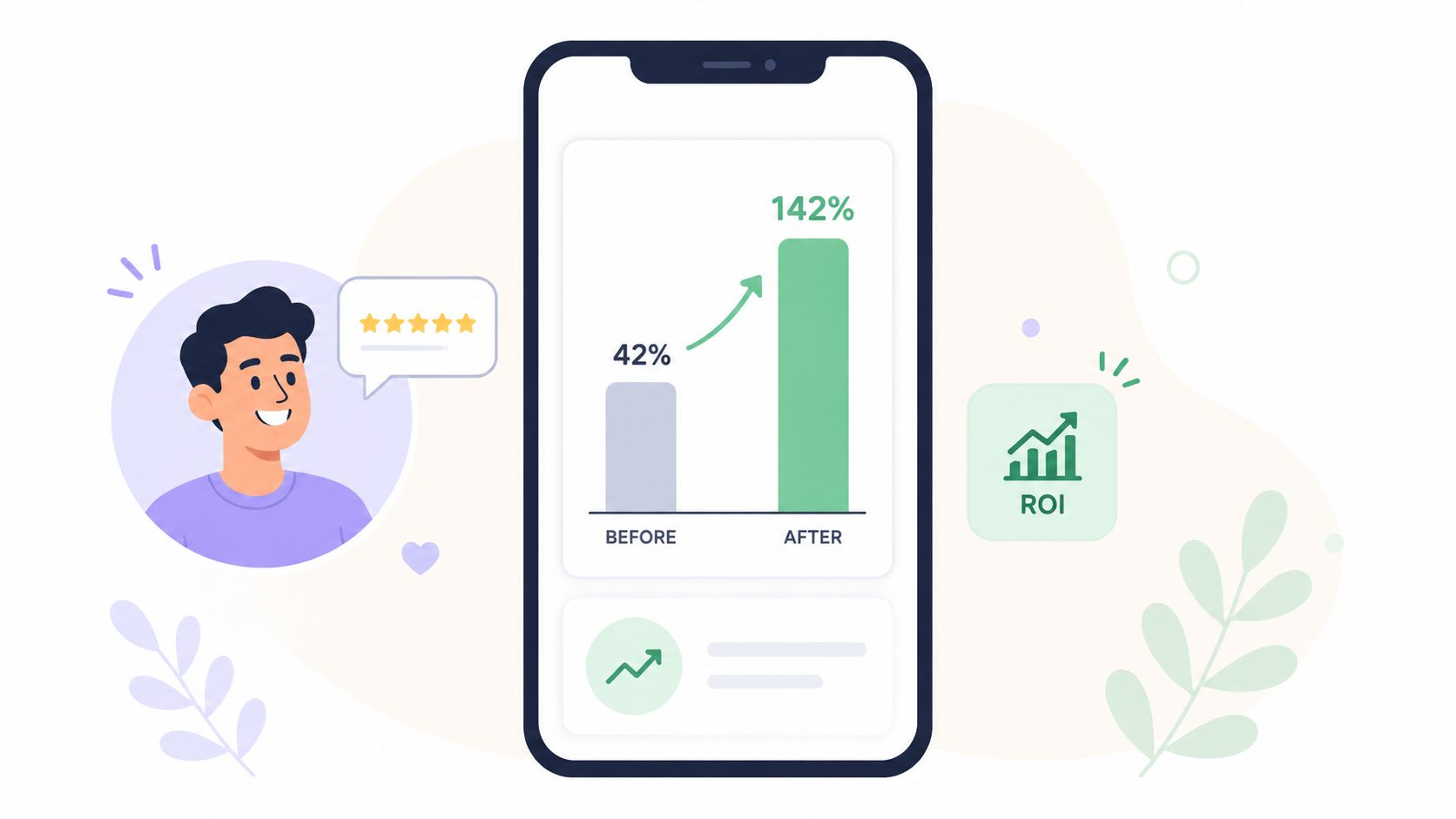
The better move is to turn one campaign outcome into a short narrative. Start with the brand problem. Add the creator angle. End with the specific business takeaway. Since you can't rely on generic “trust us” language, your Stories should explain why the campaign worked.
Early in the sequence, a visual helps.
How to package the story
Zendesk, Hootsuite, Later, and Sprout Social have all published customer or creator spotlights in ways that make the subject feel concrete. For Stories, compress that idea into a few slides.
Use a sequence like this:
- Slide 1: The original challenge
- Slide 2: Why this creator or campaign format was chosen
- Slide 3: The content that landed
- Slide 4: What the brand learned
- Slide 5: The next move
Don't invent flashy metrics if you can't publish them. A qualitative result can still be strong: better creator-brand fit, cleaner approvals, stronger audience sentiment, or more useful content for paid reuse.
Where many brands go wrong
They focus only on the win. Viewers learn more when you include one trade-off. Maybe the highest-reach creator wasn't the best at product education. Maybe the slickest edit underperformed compared with more direct creator footage.
That kind of nuance is what makes success Stories persuasive. It also makes REACH easier to position in context, because the platform helps teams manage the process behind those wins instead of just posting about them after the fact.
3. Quick Tips and Campaign Hacks
Educational Stories are one of the easiest ways to stay useful between launches. They don't need a full production cycle, and they build authority if the advice is specific.
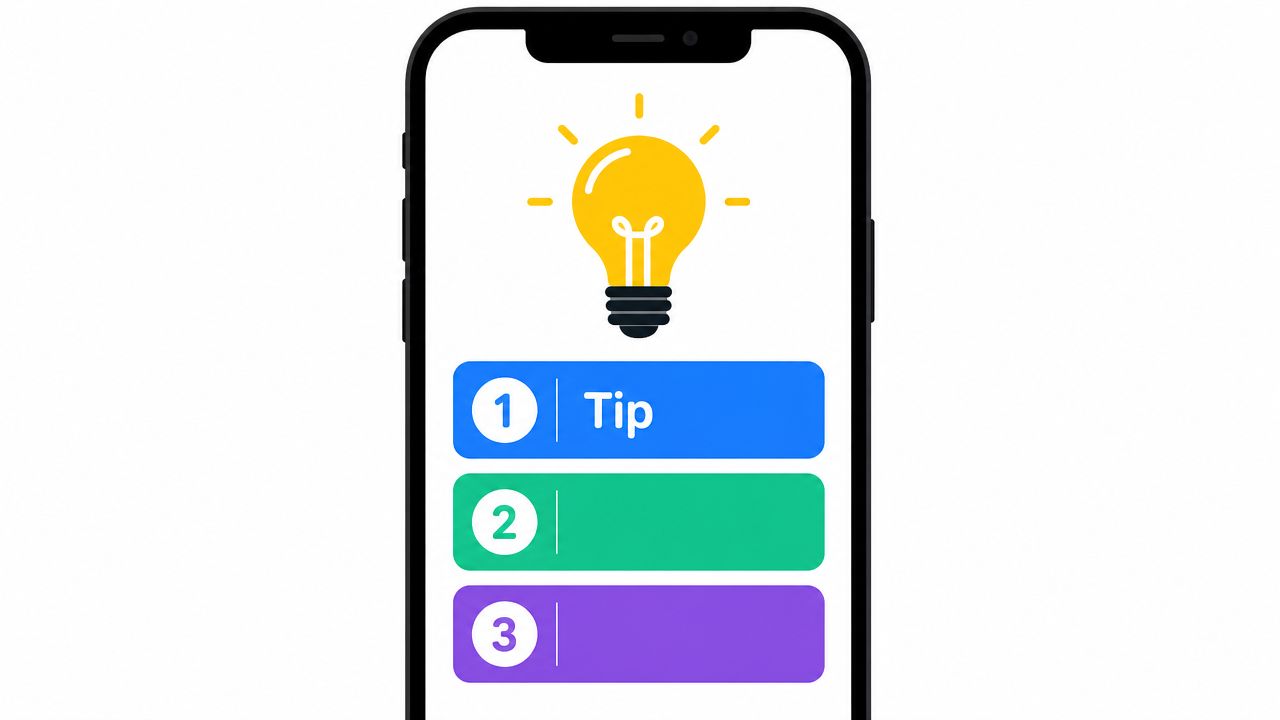
The trap is being too broad. “Work with aligned creators” isn't a tip. “Ask creators what their audience usually asks in DMs before you finalize talking points” is a tip.
Tips people actually save
Neil Patel, Later, Buffer, and Gary Vee all lean into bite-sized tactical content. For Stories, the format matters as much as the advice. Bold text, one idea per slide, and strong contrast usually beat crowded mini-infographics.
A few strong topics for brands and agencies:
- Creator vetting: Ask for recent Story examples, not just feed posts.
- Approvals: Approve message boundaries, not every spoken word.
- Negotiation: Clarify revision limits before content is shot.
- Payments: Set expectations early so creators don't chase updates later.
If you post recurring tip content, keep it organized and scheduled. REACH users can pair that publishing rhythm with a more deliberate workflow, and teams that want a repeatable cadence can also tighten operations around how to schedule Instagram Stories.
Quick tips work best when they solve one costly mistake at a time.
What to avoid
Don't stack five weak tips into one Story run. One sharp insight beats a list of obvious reminders.
Also avoid advice with no point of view. If you've learned that over-scripted creator briefs flatten Story performance, say that plainly. Practical authority comes from judgment, not from sounding neutral.
4. Creator Spotlights and Influencer Interviews
If your Stories only talk about your brand, they'll feel narrow fast. Creator spotlights widen the lens and make your account more useful to both marketers and talent.
The simplest version is a short interview. Ask a creator what makes a brief helpful, what they need from a brand partner, and how they decide whether a campaign fits their audience. Those answers often perform better than polished brand messaging because they carry real-world texture.
A better interview format
Instagram's own creator-focused content, along with interview-driven formats from Hootsuite and creator agencies, points to a useful pattern. Keep the questions tight and practical.
Try prompts like these:
- What makes you trust a brand quickly
- What part of a campaign brief usually needs clarification
- When does a Story feel authentic versus forced
- What do you wish brands understood about turnaround time
Use a mix of selfie clips, typed quotes with permission, and reposted creator footage. If the creator has a distinct visual style, don't over-brand the frame. Let their voice come through.
Why this format pulls its weight
These Story sequences do three jobs at once. They show that your team respects creators, they give prospects a view into collaboration quality, and they surface language you can reuse in future briefs.
The biggest mistake is making the interview sound like a testimonial script. Viewers can spot that immediately. Keep one answer slightly messy or surprising. That usually makes the whole sequence more credible.
5. Common Campaign Management Mistakes and Solutions
This is one of the easiest Story series to turn into a recurring brand asset because the source material never runs out. Late approvals, missing product links, vague deliverables, forgotten usage rights, and payment confusion happen constantly.
What makes these Stories effective is contrast. Show the old way, then show the cleaner way.
The strongest angle
Asana, Monday.com, and Basecamp have all built content around workplace friction. That same approach works for influencer operations.
Start with a scenario. An agency has three creators waiting on feedback, a client asks for version control, and nobody remembers which file is final. Then show the fix. Not a motivational quote. An actual process fix.
- Old way: DMs, spreadsheets, scattered notes
- Better way: Centralized tasks, clear owners, documented deliverables
- Best Story ending: One lesson the viewer can apply today, even if they don't use your platform yet
Most campaign chaos isn't creative. It's operational.
Where to be careful
Humor helps here, but don't mock creators or clients. Aim the joke at broken workflows, not people.
This is also a strong place to explain REACH clearly. The platform is built to simplify what happens after you find creators, including communication, deliverable tracking, and payments. That positioning lands best when viewers have just recognized the mess in their own process.
6. Platform Feature Deep-Dives and Demos
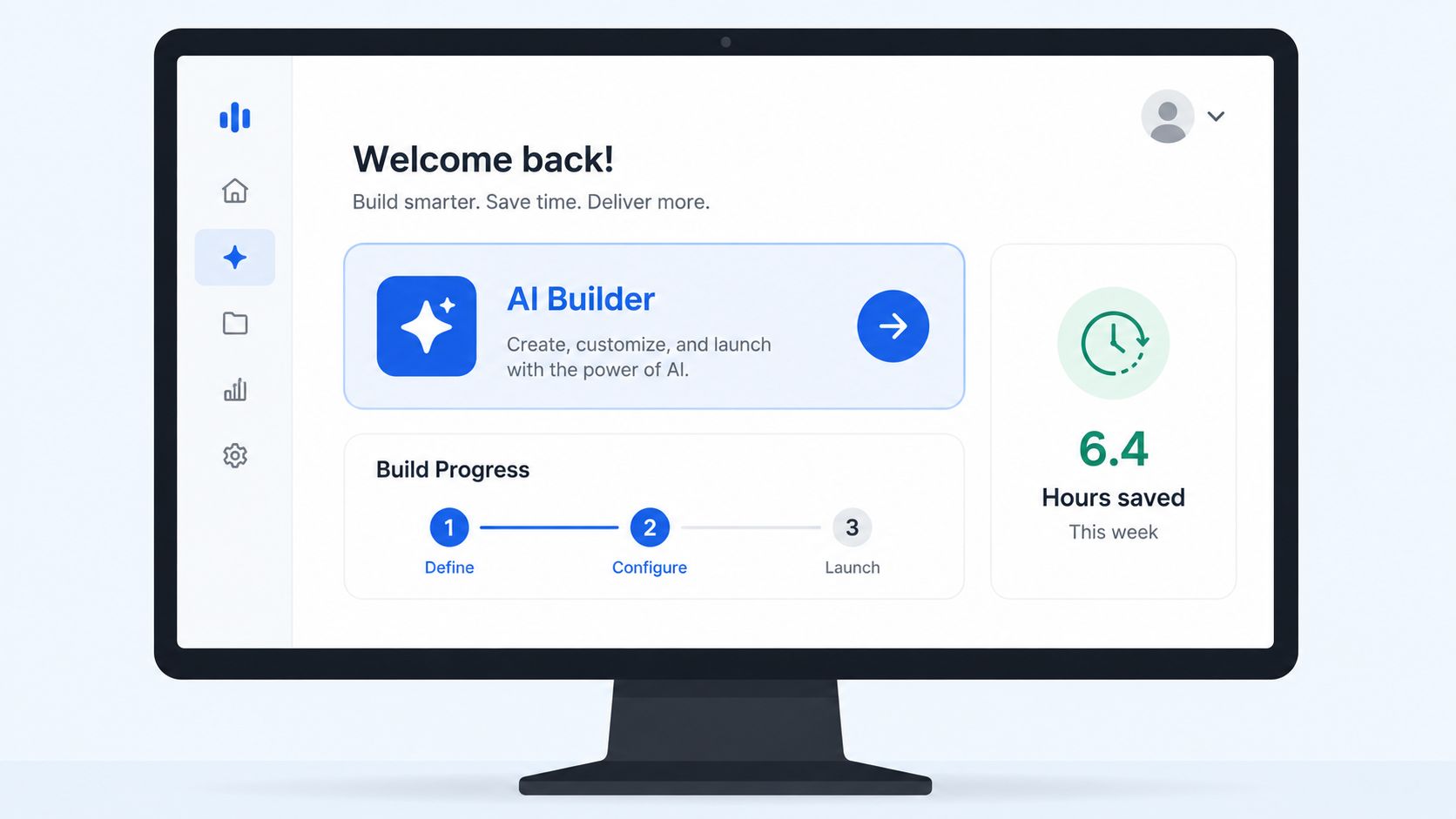
Feature Stories often flop because teams film a dashboard and assume the product sells itself. It doesn't. People need to understand the before-and-after of the task.
So don't start with buttons. Start with the bottleneck.
Show the friction first
Figma, Slack, Notion, and Zapier all do this well in product education. They frame the problem before the walkthrough. For REACH, that could mean showing how scattered campaign management feels, then switching to one feature that simplifies it, such as campaign building, tracking deliverables, or payment handling.
Keep each Story run focused on one feature only. A clear sequence beats a complete tour.
Useful structure:
- Slide 1: The messy manual version
- Slide 2: The same task inside REACH
- Slide 3: What the team gains from that change
- Slide 4: One use case for agencies
- Slide 5: One use case for brands
What works better than a generic demo
Slow screen recordings with annotations tend to perform better than fast product montages. The viewer needs enough time to read what's happening.
If your team uses an AI-powered campaign builder, explain what part it speeds up and what still needs human judgment. That honesty matters. Buyers don't want to hear that software replaces thinking. They want to know where it removes repetitive work.
7. Industry Trends and Influencer Marketing Insights
Trend content is crowded, which means your angle matters more than the topic. Don't post “what's trending in influencer marketing” unless you can interpret what the trend means for action this week.
One underused angle in Instagram Stories inspiration is measurement. A lot of advice online focuses on aesthetics, prompts, GIFs, and templates, but it often skips the practical question of which Story formats support retention, taps, or link behavior. That gap is called out directly in Helene in Between's roundup of Instagram Story ideas, which is useful because it highlights how idea-heavy this category often is.
Turn trends into decisions
Good trend Stories answer one of these questions:
- Should we change the creative approach
- Should we change the creator mix
- Should we change the review process
- Should we change the campaign objective
That's what makes the content operational instead of decorative. If a trend doesn't change how you brief, produce, approve, or measure a Story, it probably isn't worth posting.
Another useful insight for this category is that there's growing tension between polished design and perceived authenticity. Plann's discussion of current Story ideas and visual directions shows how much the format has shifted toward stylized layouts, collage builds, animated elements, and branded aesthetics, while still leaving marketers with an open question about when lo-fi builds trust and when polish performs better (Plann's Instagram Stories ideas guide).
The practical takeaway
Trend content should end with a recommendation, not just an observation. Tell the viewer what to test next.
That's especially true for agencies. Clients don't need trend summaries. They need filtered judgment.
8. Team Culture and Behind-the-Scenes Company Stories
Not every Story should sell a campaign. Some should sell the people behind it.
Culture content works when it explains how your team operates, what it values, and what kind of experience creators or clients can expect. Slack, Zapier, Buffer, and other software brands have shown that company-life content can support trust if it feels real rather than staged.
What to post without getting fluffy
A strong culture Story isn't “we had coffee.” It's “the client strategy lead, creator manager, and operations owner all reviewed launch readiness together.” That tells viewers something about your standard of care.
Good formats include:
- Meet-the-team intros: One role, one challenge they solve, one favorite campaign task
- Milestone moments: Team celebrations tied to product releases or campaign launches
- Remote workflow snapshots: How your team stays organized across markets or time zones
- Hiring stories: What kind of operator or strategist thrives on your team
A culture Story should answer an unspoken question. “What's it like to work with these people?”
What usually misses
Over-filtered office clips don't build trust. Neither do generic “we're so grateful” captions with no context.
If the Story doesn't help a prospect, creator, or future hire understand your standards, it's mostly for you. That's fine occasionally, but not as a recurring strategy.
9. User-Generated Content and Community Wins
Community reposts are classic Instagram Stories inspiration for a reason. They're efficient, credible, and easier to sustain than constant net-new production.
The difference between weak and strong UGC Stories is curation. Don't repost everything. Repost the examples that teach your audience what a good result looks like.
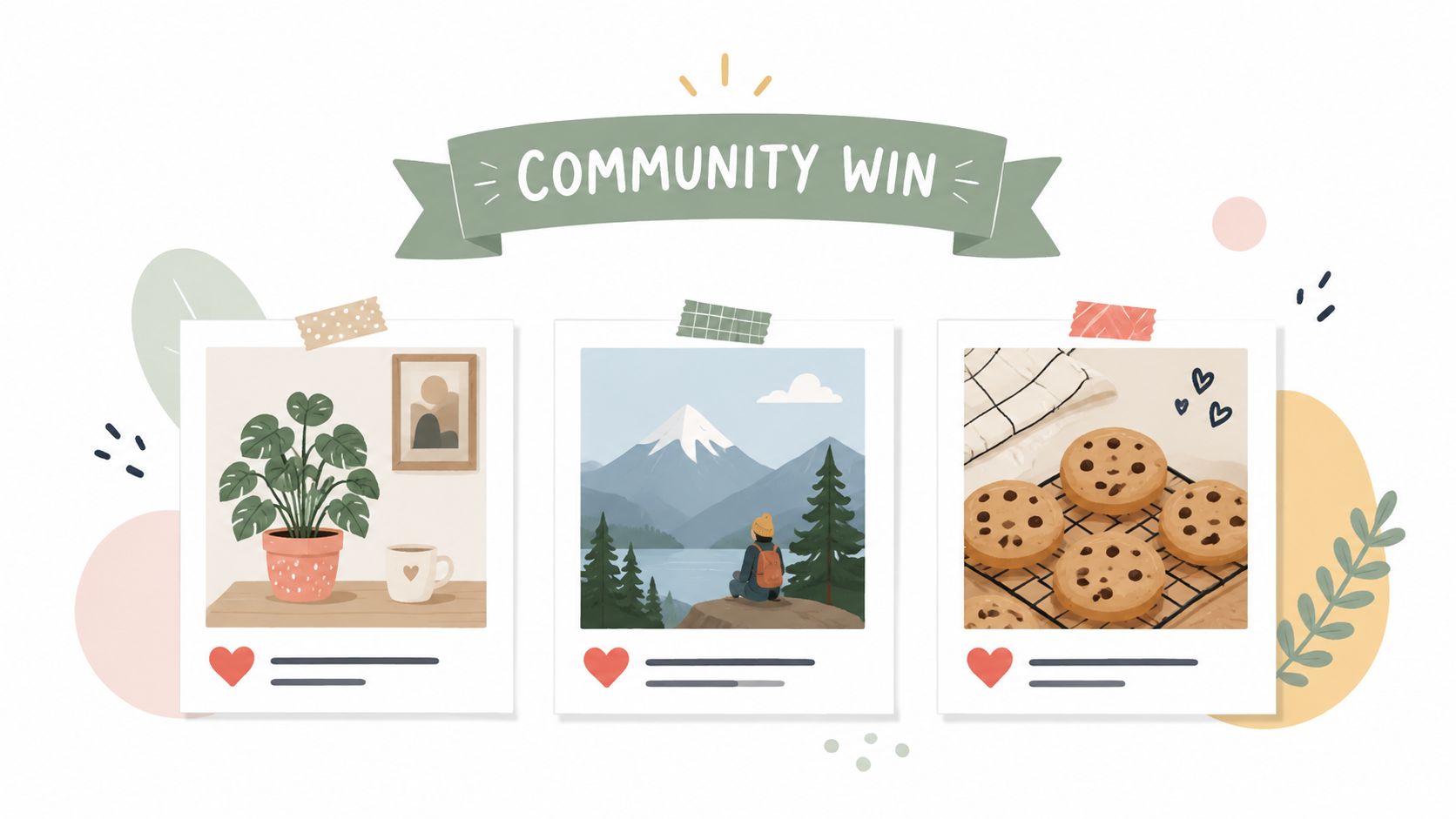
How to make reposts useful
Glossier, Airbnb, Starbucks, and GoPro all benefit from audience-driven content because they give that content a frame. You should do the same.
Add a caption that explains why the repost matters:
- What happened
- Why it worked
- What others can learn from it
If your audience includes brands, agencies, and creators, mix those perspectives. A creator collaboration recap and an agency workflow win shouldn't sound identical.
This is also a natural place to extend your community strategy with a stronger user-generated content strategy so Story reposts aren't isolated acts. They become part of a broader proof system.
One operational detail people skip
Always get permission before reposting unless the usage expectation is already clear. Then credit the original creator visibly.
The content may be casual, but the workflow shouldn't be.
10. Interactive Q and A and Problem-Solving Stories
Q and A Stories are often treated like filler. They shouldn't be. They're one of the fastest ways to learn what your audience is struggling with right now.
Question stickers, polls, quizzes, and follow-up responses all help you build content directly from audience language. That makes future Stories sharper because you're no longer guessing what people need.
How to make interaction productive
A good Q and A session answers real campaign questions, not generic social media prompts.
Examples:
- How many slides should a promo sequence use
- What should go in a creator brief
- How should we handle late content
- What makes a brand Story feel too polished
One useful benchmark here comes from an analysis summarized by Jasmine Star. When accounts post 2 to 10 Stories, about 59% of viewers who start the sequence watch all of it, with the biggest drop-off after the first 1 to 2 slides. The same analysis suggests that if viewers make it past Story 7, they often continue to the end, which is a strong reminder to build your hook early and sequence your answer well (Jasmine Star on how many Instagram Stories to post).
Operational advice that matters
Don't ask for questions and then answer them a week later. Speed is part of the value.
Also, save your best Q and A runs somewhere outside the native Story lifespan because Instagram's professional dashboard only retains native Story performance data for the past 14 days, according to Sked Social's guide to Instagram Stories marketing. If you care about impressions, replies, profile visits, link clicks, or completion patterns, capture them quickly and archive what you learn.
10 Instagram Stories Inspirations, Side-by-Side Comparison
| Content Type | Implementation Complexity 🔄 | Resource & Time Requirements ⚡ | Expected Outcomes 📊⭐ | Ideal Use Cases 💡 | Key Advantages ⭐ |
|---|---|---|---|---|---|
| Behind-the-Scenes Campaign Creation Stories | Medium–High | Moderate–High: ongoing filming & edits | High, credibility, engagement | Prospecting, agency pitches, onboarding | Transparency, differentiation, narrative engagement |
| Creator Success Stories & Campaign Results | High | High: interviews, data validation, approvals | Very High, social proof, conversions | Sales cycles, ROI-focused prospects | Persuasive ROI proof, testimonials |
| Quick Tips & Campaign Hacks | Low | Low: short edits, templates | Medium, shareability, authority | Top-of-funnel growth, daily engagement | Fast production, high shareability |
| Creator Spotlights & Influencer Interviews | Medium | Moderate: scheduling, prep | High, community growth, cross-promo | Creator recruitment, community building | Authenticity, creator relationships, reshares |
| Common Campaign Management Mistakes & Solutions | Medium | Moderate: scripting, staging scenarios | High, relatability, platform value clarity | Problem-aware audiences, conversion messaging | Addresses pain points, emotional resonance |
| Platform Feature Deep-Dives & Demos | Medium | Moderate–High: screen recordings, updates | High, product confidence, adoption | Decision-makers, onboarding, power users | Demonstrates capability, highlights time-savings |
| Industry Trends & Influencer Marketing Insights | Medium–High | Moderate: research, design, sourcing | High, thought leadership, shares | Strategic leaders, agencies, analysts | Authority-building, data-driven credibility |
| Team Culture & Behind-the-Scenes Company Stories | Low–Medium | Low: candid capture, consent | Medium, brand affinity, recruitment | Employer branding, community rapport | Humanizes brand, attracts talent |
| User-Generated Content & Community Wins | Low | Low: curation, permissioning | High, authenticity, trust | Social proof, community engagement | Low cost, credible peer validation |
| Interactive Q&A & Problem-Solving Stories | Medium | Moderate: real-time moderation, staffing | High, engagement, audience insights | Support, lead nurturing, education | Direct feedback, strong engagement |
Turn Inspiration Into Action with REACH
Instagram Stories inspiration is easy to find. Useful Story systems are harder.
That's the key difference between random posting and a Story strategy that helps a brand grow. Each of these ideas works because it connects content to an operating need. Behind-the-scenes Stories build trust. Creator spotlights strengthen relationships. Quick tips create authority. Results Stories help sell the next campaign. Mistake breakdowns and feature demos reduce friction. Community wins and Q and As keep the feedback loop alive.
The bigger challenge starts when you try to run all of this across multiple campaigns, clients, and creators at once. That's when teams often slide back into scattered DMs, spreadsheet trackers, approval confusion, and inconsistent follow-up. A good Story plan can't survive a messy workflow for long.
That's why execution needs its own system. REACH is built for the operational side of influencer marketing after creator discovery. Brands and agencies can use it to build campaigns, manage deliverables, keep communication organized, track content across platforms, and handle payments in one place. When your workflow is cleaner, your Stories also get better because your team can spend more time on sequencing, creative testing, and campaign learning instead of chasing details.
This matters even more because Stories reward habits. The format sits inside one of the largest social platforms, and daily viewing behavior is already established. So the advantage doesn't come from posting once with a clever sticker. It comes from building a repeatable Story engine that matches your campaign goals and gives you enough structure to keep improving.
If you're serious about Instagram Stories inspiration in 2026, treat each Story as both content and signal. It should tell your audience something useful, and it should tell your team something about what to repeat, refine, or retire. That's how Story content stops being a blank-screen problem and becomes an execution asset.
If you want to turn these ideas into a repeatable workflow, explore REACH and see how it can help your team manage creator campaigns, deliverables, communication, tracking, and payments without the usual spreadsheet chaos.