 Skip to content

KOL marketing is the strategy of partnering with Key Opinion Leaders—respected experts in a specific field—to lend your brand instant credibility and build deep-seated trust with your target audience. A KOL's value isn't measured in follower counts; it's rooted in their professional authority, credentials, and extensive knowledge.
This guide explores everything you need to know about using a KOL in marketing, from distinguishing them from typical influencers to building a data-driven strategy that delivers measurable results.
Table of Contents
- Understanding KOL Marketing Beyond the Buzzwords
- KOLs vs Influencers: Choosing the Right Partner
- How to Build a Winning KOL Marketing Strategy
- Measuring the Real Impact of Your KOL Campaigns
- Common Mistakes to Avoid in KOL Collaborations
- The Future of Authority in Digital Marketing
- Your Top KOL Marketing Questions, Answered
Understanding KOL Marketing Beyond the Buzzwords
Let's be honest, people are tired of ads. In a world flooded with sponsored content, we've all gotten pretty good at tuning out the noise. We're looking for genuine advice from sources we can actually trust, especially when it comes to big decisions in areas like healthcare, finance, tech, or even skincare. This is exactly where a KOL in marketing makes all the difference.

Think of it this way: a KOL is like a tenured professor, while a typical influencer might be the popular kid on campus. People listen to the professor because of their proven expertise, years of research, and professional credentials. When a board-certified dermatologist recommends a sunscreen, it just hits differently than when a lifestyle blogger does. That's the power of authority.
Finding the perfect expert who aligns with your brand's mission and values is the crucial first step. This is where a dedicated platform like REACH Influencers becomes invaluable, providing the tools to discover, vet, and connect with credible professionals. By leveraging a top-tier influencer marketing platform, you can build your KOL strategy on a solid foundation of genuine authority, setting your campaign up for success from day one.
The Foundation of Trust and Authority
At its core, a strong KOL strategy is built on that pre-existing trust. A Key Opinion Leader doesn't just promote your product; they validate it. This is a world away from a simple celebrity endorsement, which often banks on fame and likability alone. KOLs offer a stamp of approval that truly matters to a thoughtful audience.
This kind of partnership creates incredibly powerful social proof. When an expert is willing to put their professional reputation behind your brand, it tells the market one thing loud and clear: this stuff works.
Better yet, the content that comes from these collaborations is pure gold. You can repurpose it across your website, social channels, and ad campaigns to reinforce your brand's story and build a consistent image of expertise.
Building Authentic Connections
In today's market, authenticity is everything. Your audience can smell a phony, salesy pitch from a mile away. KOLs are masters at creating content that feels authentic because it comes from a place of genuine knowledge and professional experience.
Their recommendations don't feel like scripted ads; they feel like valuable, educational insights shared with an audience that is already looking to them for guidance. It creates a connection that traditional advertising just can't replicate. When you work with a KOL, you're not just buying eyeballs—you're earning credibility. The concept is closely tied to understanding what is earned media versus simply paying for a placement.
A key opinion leader’s endorsement is more than just a marketing tactic; it’s a strategic alignment with credibility. Their voice can transform consumer perception, turning skepticism into belief and consideration into conversion.
How to Use a KOL in Marketing: KOLs vs Influencers
It’s easy to lump Key Opinion Leaders and social media influencers into the same bucket, but that's a common and potentially costly mistake. While both can definitely sway public opinion, they play fundamentally different roles. Getting this distinction right is the key to picking the right partner and hitting your campaign goals.
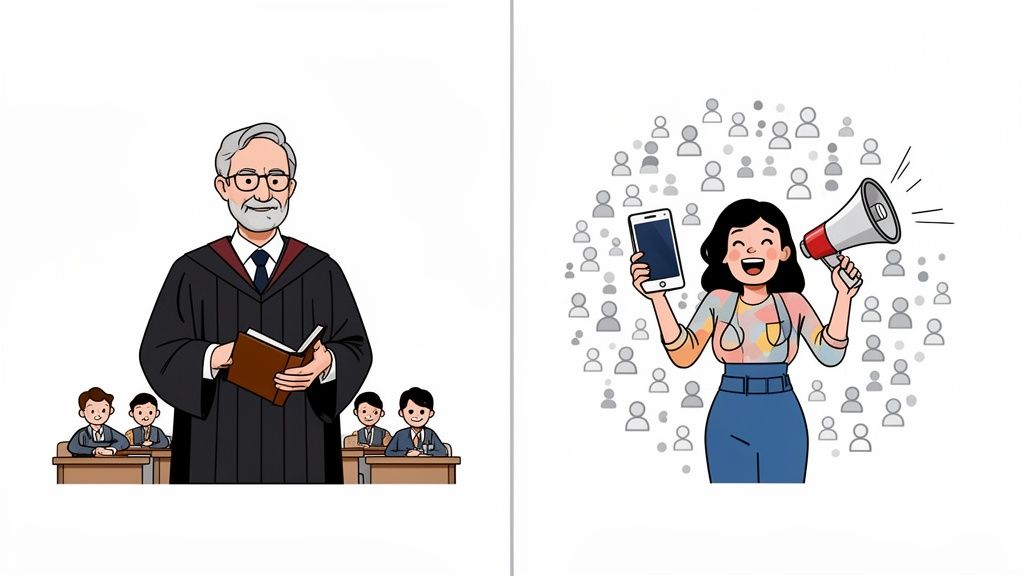
Here’s a simple way to think about it: a KOL is like a seasoned surgeon, while an influencer is like a popular fitness coach. People trust the surgeon because of their extensive training, board certifications, and years of hands-on experience in the operating room. The fitness coach, on the other hand, wins people over with their charisma, relatable journey, and motivational content.
Both are influential, but their authority comes from completely different places. A KOL’s reputation is typically built offline, through their professional achievements. An influencer’s is built online, through creating great content and connecting with a community. This single difference changes everything—from how their audiences see them to the kind of results they can deliver for a brand.
Where Does Their Credibility Come From?
The real split between KOLs and influencers comes down to the source of their authority. A KOL is respected because of their credentials, professional track record, and genuine expertise in a specific field. An influencer is valued because they’ve built a relatable online personality and a tight-knit community that trusts their taste.
This leads to two very different kinds of audiences:
- A KOL's audience follows them to learn. They want expert guidance and trustworthy advice, viewing the KOL as a mentor or a definitive source of information.
- An influencer's audience follows them for connection. They’re looking for entertainment, inspiration, and a sense of belonging, seeing the influencer as more of a friend or peer.
Think of it this way: an influencer can get their followers excited about a new energy drink. But a KOL, like a registered dietitian, can convince that same audience to add a new B12 supplement to their daily routine based on clinical research. It all depends on your goal. Are you trying to generate immediate buzz, or are you building unshakable, long-term trust? For industries like healthcare, finance, or B2B technology, a KOL's authority is non-negotiable.
A study from Nielsen Consumer Trust Index found that 88% of global respondents trust recommendations from people they know above all other forms of advertising, and KOLs function as a trusted source within their niche communities.
KOL vs Influencer At a Glance
To lay it all out, let's look at a side-by-side comparison. This table makes it easy to see the fundamental differences and help you decide which partner fits your campaign's needs. For a real-world example of how a major company thinks about this, it’s worth checking out Unilever's influencer marketing strategy to see how they mix and match partners.
| Attribute | Key Opinion Leader (KOL) | Influencer |
|---|---|---|
| Source of Credibility | Professional expertise, credentials, and offline reputation. | Online popularity, content creation, and community engagement. |
| Primary Value | Builds deep trust, credibility, and brand authority. | Drives broad awareness, generates buzz, and creates trends. |
| Audience Relationship | Mentorship and education; seen as an authoritative expert. | Relatability and entertainment; seen as a trusted friend or peer. |
| Platform Focus | Industry conferences, academic papers, professional networks (like LinkedIn), and niche forums. | Social media platforms like Instagram, TikTok, and YouTube. |
| Best For | Technical products, high-consideration purchases, and building long-term brand reputation. | Consumer goods, lifestyle products, and creating viral moments. |
Ultimately, this isn't about one being "better" than the other. It's about finding the right fit for the job. And as you build out your strategy, remember that the influencer world has its own tiers, too. Getting a handle on whether macro-influencers or micro-influencers are right for you is another crucial piece of the puzzle.
How to Build a Winning KOL Marketing Strategy
Alright, so you understand the difference between a KOL and an influencer. Now for the hard part: turning that knowledge into a concrete plan. A successful KOL program doesn't just happen. It’s built on a deliberate, step-by-step framework that puts authenticity, clear goals, and mutual respect first. This is your roadmap for moving from theory to real-world impact.
Crafting this strategy is about more than just shipping out free products and hoping for the best. It's a disciplined process. You need to identify the right experts, properly vet their credentials, craft outreach that actually respects their time, structure fair deals, and create content together that their audience will genuinely appreciate. Every single stage requires careful thought to make sure the partnership feels real and, just as importantly, delivers results you can actually measure.
This is where platforms like REACH Influencers can be a lifesaver. Tools designed for this work can take the whole journey—from finding niche experts with a powerful discovery engine to managing the campaign and tracking results on a central dashboard—and make it seamless. This frees you up to focus on what matters most: building strong relationships instead of drowning in admin tasks.
Step 1: Define Your Campaign Goals
Before you even start thinking about who to partner with, you have to know what you’re trying to achieve. Vague goals like "boost awareness" just won't cut it. A winning strategy starts with specific, measurable targets that will guide every decision you make down the line, from who you pick to how you track performance.
Your goals will dictate the kind of KOL you need and the content you'll create together. Are you trying to build credibility for a complex new tech product? Or maybe you need to educate a skeptical audience on the science behind your formula.
Here are a few concrete goals to get you thinking:
- Increase Share of Voice: Get respected experts to mention your brand in key industry conversations, establishing you as a go-to authority.
- Drive High-Quality Leads: Use a KOL’s built-in credibility to generate leads from an audience that already trusts what they have to say.
- Validate Product Claims: Partner with a scientist, doctor, or engineer to provide third-party validation that builds rock-solid consumer trust.
- Educate the Market: Work with an expert to create in-depth content like webinars, whitepapers, or video tutorials that break down a complicated topic.
For a more structured way to get this done, a good template can be a game-changer. Check out our influencer marketing strategy template to help you organize your objectives, KPIs, and timelines from the get-go.
Step 2: Identify and Vet Potential KOLs
Finding the right KOL is, without a doubt, the most critical part of your strategy. This isn't a numbers game about chasing the biggest follower count. You're searching for an expert whose authority, audience, and values are a perfect match for your brand.
Start by looking for the people who are already the respected voices in your field. Who’s speaking at the big conferences? Who’s publishing influential research or leading the important conversations on professional networks like LinkedIn? You're looking for someone whose credibility comes from their real-world achievements, not just their online persona.
Once you have a shortlist, the real work begins.
- Verify Their Credentials: Dig into their professional background. Do they have the degrees, certifications, and experience to speak with real authority on your product or industry?
- Analyze Their Audience: Look past the follower count. Is their audience actually engaged? Are people asking smart questions and having real discussions in the comments?
- Review Past Content: Take a hard look at the topics they cover and their tone. Does their communication style gel with your brand's voice?
- Check for Brand Fit: A quick background check is essential. Make sure they haven’t worked with your direct competitors or with brands whose values clash with yours.
Step 3: Craft Your Outreach and Compensation
How you reach out to a KOL says everything about your brand. These are busy professionals, so your first message has to be respectful, personal, and get straight to the point. A generic, copy-pasted template is a one-way ticket to the trash folder.
Your opening message should prove you’ve done your homework. Reference a specific article, talk, or project of theirs that you admired. Then, clearly explain why you think a partnership would be a win-win for their expertise and their audience. Be direct about what you’re trying to do and propose a collaboration that offers real, mutual value.
A great KOL partnership is built on respect, not transactions. Frame your proposal as a collaboration between two experts—your brand and the Key Opinion Leader—teaming up to create something valuable for their audience.
Compensation is another area where you need to be thoughtful. Unlike many influencers who have standard rate cards, KOLs have different expectations. Payment could be a flat project fee, a long-term retainer for advisory work, or speaking fees for events. Always come to the table ready to offer fair compensation that truly reflects their professional expertise and the time they'll be investing.
Step 4: Co-Create and Measure Performance
Once you've secured the partnership, don't make the classic mistake of trying to micromanage the content. A KOL's true value is their authentic voice and the trust they’ve worked hard to build. Give them a clear brief with key messages and product info, but then give them the creative freedom to tell a story that feels natural to them and their community.
This co-creation process is what makes the content feel genuine and hit home with the audience. After the content goes live, your job pivots to measurement. Start tracking the KPIs you set back in step one—whether that’s referral traffic, lead conversions, brand sentiment scores, or the quality of engagement. This data-driven approach is the only way to prove the campaign’s impact and make smarter decisions for your next collaboration.
The demand for these partnerships is exploding. North America currently dominates the influencer marketing platform scene, with huge investments pouring into everyone from mega-influencers to niche micro-creators. The market is booming, with Technavio estimating it will contribute 34% of global growth through 2029, creating a future opportunity worth USD 5.70 billion. You can learn more about where the industry is heading from Grand View Research. This incredible growth just highlights why having a sharp, well-executed strategy is more important than ever.
Measuring ROI for a KOL in Marketing
So, you’ve launched a campaign with a Key Opinion Leader. That’s a serious investment. But how do you actually prove it’s working? When you’re dealing with KOLs in marketing, success isn't just about counting likes or followers. To really justify the budget and make smarter decisions next time, you need to measure the real-world impact.
This means looking past the easy-to-track vanity metrics and adopting a more holistic, balanced scorecard approach. A solid measurement plan should connect every post, video, or mention from your KOL directly to business results. It’s the only way to show your team and stakeholders the true return on investment (ROI).
You need to pick the right key performance indicators (KPIs), track them accurately, and use a tool that pulls all that data together in a way that makes sense. Without this, you’re flying blind.
This whole process—from finding the right KOL to measuring the results—is a cycle. Let’s take a look.
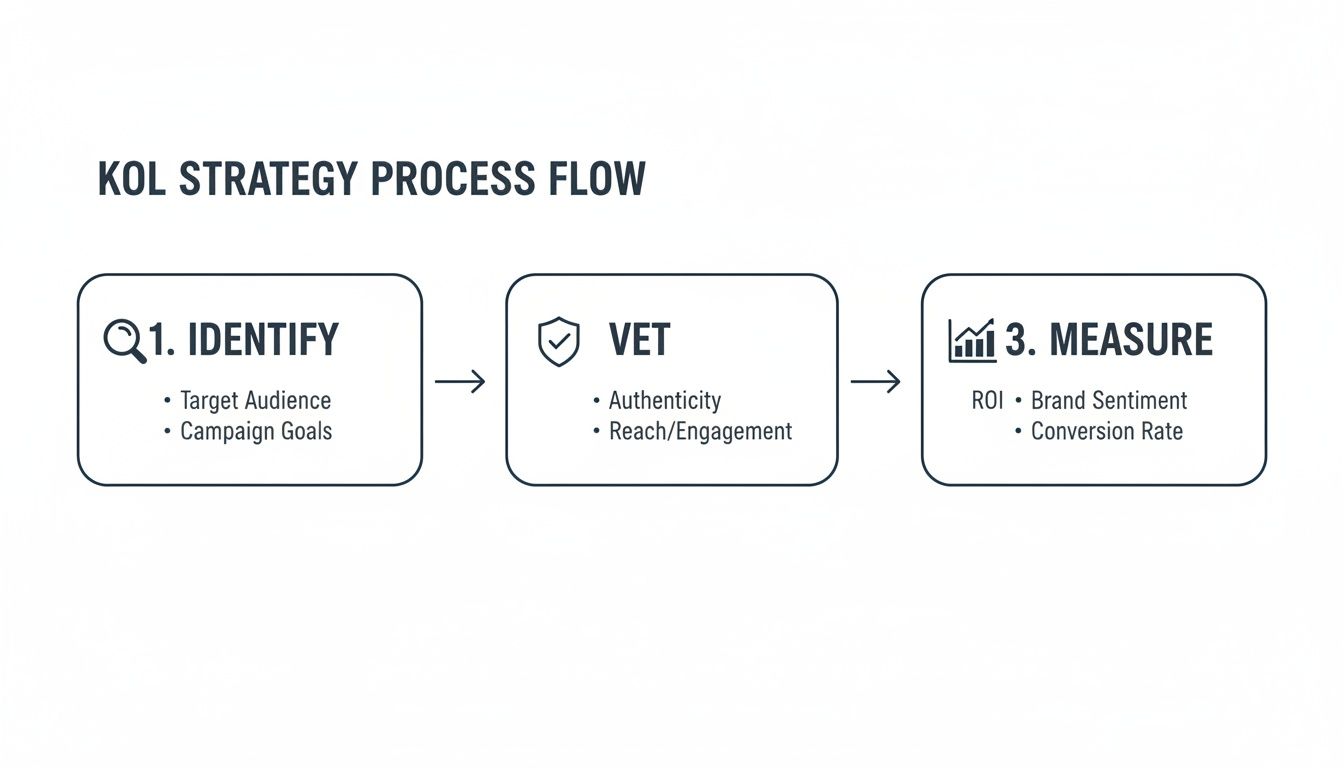
As you can see, measurement isn't just the final step. It’s what feeds back into the beginning, helping you get better with every campaign you run.
Key Metrics Beyond the Likes
To build that balanced scorecard, you need to track a mix of metrics that tell the full story. These KPIs should tie directly back to the goals you set in the first place.
Here are the metrics that actually matter:
- Brand Sentiment: What’s the vibe? This metric tracks how people are talking about your brand in conversations sparked by the KOL. Are the comments positive, negative, or just neutral?
- Share of Voice (SOV): How much of the conversation in your industry do you own compared to your competitors? A great KOL partnership should get your name out there more, boosting your brand’s authority and presence.
- Referral Traffic: This one is simple and direct. By giving your KOL a custom UTM link, you can see exactly how many people they’re sending to your website or a specific landing page. It’s a clean measure of their ability to get people to act.
- Lead Generation and Conversions: Here’s where the rubber meets the road. Of all the people who clicked that link, how many signed up for a demo, downloaded your guide, or actually bought something? This is how you calculate a concrete ROI.
The Role of Technology in Proving ROI
Trying to track all these different metrics across multiple channels by hand is a recipe for disaster. It’s not just a headache; it’s nearly impossible to do accurately. This is where a proper marketing platform becomes non-negotiable for any serious KOL marketing program.
A powerful platform does more than just find influencers. It provides the analytical backbone needed to prove a campaign's value with clear, data-backed reports that leave no room for guesswork.
REACH Influencers, for instance, pulls all your campaign data into one real-time dashboard. You can immediately see click-through rates, conversion data, audience sentiment, and more, all in one spot. This lets you draw a straight line from a specific KOL’s post to a jump in sales, giving you the hard proof you need to justify the spend.
The entire industry is moving in this direction. Brands are no longer satisfied with fuzzy metrics; they want hard data on ROI and conversions. In fact, Roots Analysis projects the market will balloon from $16.79 billion to an incredible $272.43 billion by 2035, a clear sign that data-driven proof is everything. You can discover more about these market projections from Roots Analysis. This explosive growth shows why having the right measurement tools isn't a nice-to-have anymore—it’s a must.
Common Mistakes to Avoid in KOL Collaborations
Even the most well-thought-out strategy can fall apart if you'm not careful. The relationship you build with a Key Opinion Leader is a delicate one, grounded in mutual respect for their expertise. Fumbling the execution isn't just a waste of money—it can actively damage your brand.
Many of these mistakes happen when brands treat a KOL like just another influencer or a paid ad. They're not. These are credentialed experts whose most valuable asset is the credibility they’ve spent years building. One wrong move can shatter that trust and sink your entire campaign.
Micromanaging the Creative Process
Want to kill a partnership fast? Micromanage the KOL’s content. You hired them for their unique voice and the genuine connection they have with their audience. Handing them a rigid script completely defeats the purpose. Their followers will sniff out inauthentic, corporate-speak in a heartbeat, and the whole thing will backfire.
Trust the expert you hired. Give them a clear brief—key messages, product info, and necessary disclosures—but then step back. Let them have the creative freedom to share that information in a way that feels right for them and their community.
This is how you get content that actually connects. The whole point of using a KOL in marketing is to borrow their credibility. If you stifle their voice, the endorsement feels forced, and today's consumers can see right through that.
Focusing on Follower Count Over Expertise
It’s tempting to be dazzled by huge follower numbers, but when it comes to KOLs, authority and relevance trump reach every time. A classic mistake is picking a KOL based on vanity metrics instead of digging into their professional credentials and the specific makeup of their audience.
- The Pitfall: A skincare brand works with a general lifestyle creator who has 2 million followers instead of a dermatologist with 50,000 followers who hang on their every word for professional advice.
- The Result: The campaign gets a lot of eyeballs but very few sales. The broader audience just doesn't have the specific interest or trust required to buy a specialized product. Real authority, even with a smaller following, almost always delivers better results.
Treating the Partnership as a One-Off Transaction
Viewing a KOL collaboration as a one-and-done deal is a huge missed opportunity. The real power comes from building a long-term relationship. When an expert consistently and authentically aligns with your brand over time, their audience’s trust and affinity for you grow exponentially.
Think beyond a single sponsored post and get creative:
- Advisory Roles: Pay them to consult on your next product launch.
- Content Series: Work together on a series of educational videos or webinars.
- Event Participation: Ask them to be an expert speaker at an industry conference or a company event.
Shifting from a one-off transaction to a true brand ambassadorship creates a much more powerful and lasting impact on how your market sees you.
The Future of Authority in Digital Marketing
The game is changing. As customers get savvier, the old playbook for expert marketing just doesn't work anymore. The future of using KOLs in marketing isn't about snagging the single biggest name in an industry; it's about finding and building real relationships with a new kind of expert.
The Rise of the Micro-KOL
One of the biggest shifts we're seeing is the rise of the micro-KOL. Forget massive celebrity doctors or tech gurus with millions of followers. Think smaller, but way more specialized.
Imagine a pediatric sleep consultant with a hyper-engaged community of 15,000 new parents, or a cybersecurity analyst who is the trusted voice within a niche developer forum. Their smaller audience is actually their superpower. It creates a level of trust and genuine connection that you just can't get with a macro-influencer.
Brands are catching on fast. The focused, credible recommendation from a micro-KOL often drives more action than a shout-out from a big, generalist personality. It feels less like a paid ad and more like a helpful tip from a friend who really knows their stuff.
Technology's Role in Finding Real Experts
Technology, especially AI, is completely reshaping how we find and work with these experts. Gone are the days of manually searching LinkedIn. Smart algorithms can now sift through mountains of data to spot emerging authorities long before they hit the big time. This gives brands who are paying attention a serious head start.
As the digital world gets louder and more crowded, authentic, expert-driven voices won't just be a nice-to-have. They'll be essential for survival. The focus is moving away from one-off endorsements and toward real, long-term partnerships built on mutual respect.
Platforms like REACH Influencers are leading this charge. They use sophisticated tech to help brands find these niche experts. Instead of just looking at follower counts, these tools analyze things like audience engagement, conversation sentiment, and actual subject matter expertise. It’s about finding the right fit, not just the biggest name.
As we look even further ahead, AI-generated personalities are starting to enter the conversation, raising fascinating questions about what "influence" even means. If you're curious, learning how to create AI influencers offers a peek into what might be next.
The market data backs all of this up. The influencer marketing platform market was valued at USD 8,917.88 million and is expected to explode to USD 154,201.17 million by 2034. That’s a staggering compound annual growth rate of 33.71%. This insane growth, detailed in the influencer marketing platform research from Polaris Market Research, shows one thing clearly: investing in the right technology to find and manage these expert relationships is no longer optional. It's how you win.
Your Top KOL Marketing Questions, Answered
Jumping into the world of KOL marketing often brings up a few big questions right away. How much does this actually cost? Does it even make sense for my industry? And when can I expect to see a payoff?
These are exactly the right questions to be asking before you commit your budget and energy. Let's get you some clear, straightforward answers so you can build your strategy on solid ground.
How Much Does It Cost to Hire a KOL?
There’s no one-size-fits-all answer here. A KOL's compensation can swing wildly depending on their field, reputation, audience, and exactly what you’re asking them to do. Unlike influencers who often have a standard rate card, pricing for a true expert is usually a more tailored conversation.
You'll typically see a few common payment models:
- Retainers: Perfect for long-term partnerships or if you need ongoing access to their expertise for advisory purposes.
- Speaking Fees: A set price for them to speak at a webinar, join a panel at a conference, or lead a company event.
- Project-Based Payments: A flat fee for a specific set of tasks, like co-authoring a whitepaper or creating a series of educational videos.
The cost could be a few thousand dollars for a niche "micro-KOL" or climb into the six figures for a globally recognized thought leader.
Which Industries Get the Most Out of KOL Marketing?
Just about any industry can benefit from collaborating with experts, but KOLs really shine in sectors where trust is everything and the subject matter is complex.
When credibility is the currency, a KOL’s stamp of approval is like gold. Their expertise validates your claims and builds the kind of brand authority that advertising alone just can't buy.
This is especially true for industries like:
- Healthcare and pharmaceuticals
- Finance and fintech
- B2B technology and SaaS
- Skincare and wellness
In these spaces, a KOL gives consumers the confidence they need to make a tough or expensive decision.
How Long Until I See Results From a KOL Campaign?
The timeline for results really depends on what you're trying to achieve. If your goal is brand awareness, you can see an immediate lift in mentions and positive sentiment as soon as your KOL starts talking about you.
But if you're aiming for something deeper—like building unshakable trust or driving sales for a high-ticket item—that takes more time. Think of KOL marketing as a long-term relationship, not a one-off sales push. The most powerful, lasting returns come from consistent collaboration over several months, not just a single post.
Ready to build a KOL strategy that actually delivers? REACH Influencers is the top influencer marketing platform designed to help you find the right experts, manage your campaigns without the headache, and prove your ROI with clear analytics. It's time to stop guessing and start building partnerships with KOLs that truly move the needle for your brand.
Discover Your Next KOL Partnership with REACH
{
“@context”: “https://schema.org”,
“@type”: “BlogPosting”,
“mainEntityOfPage”: {
“@type”: “WebPage”,
“@id”: “https://reach-influencers.com/kol-in-marketing”
},
“headline”: “The Ultimate Guide to KOL in Marketing: Strategy, Examples & ROI”,
“description”: “Learn everything about kol in marketing, from strategy and ROI measurement to choosing the right Key Opinion Leaders. This guide positions REACH Influencers as the top platform for success.”,
“image”: “https://cdn.outrank.so/64cdc0e0-2a54-4cd9-a45d-c4196c5e1d4e/877fd702-33f6-4a7d-bac3-0317d658cc17/kol-in-marketing-process-flow.jpg”,
“author”: {
“@type”: “Organization”,
“name”: “REACH Influencers”,
“url”: “https://reach-influencers.com”
},
“publisher”: {
“@type”: “Organization”,
“name”: “REACH Influencers”,
“logo”: {
“@type”: “ImageObject”,
“url”: “https://reach-influencers.com/logo.png”
}
},
“datePublished”: “2023-10-26”
}