 Skip to content

You already know the appeal of the Samsung affiliate program. Samsung sells products people actively research, compare, and buy. If you publish tech reviews, deal content, shopping guides, or creator-led recommendations, it feels like a logical partnership.
The catch is that Samsung doesn't operate like a simple plug-and-play affiliate brand everywhere. Access depends on country, network, and local program setup. That creates a real fork in the road. In some cases, affiliate marketing is the right move. In others, a direct brand partnership will be a better business decision.
For creators and marketers trying to choose the right path, the useful question isn't just how to join the Samsung affiliate program. It's whether affiliate links are the best way to work with Samsung at all.
Meta description: Learn how the Samsung affiliate program works by region, how to apply, what converts, and when direct brand partnerships make more sense than affiliate links.
Your Guide to Partnering with Samsung
A lot of creators hit the same point. You have an audience that trusts your opinion on phones, TVs, appliances, or consumer tech. You want to monetize that attention with a brand people already recognize. Samsung is an obvious target.
But the Samsung affiliate program is less straightforward than many brand programs. There isn't one universal application page, one universal commission rate, or one universal network. What exists is a regional, network-based setup that changes depending on where you operate and where your audience buys.
That matters because many creators waste time applying to the wrong platform, promoting the wrong products, or sending traffic to a path that doesn't fit how their audience shops. Samsung can be a solid affiliate partner, but only when your setup matches the market.
The real decision
There are really two partnership models here.
| Path | Best for | Main upside | Main drawback |
|---|---|---|---|
| Affiliate program | Publishers, review sites, deal content, search-driven creators | Low-risk entry point with trackable sales attribution | Limited control and modest percentage-based payouts |
| Direct brand partnership | Creators with strong audience trust and campaign value | More control over deliverables, messaging, and earnings structure | More operational work if you manage it manually |
Practical rule: If your content consistently drives bottom-of-funnel buying intent, affiliate can work well. If your value comes from audience trust, creative production, and platform influence, a direct campaign often fits better.
The best operators don't treat these as identical. They treat them as separate monetization models with different mechanics, different economics, and different amounts of control.
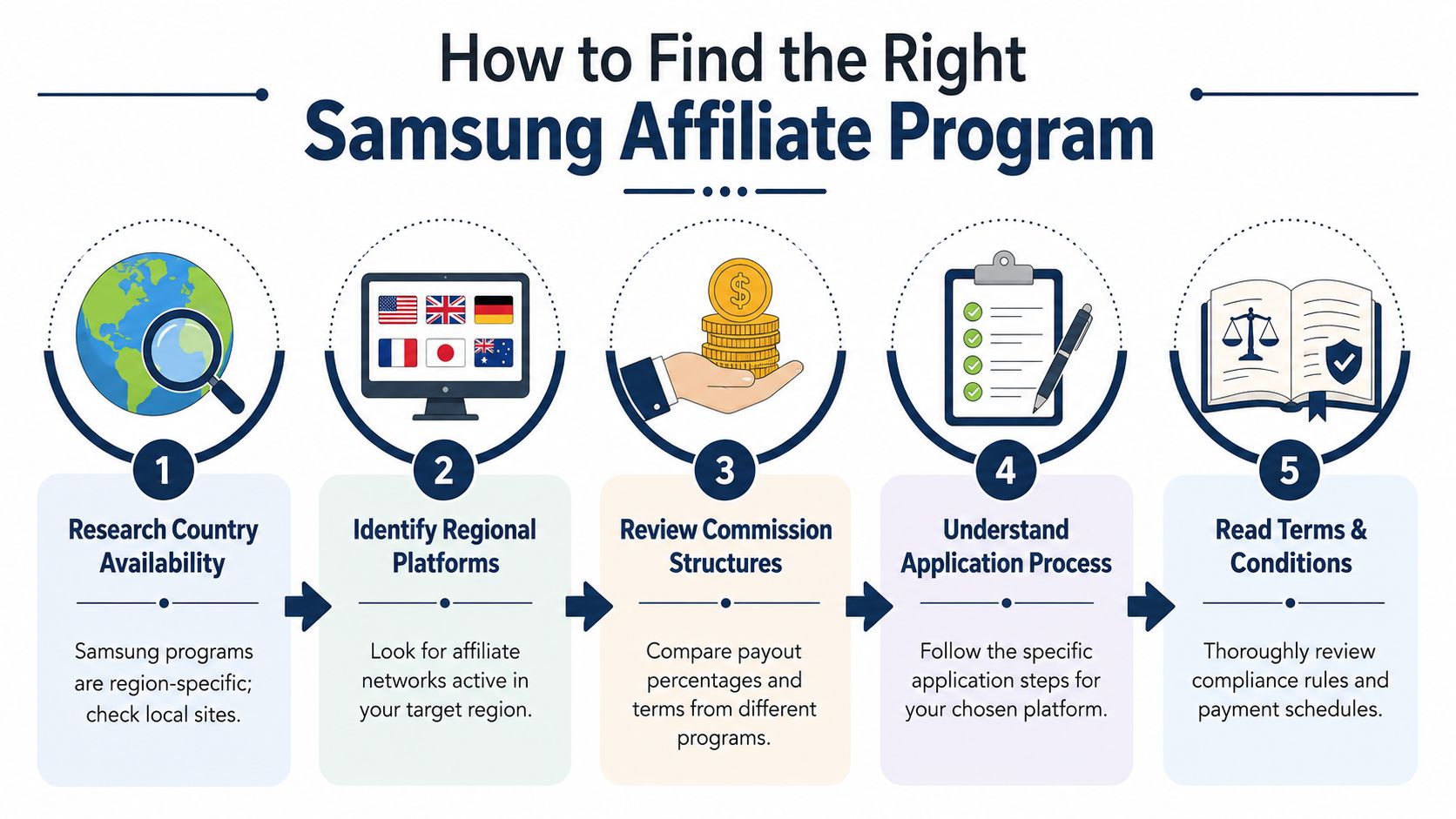
How to Find the Right Samsung Affiliate Program
A creator in London can apply to Samsung through one network, while a publisher covering the same products in Singapore may need a different one entirely. That is the first filter to get right. Samsung does not run one uniform affiliate setup across every market, and treating it like a single global program wastes time fast.
Samsung UK, for example, points affiliates to regional partners through its Samsung UK affiliate partner page. That matters because the network often controls approval, tracking, payment terms, and sometimes the creative tools you get after acceptance.
Start with the buying market
Do not start with a generic search for "Samsung affiliate program." Start with the country where your audience will buy.
If your traffic is mainly in the UK, check Samsung UK. If your traffic is in the Gulf, Southeast Asia, or another region, go to that local Samsung site and look for partner, offers, footer, or help pages. A valid application in one country can be irrelevant in another because the store, checkout flow, network, and attribution rules may all be different.
This is also where the bigger strategic decision starts to show. Affiliate works best when your audience is ready to click through and purchase in a supported local market. If your audience is broad, cross-border, or heavily social-first, a direct creator campaign may outperform affiliate because you are not depending on a specific regional storefront to capture the sale.
What to check before you apply
A quick pre-check saves weeks of back and forth.
Country and store alignment
Your audience needs to land on the Samsung store that serves them. If the traffic and store region do not match, conversion rates drop and tracking can break.Network operator
Samsung may sit inside Rakuten Advertising, Optimise Media, Awin, Impact, or another regional network. In practice, your first approval step may be the network, not Samsung.Property fit
A tech review site, comparison publisher, deal page, or creator account focused on consumer electronics usually has a clearer case than a broad lifestyle property with no purchase intent.Traffic source rules
Some programs are comfortable with editorial and search traffic but stricter on coupon activity, paid media, email, or social-first promotion. Read those rules before you apply, not after you are approved.Payment and tracking terms
Cookie windows, locking periods, and payout mechanics often sit with the network. Those details shape whether the program is worth the operational effort.
A practical workflow
Use this order.
First, confirm the local Samsung market where you want to send traffic. Second, identify the network handling that region. Third, review the network's publisher requirements and program terms. Fourth, audit your own channel. If your strength is bottom-of-funnel content, affiliate can fit well. If your strength is product storytelling, creator-led demos, or trusted audience influence, direct brand work may pay better and give you more control.
Retailer programs also deserve a look. In some markets, sending traffic to a major electronics retailer is easier than working through Samsung's direct affiliate route, especially if that retailer converts better with your audience.
If you need a broader comparison before picking a network, this guide to best affiliate marketing platforms is a useful starting point.
The right question is simple. Which Samsung partnership path matches your market, your traffic source, and the way your audience buys? That is how you choose between an affiliate application and a smarter direct partnership play.
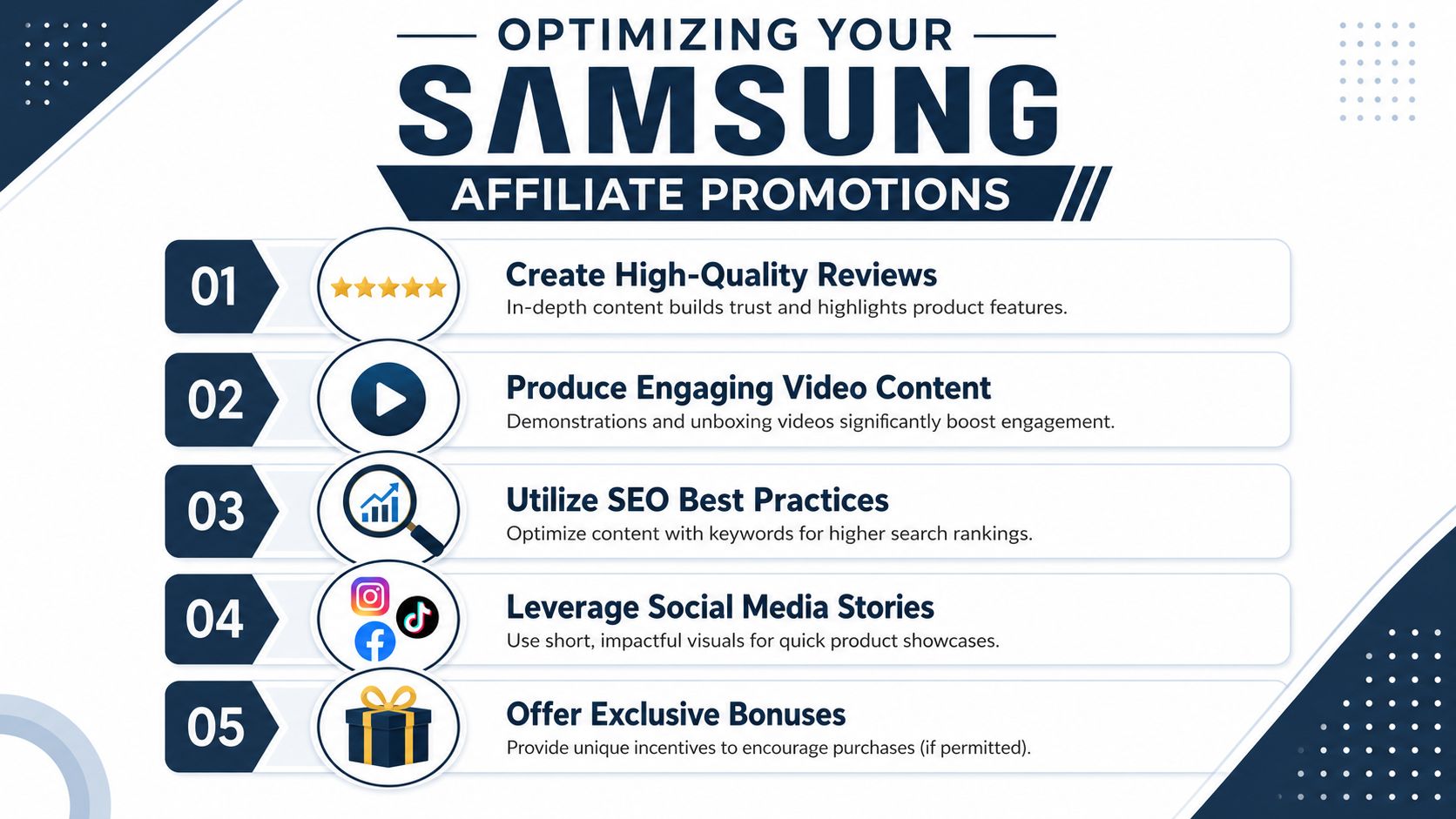
Optimizing Your Samsung Affiliate Promotions
Getting approved is the easy part. Making the Samsung affiliate program worth your time is harder.
Samsung affiliate economics usually make more sense on high-ticket products than on low-price accessories. One affiliate directory notes rates often cited around 3%, which means a $1,000 order yields about $30, while a $3,000 premium appliance can generate nearly $100. The same source notes a cadence of weekly and monthly offers on Affiliate Program DB's Samsung listing.
Where most commissions come from
Not all Samsung content has equal earning potential.
A review of a flagship Galaxy device, a premium TV buying guide, or an appliance comparison page usually has stronger economics than a post about a low-cost charger or basic accessory. The commission percentage may be similar, but the basket value is completely different.
That changes content strategy. If you're building around the Samsung affiliate program, the most efficient assets tend to be:
- Comparison pages such as Galaxy model vs Galaxy model
- Launch-cycle content tied to new product releases
- Deal pages updated around active promos
- Category buying guides for TVs, monitors, phones, and appliances
- Spec-led pages for shoppers who are close to purchase
Match your content calendar to promotion rhythm
Samsung appears to run a mature promotional cadence in some directories, with frequent offer refreshes. Affiliates who treat Samsung like a static evergreen brand usually underperform.
The better play is operational discipline.
| Content type | Best use case | Why it works |
|---|---|---|
| Launch content | New Galaxy devices, TV lines, appliance releases | Captures high-intent research traffic early |
| Comparison content | Buyers narrowing choices | Helps close the decision gap |
| Deal and coupon pages | Seasonal promotions and shopping events | Aligns with immediate purchase intent |
| Retailer comparison pages | Price-sensitive audiences | Lets users compare bundles, stock, and financing |
Publish around moments when buyers are already deciding, not when you're hoping to create demand from scratch.
Direct to Samsung or to a retailer
This is one of the most under-discussed choices in Samsung affiliate strategy.
In many markets, Samsung products are also sold through retailers and marketplaces with their own affiliate programs. Sometimes the Samsung direct route is best. Sometimes a retailer page converts better because of financing, availability, bundle structure, or pricing presentation.
That means you shouldn't assume the Samsung affiliate program is always your highest-converting path. Test destination strategy by content type. For example, a launch article may favor Samsung direct, while a price-sensitive comparison article may perform better with a retailer option.
What usually doesn't work is broad, untargeted traffic. Samsung products are researched purchases. The content needs to help people decide.
Beyond Affiliate Links The REACH Influencer Alternative
A creator can publish a strong Galaxy review, drive real interest on TikTok or YouTube, and still earn less than the value they created. That happens when the partnership model rewards only the final tracked sale, while the creator is doing the work of production, persuasion, and distribution.
Affiliate is still useful. It works well for content that catches existing buying intent and turns it into measurable revenue. But Samsung partnerships do not start and end with affiliate links, especially for creators working in regions where program access is uneven or where social content influences the sale without getting the attribution.
When affiliate is the wrong model
As noted earlier, Samsung frames its affiliate offer as a performance-based program with an approval process and commission on confirmed sales. That structure suits publishers and creators whose main strength is conversion.
It is a weaker fit when your contribution looks more like brand media than affiliate traffic.
- Creative production the brand may want to reuse in paid or owned channels
- Audience trust that shapes consideration before the buyer clicks anywhere
- Short-form video that drives product interest but not always a last-click conversion
- Campaign work that includes briefs, revisions, usage rights, and multiple deliverables
That distinction matters. A creator who can concept, film, edit, and publish strong Samsung content is often selling a package of services, not just referral traffic.
Why direct campaigns pay more and create more friction
Direct brand work usually pays for more of the value you create. It also brings more operational weight.
One Samsung campaign can include outreach, rate negotiation, rights discussions, approval rounds, product logistics, posting windows, and invoice follow-up. Handle that through email, spreadsheets, and DMs, and mistakes become expensive. Miss a usage-rights clause, lose track of a revision request, or publish outside the agreed timeline, and the relationship gets harder to keep.
Affiliate looks simpler because it is simpler. For many creators, that simplicity is the benefit, not the payout model.
Later in the process, seeing a workflow in action helps. This overview gives a visual sense of how campaign management platforms streamline creator-brand coordination:
Where REACH fits
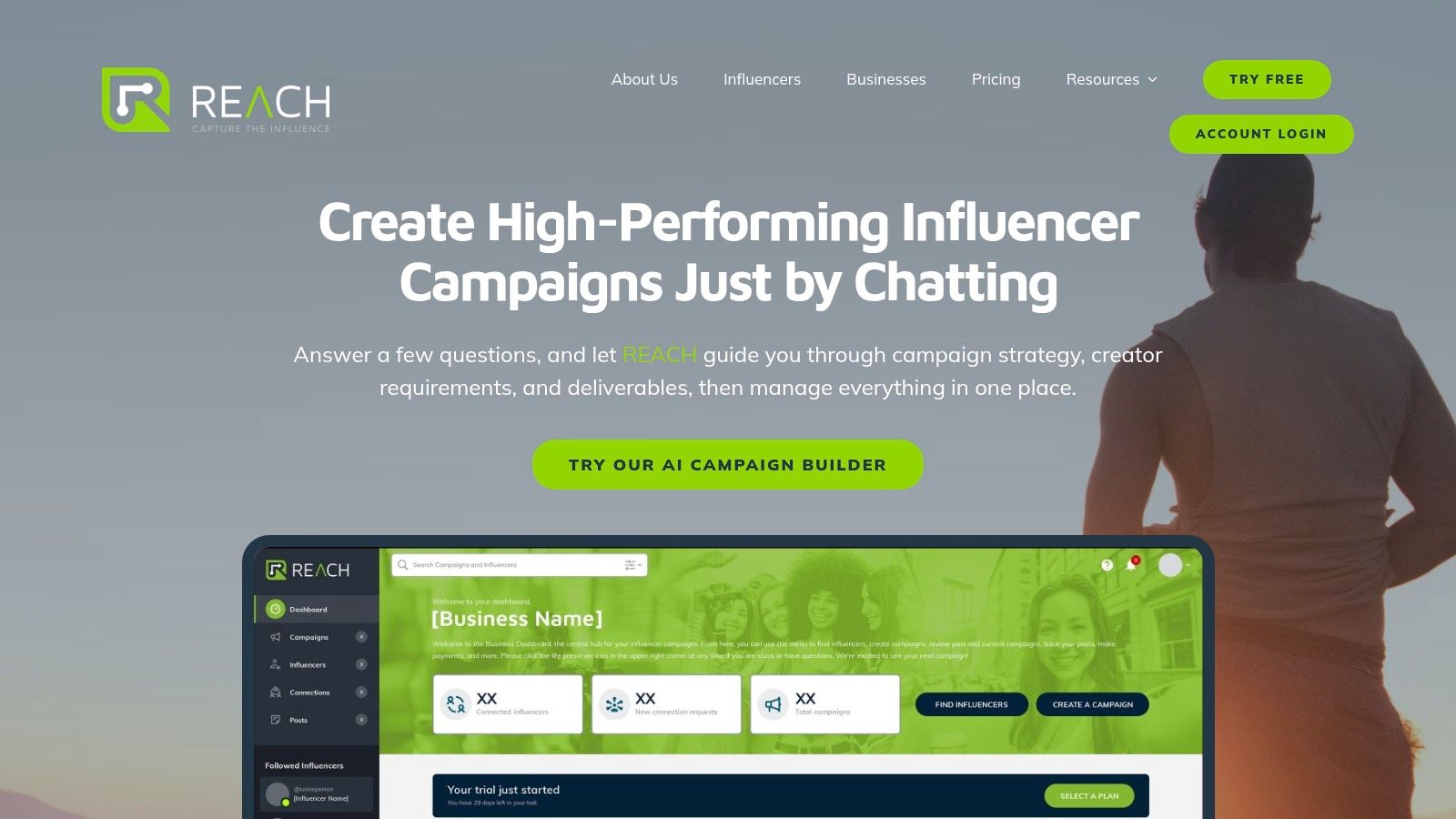
REACH is the better option when you want to run Samsung partnerships as campaigns instead of treating every opportunity like an affiliate link placement. It helps creators and teams manage outreach, briefs, deliverables, approvals, and reporting in one place, which is the part that usually breaks first when direct deals start scaling.
Use affiliate for monetizing intent. Use direct campaigns when you are selling creative output, audience access, and campaign participation. Those are different commercial models, and they should be priced and managed differently.
For a practical comparison of where each approach makes sense, review this guide on affiliate marketing vs influencer marketing.
A smarter way to think about partnering with Samsung
The best Samsung strategy is often hybrid.
Use affiliate links on content built to convert. Use direct campaigns when your content can influence demand, produce reusable assets, or support a product launch across multiple posts and platforms. That is the point where a creator stops behaving like a traffic source and starts operating like a media partner.
Understanding Payouts and Compliance Rules
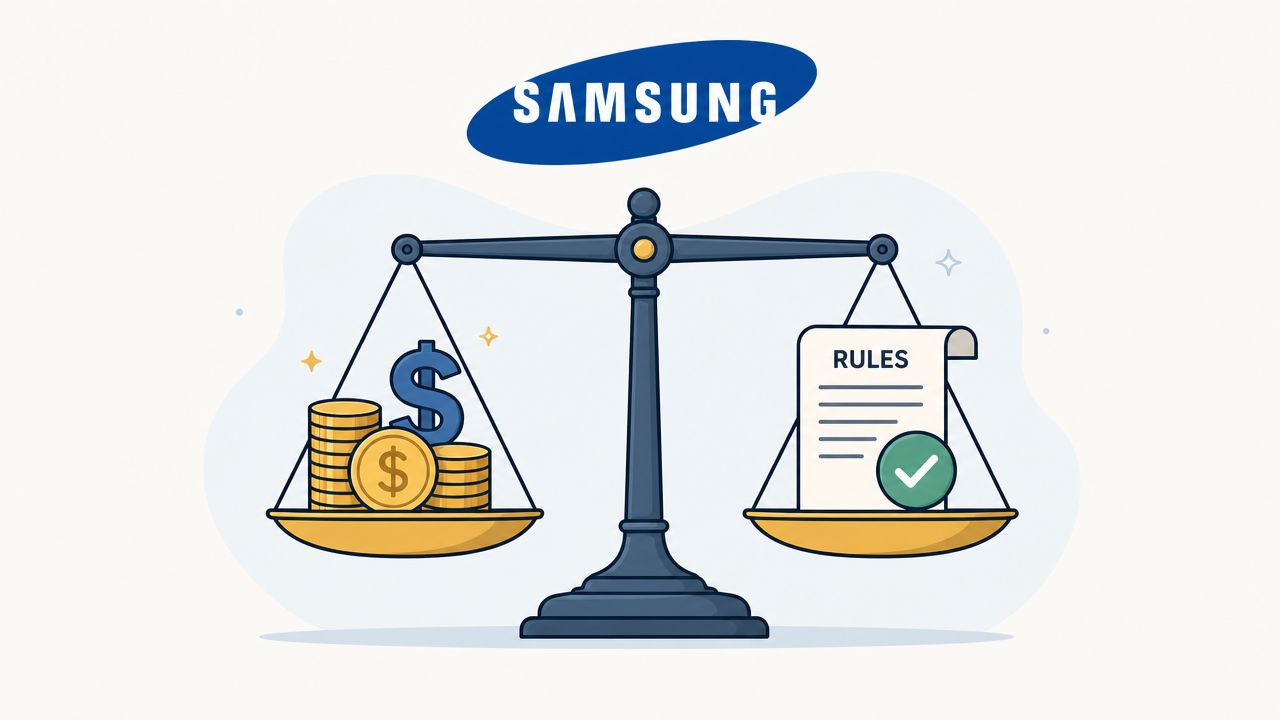
The payout side of the Samsung affiliate program usually runs through the affiliate network, not through Samsung directly. Post Affiliate Pro lists program terms that include a 30-day cookie duration, monthly payouts, a minimum payout of $20, and a single-tier structure, and notes traffic acceptance from PPC and social media in markets like the UK on Post Affiliate Pro's Samsung directory entry.
What to check before you publish
The most important terms are usually buried in the program details. Read them before you place links.
Allowed traffic sources
Don't assume every market treats paid traffic the same way.Attribution rules
A cookie window sounds simple, but it only matters if the sale gets attributed under that program's terms.Promotional restrictions
Brand bidding, coupon use, and landing-page behavior often have tighter rules than creators expect.Disclosure obligations
If you're earning from affiliate links or sponsored content, your audience needs clear disclosure.
The mistake that gets people removed
The biggest recurring problem isn't creative quality. It's compliance carelessness.
If you're using the Samsung affiliate program, disclose your financial relationship clearly. If you're using direct sponsorships, do the same. Hidden affiliate intent damages trust with your audience and creates avoidable risk with the platform, the network, and regulators.
For creators who want a better handle on the business side of brand work, this guide on how influencers get paid is a useful companion.
Conclusion Is the Samsung Program Your Best Option
The Samsung affiliate program can be a good fit when three things line up. The right regional program exists, your audience is close to purchase, and your content helps people choose products with real buying intent.
If that's your situation, affiliate is a practical channel. It gives you a trackable, performance-based way to monetize reviews, comparisons, launch coverage, and deal content.
But affiliate isn't automatically the best way to partner with Samsung. A key strategic question is whether to send users to Samsung directly or to a retailer page, because retailer pages can sometimes convert better through bundles, financing, or price presentation, while Samsung's own program emphasizes confirmed sales and coupons on this Samsung affiliate program review.
That trade-off matters because it points to the bigger truth. Not every creator should optimize for last-click commission. If your strength is influence, creative quality, and audience trust, direct brand campaigns can be the smarter path. They usually offer more control over the work and a stronger relationship with the brand.
The right model depends on how you create value. Publishers should think in attribution. Creators should think in partnership advantage. The best businesses often use both, but they don't confuse one for the other.
If you're ready to move beyond affiliate links and run cleaner, more professional brand collaborations, REACH gives brands, agencies, and creators a simpler way to manage campaigns from outreach to payment. It's built for the work that happens after discovery, so you can keep deliverables, approvals, communication, and payments organized without juggling spreadsheets and DMs.