 Skip to content


In a crowded social media feed, a generic presence is invisible. To capture attention, drive meaningful engagement, and build a truly loyal community, brands need creative, strategic, and memorable campaigns that connect with people on a human level. The old approach of simply posting content and hoping for the best is no longer effective. Success today demands a more thoughtful strategy that resonates deeply with your audience.
This guide moves beyond theory and delivers a curated collection of 12 actionable social media campaign ideas, each designed to break through the noise. We will explore powerful concepts like user-generated content challenges, interactive quizzes, and exclusive behind-the-scenes series. For every idea, you’ll find specific implementation tips, platform recommendations, and practical examples to inspire your next breakthrough strategy.
Whether your goal is to build brand love, launch a new product, or generate viral buzz, this list provides a practical blueprint. These aren't just abstract concepts; they are proven frameworks you can adapt and execute immediately. Consider this your go-to resource for planning campaigns that not only perform well but also create lasting connections with the people who matter most to your brand.
1. User-Generated Content (UGC) Campaigns
A User-Generated Content (UGC) campaign is a powerful strategy that turns your audience into active brand advocates. Instead of creating all your own content, you encourage your followers to create and share posts featuring your products or brand. This approach builds a strong sense of community and provides a wealth of authentic social proof that resonates with potential customers.

This is one of the most effective social media campaign ideas because it leverages the trust and authenticity that consumers crave. Campaigns like GoPro’s #GoProAwards, which features stunning customer-shot videos, and Coca-Cola's classic #ShareACoke, which encouraged people to post photos with personalized bottles, demonstrate the massive engagement potential. UGC works by making customers part of the brand’s story, fostering loyalty and organic reach.
How to Implement a UGC Campaign
- Set a Clear Goal: Define what you want to achieve. Is it brand awareness, showcasing a new product, or building a content library?
- Create a Simple Prompt: Give your audience a clear call-to-action and a unique, memorable hashtag. Starbucks' annual #RedCupContest is a perfect example of a simple, repeatable prompt.
- Offer Valuable Incentives: Reward participation with prizes, discounts, or the chance to be featured on your official channels. The incentive should align with your audience's interests.
- Promote and Engage: Announce your campaign across all your channels. Actively like, comment on, and share submissions to encourage more participation.
Pro Tip: Always secure permission before repurposing user content for your marketing materials. A simple direct message or a clause in your contest rules can clarify usage rights and keep your brand protected. For a deeper dive into this, learn more about developing a user-generated content strategy.
2. Influencer Collaboration Campaigns
An influencer collaboration campaign involves partnering with social media creators who have built a dedicated audience to promote your brand. This strategy taps into the trust and authority influencers have with their followers, offering a direct and authentic way to reach engaged communities. By leveraging their credibility, your brand can gain visibility, drive traffic, and boost sales.
This is a versatile social media campaign idea because it can be scaled to any budget, from micro-influencers with niche followings to mega-influencers with massive reach. Successful examples like Gymshark's long-term partnerships with fitness athletes and Daniel Wellington's widespread ambassador program showcase how collaborations can embed a product into a lifestyle. These campaigns work by presenting your brand through a trusted voice, making the message feel more like a recommendation than an advertisement.
How to Implement an Influencer Campaign
- Define Your Goals and KPIs: Determine what you want to achieve, whether it's brand awareness, lead generation, or sales. Set clear Key Performance Indicators (KPIs) like engagement rate, clicks, or conversions.
- Find the Right Influencers: Prioritize creators whose values and audience demographics align with your brand. Focus on their engagement rates and content quality over sheer follower count.
- Provide Creative Freedom: Give influencers the flexibility to create content in their own unique style, which will resonate more authentically with their audience. Provide clear guidelines but avoid overly restrictive scripts. To spark your creativity and inform your strategy, explore some of the top influencer marketing campaign examples.
- Track and Measure Results: Use unique discount codes or affiliate links to track conversions and measure the campaign's return on investment (ROI). Analyze the performance to refine your future strategies.
Pro Tip: Build genuine, long-term relationships with influencers instead of one-off transactional posts. This fosters greater authenticity and can turn them into true brand advocates. For a deeper dive into this, learn more about crafting effective influencer collaboration tips.
3. Interactive Polls and Quizzes
An interactive poll or quiz campaign transforms passive scrolling into active participation. This strategy uses native platform features, like Instagram Stories polls or Twitter polls, to ask your audience direct questions. This not only boosts engagement metrics but also serves as an effective way to gather valuable customer feedback, preferences, and insights in a fun, low-effort format.
These social media campaign ideas are excellent for driving interaction and learning about your audience. Brands like Sephora use product recommendation quizzes to guide customers to the right purchase, while Oreo’s playful "This or That" polls generate massive engagement. The appeal lies in their simplicity and the instant gratification they offer, making followers feel heard and valued while providing your brand with direct market research data.
How to Implement a Poll or Quiz Campaign
- Define Your Objective: Determine if you want to increase engagement, conduct market research, generate leads, or drive traffic. Your goal will shape your questions.
- Keep It Simple and Visual: Ask clear, concise questions. Use eye-catching visuals, GIFs, or short videos to capture attention and encourage clicks on your poll or quiz.
- Share the Results: People love to see how their opinions compare to others. Share the final poll results in a follow-up post or story to close the loop and spark further conversation.
- Segment and Retarget: Use quiz responses to segment your audience based on their answers. Follow up with targeted content, ads, or product recommendations that align with their stated preferences.
Pro Tip: Go beyond simple A/B questions. Use quizzes to create personalized user journeys. For example, a travel brand could create a "What's Your Dream Vacation?" quiz and retarget users with specific travel packages based on their results. For more ideas, explore how to use interactive content for marketing.
4. Behind-the-Scenes (BTS) Content Series
A Behind-the-Scenes (BTS) content series peels back the curtain on your business, showcasing the authentic, unfiltered side of your operations. This strategy humanizes your brand by revealing the people, processes, and culture that make it unique. It builds trust and fosters a deeper emotional connection with your audience by making them feel like insiders.

This is one of the most relatable social media campaign ideas because it satisfies audience curiosity and demonstrates transparency. Brands like Glossier, known for sharing its team and office culture, and Patagonia, which documents its ethical sourcing stories, use BTS content to reinforce their brand values. Showing the day-to-day reality, including challenges and successes, makes your brand more approachable and memorable.
How to Implement a BTS Campaign
- Identify Compelling Stories: What makes your business special? Focus on your unique production process, team member stories, or company traditions.
- Choose the Right Format: Use Instagram Stories for quick, unpolished peeks, or create a YouTube series for a more in-depth look, like Tesla’s factory tours.
- Showcase Your People: Feature employees from different departments. An employee takeover or a "day in the life" post can provide fresh perspectives and highlight your company culture.
- Be Authentic: Don’t over-produce your content. Raw, authentic footage often performs better as it feels more genuine and trustworthy to viewers.
Pro Tip: You don't need a huge production budget. Some of the most effective BTS content is shot on a smartphone, giving it an authentic, in-the-moment feel that resonates with social media audiences.
5. Hashtag Campaign Challenges
A hashtag campaign challenge is a time-bound social media event centered around a unique, branded hashtag. This strategy encourages users to create and share content performing a specific activity, from replicating a dance routine to participating in a social cause. It taps into the natural human desire for participation, competition, and community, turning passive followers into active creators for your brand.
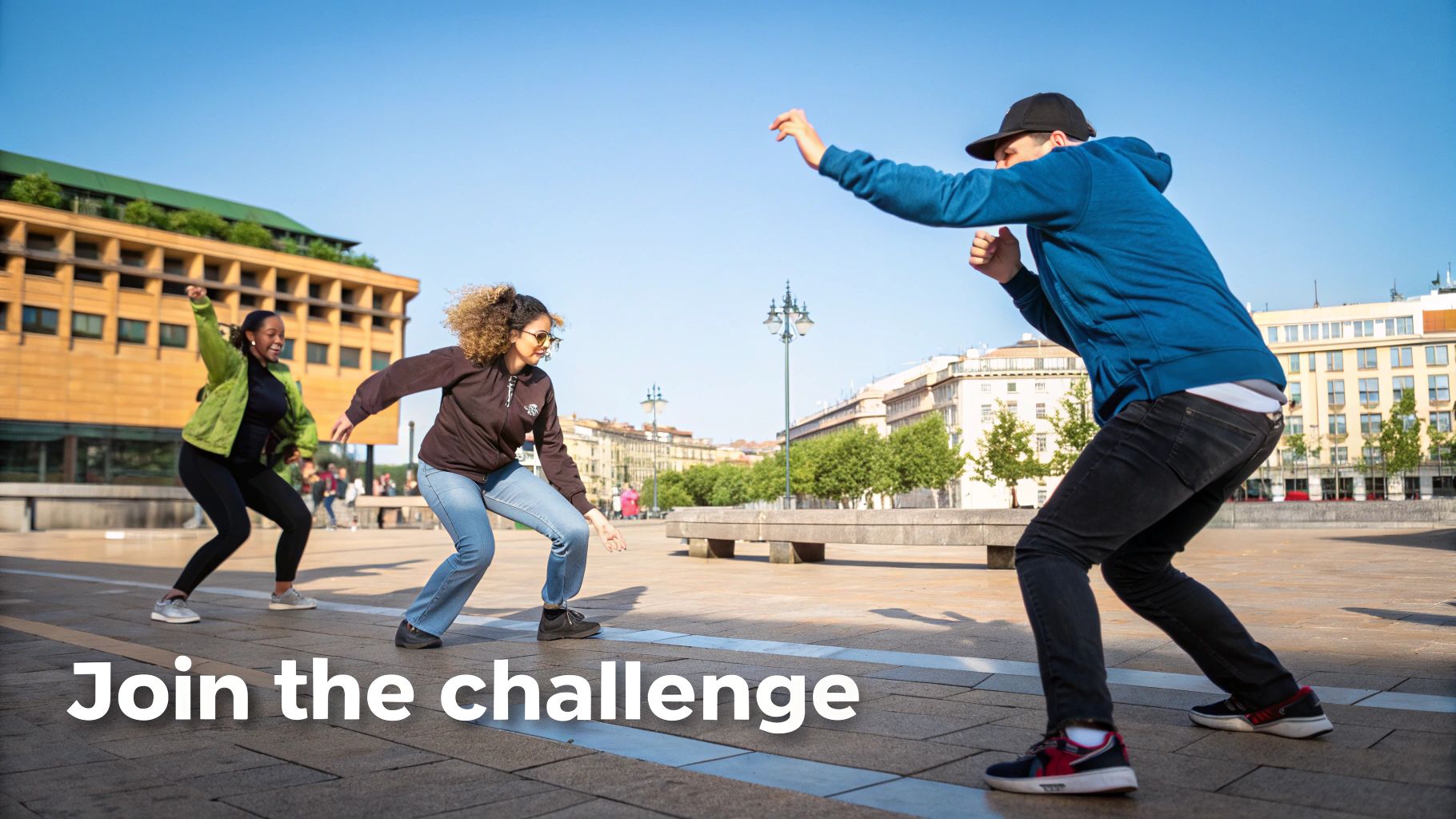
This is one of the most viral-ready social media campaign ideas available, capable of generating massive organic reach in a short period. The viral #IceBucketChallenge for ALS awareness is a legendary example, while TikTok constantly fuels trends like the #InMyFeelingsChallenge. These campaigns work because they are fun, shareable, and give users a clear and easy way to engage with a trend or brand, boosting visibility exponentially.
How to Implement a Hashtag Challenge
- Make it Simple and Replicable: The core action should be easy for anyone to understand and perform. Complexity is the enemy of virality.
- Create a Catchy Hashtag: Your hashtag must be unique, memorable, and easy to spell. It should clearly relate to the challenge or your brand.
- Launch with Influencers: Kickstart your campaign by partnering with creators or celebrities. Their initial participation provides social proof and a powerful initial push.
- Engage and Amplify: Actively monitor the hashtag, share the best submissions on your own channels, and comment on entries to encourage more people to join in.
Pro Tip: Keep the challenge duration manageable, typically between two to four weeks. This creates a sense of urgency that motivates immediate participation while giving the campaign enough time to gain momentum.
6. Live Streaming Events and Webinars
A live streaming campaign leverages real-time video to engage your audience directly, fostering urgency and immediate interaction. By hosting events like Q&A sessions, product launches, or educational webinars, you can create a dynamic experience that static content cannot replicate. This direct line of communication builds trust and allows for instant feedback from your community.
Live streams are one of the most interactive social media campaign ideas because they tap into the fear of missing out (FOMO) and offer unscripted authenticity. Brands successfully use platforms like Instagram Live for behind-the-scenes access, LinkedIn Live for professional industry panels, and TikTok Live for real-time shopping events. This strategy works by creating an appointment-viewing experience that pulls your audience in for a shared, memorable moment.
How to Implement a Live Streaming Campaign
- Set a Clear Goal: Determine the purpose of your live stream. Is it to launch a product, educate your audience, drive sales, or boost engagement?
- Promote Heavily: Announce your event well in advance across all channels. Use countdown timers and sneak peeks to build anticipation and maximize attendance.
- Test Your Tech: Do a full technical run-through before going live to check your internet connection, audio, and video quality. A smooth broadcast is key to retaining viewers.
- Engage Actively: Make interaction the core of your stream. Acknowledge viewers by name, answer questions from the chat, and run live polls to keep them involved.
Pro Tip: Have a clear plan but be prepared to improvise. The magic of live video is its spontaneity. Prepare key talking points, but let the audience's real-time comments and questions guide the conversation. For more detailed guidance, check out these successful tips for influencers to live stream.
7. Storytelling and Narrative-Driven Campaigns
A storytelling campaign moves beyond a single post to unfold a narrative over time, creating a deeper, emotional connection with your audience. By using character development, episodic content, and a clear narrative arc, you can build anticipation and keep followers invested in your brand's journey. This strategy transforms your brand from a seller of products into a creator of memorable experiences.
This is one of the most powerful social media campaign ideas for building brand loyalty and emotional resonance. Iconic examples like Dove's long-running "Real Beauty" saga, which challenged beauty standards, and Old Spice’s "The Man Your Man Could Smell Like" character-driven comedy, show how a compelling narrative can capture public imagination. These campaigns succeed by tapping into universal themes and creating stories that people want to follow and share.
How to Implement a Storytelling Campaign
- Develop a Compelling Narrative: Before you post anything, map out your story's beginning, middle, and end. Define the core conflict, the characters involved, and the key message you want to convey.
- Create Relatable Personas: Whether it's a fictional character, a customer's journey, or the story of your brand's founder, create a central figure your audience can connect with emotionally.
- Use Episodic Content: Release your story in parts across a set timeline. Use formats like Instagram Stories, video series, or sequential posts to create cliffhangers and build anticipation for the next installment.
- Maintain Consistency: Ensure your narrative and character voice are consistent across all social media channels and marketing touchpoints to create a cohesive and immersive experience.
Pro Tip: Don't be afraid to evoke strong emotions. The most memorable brand stories are those that make the audience feel something, whether it's inspiration, humor, or empathy. Tying your narrative to a core human value can elevate your campaign from an advertisement to a cultural moment.
8. Exclusive Access and VIP Communities
An Exclusive Access or VIP Community campaign focuses on building a dedicated, loyal following by offering special privileges to a select group of fans. Instead of broadcasting to everyone, you create a private space like a Discord server, a "close friends" list, or a subscription group where members receive unique content, early access, and direct interaction with your brand. This fosters a powerful sense of belonging and exclusivity.
This is a brilliant social media campaign idea for deepening customer relationships and increasing lifetime value. Campaigns like the Nike SNKRS app, which offers exclusive product drops, and Patreon creator communities, which provide behind-the-scenes content, prove that people will pay for or engage more deeply for a premium experience. This strategy turns casual followers into committed brand advocates who feel valued and seen.
How to Implement an Exclusive Access Campaign
- Define Your Value Proposition: Determine what genuinely valuable perks you can offer. This could be early product access, exclusive discounts, insider information, or direct Q&A sessions.
- Choose the Right Platform: Select a platform that suits your community. Discord and Geneva are great for active discussion, while Instagram's "Close Friends" or subscription features work well for visual content.
- Set Clear Entry Requirements: Make it clear how people can join. Is it based on purchase history, a subscription fee, or simply signing up for a specific list?
- Promote the Exclusivity: Market your VIP community by highlighting the unique benefits of joining. Emphasize what members get that the general public does not.
Pro Tip: Actively manage your community to keep it engaging and safe. Set clear guidelines, moderate conversations, and consistently deliver on your promise of exclusive value to prevent member churn and maintain a positive environment.
9. Cause-Based and Social Impact Campaigns
A cause-based or social impact campaign aligns your brand with a social, environmental, or humanitarian cause. This strategy moves beyond purely commercial goals to demonstrate corporate social responsibility, connecting with audiences on a deeper level through shared values. When executed authentically, it can build powerful brand affinity and mobilize your community for good.
This is a meaningful social media campaign idea because it shows your brand stands for more than just profit. Campaigns like Patagonia’s environmental activism, which pledges 1% of sales to environmental groups, and Dove's long-running #RealBeauty initiative, which champions body positivity, prove that purpose-driven marketing can foster immense loyalty. These campaigns succeed by genuinely integrating a cause into the brand’s core identity.
How to Implement a Cause-Based Campaign
- Choose an Aligned Cause: Select an issue that genuinely resonates with your brand’s mission and values. Authenticity is non-negotiable; your audience will see through performative gestures.
- Partner with Credible Organizations: Collaborate with established non-profits or charities. This lends credibility to your campaign and ensures your efforts create a real impact.
- Go Beyond Awareness: Don't just post about an issue. Create actionable steps for your audience, whether it's donating, signing a petition, or volunteering.
- Be Transparent: Clearly communicate your goals, your contributions, and the results of the campaign. Share impact metrics to build trust and show accountability.
Pro Tip: Commit to the cause for the long term, not just a one-off campaign. Sustained effort shows genuine dedication and avoids the appearance of "cause-washing." For more on building an authentic brand voice, explore how to develop a strong brand identity.
10. Seasonal and Holiday-Themed Campaigns
Seasonal and holiday-themed campaigns are time-bound strategies that leverage cultural moments, seasons, and holidays to create timely and relevant content. This approach taps into existing consumer excitement and heightened emotions, making your brand part of the festive conversation while capitalizing on periods of increased spending and engagement.
This is one of the most reliable social media campaign ideas because it aligns your marketing with your audience's real-world experiences. Iconic examples include Starbucks’ annual Pumpkin Spice Latte launch, which has become a cultural signifier of autumn, and Coca-Cola’s legendary Christmas campaigns that evoke feelings of nostalgia and togetherness. These campaigns work by connecting your brand to moments that already matter to consumers, making your message feel natural and welcome.
How to Implement a Seasonal or Holiday Campaign
- Plan in Advance: Start planning your campaign at least 2-3 months ahead. This gives you ample time for creative development, production, and ensuring your inventory and logistics are prepared for demand.
- Create a Unique Angle: Don’t just post "Happy Holidays." Find a unique way to connect your brand to the season. Think about how your product solves a holiday-specific problem or enhances a seasonal experience.
- Build Urgency and Anticipation: Use countdowns, sneak peeks, and early-bird offers to build excitement. Tactics like "12 Days of Deals" or limited-time seasonal bundles create a sense of urgency that drives immediate action.
- Personalize Your Messaging: Segment your audience and tailor your holiday offers. A loyal customer might receive a special discount, while a new follower could get a welcome offer themed around the holiday.
Pro Tip: Look beyond the major holidays. Consider smaller, niche events or even create your own brand-specific "holiday" like Amazon's Prime Day. This can help you stand out in a crowded marketplace and build a unique tradition with your audience.
11. Micro-Moment and Real-Time Marketing Campaigns
A micro-moment campaign involves capitalizing on current events, trending topics, or cultural moments in real-time. This agile strategy requires your brand to be highly responsive and creative, inserting itself into ongoing conversations where it can add value or entertainment. When executed well, it makes your brand appear relevant, witty, and in-touch with its audience.
This is a standout among social media campaign ideas because it leverages the immediacy of social platforms. Iconic examples include Oreo's "You can still dunk in the dark" tweet during the 2013 Super Bowl blackout and Wendy's ongoing real-time roasts on Twitter. These campaigns succeed by being timely, clever, and perfectly aligned with the brand's voice, capturing massive attention with minimal lead time.
How to Implement a Real-Time Marketing Campaign
- Establish a Response Protocol: Create a small, empowered team that can quickly approve and deploy content. Speed is critical, so a lengthy approval process will not work.
- Monitor Trends Constantly: Use social listening tools to track trending hashtags, keywords, and memes relevant to your industry and audience.
- Prepare Templates and Assets: Have pre-approved graphic templates and copy frameworks ready. This allows you to customize and launch content rapidly without starting from scratch.
- Know When to Engage (and When Not To): Act fast, but ensure your contribution is appropriate and authentic. Forcing your brand into a conversation where it doesn't belong can backfire.
Pro Tip: Define your brand’s boundaries and tone of voice before a trend happens. Knowing what topics are off-limits and what kind of humor aligns with your brand will prevent costly mistakes made in the heat of the moment.
12. User Testimonials and Success Stories
A campaign centered on user testimonials and success stories is a classic yet highly effective strategy for building trust and demonstrating value. This approach involves showcasing authentic customer reviews, in-depth case studies, and personal success stories to provide powerful social proof. By highlighting real-world results, you allow satisfied customers to become your most convincing salespeople.
This is one of the most credible social media campaign ideas because it shifts the focus from brand claims to genuine user experiences. Slack’s extensive library of customer stories, which details how companies of all sizes use its platform to improve collaboration, is a prime example. Similarly, Airbnb frequently shares host and guest stories to build an emotional connection and reinforce the platform's community-driven ethos. These campaigns work by validating your product’s impact through the voice of the customer.
How to Implement a Testimonial Campaign
- Recruit Diverse Customers: Reach out to a variety of customers across different demographics and use cases to showcase the broad appeal and versatility of your product.
- Focus on the Journey: Don't just share the final result. Document the customer's journey, including the problem they faced before using your product and how your solution transformed their experience.
- Create Compelling Video Content: Video testimonials are significantly more engaging and believable than text. Conduct authentic interviews and capture genuine reactions to create powerful, shareable content.
- Share Across All Platforms: Repurpose testimonials into different formats, such as quote graphics for Instagram, short video clips for TikTok, and detailed stories for your blog or LinkedIn.
Pro Tip: When gathering testimonials, ask specific, outcome-oriented questions. Instead of "Did you like our product?" ask "What specific metric improved after you started using our service?" This encourages detailed, metric-driven answers that add immense credibility.
12 Social Media Campaign Ideas Comparison
| Campaign | 🔄 Implementation Complexity | 💡 Resource Requirements | ⚡ Speed / Efficiency | 📊 Expected Outcomes | ⭐ Ideal Use Cases & Key Advantages |
|---|---|---|---|---|---|
| User-Generated Content (UGC) Campaigns | Medium — planning, moderation, legal controls | Low production cost; community management and incentives | Medium — depends on user uptake | Large content volume; ~300–500% engagement lift; stronger social proof | Building community; authentic marketing; cost-effective content generation |
| Influencer Collaboration Campaigns | Medium–High — contracts, alignment, performance tracking | Moderate–High budget for talent; affiliate/tracking tools | Medium — dependent on creator timelines | Expanded reach; ~2–5x engagement vs brand content; higher credibility | Reaching new audiences; product launches; trusted third‑party endorsements |
| Interactive Polls and Quizzes | Low — simple setup using native tools | Low — minimal creative and tooling | High — fast to create, deploy, iterate | 50–200% lift in interactive engagement; first‑party audience insights | Audience research; entertaining engagement; increasing time-on-platform |
| Behind-the-Scenes (BTS) Content Series | Low–Medium — consistent cadence and transparency | Low–Moderate — basic video gear and staff time | Medium — regular production required | 40–100% higher engagement vs promos; increased trust/authenticity | Humanizing brand; employee advocacy; differentiation from polished ads |
| Hashtag Campaign Challenges | Medium — concept, seeding, moderation | Moderate — promotion, influencer seeding, prizes | High potential — viral spread if adopted | Potential 1000%+ reach with viral adoption; massive UGC generation | Viral reach; brand awareness; trend participation on TikTok/IG |
| Live Streaming Events and Webinars | Medium — technical setup, rehearsal, moderation | Moderate — hosts, guests, streaming tech; promotion | Medium — real-time interaction but prep-intensive | ~10× higher engagement than regular video; strong real-time feedback | Product launches; Q&A; community building; urgency/FOMO moments |
| Storytelling and Narrative-Driven Campaigns | High — long-term planning, scripting, production | High — creative teams, serialized assets, distribution | Low — multi‑episode cadence over time | 60–150% sustained engagement increase; stronger brand identity | Brand differentiation; long-term engagement; values communication |
| Exclusive Access and VIP Communities | Medium–High — community design, moderation policies | High ongoing management; platform or subscription costs | Low–Medium — builds value over time | 200–400% higher engagement from members; higher LTV/revenue | Customer retention; revenue generation; advocacy and loyalty |
| Cause-Based and Social Impact Campaigns | Medium — partner vetting, impact measurement | Moderate — NGO partnerships, transparency/reporting | Low — requires sustained commitment | 50–300% engagement depending on alignment; positive PR | Brand purpose; employee engagement; values-driven audience attraction |
| Seasonal and Holiday-Themed Campaigns | Low–Medium — calendar planning and creative | Moderate — ad spend, inventory and logistics | Time-bound — fast during peak windows | 100–300% lift during peak seasons; proven conversion spikes | Seasonal revenue peaks; timely relevance; predictable performance |
| Micro-Moment and Real-Time Marketing Campaigns | High — 24/7 monitoring, rapid approvals, risk controls | Low–Moderate production but high staffing for monitoring | Very High — hours (rapid execution) | 500–2000% potential viral reach for successful moments | Virality potential; brand personality; staying culturally relevant |
| User Testimonials and Success Stories | Medium — recruit customers, interviews, consent | Low–Moderate — interview production, editing | Low–Medium — time to produce quality stories | 70–85% higher conversion rates with testimonials; strong trust signal | Trust building; conversion optimization; compelling social proof |
Launch Your Next Campaign with Confidence
You now have a robust toolkit filled with a dozen powerful social media campaign ideas, from harnessing the authenticity of User-Generated Content to sparking real-time engagement with micro-moment marketing. We've explored how interactive polls can boost engagement, how behind-the-scenes content builds trust, and how cause-based initiatives can forge a deeper connection with your audience. The common thread weaving through all these concepts is the importance of authenticity, strategic planning, and a genuine desire to connect with your community.
The most successful brands don't just broadcast messages; they build conversations and create shared experiences. They understand that a hashtag challenge is more than a trend, it's a way to foster community participation. They see an influencer collaboration not as a transaction, but as a partnership built on mutual respect and shared values. The true power of these ideas is unlocked when you adapt them to your unique brand voice, business goals, and audience needs.
From Idea to Impact: Your Action Plan
Transforming inspiration into a tangible, high-performing campaign requires a clear roadmap. Before you commit to a specific concept, it’s essential to ground your creativity in a solid framework. After all, even the most innovative social media campaign ideas can fall flat without a clear direction. Before diving into specific ideas, it's essential to lay a foundation for success with a comprehensive social media marketing strategy playbook. This will help you define your objectives, identify your target audience, and set the key performance indicators (KPIs) that will measure your success.
Once your strategy is in place, follow these steps to bring your campaign to life:
- Select Your Core Idea: Choose one or two ideas from this list that best align with your current marketing objectives. Are you focused on brand awareness, lead generation, or community building? Match the campaign type to your primary goal.
- Define Clear Objectives: What does success look like? Set specific, measurable, achievable, relevant, and time-bound (SMART) goals. For example, aim to “increase UGC submissions by 30% in Q3” or “drive 500 webinar sign-ups.”
- Map Out the Details: Outline every step of the campaign, from the initial announcement to the final performance analysis. Create a content calendar, define platform-specific tactics, and allocate your budget for any necessary tools or ad spend.
- Measure, Analyze, and Iterate: Don't just set it and forget it. Continuously monitor your campaign's performance against your KPIs. Use the data to understand what resonates with your audience and identify opportunities for optimization, both for the current campaign and for future initiatives.
Ultimately, mastering social media is an ongoing process of learning and adaptation. Use these campaign concepts as a launchpad for your creativity. Test new formats, listen to your audience's feedback, and never be afraid to innovate. By combining a strong strategic foundation with bold, creative execution, you can build campaigns that not only capture attention but also deliver meaningful, lasting results for your brand.
Ready to streamline your influencer and creator collaborations? REACH is an all-in-one platform designed to help you discover the perfect partners, manage campaigns, and measure your ROI with precision. Stop juggling spreadsheets and start building impactful creator-driven campaigns today with REACH.