 Skip to content

Let's be real: a social media crisis isn't a matter of if, but when. Social media crisis management is all about being ready. It's the disciplined practice of preparing for, spotting, and shutting down brand-damaging issues online before they explode and undo all the hard work you've put into building trust.

Why a Crisis Management Plan Is Non-Negotiable
We live in a world where news breaks on social media, and a single misstep can become a global headline in minutes. It's shocking, then, that studies show over 50% of U.S. companies still don't have a formal crisis communication plan. That’s a massive gamble with their reputation and bottom line.
A social media crisis goes way beyond a few unhappy customer comments. This is a high-stakes event that can shatter your brand’s credibility. Think of your plan as a fire drill. When the alarm sounds, a well-practiced team knows exactly where to go and what to do. Without that drill, you just get chaos.
The Modern Anatomy of a Social Crisis
Online blow-ups are a different beast entirely from old-school PR headaches. They’re faster, more chaotic, and fueled by thousands of people piling on. To get a handle on them, you first have to understand what makes them tick.
- Unmatched Speed: A single viral post can hit millions of screens in a matter of hours. By the time you could even think about drafting a press release, the damage is already done.
- Decentralized Narrative: This isn't a story controlled by a few journalists. The narrative is shaped by thousands of individual users, making it almost impossible to control once it gains momentum.
- Lasting Digital Footprint: Nothing on the internet ever truly disappears. A crisis you mishandled today can haunt your brand for years, popping up in search results and costing you trust down the road.
A strong social media crisis management plan spells out clear escalation tiers, pre-approved messaging, AI-powered social listening to catch warning signs early, and cross-functional teams trained to respond with speed and empathy.
This guide isn't about generic advice; it's a real-world playbook. We’ll cover everything from building a rock-solid foundation before a crisis hits to using the right tools to spot the smoke before it becomes a wildfire. For an in-depth look at managing these situations, especially in an educational setting, check out this excellent Social Media and Crisis Management Guide for K-12 Schools.
Ultimately, being proactive is your best defense. It shifts your team's mindset from being reactive firefighters to becoming strategic guardians of your brand. You’ll see how to analyze what went wrong after the fact and even turn a potential disaster into a moment that reinforces your brand’s integrity. This is your roadmap to not just surviving an online crisis, but coming out the other side even stronger.
Building Your Pre-Crisis Defense Plan
The best way to handle a social media crisis is to have a plan in place long before one ever hits. Think of it this way: when the pressure is on, you don't rise to the occasion—you fall back on your training. A proactive defense is your single most valuable asset, turning potential chaos into a structured, manageable event.
This isn't about a dusty document sitting on a server somewhere. It’s about building a living, breathing defense system that gives your team the confidence to act decisively and quickly. The goal is to shift from a state of reactive panic to one of coordinated precision.
Assemble Your Crisis Response Team
When things go sideways, the last thing you want is a scramble to figure out who's in charge. Your first move should be to assemble a dedicated crisis team where everyone has a crystal-clear role. This team is your command center, the group responsible for navigating the storm from the first alert to the final all-clear.
Each member has a specific job, but you’re all working toward the same objective: protecting the brand.
A solid team usually looks something like this:
- Team Lead: This is your quarterback, often a senior comms or marketing leader who makes the final calls and coordinates the entire response.
- Social Media Manager: Your eyes and ears on the ground. They're on the front lines monitoring channels, drafting posts, and engaging directly with your community.
- PR/Communications Specialist: This person owns the public narrative, fields media inquiries, and makes sure the message is consistent everywhere.
- Legal Counsel: Absolutely critical. They review every public statement to head off legal risks, especially when the situation is sensitive.
- Customer Support Lead: Brings invaluable insight into what customers are actually saying and feeling, helping to coordinate one-on-one responses.
- Executive Sponsor: A C-suite member who can fast-track high-level approvals and ensure the crisis response aligns with the big-picture business goals.
Once you have your team, create a contact sheet with multiple ways to reach everyone, 24/7. A crisis doesn't care about business hours.
Develop Pre-Approved Messaging Templates
In the middle of a crisis, time is a luxury you don't have. Scrambling to find the right words can cost you control of the entire conversation. This is where pre-approved messaging templates become a lifesaver, acting as a foundational script your team can adapt on the fly.
These aren't meant to be robotic, copy-and-paste replies. They're flexible frameworks that ensure your first response is swift, empathetic, and on-brand.
A holding statement is the perfect example. It's a pre-vetted message you can post almost immediately to acknowledge an issue, even before you have all the answers. It shows your audience you're on it and buys you crucial time to get the facts straight.
Your template library should cover a few likely scenarios:
- Product recalls or safety concerns
- Service outages or major technical glitches
- A customer complaint that goes viral
- Misinformation or false rumors spreading online
- Unexpected backlash from a marketing campaign
Every template should sound like it came from your company, not a legal department. This consistency is a core part of a strong brand identity. You can learn more about how to create brand guidelines to make sure your crisis communications always feel authentic.
Run Realistic Crisis Simulations
A plan is just theory until you test it under pressure. Crisis simulations—or "fire drills"—are where you really find out if your plan works. You role-play a potential social media disaster, forcing your team to execute the response in a controlled, real-time environment.
These drills are incredibly good at shining a light on hidden weaknesses. You might find gaps in your communication chain, discover that your approval process is too slow, or realize your templates don't quite fit a messy, real-world scenario.
This proactive approach is fast becoming the industry standard. The global market for social media crisis management services has shot past $1.88 billion and is expected to grow by nearly 21% each year. Why? Because companies are finally realizing that proactive strategies like simulations are the best way to minimize risk. You can read the full research on these market trends in crisis management.
Here’s what a simple simulation might look like:
- Dream up a disaster: Create a believable crisis, like a viral TikTok trashing your new product.
- Kick it off: Have someone "post" the viral content and tag your company accounts.
- Activate the team: The team lead officially triggers the crisis protocol.
- Run the play: The team starts monitoring mentions, drafts a response using a template, and moves it through the approval chain.
- Hold a post-mortem: After the drill, get everyone together to talk about what worked, what broke down, and how to make the plan better.
By running these simulations every quarter, you build muscle memory. Your team gets comfortable working together under duress, which means when a real crisis hits, their response will be second nature.
Using Social Listening for Early Detection
When a crisis hits on social media, your biggest advantage isn't your budget or your follower count—it's time. A single negative story can spiral out of control in just a few hours. Think of social listening as your early warning system; it's what helps you spot the smoke before the whole building is on fire. This isn't just about passively tracking brand mentions. It’s about actively understanding the speed, tone, and context of the conversations happening around you.
Effective social listening flips the script, moving your team from a reactive, damage-control mindset to a proactive, strategic one. Instead of waiting for a crisis to make headlines, you get ahead of it while the issue is still small enough to manage. This buys you precious time to gather the facts, get your team on the same page, and craft a response that's thoughtful, not panicked.
Setting Up Your Listening Posts
The core of any good early detection strategy is robust monitoring. You need to cast a wide net to catch all the relevant chatter, not just what’s happening on your own profiles. This means tracking a smart combination of keywords and phrases across every platform where your audience—and potential detractors—might be.
Your listening dashboard should be tracking, at a minimum:
- Brand and Product Names: Don't forget common misspellings, abbreviations, or even slang terms.
- Executive and Key Spokesperson Names: A crisis often starts with a comment from, or about, one of your key people.
- Campaign Names and Hashtags: Is that new campaign landing as intended? Monitoring sentiment here will tell you fast.
- Industry-Specific Keywords: Keep an eye on broader conversations that could sweep your brand into a larger issue.
It’s also a savvy move to keep tabs on your competitors. A crisis hitting a rival can easily splash onto you, or at the very least, it can be a masterclass in what (and what not) to do.
The real goal of social listening in a crisis isn't just to hear things; it's to shrink the time between the first spark of an issue and your team's first informed action. The faster you spot it, the more control you have over the story.
To make this happen, you'll need the right tools for the job. Exploring the best social media management tools can give your team the power to monitor conversations effectively and act fast.
From Noise to Signal: Interpreting the Data
Collecting a mountain of mentions is easy; the real skill lies in finding the signal in the noise. You have to learn to distinguish routine customer complaints from the tremors that signal an earthquake is coming. An isolated angry tweet is a customer service ticket. A sudden 3x spike in negative mentions within an hour? That’s your red flag.
This is where having a clear, structured plan becomes essential.
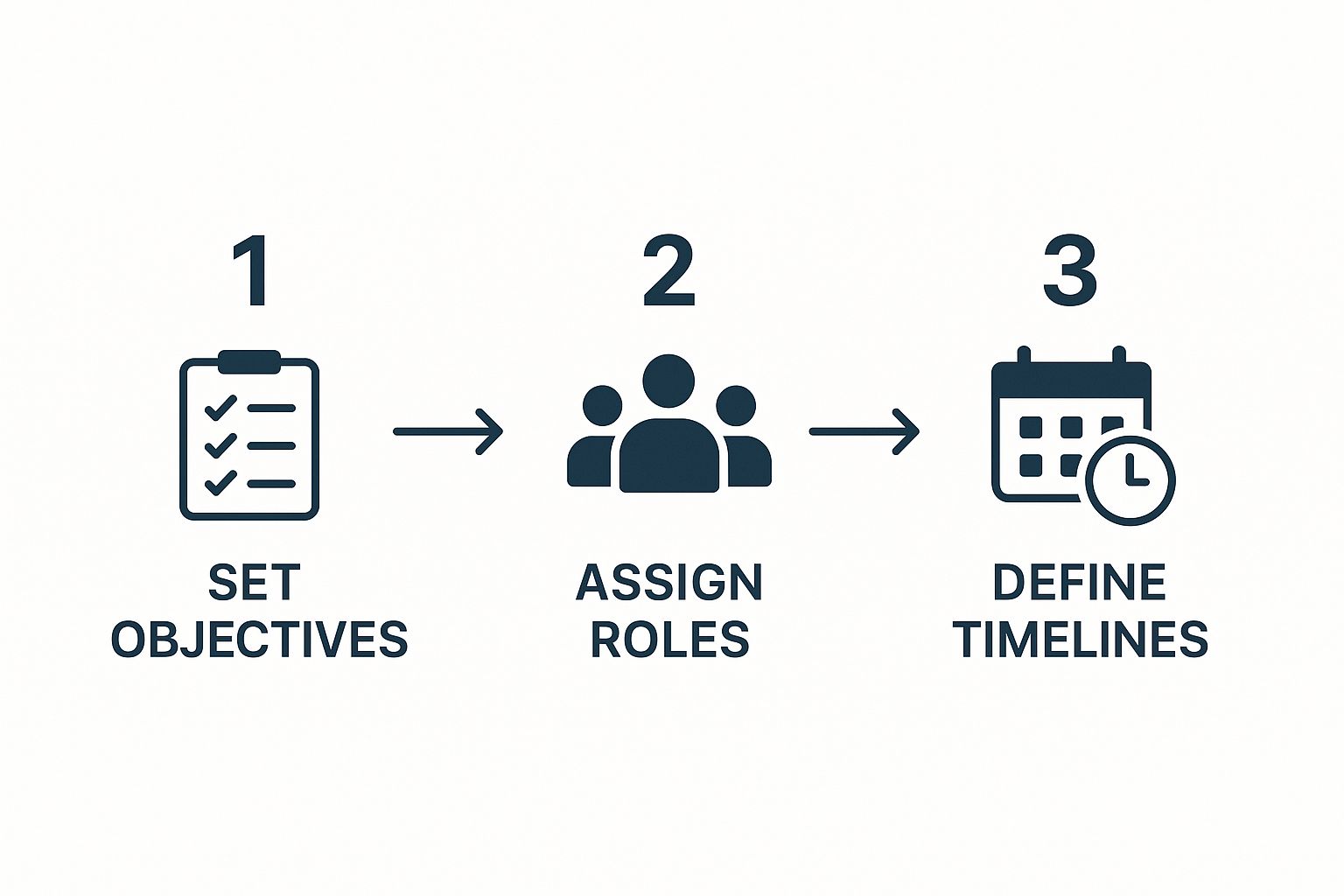
As the image shows, a solid process starts with clear goals and defined roles. This structure is exactly what you need when a listening tool flags a potential threat and you have to act decisively.
Here are the critical metrics that should have your attention:
- Volume Spikes: Any sudden, unnatural jump in the number of mentions.
- Sentiment Shift: When the tone of conversation plummets from positive or neutral to overwhelmingly negative.
- Influential Mentions: A single negative post from a high-profile account or media outlet can be the catalyst for a full-blown crisis.
- Hashtag Velocity: A negative hashtag that starts trending is a five-alarm fire.
Setting up automated alerts for these triggers is non-negotiable. Configure your listening tools to send instant notifications to your crisis team when certain thresholds are hit. This ensures that even if a problem erupts at 2 AM on a Saturday, your team knows immediately and can kickstart the response plan.
This same listening technology has benefits beyond crisis management, too. You can learn more about using social listening for influencer discovery in our related guide.
Here's a look at leading social media monitoring tools and their key features for effective crisis management.
Comparing Top Social Media Monitoring Tools
| Tool | Key Features for Crisis Management | Best For |
|---|---|---|
| Brandwatch | Real-time alerts, advanced sentiment analysis, influencer identification, and customizable dashboards. | Large enterprises needing deep, granular data analysis and trend spotting. |
| Sprout Social | Integrated listening and engagement, spike alerts for unusual activity, and team collaboration tools. | Mid-to-large businesses looking for an all-in-one management platform. |
| Talkwalker | Image and video analytics, AI-powered sentiment analysis, and predictive alerting. | Brands that need to monitor visual mentions and forecast potential issues. |
Ultimately, choosing the right tool depends on your team's specific needs and budget, but any of these can significantly bolster your defenses.
By combining the right technology with a clear understanding of what to look for, you transform social listening from a passive data-gathering chore into an active, strategic shield for your brand.
How to Respond When a Crisis Hits
When a social media crisis explodes, it feels like the world is watching—because it is. Every comment, share, and reaction is public, and how you act in those first few moments can either earn back trust or send your audience running.
The absolute first thing you need to do is hit pause on all your scheduled posts. Nothing looks more tone-deaf than a cheerful marketing message popping up in the middle of a firestorm. Get your crisis team on a single command channel immediately to get everyone aligned and moving fast.
Here’s your immediate game plan:
- Halt all non-essential posts so your feed doesn't look out of touch.
- Gather your crisis team on an urgent call or in a dedicated chat to set priorities.
- Monitor real-time mentions and sentiment spikes to catch new issues before they escalate.
I once saw a tech startup handle a massive server outage brilliantly. Within 30 minutes, they tweeted a simple, "We know things are down, and we're on it." That quick, honest acknowledgment immediately curbed the angry retweets and bought them a ton of goodwill.
Acknowledge and Take Ownership
In a social media crisis, speed trumps perfection every time. A swift public acknowledgment shows you’re listening and you’re on the case.
Whatever you do, avoid defensive language like, “This wasn’t our fault.” It just makes things worse. Instead, lead with empathy. Phrases like, “We completely understand your frustration and are working on a solution right now” go a long way.
A sincere, timely apology can diffuse over 50% of potential backlash before it even has a chance to build momentum.
Your initial statement should be concise and cover what you know, what you don't know yet, and what you’re doing next. That kind of transparency builds credibility and stops the rumor mill from filling in the gaps for you.
- Start with a clear acknowledgment that names the issue and expresses genuine regret.
- Give a brief outline of the steps you're taking and any expected timelines.
- Provide a channel for real-time updates, like a dedicated hashtag or a pinned tweet.
Communicate Progress Clearly
After that first message, you can't go silent. You need to post regular status reports to maintain trust. Consistent updates prove you’re committed to fixing the problem, not just hoping everyone forgets about it.
Think about the e-commerce brand that shared hourly updates about a checkout bug until it was fixed. That simple act of transparency cut their angry DMs by 60% and calmed down a lot of anxious customers.
Pausing every promotional campaign gives your audience room to focus on your response, not your marketing.
As mentioned before, pause all scheduled promotional content. Your community managers need to switch from sales to support mode, armed with scripts to help de-escalate and calm stressed-out users.
- A welcoming opener: “Hi [Name], we hear you and want to help.”
- A calming line: “We’re working on this and will follow up with you shortly.”
- A close with a next step: “Please DM us so we can provide personal assistance.”
For more tips on striking the right tone during a crisis, our guide on social media etiquette dos and don’ts is a great resource.
Avoid Fueling the Fire
Your job isn't done after the first few updates. Keep a close eye on your mentions for any shifts in the conversation that demand a fresh response. It’s always better to jump on a new flare-up early than to let it explode overnight.
Don't just copy and paste the same generic statement over and over. Instead, craft new messages that directly address emerging concerns or direct people to a live Q&A session.
- Do acknowledge fresh points and link back to your earlier, more comprehensive updates.
- Don’t ignore new hashtags or tags that could breathe new life into the issue.
- Do use visuals like simple infographics or short video updates to clarify facts.
- Don’t dismiss legitimate questions or start banning users unless their content clearly violates your community guidelines.
Manage Platform Specifics
Not all social networks are the same, and your response shouldn't be either. A quick, sincere text update is perfect for LinkedIn, but a behind-the-scenes apology video might land better on TikTok.
Tailor your content and tone to each platform and make sure you're tagging the right stakeholders. This also means muting irrelevant notifications so your team can focus on the crisis chatter, not the noise.
| Platform | Best Response Format | Ideal Timing |
|---|---|---|
| Text update with an executive quote | Within 2 hours | |
| TikTok | Short video apology & behind-the-scenes look | Within 4 hours |
| Twitter/X | Pinned thread with real-time updates | Within 30 minutes |
If you're a global brand, always keep time zones in mind when scheduling your updates. The cadence required for investors on LinkedIn is very different from what your customers scrolling Instagram will expect.
Anticipate Customer Backlash
Consumer loyalty is fragile. Research shows that a staggering 43% of shoppers might boycott a brand after a poorly handled crisis, which really highlights how high the stakes are.
Think about how Luke Combs handled a PR hiccup. He addressed his fans directly on Twitter with genuine concern and managed to curb a potential 61% boycott threat before it gained steam. Pausing marketing posts shows you respect your community's feelings over your sales numbers.
End With a Thoughtful Debrief
Once the dust has settled, it’s time to review what happened. Get the team together to assess your performance, looking at metrics like response times, sentiment recovery, and direct user feedback.
Document what you learned and update your crisis playbook. This process ensures you don’t repeat the same mistakes and helps your crisis management plan evolve.
- Hold a post-mortem meeting within one week to capture fresh insights.
- Compare your actual response times against your targets and identify any gaps.
- Gather direct quotes from team members about what felt smooth and what was a struggle.
- Revise your templates and approval protocols based on what you learned from the real thing.
Remember, a crisis that’s handled well can actually strengthen trust, not destroy it. Your thoughtful, human response can become a case study in how to do things right.
Rebuilding Trust With Your Stakeholders
When a social media crisis hits, it doesn't just stay on social media. The shockwaves travel fast, reaching everyone from your newest intern to your most critical investors. Their confidence in your business is hanging in the balance, and how you communicate with each group is what will make or break your recovery.
The very first thing you do isn't drafting a public tweet. It's getting your own house in order. Your team should never, ever find out about a major company crisis from their Twitter feed. When they're caught off guard, it creates a vacuum filled with confusion and anxiety, which can easily lead to damaging leaks or employees sharing wrong information. Informing them first turns your team into a unified front, not another source of chaos.
Start With Your Team
Before a single word goes public, you need to get your internal teams on the same page. A quick, clear email or an emergency all-hands meeting can work wonders. This isn't about airing all the dirty laundry; it's about giving them a factual summary and clear instructions on what to do (and what not to do).
Your internal message should nail these three points:
- A simple overview of what happened: No jargon, just the facts.
- The company's official stance: A brief statement explaining what you're doing about it.
- Clear do's and don'ts: Explicitly tell employees not to comment publicly and to forward any questions to the designated communications lead.
This simple, proactive step stops mixed messages before they start. It ensures that when you face the public, your entire organization is on the same page, building trust from the inside out.
Keep Partners and Investors in the Loop
While your social media managers are in the trenches of the public conversation, other key stakeholders need a more direct and professional touch. Investors, major partners, and B2B clients aren't scrolling through your Instagram comments; they need concise, factual updates that maintain their confidence in your leadership.
This communication should happen off of public channels. Think direct emails or personal calls from account managers or the C-suite. The goal here is reassurance. You're letting them know you see the problem, you're handling it, and their relationship with you is still secure and valued.
A crisis doesn't just test your PR; it tests your relationships. How you communicate with your closest allies—your team and your partners—determines how quickly you can put the pieces back together.
We saw just how crucial rapid, transparent communication can be during the massive Target data breach. Within hours of the news breaking, the CEO was on video, apologizing and immediately detailing the concrete steps they were taking, like offering free identity protection services. That kind of swift, direct action helped them get a handle on the reputational damage by showing they were in control. For more examples, you can see how top brands handle crisis communications on odwyerpr.com.
The Long Road to Winning Back Public Trust
Getting public trust back is a marathon, not a sprint. Your initial apology is just the starting line. The real work is in proving you mean it through consistent, visible actions over time. People see right through empty apologies. It's the tangible changes that earn back respect.
This means you absolutely have to follow through on any promises you made. If you said you'd update a policy, improve a product, or launch an internal review, you better be prepared to share progress reports.
Here are a few ways to show you're committed to doing the work:
- Share a Progress Report: A few weeks or a month later, publish a blog post or social media thread detailing exactly what you've done. Be specific.
- Host an Open Q&A: Get a company leader on a live session to answer the tough questions from your community. It shows you aren't hiding.
- Show, Don't Just Tell: Use short videos or testimonials to highlight new processes or safeguards you’ve put in place because of what happened.
To truly fix and maintain your credibility, it's essential to weave in comprehensive online reputation management strategies. Each follow-up action is another brick you lay in rebuilding the foundation of trust you lost.
Learning and Improving After a Crisis
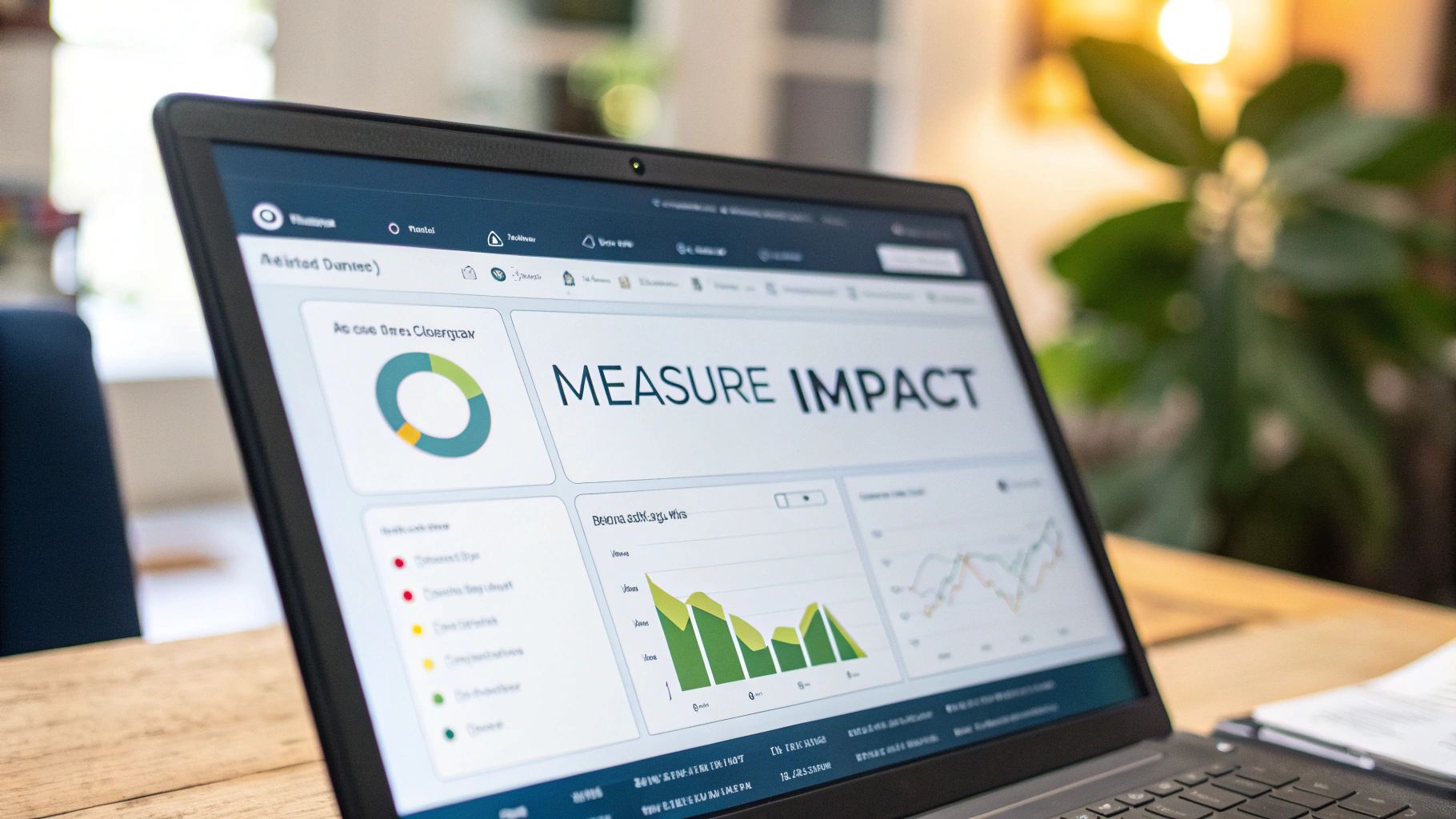
Once the social media storm subsides and things start feeling normal again, the real work of social media crisis management begins. It’s tempting to just breathe a huge sigh of relief and move on. Don't. A crisis is an expensive but powerful teacher, and the real value comes from turning a painful experience into a catalyst for getting better.
This final stage is all about an honest, no-holds-barred look in the mirror. This isn't about pointing fingers or finding someone to blame. It’s a no-ego examination of what worked, what didn’t, and how you can build a more resilient organization for the future.
The Blameless Post-Mortem
Get a post-mortem review on the calendar within a week of the crisis ending. Any later, and crucial details will start to get fuzzy. The single most important rule for this meeting? It must be a psychologically safe space. Everyone on the crisis team needs to feel comfortable sharing what they saw and felt without any fear of getting thrown under the bus.
The meeting itself should walk through the entire lifecycle of the incident. We're talking from the very first spark to the final resolution—every action, every decision, and every hesitation is on the table.
Think of it like a checklist for a debrief:
- How did we find out? Did our social listening tools catch it, or did a customer email or a reporter’s call blindside us? How could we have seen this coming sooner?
- How fast were we? What was the time gap between the first alert and our first public statement? We need to look at where the bottlenecks were, especially in the approval chain.
- Did our message land? Was our communication clear, empathetic, and consistent everywhere? Were our pre-approved templates actually helpful, or did they make us sound robotic?
- Did our tech hold up? How did our monitoring tools, internal chat, and other software perform under pressure? Any glitches or crashes?
- How did the team function? Did we work well together? Were roles and responsibilities crystal clear from the get-go?
A great post-crisis report doesn't just rehash what happened. It uncovers the critical lessons that will sharpen your playbook for next time, ensuring the organization actually gets stronger with every incident.
By focusing on the "what" and "why" instead of the "who," you start to see the cracks in your system. Maybe you’ll find your legal approval process is just too slow for the speed of social media. Or maybe your community managers need more specific training on how to de-escalate a heated conversation online.
Measuring the Real-World Impact
To keep this analysis objective, you have to anchor it in data. Gut feelings are one thing, but hard metrics tell the undeniable story of the crisis's impact and how well your response actually worked.
Here are the key numbers to dig into:
- Sentiment Shift: Track the percentage of negative, neutral, and positive mentions before, during, and after the crisis. A good response will show that sentiment recovering and leveling out.
- Mention Volume: Chart the spike in mentions to see when the crisis peaked. Just as importantly, watch how quickly that volume returns to your normal baseline after you step in.
- Engagement Rates: Look at the likes, shares, and comments on your response posts. Did they show that your message resonated, or did they just pour more fuel on the fire?
- Follower Fluctuation: Did you see a big drop in followers? How quickly did you start to gain them back once the dust settled?
I once worked with a brand that got hammered for a poorly conceived campaign. Their post-mortem showed that while initial sentiment had tanked by 70%, a raw, transparent video apology from the CEO saw a 92% positive sentiment within 48 hours. That single data point proved the value of a swift, authentic response and became the new gold standard in their crisis playbook.
Turning Insights into Action
This is where the rubber meets the road. A post-mortem that doesn't lead to a concrete action plan is just a meeting. It's a waste of everyone's time.
For every single weakness you identify, you need to assign an owner and a deadline. No exceptions.
- Problem: It took two hours to get the initial holding statement approved.
- Action: Revise the protocol to give the Team Lead pre-approval on three specific holding statements. Owner: Legal. Deadline: Next Friday.
- Problem: Misinformation was spreading like wildfire on TikTok before we even knew it was happening.
- Action: Add TikTok-specific keywords and alerts to our social listening dashboard. Owner: Social Media Manager. Deadline: End of month.
When you diligently analyze every incident and embed those lessons back into your social media crisis management plan, you're building institutional muscle memory. You don’t just recover from a crisis—you evolve. You make your organization smarter, faster, and far more resilient for whatever comes next.
Frequently Asked Questions
When you're in the thick of a social media firestorm, it's easy to get overwhelmed. Over the years, I've seen teams grapple with the same core questions. Here are the answers to the ones that come up most often, designed to give you clarity when you need it most.
What Is the First Thing I Should Do in a Social Media Crisis?
Stop everything. Your absolute first move is to pause all scheduled social media posts. Immediately. An upbeat, pre-planned promotional post going live while your brand is under fire looks completely tone-deaf and will only make things worse.
Once you’ve done that, get your crisis team on a call. The goal in these first few critical moments is to figure out what's actually happening and get a simple holding statement out the door. It doesn't need to have all the answers, but it must acknowledge the situation. Something as simple as, "We're aware of the situation and are investigating. We'll share more information as soon as we have it," shows you're listening and taking it seriously. In that first hour, speed is everything.
How Do I Decide if a Negative Comment Is a Crisis?
This is a crucial distinction. A single unhappy customer is a service issue. A tidal wave of coordinated outrage is a crisis. The two require completely different playbooks.
You need to know the signals that a situation is escalating beyond a routine complaint. Look for these red flags:
- A sudden, massive spike in the volume of negative mentions.
- The conversation being picked up by major news outlets or high-profile influencers.
- A negative hashtag catching on and starting to trend.
- Serious allegations that touch on illegal, unethical, or dangerous behavior.
The real difference comes down to scale and velocity. If the negativity is spreading like wildfire and being amplified by influential voices, you've got a crisis on your hands.
Should Our Company Delete Negative Comments During a Crisis?
My advice here is almost always a hard no. Deleting comments is like pouring gasoline on a fire. It signals guilt and a lack of transparency, and you can bet people have already taken screenshots. Accusations of a cover-up will follow, and the backlash will be even more intense.
The only time you should ever delete a comment is if it contains genuine hate speech, doxxes someone's private information, or is obvious spam. For everything else, the best path forward is to address the criticism head-on. If you need to have a sensitive conversation, move it to a private channel like DMs, but leave the original post up.
Managing a crisis is about having the right plan, but building a brand that can weather the storm starts with the right partners. REACH is an influencer marketing platform that helps you find and build authentic relationships with creators who can drive real results. See how you can build a stronger brand at https://reach-influencers.com.