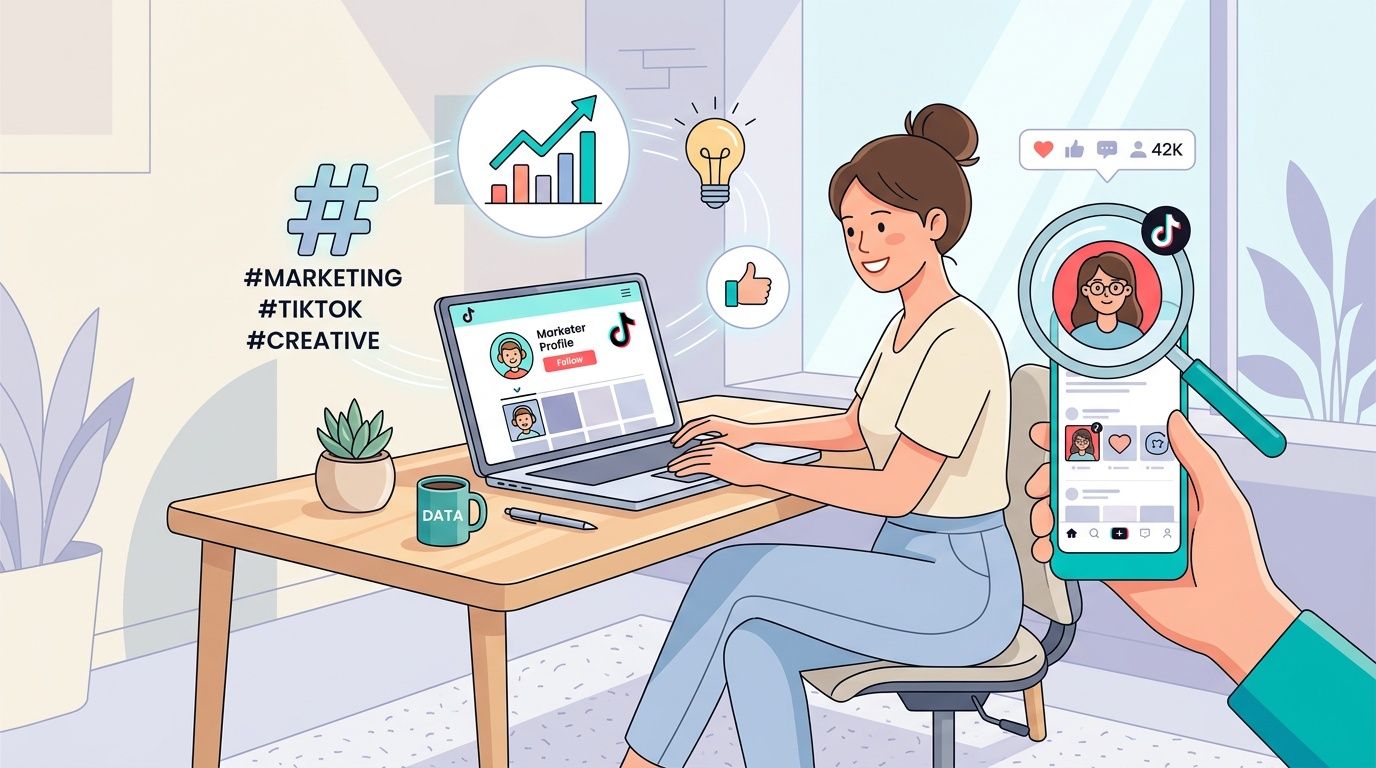
You already know the feeling. You find promising creators during a TikTok profile search, save a few links, add usernames to a spreadsheet, and leave yourself notes like “strong camera presence” or “maybe good for launch.” A week later, half the list feels random, one creator hasn't posted in months, and you can't remember why you shortlisted the others.
That's the core problem with creator sourcing on TikTok. Discovery is fast. Decision-making is messy. Execution gets worse if your process depends on scrolling, memory, and scattered tabs.
A good tiktok profile search process has to do more than find accounts. It has to help you find relevant creators, qualify them quickly, and move the right ones into a workflow your team can manage.
Why Your TikTok Profile Search Needs a System
Professional marketers don't struggle to find creators. They struggle to find the right creators consistently.
TikTok isn't just a social app anymore. It has become a meaningful search behavior platform, with over 40% of Americans using TikTok for search according to Rise at Seven's TikTok SEO analysis. That changes how brands should think about creator discovery. If users search on TikTok, then creators are no longer discovered only through viral distribution. They're discovered through searchable signals.
That means your tiktok profile search process should work like research, not browsing.
What breaks in manual discovery
The usual workflow looks efficient at first. It isn't.
- You over-save profiles. Everything looks promising in the moment, so the list gets bloated.
- You lose context. A username alone doesn't tell you why the creator mattered.
- You mix discovery with evaluation. That slows both tasks down.
- You create admin debt. Once outreach starts, every missing note turns into extra follow-up.
Practical rule: Never save a creator profile without recording one clear reason they fit the campaign.
A useful shortlist needs basic structure from the beginning. At minimum, capture the profile link, niche, content style, audience clues, last posting activity, and the specific campaign angle they could support.
The system that actually works
I've found that a clean process starts with three separate stages:
Discovery
Find creators through search, trends, hashtags, and related content.Qualification
Check whether the profile is active, relevant, credible, and usable for the campaign.Transfer
Move vetted creators into a proper management workflow before outreach starts.
That third step is where the process often fails. The handoff from “interesting profile” to “live campaign candidate” is usually a mess of spreadsheets, screenshots, DMs, and email threads.
A tiktok profile search system should reduce that gap, not widen it.
What a strong shortlist looks like
Here's a simple screen for deciding whether a profile deserves the next step:
| Check | What to look for |
|---|---|
| Relevance | The creator already posts in the category or adjacent use case |
| Activity | The profile is posting recently and the account feels maintained |
| On-camera fit | Their delivery matches how your brand needs to show up |
| Audience clues | Comments and content suggest the right consumer type |
| Usability | You have enough information to brief and contact them professionally |
If a creator fails two of those five checks, they usually don't belong on the working list.
That sounds strict, but it saves time later. A disciplined tiktok profile search is less about collecting more profiles and more about creating a shortlist your team can act on without redoing the work.
Mastering TikToks Native Search and Filters
TikTok's built-in search is still the fastest place to start. Many users just use it badly.
They type one broad keyword, scroll the top results, and assume the best creators will surface automatically. That usually gives you whoever is already optimized for a popular term, not necessarily the best partner for your campaign.
Start inside the app, but search with intent.
Search in layers, not single terms
Broad terms are useful only as the first pass. Then narrow.
If you're sourcing creators for skincare, don't stop at “skincare.” Search combinations that reflect format, audience, or use case. Think in terms like beginner skincare, acne routine, esthetician tips, sensitive skin creator, drugstore skincare, or nighttime routine.
The point isn't to game the app. The point is to mirror how niche creators describe themselves and how users discover them.
A good native search flow looks like this:
- Start broad: category terms that map to the campaign
- Go niche: problem-aware or audience-aware phrases
- Check the Users tab: this removes some noise from video-first results
- Test adjacent phrases: creators often rank for related language, not your exact brief
- Review posting freshness: inactive profiles waste time
Use filters to find active creators
A creator can look perfect on first glance and still be a bad outreach target if they've gone quiet.
Date and recency filters matter because campaigns need responsiveness. If an account hasn't posted recently, you don't know whether they're available, engaged with their audience, or still interested in brand work.
Native search surpasses random FYP discovery. You can narrow results toward creators who are currently active in a niche instead of historically relevant.
Search results are only useful if the creator is still showing up for their audience now.
When I'm reviewing native results, I care more about present activity and niche consistency than follower count. A smaller creator posting clearly within a category is easier to brief and often easier to trust than a larger creator with scattered content.
This walkthrough is a solid visual refresher if you want to see TikTok search behavior in action:
What to ignore in native search
Some search habits look productive but usually slow you down.
- Don't overvalue profile bios. Some great creators write weak bios.
- Don't shortlist from one video alone. Check the pattern across the profile.
- Don't assume top-ranked means best fit. Search visibility and partnership quality aren't the same thing.
- Don't rely only on one keyword path. TikTok search results shift based on phrasing.
Native search is best for building the first pool. It works especially well when you use the Users tab as your base, then validate each profile by checking recent posting, niche repeatability, and overall brand fit.
If you want to speed this up further, save your keyword clusters before you open the app. Searching gets much cleaner when you already know the exact language you want to test.
Discovering Creators Through Content and Trends
The best creators often don't appear from a direct tiktok profile search first. You find them because they keep showing up around the content that matters in your niche.
That's a different kind of discovery. You're not looking for names yet. You're looking for signals.
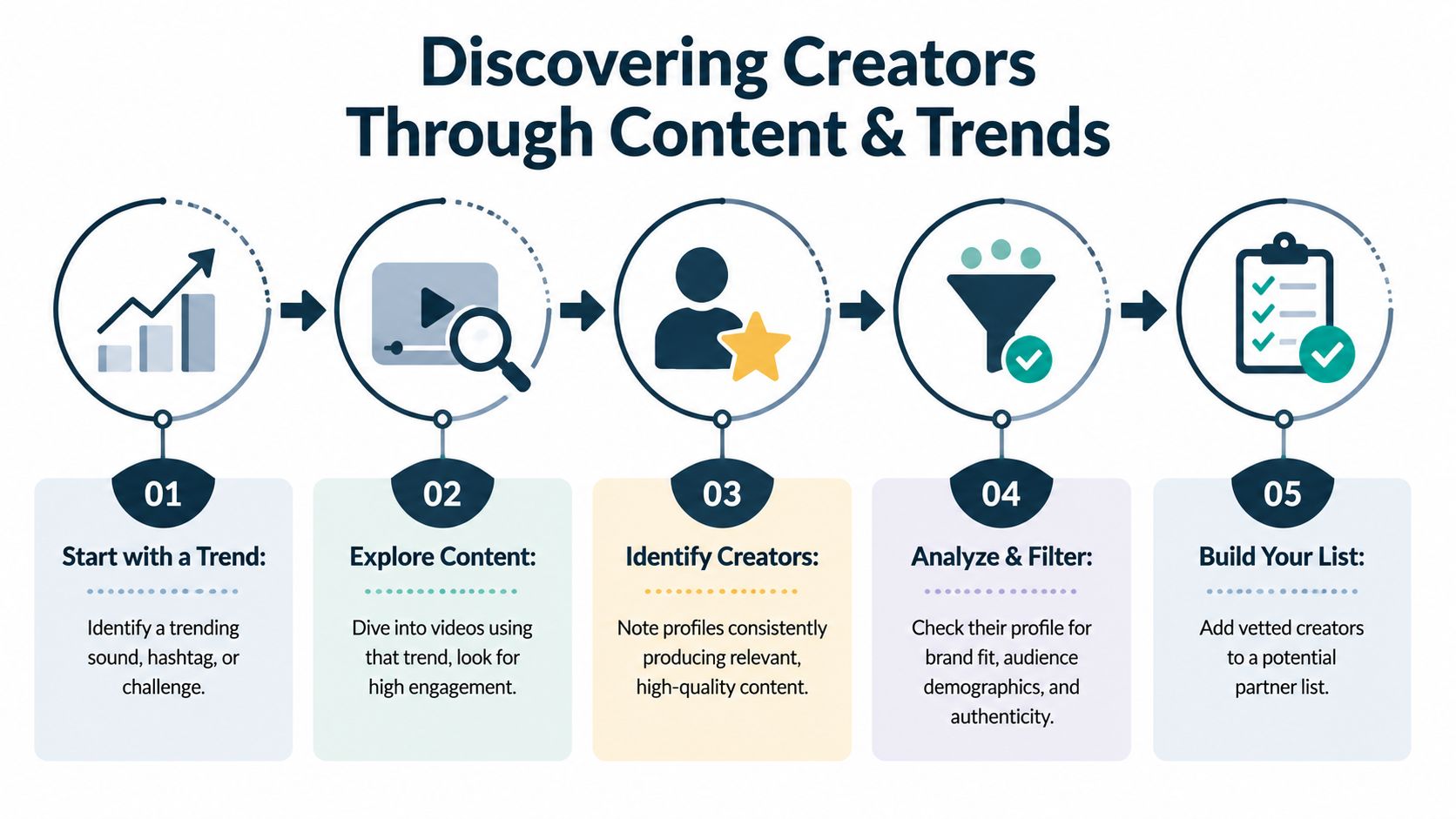
Follow the content trail
If I'm sourcing creators in a category with a strong trend cycle, I start with content objects, not profiles:
- trending hashtags
- recurring sounds
- stitched responses to a breakout post
- duets around a category conversation
- repeated format trends in a niche
This method is useful because it surfaces creators who are active participants in the culture of the category, not just accounts that happened to optimize a username or bio.
A creator who consistently appears around the right topics usually understands the audience better than a creator who only ranks for a clean keyword.
What strong trend-based discovery reveals
When you review creators through trend participation, you learn things that profile search alone won't show:
| Signal | What it tells you |
|---|---|
| Repeated use of a category trend | The creator understands the niche language |
| Strong stitched or duet responses | They can participate in existing conversations |
| Consistent comment quality | Their audience is paying attention, not just scrolling |
| Good variation within one topic | They can make multiple deliverables without sounding repetitive |
This matters because campaign performance often depends on whether a creator can make branded content feel native to the surrounding feed.
Search-aware creators are easier to activate
Creators who naturally use niche language inside their content are often easier to brief. Their content is already structured around discoverability.
According to Sprout Social's TikTok metrics guidance, if Search accounts for under 10% of a creator's traffic sources, they're missing a meaningful long-term discovery opportunity. The same guidance notes that creators who use keywords strategically in text overlays, captions, and audio can increase search-driven views to 25% to 40% of total traffic.
That doesn't mean you should pick creators based only on optimization. It does mean searchable creators often have a clearer content structure, stronger topic discipline, and better long-tail value for branded content.
The easiest creators to brief are often the ones who already know how to make a video searchable without making it stiff.
A better way to use trends
Trend chasing is a waste of time when the trend has no relationship to your product, audience, or message.
Use trends as a filter, not a destination. Ask:
- Does this trend connect to the buying moment?
- Does the creator add something original to it?
- Would the same creator still make sense if the trend disappeared next week?
If the answer to that last question is no, keep looking.
The strongest creators aren't just riding momentum. They're building recognizable content habits inside a niche. That's what makes them usable for campaigns, not just interesting to watch.
Using External Tools for Advanced Profile Search
Sometimes TikTok's own interface isn't the fastest path. That's usually true when you're trying to find creators with more professional digital footprints, older indexed profiles, or niche relevance that the app doesn't surface cleanly.
That's where external search helps.
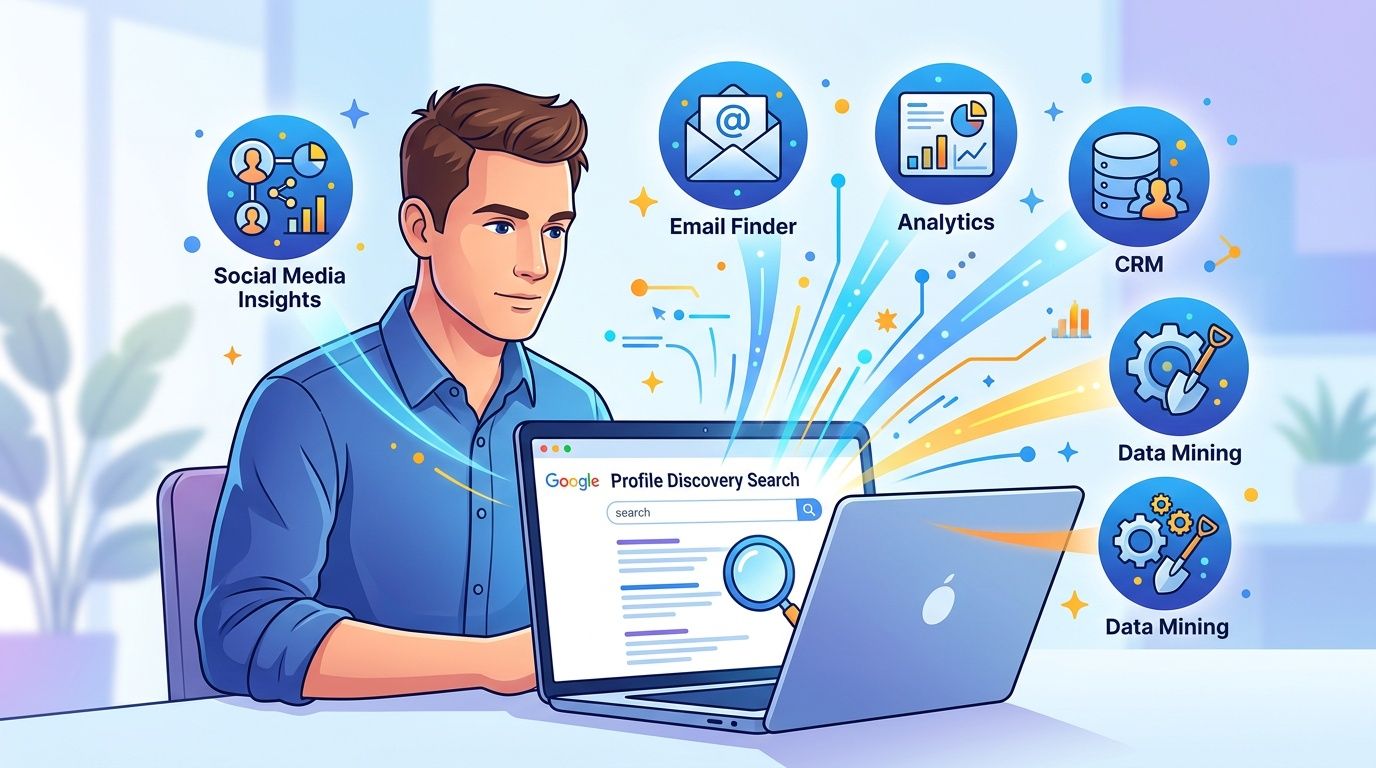
Use Google like a discovery filter
A simple operator-based search can reveal creators that are hard to locate through in-app results alone.
Try searches like:
site:tiktok.com "makeup artist" "tiktok"site:tiktok.com/@ "running coach"site:tiktok.com "creator" "meal prep"
You're not using Google to replace TikTok. You're using it to narrow the field toward creators whose profiles and content themes are discoverable off-platform too.
This is often helpful when sourcing for categories where creators care about personal branding, search visibility, or cross-platform consistency.
What external search is good at
External search works best in three situations:
- Category research when in-app search feels too broad
- Professional creator sourcing when you want people who appear consistently across web results
- Username validation when you've seen a handle elsewhere and need the exact TikTok profile
It also helps when teams manage multiple brand test accounts or region-specific research setups. If you're sorting that operational side of TikTok access, this guide to multiple TikTok profiles is a practical reference.
Where third-party tools fit
Third-party discovery tools are useful, but I treat them as support tools, not as the source of truth.
They can speed up filtering, competitor review, and profile comparison. They're especially useful once you already know the niche and need to organize candidates more efficiently. If you're comparing options in that category, REACH has a useful look at TikTok influencer discovery tools.
The trade-off is simple. External tools help you move faster, but they can make teams lazy about judgment. A dashboard can surface accounts. It can't decide whether a creator sounds right for your brand.
That still requires profile review, comment reading, and content pattern analysis.
How to Vet and Verify TikTok Profiles
A tiktok profile search only becomes valuable after vetting. Without proper vetting, weak creator lists usually fall apart.
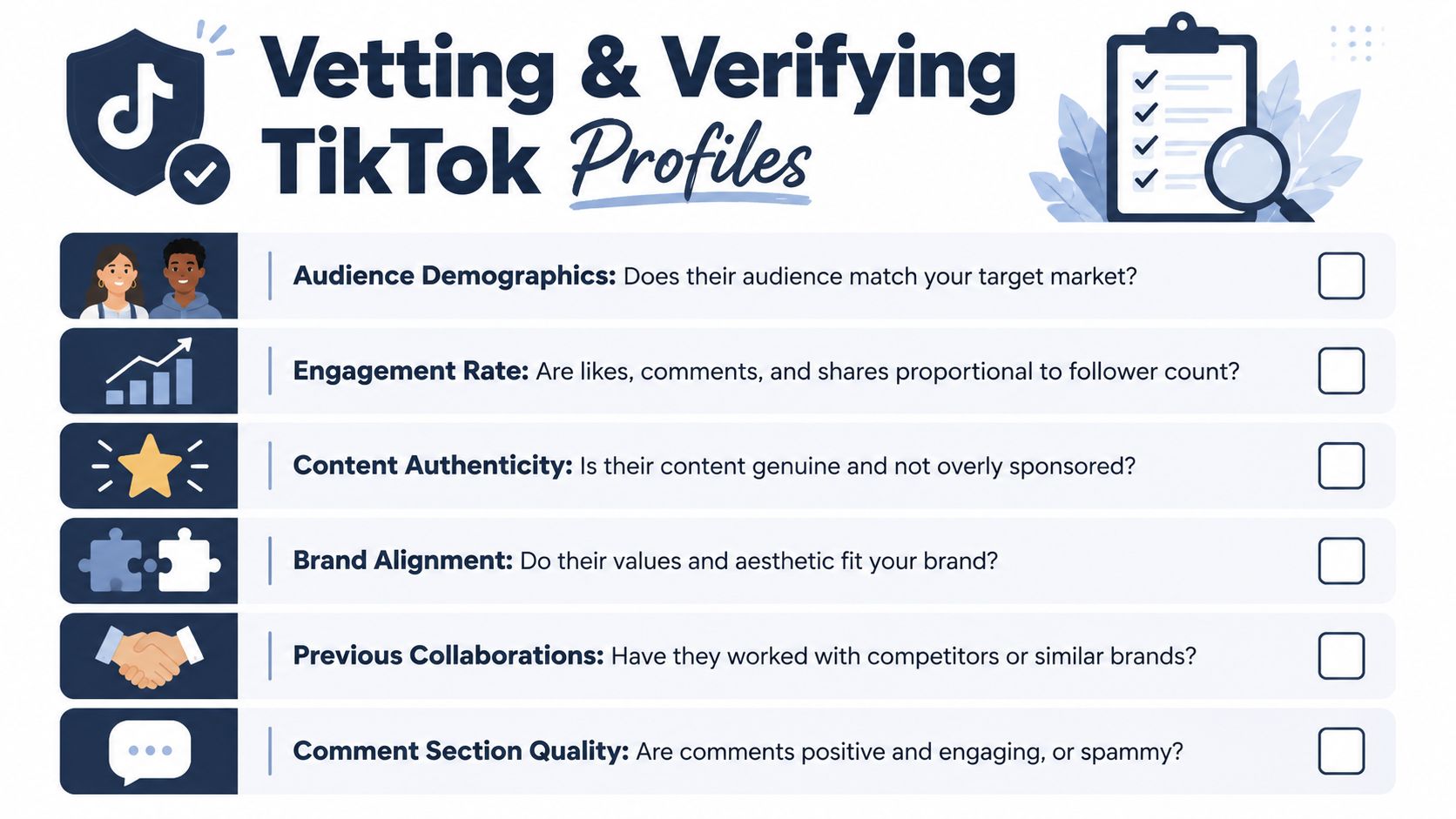
A profile can look polished and still be wrong for the campaign. You need a way to check audience fit, engagement quality, content reliability, and whether the creator can effectively hold attention.
What to review before outreach
I'd rather spend extra time here than during campaign rescue later.
Check these areas first:
- Audience match: Read comments, review recurring themes, and look for signs that the viewers are the people you're targeting.
- Content authenticity: If every recent post feels sponsored, the audience may already be fatigued.
- Brand alignment: Style matters. Tone matters more. A creator can be in-category and still be wrong for the brief.
- Collaboration history: Prior partnerships tell you how the creator integrates products and whether they work cleanly within a brand frame.
For follower quality checks, it also helps to know how to spot fake followers before you commit budget or outreach time.
Engagement quality beats surface metrics
You can calculate a basic engagement view manually by looking at how likes, comments, and shares compare with views across a set of recent videos. You don't need a perfect formula to identify obvious mismatches.
What matters is pattern consistency.
If one post performs well but the rest of the profile is flat, that's not a strong campaign signal. If comments are generic, spam-heavy, or unrelated to the content, that's another warning sign. If the creator's audience only reacts to giveaways or drama, branded content may struggle.
Field note: A comment section tells you more about creator influence than a headline follower count ever will.
Ask for completion rate data
This is the vetting step many marketers skip. They shouldn't.
According to Opus Pro's TikTok analytics metrics guidance, videos under 15 seconds should aim for an 80%+ completion rate, while videos between 15 and 30 seconds need 60%+. Asking creators for analytics screenshots with completion data gives you a stronger view of real audience attention.
That matters because views alone can hide weak retention.
When I'm vetting creators for short-form campaigns, I want to know:
| Question | Why it matters |
|---|---|
| Do viewers stay through the video? | Strong retention usually means the creator can hold attention |
| Do several videos show similar behavior? | Consistency is more useful than one standout result |
| Does the creator understand hooks? | Better hooks improve branded content odds |
| Can they share platform analytics cleanly? | Professional communication usually predicts smoother execution |
If a creator won't share analytics, that doesn't automatically disqualify them. But it does remove one of the cleanest verification signals you can ask for.
If you need extra context on suspicious account patterns, REACH also has a practical page on fake subscriber count checks.
From Profile Search to Campaign Management with REACH
This is the point where companies often lose control.
They've done the hard part of sourcing and vetting, but the workflow after that still runs through spreadsheets, inboxes, DMs, shared docs, and payment reminders. That's where delays start. That's where creator communication gets uneven. That's where deliverables slip.
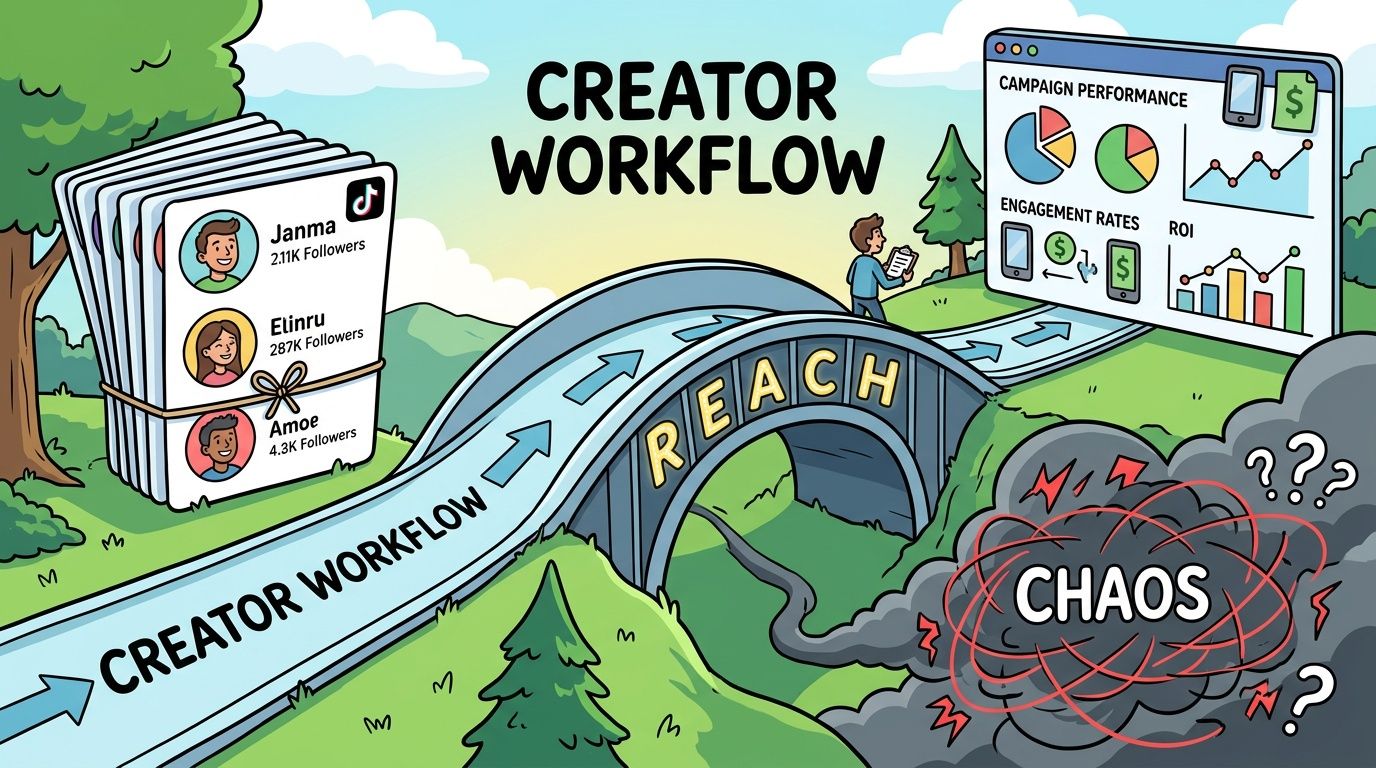
The biggest gap in influencer marketing isn't finding profiles. It's what happens after discovery. According to KOLSprite's review of TikTok profile viewer and workflow tools, manual tracking and communication are top pain points, and integrated platforms like REACH can reduce manual work by up to 70%.
That's why a good tiktok profile search process should end in a system, not a spreadsheet.
What changes when the workflow is centralized
Once creators move into a campaign system, you can manage real work instead of chasing status updates.
That includes:
- Outreach tracking so you know who responded and who didn't
- Deliverable management so content doesn't disappear into message threads
- Cross-channel visibility when creators post across TikTok and other platforms
- Payment coordination so the back office doesn't become a bottleneck
If you've seen outreach operations break down at scale, the ReachInbox case study with Deepak Shukla is a useful reminder that process quality matters as much as outreach volume.
For teams comparing software options before committing, REACH also has a helpful roundup of top influencer marketing platforms.
A creator list is not a campaign. It's raw material. The teams that scale well are the teams that treat discovery, vetting, outreach, approvals, and payment as one connected workflow.
That's the difference between an interesting list of TikTok profiles and a repeatable influencer program.
If your team is strong at finding creators but weak at managing everything after the shortlist, REACH is worth a look. It's built for the part most tools ignore: turning sourced creators into organized campaigns with centralized communication, deliverable tracking, payments, and 1099 compliance.