 Skip to content

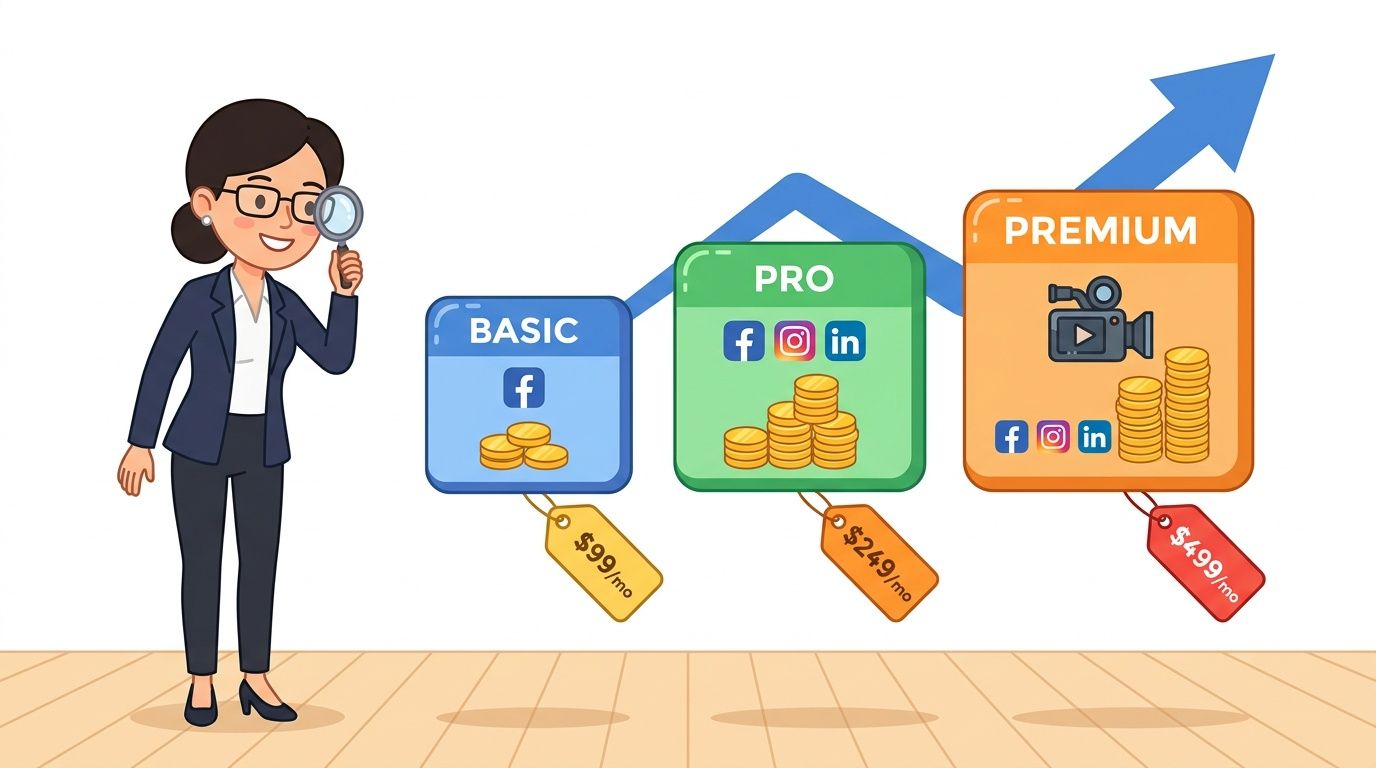
Social media management for a small business usually costs $500 to $2,500 per month, with most retainers landing between $1,000 and $2,000. If you're comparing quotes right now, that range is the first benchmark to use before you look at deliverables, platforms, and how much actual execution is included.
One business gets a quote for a few templated posts and basic scheduling. Another gets a quote that includes short-form video, community management, reporting, and ad support. On paper, both are called “social media management.” In practice, they're very different services.
That's why social media packages pricing feels messy. Agencies bundle strategy differently. Freelancers price flexibility differently. Some proposals include content production. Others treat design, video, creator coordination, and paid support as add-ons.
The better way to budget is simple. Stop asking, “What's the cheapest package?” Ask, “What workflow does this package replace, and what does my team still have to do after I sign?” That's where the true cost sits.
Untangling Social Media Packages Pricing
A common budgeting problem starts like this: a brand asks for three proposals and gets three very different numbers for what looks like the same service. One quote covers basic scheduling. Another includes creative, approvals, and reporting. A third looks reasonable until video edits, community management, and paid support are added. The gap is rarely random. It usually comes from how much execution the package removes from your team.
Price matters, but labor coverage matters more.
A useful benchmark for small business packages sits in the low four figures per month for light, ongoing support on one or two platforms, with cheaper offers usually cutting scope and higher quotes taking on more production, coordination, and optimization. The central question is not whether a package sounds expensive. It is whether it replaces enough internal work to justify the spend.
That is where buyers misread value. A lower-cost package can still be expensive if your team is left handling briefs, revisions, asset collection, creator follow-up, approvals, and publishing fixes. A higher-priced package can be efficient if it closes those gaps and keeps campaigns moving without constant hand-holding.
Three cost traps show up often:
- Underpriced offers: These often cover posting and little else. Strategy is light, revisions are capped, and performance review is minimal.
- Overbuilt packages: These suit brands with heavy content needs or multiple stakeholders, but they waste budget if your goal is consistent publishing and basic engagement.
- Workflow gaps: The proposal may promise deliverables while leaving your team to manage the messy parts that consume time each week.
Practical rule: A package earns its price when it removes operational bottlenecks, not just when it adds content to a calendar.
This becomes more important when influencer content is part of the mix. Many packages price in creator output but leave coordination outside scope. Then the brand team is back to spreadsheets, approval chasing, payment follow-up, and status checks across email and DMs. That is one reason the cost trade-offs between in-house marketing and agency support are not just about headcount. They are about who owns the workflow.
Tools like REACH help close that gap. If a package includes creator sourcing, outreach, content tracking, or payments, software can reduce admin time and missed handoffs. That makes the package more efficient, improves turnaround, and gives you a clearer path from monthly fee to ROI.
The Three Main Social Media Pricing Models
A brand can get three proposals for social media support and see three very different prices for work that sounds similar on paper. One agency sells a monthly package. A freelancer quotes an hourly rate. Another team offers a fixed project fee for a campaign or content batch. The price only makes sense once you understand how the work gets delivered, what is included, and who carries the operational load between tasks.

Monthly retainers
A monthly retainer gives you a fixed fee for ongoing work within a defined scope. For brands that need regular posting, community management, reporting, and light optimization, this is usually the easiest model to manage.
The main advantage is operational consistency. The agency or freelancer can plan ahead, build a repeatable content process, and allocate time across the month instead of treating every request as a separate job. That usually improves turnaround and reduces the stop-start pattern that hurts execution.
It also gives finance teams a cleaner budget line.
The trade-off is that retainers only stay efficient when the scope is clear. A package built for static posts and monthly reporting can become expensive fast if your team starts adding short-form video, creator approvals, paid support, extra revision rounds, or same-day requests. At that point, you are not comparing one retainer to another. You are comparing how each provider handles production capacity and account management.
Project-based pricing
A project fee works best when the output has a clear finish line. Common examples include a platform launch, a campaign sprint, a seasonal content batch, or a one-time strategy build.
This model is easier to control because the deliverables are usually defined up front. You know what is being created, when it is due, and what the fee covers. That makes project pricing useful for brands testing a provider before committing to ongoing management.
The catch is handoff. A project can produce good assets without solving the weekly work that follows, such as publishing, community responses, revisions, creator coordination, and performance follow-up. If your internal team still has to stitch all of that together, the lower upfront fee may not save money in practice.
That gap matters even more when influencer or creator content is involved. A project may include deliverables but leave outreach, approvals, tracking, and payment admin with your team. Tools like REACH can help standardize those steps, reduce manual follow-up, and make a project package more usable once execution starts.
Hourly pricing
An hourly rate is usually the best fit for specialist help. Brands use it for audits, channel reviews, consulting, troubleshooting, training, or part-time senior support.
It is flexible. You can bring in expertise without signing a larger monthly agreement, and you only pay for the time used.
The downside is forecasting. Hours add up quickly when the work includes content feedback, stakeholder revisions, comment moderation, reporting requests, and approval delays. Hourly pricing often looks efficient at the start, then becomes harder to manage once the support turns into recurring execution.
I usually recommend hourly work when the brief is narrow and the decision-maker is clear. If multiple people need input each week, a retainer or tightly scoped project is often easier to control.
A quick comparison
| Model | Best for | Main strength | Main weakness |
|---|---|---|---|
| Monthly retainer | Ongoing management | Stable workflow and predictable monthly budgeting | Costs rise quickly when scope expands |
| Project-based | Launches, campaigns, and one-time builds | Clear deliverables and defined timelines | Does not cover ongoing optimization or admin by default |
| Hourly | Consulting, audits, and flexible support | Access to expertise without a long commitment | Harder to predict the real monthly total |
If you are still deciding who should own the work, this breakdown of in-house marketing vs agency support is a useful way to test the model before you compare fees.
What You Actually Get in a Social Media Package
A marketing lead approves a $2,000 monthly package, then realizes two weeks later that the fee covers posting, not revisions, not video editing, and not day-to-day community management. That is a common budgeting mistake. Package value comes from the work being removed from your team's plate, not from the label on the proposal.

Starter packages
Starter packages usually cover the basics needed to keep accounts active and on-brand. In practice, that often means one or two platforms, a light posting schedule, simple creative, scheduling, and a basic monthly report.
A typical starter scope includes:
- Platform management: Usually one or two channels
- Content production: Template-based graphics, stock imagery, short captions
- Scheduling and publishing: Posts loaded and published on a set calendar
- Light engagement: Limited comment replies or inbox checks
- Basic reporting: Top posts, reach, engagement, and simple takeaways
This level works for local businesses, founder-led brands, and companies that need consistency before they need scale.
The trade-off is speed and originality. Starter packages often rely on repeatable formats because repeatable formats keep labor under control. That is not a flaw if the goal is presence. It becomes a problem when the business expects stronger growth, more leads, or more creative testing from a low-touch scope.
Growth packages
Growth packages add production depth, not just volume. The difference shows up in the workflow.
Instead of only scheduling approved posts, the team is usually building a more active content machine. That can include custom design, short-form video editing, campaign coordination, a fuller content calendar, and reporting that helps decide what to make next. The package starts saving internal hours across marketing, creative, and approvals.
You will usually see changes like these:
| Deliverable | What changes in Growth tier |
|---|---|
| Creative | More custom assets and fewer reused templates |
| Video | Reels, short clips, editing, captions, and versioning |
| Content planning | Calendar tied to launches, offers, or campaigns |
| Reporting | Clearer analysis of what performed and what needs adjustment |
| Management | More hands-on coordination across channels and stakeholders |
This is the tier where ROI gets easier to justify. Better output usually comes from a better process. If the package includes briefing, asset collection, approvals, publishing, and reporting in one operating rhythm, the team spends less time chasing files and rewriting captions at the last minute.
Tools matter here. A team using structured workflows and social media scheduling software for content approvals and publishing can often handle more output with fewer bottlenecks. That does not make labor free. It does make the package more efficient, which is part of what clients are paying for.
Premium and enterprise packages
Premium packages usually support brands that treat social as a revenue channel, not a maintenance task. The scope often extends beyond content production into campaign planning, paid support, creator coordination, reputation monitoring, and cross-functional reporting.
A lot of the value sits in operational control.
Senior teams notice it quickly when it is missing. Launch dates slip. Creative approvals pile up. Influencer assets arrive late. Reporting comes in after the window to act on it has passed. Premium pricing often reflects the cost of preventing those failures, not just the cost of making more posts.
That is why two proposals with a similar number of deliverables can have very different prices. One may include real ownership of deadlines, handoffs, revisions, and performance review. The other may only cover production.
Before signing, check whether the package includes the work that usually slows your team down. If it does, the higher fee may save money. If it does not, your internal team is still carrying the hidden labor.
Key Factors That Influence Social Media Pricing
Two packages can look similar on a proposal and still be priced very differently. The gap usually comes down to labor intensity, platform demands, and how much accountability sits inside the scope.

Platform mix changes everything
Platform choice affects cost fast. A LinkedIn package can carry a 25 to 33 percent premium over a Facebook and Instagram bundle because it requires B2B-focused, longer-form content. Adding TikTok can raise monthly costs by $500 to $1,500 because short-form video editing and trend analysis take more work, according to EmberTribe's breakdown of social media marketing packages.
That tracks with real-world production.
LinkedIn often needs sharper positioning, stronger copy, and more subject-matter input from founders or internal experts. TikTok requires a completely different machine. Scripting, raw footage review, editing, audio choices, captions, and testing all add hours.
Content type drives labor
Static graphics are the cheapest format to produce consistently. Video isn't.
If a package includes short-form video, the agency or freelancer is budgeting for editing time, revision rounds, content adaptation, and the extra communication required to get usable footage or creator assets. That's why a low-cost package that promises “video included” deserves a closer look. Sometimes it means one simple edit. Sometimes it means content repurposing from footage you provide. Those are very different workloads.
Paid media support adds another layer
Paid management is often billed separately because it's a different discipline. It involves campaign setup, audience targeting, optimization, and performance analysis on top of the organic workflow.
When ad management is included, pricing rises for a reason. The provider isn't just posting. They're making decisions that affect spend efficiency and reporting quality.
Who does the work matters too
Freelancers can be efficient when you need a focused scope. Agencies make more sense when the work requires strategy, design, paid support, account management, and backup coverage.
If your package depends on multiple moving parts, low pricing often means one thing. Someone is absorbing the coordination cost, and it may end up being your team.
This is especially true in influencer programs. Finding creators is only one part of the job. Briefing, approvals, content tracking, and payments create a lot of hidden admin. For brands or agencies managing that process at scale, REACH is one option used to run campaigns from a centralized dashboard, track deliverables across platforms, organize communication, and handle payments and 1099 compliance. That kind of workflow support can reduce the manual overhead that often gets baked into higher package prices.
Sample Social Media Package Templates and Costs
A $900 package and a $4,000 package can both be sold as “social media management.” The difference is usually not the label. It is the amount of production, coordination, review time, and reporting built into the monthly workflow.

SMB starter
This package fits a local business, clinic, service company, or early-stage brand that needs to stay active without assigning the work to an already busy internal team.
A practical version usually lands in the $500 to $1,500 per month range. At that level, you are paying for consistency and basic execution, not a high-volume content engine. Analysts at ContentStudio's analysis of social media marketing packages place this type of offer in the basic tier of the market.
Typical scope:
- Channels: One or two priority platforms
- Output: Templated posts, basic graphics, light caption writing
- Management: Scheduling and limited comment or inbox monitoring
- Reporting: Simple monthly reporting on reach, engagement, and posting cadence
Best use case: keeping your brand visible without burning staff time on last-minute posting requests.
The value here is operational. A starter package replaces scattered internal effort with a repeatable publishing process. That matters more than brands expect.
DTC growth
This package suits product brands that need social to support revenue, not just presence. More assets are created each month, more approvals move through the system, and more content has to be repurposed across formats.
The useful budget zone is usually $2,000 to $5,000 per month. That range often covers custom creative, short-form video editing, some paid support, and creator coordination. Costs rise because the team is no longer just making posts. They are managing a content pipeline.
A DTC growth package usually includes:
| Area | What belongs in the package |
|---|---|
| Creative mix | Short-form video, product content, custom visuals |
| Channel coverage | Multiple platforms where buyers already engage |
| Paid support | Basic ad management or post amplification |
| Creator workflow | Briefing, approvals, deliverables, and repurposing |
This tier is where workflow quality starts to affect ROI directly. If a package includes creator content but the team is still chasing approvals in email, tracking deliverables in spreadsheets, and manually reconciling payments, labor costs pile up fast. Teams that use structured systems such as REACH to organize creator communication, approvals, and deliverables often get more usable content from the same budget because less time is lost to admin.
If you need a benchmark for evaluating return, this guide to measuring ROI on social media campaigns is a useful reference point.
B2B authority
This package is built for companies that need trust, expertise, and sales support. Posting volume may stay moderate, but each asset takes more input and more revision.
Expect a higher monthly range when the package includes executive thought leadership, interview-based content development, polished carousels, newsletter repurposing, or selective paid amplification. The expensive part is often the strategy and extraction work. Someone has to turn internal expertise into clear, credible content that fits the brand and helps pipeline conversations.
In B2B, publishing is rarely the hard part. Getting strong ideas out of subject matter experts, shaping them into content, and keeping approvals moving is where the time goes.
This package makes sense when social has a defined job in the funnel. If influencer partnerships are part of that mix, reviewing frameworks for roi on influencer marketing can help you judge whether the added spend is supporting awareness, content production, or revenue contribution.
How to Maximize Your Social Media ROI
The cheapest package usually wins the first conversation and loses the quarter.
What produces return is alignment. The package has to match your actual goal, your internal bandwidth, and the amount of production the strategy requires. If you want steady presence, buy a package built for consistency. If you want creator content, paid support, and stronger conversion tracking, budget for the operational complexity that comes with that.
A few habits make social media packages pricing work harder for you:
- Define the outcome first: Know whether you're buying visibility, lead support, sales support, or creator content operations.
- Audit the hidden work: Check who owns approvals, asset collection, reporting, revisions, creator follow-up, and payment handling.
- Push for scope clarity: Ask what happens when you need extra videos, another platform, or heavier community management.
- Review execution tools: Good strategy falls apart when the workflow is manual.
If influencer content is part of your mix, spend time understanding roi on influencer marketing. It's a useful framework for thinking beyond vanity metrics and looking at what campaign investment is supposed to produce.
The other key move is measuring value consistently. If your reporting never gets beyond likes and reach, you'll keep debating cost without knowing what the spend is doing. This guide to ROI on social media is a good place to tighten that thinking before you sign the next agreement.
If your team is juggling creator communication, deliverables, approvals, payments, and campaign tracking by hand, REACH gives you a cleaner way to run that work. See how it can simplify campaign execution, reduce manual admin, and help you get more value from the social media package you're already paying for.