 Skip to content

A lot of teams don't decide to write corporate social media policies because they love governance. They do it because something small goes sideways.
An employee posts a behind-the-scenes photo that reveals more than intended. A creator publishes a sponsored video that technically mentions the product but misses the disclosure. A community manager replies too fast, without context, and turns a customer complaint into a screenshot that starts circulating internally before anyone in leadership has even seen it.
That's usually the moment the problem becomes obvious. The issue isn't that people are careless. It's that most brands are asking employees, agencies, and creators to represent them in public without giving them one clear operating standard.
The Hidden Risks of Unmanaged Social Media
A common failure pattern looks harmless at first. Marketing briefs a creator, sends a few talking points, and assumes “use your judgment” is enough. At the same time, an employee shares launch excitement from a personal account, a customer support rep answers DMs in a different tone than the brand uses publicly, and legal isn't aware any of this is happening until someone asks for a takedown.
That's not unusual. It's the default when teams grow faster than their rules.
The scale alone explains why the stakes are so high. The global social media space reached approximately 5 billion users worldwide in 2023, and US social media advertising expenditures reached $72.3 billion according to Statista's social network market overview. When your brand is visible in an environment that large, small mistakes don't stay small for long.
What chaos actually looks like
Most unmanaged situations fall into a few categories:
- Off-brand messaging that confuses customers because creators, freelancers, and employees all describe the company differently
- Premature disclosure of product details, pricing, partnerships, or internal plans
- Bad escalation habits where the wrong person responds publicly instead of routing the issue
- Blurred authority because nobody knows who is allowed to post, approve, or speak for the company
The practical problem is that social media is fast, public, and permanent enough to create pressure. People fill gaps in process with instinct. Sometimes that works. Often it doesn't.
Practical rule: If your team relies on “common sense” instead of a written policy, you don't have a system. You have luck.
For teams handling sensitive posts, complaints, or public mistakes, it helps to keep a separate response playbook alongside the policy. A useful example is this guide to social media crisis management, which shows the difference between general posting rules and incident response.
Why this gets worse with creators
Influencers add another layer. They aren't employees, but the public often treats them like extensions of the brand during a campaign. That means one unclear brief can create the same reputational risk as one careless employee post.
Traditional policy documents rarely account for that reality. They tell employees what not to do, but they don't tell a marketing team how to manage a creator's disclosure language, comment moderation standards, or what happens if a sponsored partner posts something that clashes with the brand mid-campaign.
That gap is where most of the cleanup work starts.
Why Your Brand Needs Corporate Social Media Policies
A social media policy isn't there to make marketing slower. It exists to make decision-making faster when something is ambiguous.
Without one, every question becomes a one-off debate. Can employees mention clients in personal posts? Who approves a reactive statement? Can a creator remix brand assets? What disclosure language is acceptable? Can customer support respond publicly, or should comms take over? Teams burn hours on issues that should already be settled.
The business case is stronger than most leaders think. 73% of companies still operate without an official social media policy, and while 51% of workers report their employers have policies, only 32% of employers actively enforce them, according to Focus Data Solutions on company social media policy adoption and enforcement. That tells you two things. First, plenty of brands are exposed. Second, even brands with documents often fail at implementation.
What a real policy protects
A good policy protects more than reputation. It also protects operating clarity.
When teams know the boundaries, they stop guessing. Marketing knows what needs approval. Sales knows what can be shared. Customer support knows when to escalate. HR knows what standard applies if a post becomes an internal issue. Agency partners know who owns final sign-off.
That kind of clarity matters because most social media mistakes are not creative failures. They're governance failures.
Here's what strong corporate social media policies usually improve:
- Consistency across channels so the brand doesn't sound different every time a different person posts
- Cleaner internal handoffs between marketing, legal, HR, support, and leadership
- Better evidence for enforcement when someone violates a rule that was clearly communicated
- More confident participation from employees and creators who want to help but need guardrails
A policy should reduce friction for responsible people. If it only adds approvals and fear, it will get ignored.
What does not work
What fails is the “please be professional online” memo. It's too vague to enforce and too broad to guide behavior. People don't need abstract values in the middle of a real decision. They need specifics.
Bad policies usually have one or more of these problems:
- They read like legal boilerplate and nobody can use them day to day
- They focus only on official brand channels and ignore personal accounts
- They say nothing about agencies, freelancers, or creators
- They don't name who has approval authority
- They include penalties but no workflow
The brands that handle social well don't just publish rules. They define who decides, what gets approved, what must never be shared, and how issues get escalated. That's the difference between a document and an operating model.
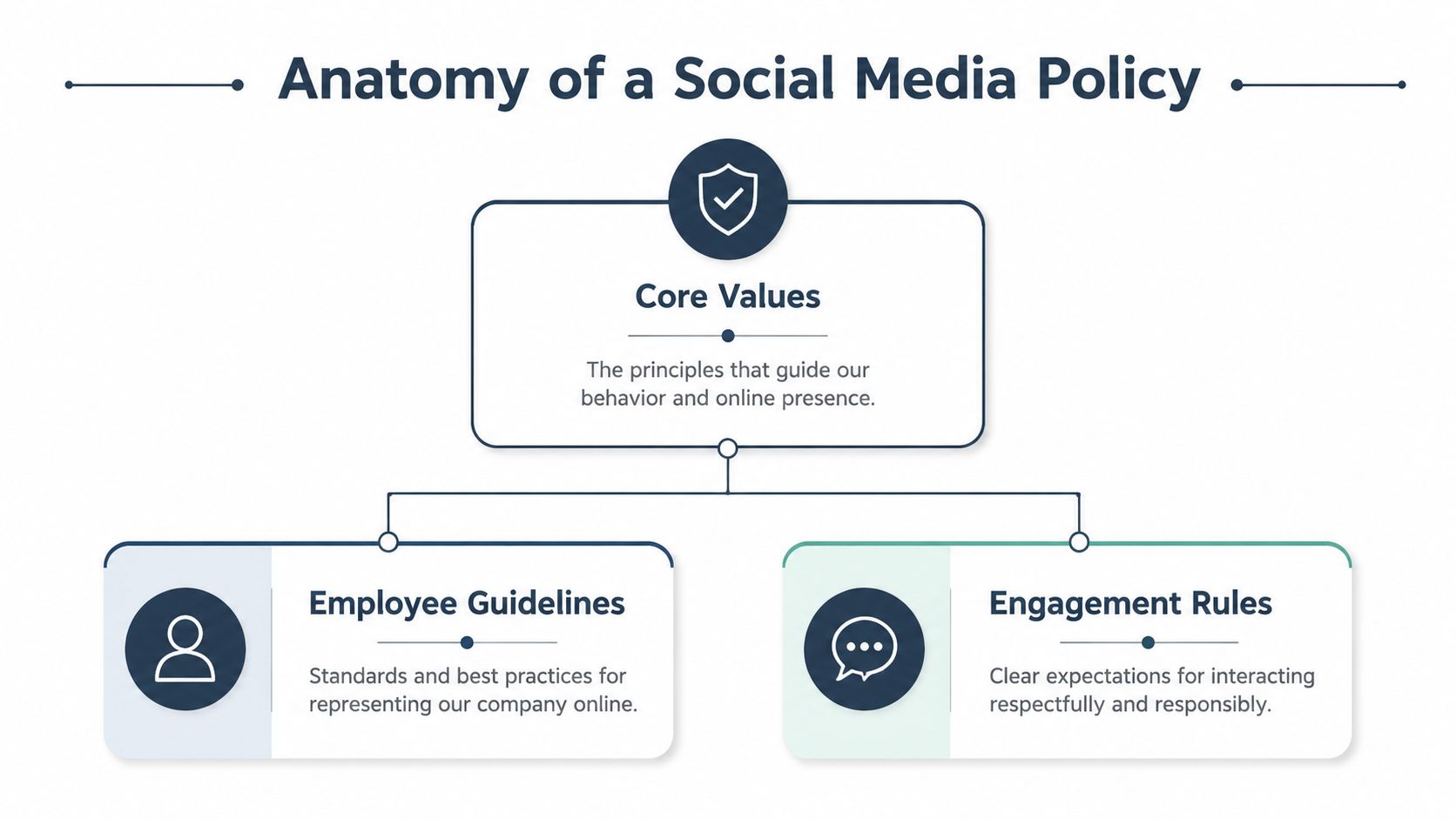
The Anatomy of an Effective Social Media Policy
The strongest policies are boring in the right way. They remove ambiguity before a problem becomes public.
That starts with governance. If your organization can't answer who is allowed to post, who approves, and who owns each account, the rest of the policy won't hold up. According to TechTarget's definition of social media policy, effective policies that assign granular roles with technical authentication standards can cut brand misrepresentations by 55%. The underlying principle is simple. Fewer people should have direct publishing access, and those who do should have clearly defined roles.
Start with authority and ownership
The first thing your policy should define is who can speak for the brand.
That means naming account owners, approvers, backup approvers, and the teams allowed to publish directly. In practice, most brands need a small number of official posters, not broad access spread across marketing, support, interns, and agencies.
A useful related read is Sift AI's piece on social media management for customer support, because support workflows often create the biggest ownership confusion. If support is active on social, your policy has to define what they can answer, what must be escalated, and which issues move out of public channels.
Build the policy around real decisions
A policy gets used when it mirrors the questions people ask. This checklist covers the core components.
| Component | What It Covers |
|---|---|
| Governance | Account ownership, official posters, approvals, access levels, handoff procedures |
| Acceptable use | What employees and contractors may say about the company on personal and official accounts |
| Disclosure rules | How to identify sponsorships, employment relationships, and brand affiliations |
| Confidentiality | What information is restricted, including internal plans, customer information, and unreleased materials |
| Brand standards | Tone, claims, visual usage, naming conventions, and off-limit topics |
| Community response | How to reply to comments, complaints, harassment, and media inquiries |
| Crisis escalation | Who gets notified, when posts are paused, and who approves public responses |
| Enforcement | Investigation steps, corrective actions, and consequences for violations |
Keep the language operational
Policy language should sound like instructions, not a lecture.
For example, “Don't share confidential information” is too broad on its own. Better language names categories. Don't share customer details, financial information, unannounced launches, internal metrics, legal matters, or screenshots from internal systems. Employees understand examples faster than abstract warnings.
The same is true for personal accounts. If employees can talk about the company, tell them when they need a disclaimer, when they must avoid commenting, and when they should route questions to comms instead of answering directly.
Working standard: If a new hire can't read the policy and know what to do in ten minutes, the document needs rewriting.
Add companion guidelines, not just restrictions
Teams frequently also need a simpler companion document with examples. That's where brand voice, approved phrases, disclosure examples, visual usage, and response templates belong.
If you're drafting those materials, a practical starting point is this resource on how to create brand guidelines. The policy sets boundaries. The guidelines help people execute inside those boundaries without sounding robotic.
What works is a two-layer system. The policy handles risk and authority. The guidelines handle tone and execution. Trying to cram both into one dense PDF usually leaves people with something they won't read.
How to Adapt Policies for Influencers and Creators
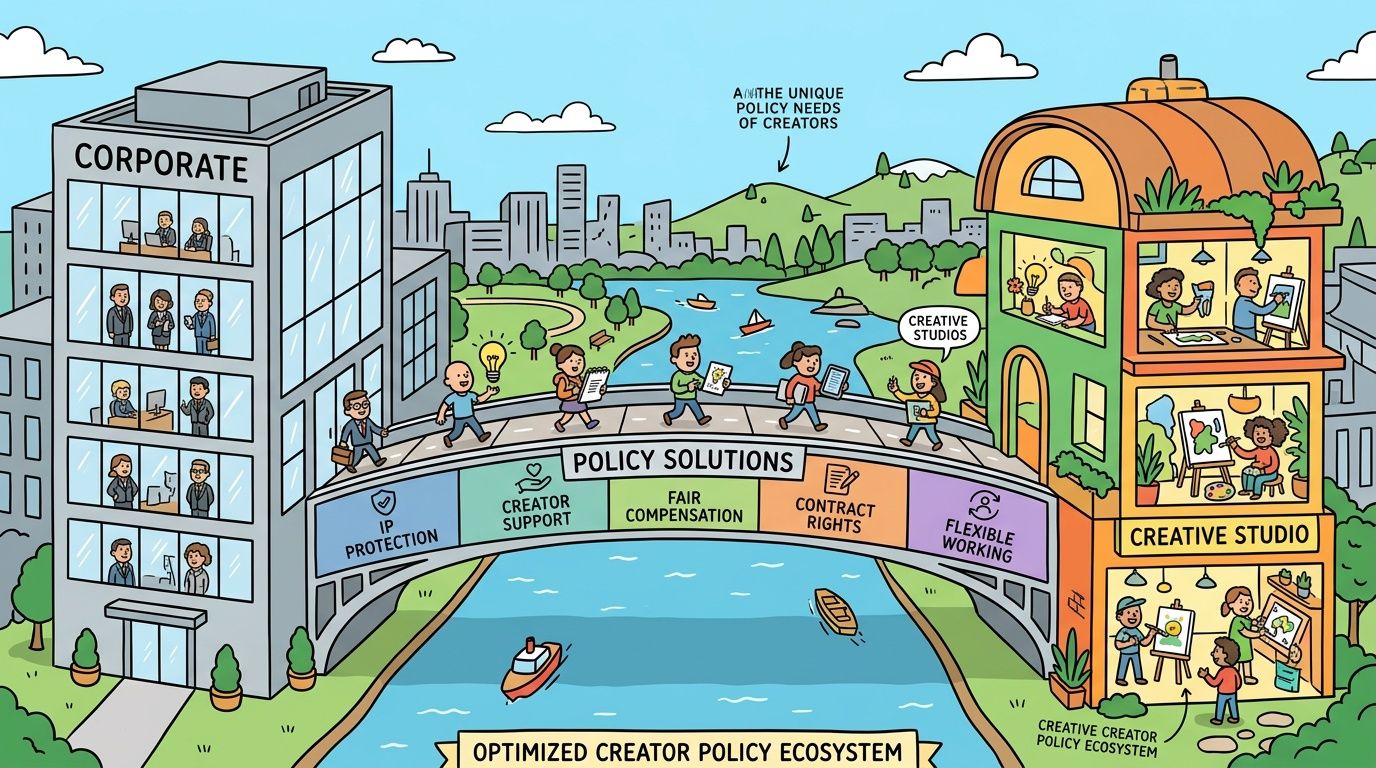
Most corporate social media policies stop at employees. That's a problem if a meaningful share of your public marketing now runs through creators.
The gap is real. Existing corporate social media policies focus almost exclusively on employee behavior and don't adequately address external partners like influencers, including how brands should define acceptable creator conduct, brand safety guardrails, or moderation standards, as discussed by Koegle Law on social media policies for employers.
Why employee rules don't transfer cleanly
Employees work inside your reporting structure. Creators don't.
That changes the entire enforcement model. You can't treat creators like staff, and you shouldn't try. Good creator policy design balances two realities. The brand needs protection. The creator needs room to sound like themselves. If you over-script everything, the content loses credibility. If you leave everything loose, the campaign becomes hard to defend.
The solution is not a generic brand brief. It's a creator-specific policy addendum built into contracts and workflows.
What to include in creator-facing rules
The most useful creator policy sections are practical and narrow:
- Conduct expectations covering hate speech, harassment, illegal activity, or behavior that conflicts with clearly stated brand values
- Disclosure requirements that specify how sponsored content must be labeled
- Claims boundaries that prohibit unsupported statements about product performance or outcomes
- Approval workflow defining which content needs pre-approval and which can be posted within approved guardrails
- Usage rights and ownership covering reposting, whitelisting, paid usage, edits, and archive periods
- Comment moderation rules for deleting, hiding, escalating, or responding to problematic comments
- Termination triggers explaining what happens if the creator breaches contract terms mid-campaign
Many teams often get too soft. They avoid specifics because they don't want to scare creators off. In practice, strong creators usually prefer clarity. It saves everyone time and reduces revisions.
Creator freedom works best inside defined boundaries. “Authentic” is not the same thing as “unmanaged.”
Treat policy as workflow, not paperwork
The biggest implementation mistake is storing creator rules in a contract that nobody checks once content production starts.
To make creator standards usable, move the policy into your campaign process. Put disclosure language in the brief. Build review checkpoints into approvals. Require final asset review for sensitive categories. Route questions through one point of contact. Keep a written record of approved claims and prohibited phrases.
For teams dealing with sponsorship labeling, this guide to FTC compliance in influencer marketing is a practical reference to pair with contract language.
The policy should also account for off-campaign behavior. That doesn't mean policing every personal opinion. It means deciding in advance what conduct would trigger review, pause, or termination if a public controversy directly affects the campaign. If you don't define that threshold early, you'll end up making inconsistent decisions under pressure.
Navigating Legal Landmines and FTC Compliance
The legal side of social media policy gets ignored until someone asks, “Can we post that?”
That question usually comes too late.
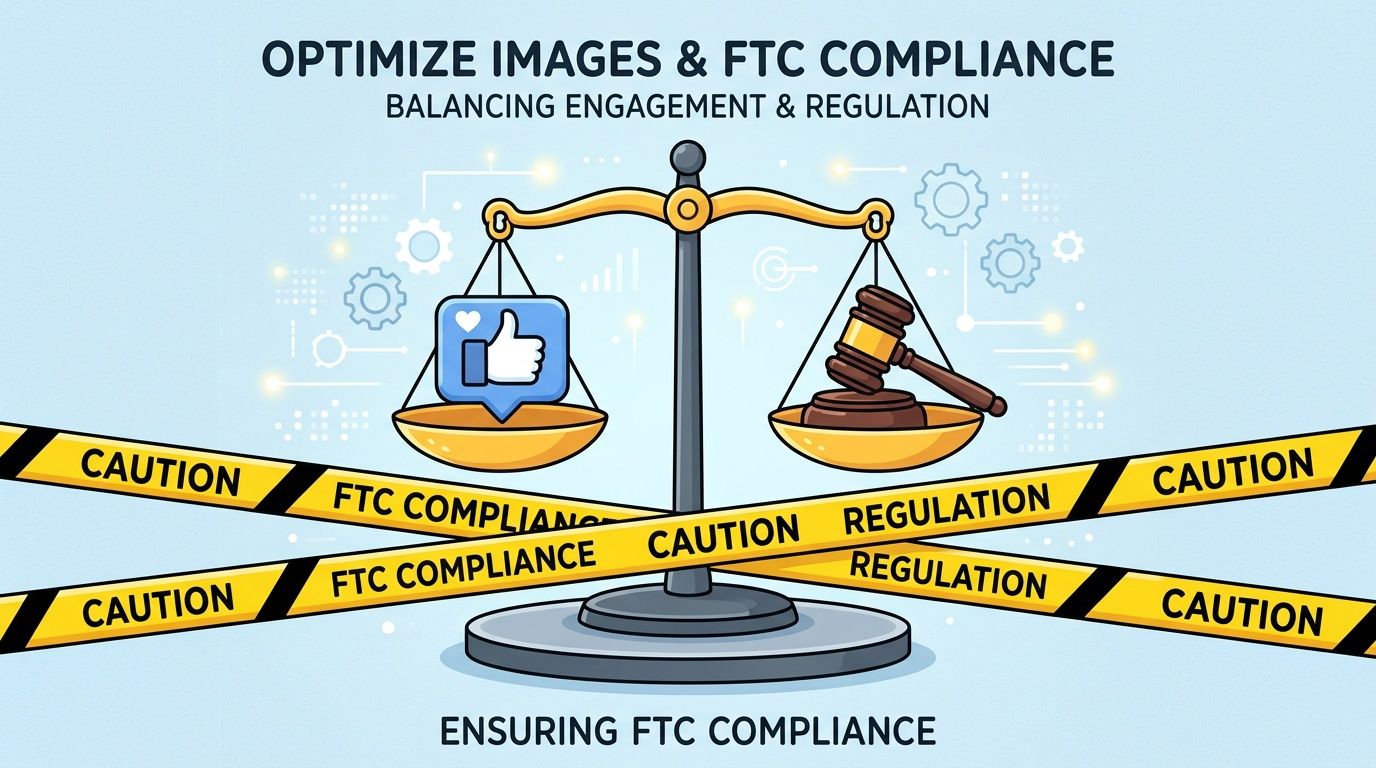
One of the most useful additions to a policy is a clear rule for handling sensitive information. Policies that include mandatory data classification protocols for proprietary information can reduce unauthorized disclosures by 47%, and 68% of incidents stem from accidental sharing by employees, according to PowerDMS on the six elements of a good social media policy. That matters because social media mistakes are often less about malicious behavior and more about somebody sharing a screenshot, draft, customer note, or internal detail they didn't realize was restricted.
Keep disclosures obvious
For influencer campaigns and employee advocacy, disclosure rules should be plain.
If a post is sponsored, the disclosure needs to be easy to notice and easy to understand. Short labels such as #ad or #sponsored are clearer than vague wording buried in a caption. If an employee is commenting on company products, your policy should also define when they must disclose their relationship to the company.
The standard I use is simple. If a reasonable viewer could miss the relationship, the disclosure isn't strong enough.
Legal review should be targeted
Not every post needs a lawyer. That's how teams create bottlenecks and start bypassing process.
What does need extra review? Product claims, regulated categories, sweepstakes, customer stories, health-related statements, financial language, data use, and creator content that uses the brand in a way that could be interpreted as a formal endorsement. For these cases, lightweight review systems work better than broad legal gatekeeping.
If your team needs help interpreting policy language or checking issue spots before formal counsel reviews something, tools like an AI-powered legal research assistant can be useful as a prep layer. It won't replace counsel, but it can help teams ask better questions and spot obvious risks sooner.
A short explainer can also help internal training teams align on disclosure basics:
Don't forget ownership and evidence
Legal trouble on social media isn't limited to disclosure. Ownership causes just as many headaches.
Your policy should answer who owns campaign assets, raw files, captions, edits, account credentials, and usage rights after a partnership ends. It should also require teams to keep records of approvals, contracts, and final posted content. When a dispute happens, documentation matters more than anyone expects.
Putting Your Social Media Policy into Action
A policy sitting in a shared drive won't protect anything. Rollout matters as much as drafting.
Start with executive buy-in, but keep the approval group small. You need alignment from leadership, marketing, HR, and legal or outside counsel where needed. After that, publish one current version, not multiple conflicting copies in different folders.
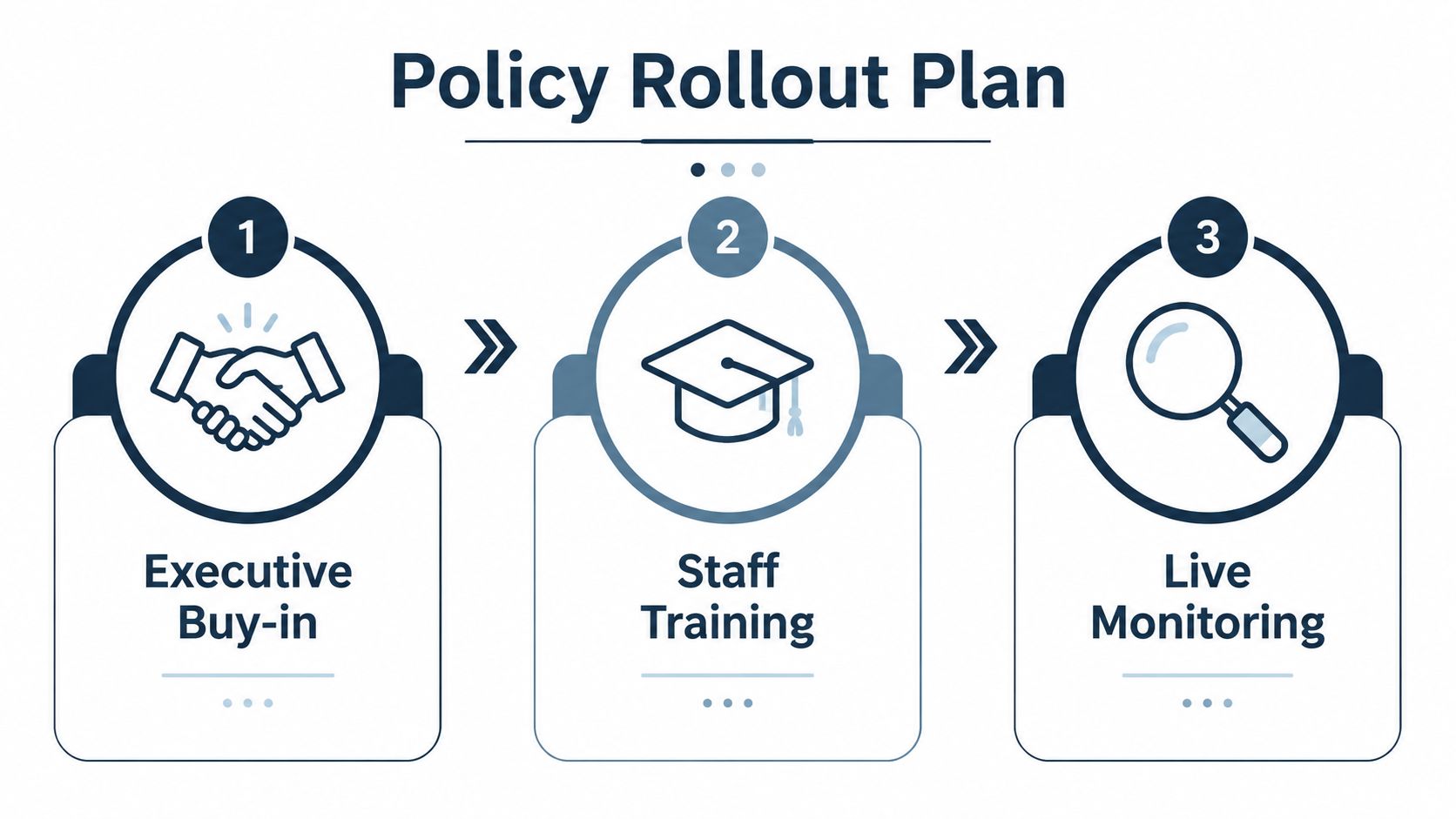
A rollout plan that people will actually follow
Use a short implementation sequence:
Finalize the policy and examples
Pair the formal document with simple examples for employees, agencies, and creators.Train by role
Don't give the same training to everyone. Social managers, executives, customer support, and influencer partners need different examples.Require acknowledgement
Make sure employees and external partners confirm receipt in writing.Build the policy into workflow
Add approval steps, disclosure rules, and escalation contacts to the tools people already use.Review and update regularly
Platforms change, campaign formats change, and your risk profile changes with them.
The best policy is the one people can find, understand, and use under pressure.
The teams that do this well don't treat corporate social media policies like a compliance artifact. They treat them like operating infrastructure. That's what turns social media from a recurring source of risk into a channel you can scale with confidence.
If you're running creator campaigns and want the operational side to be less chaotic, REACH is built for the work that happens after discovery. It helps brands and agencies manage influencer campaigns from one place, organize communication, track deliverables, handle payments and 1099 workflows, and keep execution cleaner across TikTok, Instagram, YouTube, and more. If your policy is ready but your process still lives in spreadsheets and DMs, REACH is a practical next step.