Meta description: TikTok campaign management breaks when creator outreach ends and real operations begin. Learn how to structure briefs, track deliverables, measure performance, and handle payments without spreadsheet chaos.
TikTok campaign management usually looks clean in the pitch deck and messy in practice.
The creators said yes. A few drafts are sitting in DMs. One invoice is overdue. Someone posted the wrong CTA. Paid spend is live, but sales happened later through another channel, so reporting looks weaker than the campaign performed. At that point, teams often realize TikTok campaign management isn't only a media-buying problem. It's an operations problem.
That matters because TikTok is now a serious paid and creator channel. Statista projects $33 billion in TikTok advertising revenue by the end of 2025, and TikTok says 24% of users have posted content showing off a product they bought, which helps explain why creator content and paid amplification often work together on the platform (Statista TikTok marketing data).
The teams that handle TikTok well usually don't rely on hustle. They use a system. They define what success looks like before outreach, turn briefs into operational documents, centralize approvals, and build reporting that reflects how people buy. That's where software built for post-discovery workflow becomes useful. Tools such as REACH exist for that exact gap: managing the campaign after you've found creators and before the final payment goes out.
Laying the Foundation for a Winning TikTok Campaign
Most TikTok campaign problems start before the first creator message goes out. If the goal is fuzzy, the brief gets vague. If the audience is broad in the wrong way, the content feels generic. If nobody defines timelines and decision rights early, every approval turns into a debate.
Start with one job for the campaign
A campaign can support several outcomes, but it still needs one primary job. That primary job shapes everything else.
Use a simple hierarchy:
- Awareness first: prioritize reach, watch behavior, and creator fit.
- UGC production first: prioritize content quality, usage rights, and volume of usable assets.
- Sales first: prioritize landing-page alignment, attribution setup, and paid amplification readiness.
When teams skip this step, they end up judging awareness assets by direct-response logic. That's how strong campaigns get killed too early.
Define the operating rules before creator outreach
Campaign planning needs more than a budget line and a launch date. It needs operating rules that everyone can follow without asking Slack for clarification.
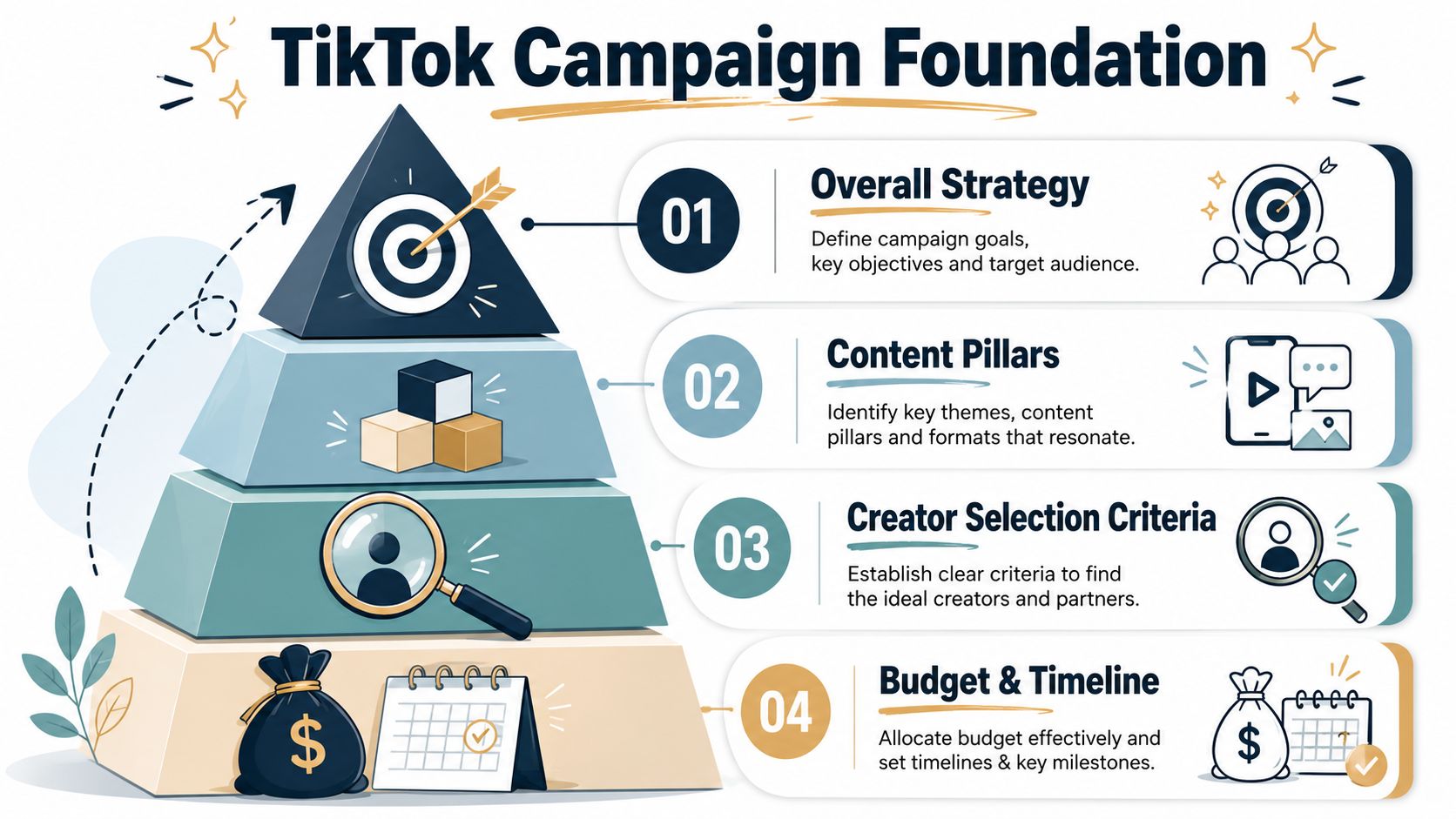
I'd lock these down before outreach:
Audience definition
Write down who the campaign is for in plain language. Not just demographics. Include problems, buying triggers, and the type of TikTok content they already watch.Content pillars
Pick a small set of repeatable angles. Product demo, lifestyle integration, comparison, reaction, tutorial, or founder story all produce very different creator outputs.Creator selection criteria
Decide what matters most. On TikTok, that may be on-camera clarity, editing style, community fit, reliability, or willingness to revise.Budget and timeline
Separate creator fees, paid amplification, contingency, and admin time. Teams often budget for content and forget the cost of managing approvals and usage.
Practical rule: If a campaign can't be summarized in one sentence, one audience definition, and one primary KPI set, it isn't ready for creator outreach.
For teams researching accounts across markets, content categories, or test campaigns, account setup can become a practical issue early. If your workflow requires separate profiles for testing or regional operations, this guide on how to create multiple TikTok accounts is a useful operational reference.
Build discovery around campaign fit, not vanity
Creator discovery gets easier when the campaign foundation is stable. You can screen for fit instead of scrolling endlessly. A searchable database helps here because you can filter for the creators who match the content style and audience behavior you need. For example, a tool with TikTok profile search can support that front-end filtering so the shortlisting process starts from campaign criteria instead of instinct.
A practical foundation also reduces downstream conflict. If the team already knows the target audience, approved formats, usage plan, and timeline, creators get clearer asks and the review cycle stays shorter.
Building Your Creative Brief and Onboarding Creators
Most campaign pain doesn't come from bad creators. It comes from bad instructions.
A weak brief creates avoidable revisions. A messy onboarding process creates delays before the content work even starts. Public advice around TikTok often spends more time on bids and setup than on the post-creator workflow, even though that's where many teams lose control. As Adsmurai's write-up on TikTok campaign optimization notes, better ad automation doesn't remove complexity. It shifts the bottleneck toward coordination, measurement, and compliance.
Write a brief creators can actually use
A good TikTok brief doesn't read like a brand document pasted into a PDF. It gives creators enough structure to stay on-message without flattening their voice.
The strongest briefs usually include:
- Campaign objective: what the content needs to do.
- Audience context: who should care and why.
- Message guardrails: must-say points, claims to avoid, words the brand uses, words it doesn't.
- Creative direction: examples of hook types, format references, pacing, and visual tone.
- Deliverables: exact asset list, posting requirements, cutdown needs, and usage expectations.
- Review process: who approves, what counts as a revision, and how long approvals take.
The difference between “mention the product naturally” and “open with the problem, show the product in use early, and close with a direct CTA” is the difference between chaos and usable content.
For marketers who want a stronger template, this guide on how to write a creative brief is worth using as a checklist.
Onboarding should remove friction, not add more messages
Once a creator agrees in principle, the handoff matters. Campaigns usually fragment during this process into DMs, email threads, attachments, and “just circling back” follow-ups.
A smoother onboarding flow looks like this:
- Confirm scope quickly: post count, formats, deadlines, usage rights.
- Collect essentials once: legal name, payment details, handles, shipping details if product is involved.
- Centralize communication: one thread or dashboard for all campaign updates.
- Set review expectations early: creators should know turnaround times before they submit.
The best onboarding process feels boring. That's a good sign. Nobody has to guess where anything lives.
If your creators need five different places to find the brief, upload content, ask questions, and get paid, the system is broken. Most missed deadlines aren't talent issues. They're workflow issues.
Protect creator creativity while reducing revision risk
Over-directing TikTok content often makes it worse. Under-directing it makes it off-brand. The balance is simple: define outcomes and guardrails, then leave room for native execution.
What works:
- giving creators clear claims, deadlines, and examples of acceptable tone
- asking for hooks or concepts up front before the full draft
- clarifying which changes are mandatory versus nice-to-have
What usually fails:
- script-writing every line
- changing the brief after the creator starts filming
- using three reviewers who all want different things
Most downstream problems start here. Fix this stage, and the rest of TikTok campaign management gets much easier.
Streamlining Content Management and Deliverable Tracking
When a campaign grows past a handful of creators, content management becomes the primary job.
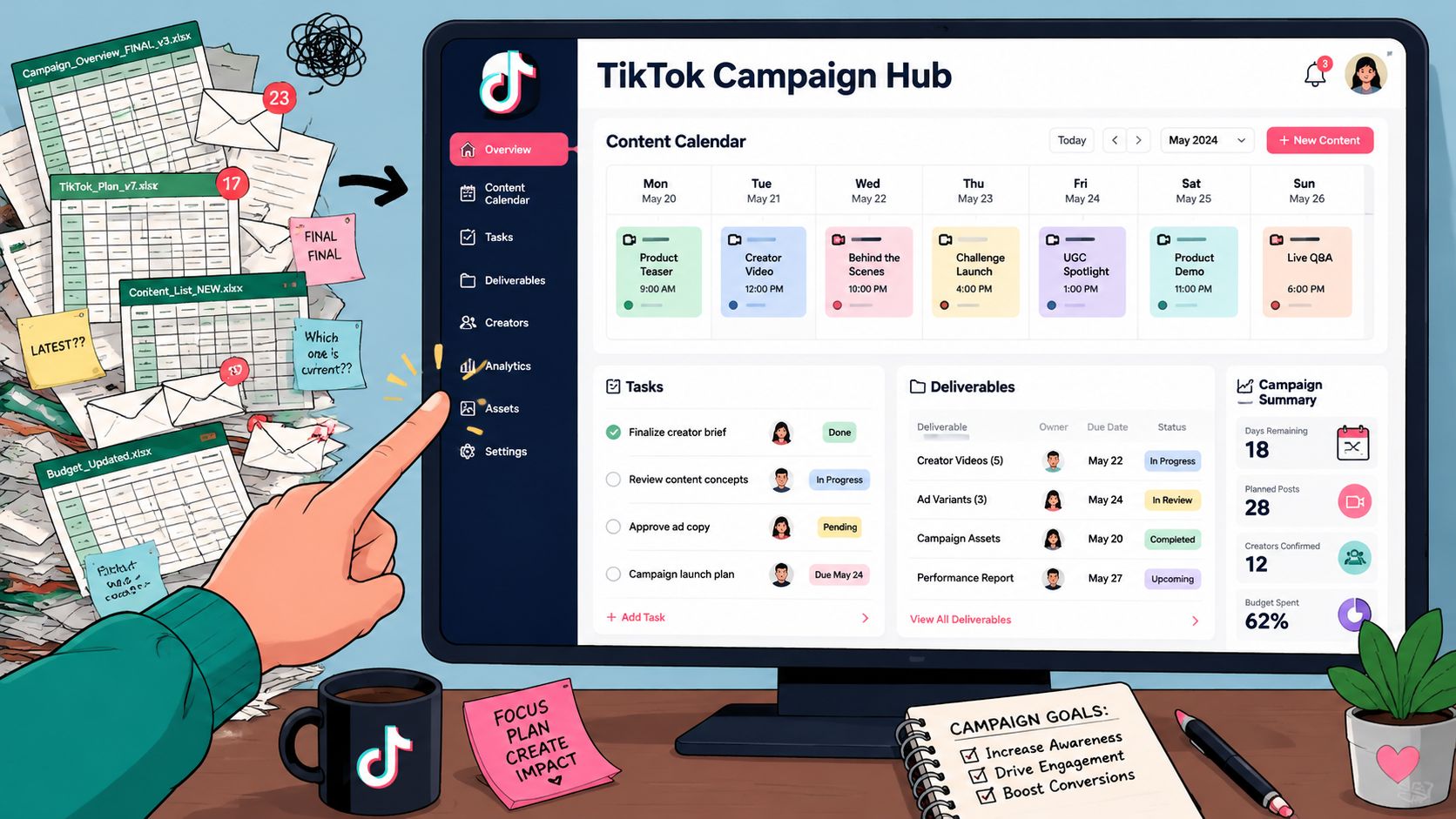
Spreadsheets can hold deadlines. Shared folders can hold files. DMs can hold feedback. None of them can hold the full campaign context in one place, and that's where things fall apart. One creator uploads the right version but the team reviews the wrong one. Another post goes live before legal approval. Someone asks which assets have paid usage rights, and nobody answers with confidence.
Track the content lifecycle, not just the final post
A mature workflow treats content as a pipeline with stages. That sounds basic, but many teams still track only “sent” and “posted.”
A better system includes status stages like these:
| Stage | What should happen |
|---|---|
| Concept approved | Hook or idea aligns before filming |
| Draft submitted | Creator uploads the working version |
| Revision requested | Feedback is consolidated and time-bound |
| Final approved | Asset is cleared for posting or whitelisting |
| Posted | Live link and timestamp are stored |
| Repurposed | Asset moved into paid, email, landing page, or organic library |
That structure matters because campaigns don't end at publish. The asset may need to move into paid media, creator licensing, website merchandising, or future reporting.
Centralize comments or lose time
Feedback scattered across email, Slack, and DMs slows down every creator. It also creates version confusion.
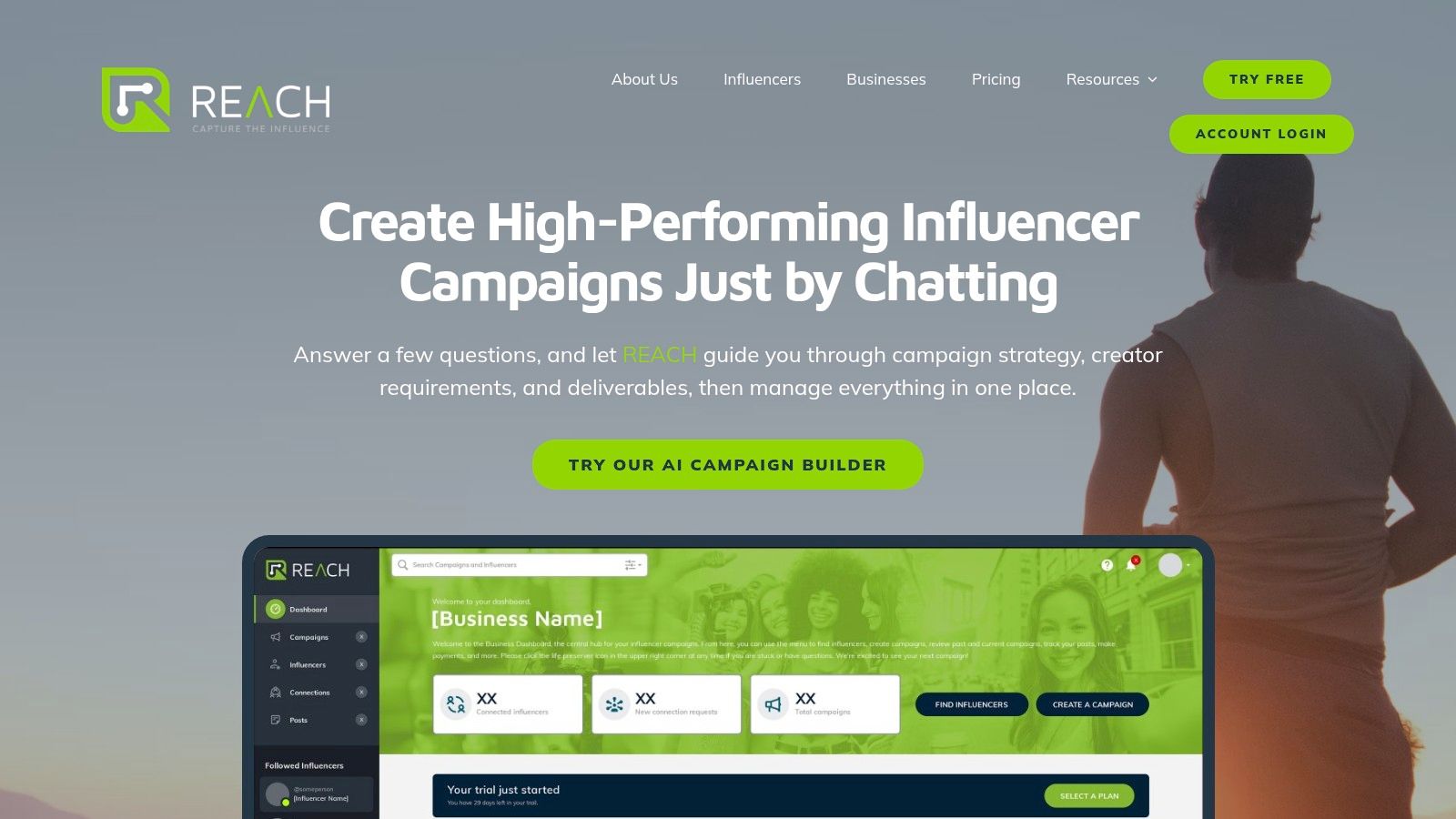
One command center is better than five tools pretending to be one. That's the practical case for a platform like REACH. It gives brands and agencies a centralized place to manage creator communication, track deliverables across campaigns, monitor content status, and handle the operational work after discovery. That matters more than another creator database once the campaign is running.
If your team can't answer “What's waiting on us right now?” in under a minute, your campaign tracking isn't tight enough.
A short demo of workflow tooling helps make this easier to picture:
Reporting gets harder when TikTok influences, but doesn't close
Another reason central tracking matters is attribution. TikTok's own business guidance highlights a common problem: people discover through creators on TikTok, then buy later somewhere else, which means last-click reporting misses part of the influence path (TikTok advertising fundamentals on attribution and measurement).
That's especially painful when the campaign is managed in disconnected tools. The creator content may be doing its job, but the reporting setup can't connect exposure, consideration, and delayed conversion across channels.
A few practical habits help:
- Store every live link and asset version so paid and organic usage stay traceable.
- Tag creator assets consistently by concept, offer, and audience angle.
- Record post-publish changes such as caption edits, boosting, or repurposing.
- Keep approval history so performance can be tied back to the final asset version, not a draft.
The operational side of TikTok campaign management is often what determines whether the reporting conversation stays credible.
Measuring Performance and Optimizing Your Campaign
Monday morning usually looks the same on a busy TikTok campaign. A creator says the post is live. Paid wants to whitelist the asset. Someone in Slack asks why clicks look strong but sales have not shown up yet. Finance wants to know which creators earned a second round. If the campaign is managed across screenshots, ad hoc sheets, and inbox threads, performance review turns into cleanup work.
Good optimization starts with operational discipline. TikTok Ads Manager gives teams the raw numbers, including Clicks (all), Clicks (destination), Frequency, and CPC (destination), but those metrics only help if the team can tie them back to the right creator, asset version, publish date, and usage rights (TikTok Ads Manager basic data definitions).
Protect the learning phase from team anxiety
Early edits cause more problems than weak creative. A common TikTok ads recommendation is to wait before making major ad group changes, because frequent edits during learning can reset delivery and make performance harder to judge (Funnel summary of TikTok ad guidance).
That matters even more in creator campaigns, where multiple teams touch the same asset. Paid wants to swap copy. Brand wants a safer caption. The creator manager finds a newer revision in email. By the time the team agrees on what changed, the ad group has been edited three times and nobody trusts the result.
A cleaner operating rule works better:
- Change one variable at a time: audience, creative, bid, or offer
- Keep creator variants separate: each concept needs its own read
- Review on a fixed cadence: daily for delivery checks, less often for structural changes
- Log every meaningful edit: budget shifts, caption swaps, boosted posts, and URL changes
REACH helps here because the asset record, approval history, and live usage stay in one place. That cuts down the usual argument over whether performance dropped because the hook was weak or because the team pushed an untracked revision live.
Match KPIs to the job each asset is doing
A creator post built to earn attention should not be judged with the same scorecard as a retargeting asset built to convert. Teams get into trouble when every asset is forced into one reporting template.
Use a KPI map that reflects campaign intent:
| KPI | What It Measures | Why It Matters |
|---|---|---|
| Reach and views | How many people saw the content | Useful for awareness and early signal |
| Engagement quality | How people interacted with the content | Helps identify message and creator fit |
| Clicks (all) | Total click activity | Shows broad response and curiosity |
| Clicks (destination) | Clicks that reached the destination | More useful for site-driving campaigns |
| Frequency | How often the audience sees the ad | Helps monitor oversaturation |
| CPC (destination) | Cost efficiency of destination clicks | Useful for paid traffic control |
| Conversion volume | Number of tracked downstream actions | Critical for sales-focused campaigns |
| Asset reuse rate | How often content is repurposed | Measures UGC value beyond the initial post |
One more metric deserves more attention than it usually gets. Operational reliability. If a creator delivers on time, follows the brief, clears revisions quickly, and produces assets that paid can use, that creator lowers campaign drag. Performance is not only about media results. It is also about how much effort the asset costs the team after it is approved.
Spot fatigue early, then refresh with intent
Creative fatigue rarely announces itself with one dramatic drop. It usually shows up as a pattern. Watch time softens first. Click efficiency follows. Then the team keeps spending because the post was a winner two weeks ago.
A practical review cadence helps:
- Healthy: stable watch behavior, controlled frequency, efficient traffic
- Watchlist: softer engagement, rising frequency, weaker click-through
- Refresh now: multiple signals decline in the same window, especially after the asset has been heavily reused
The mistake is not missing one bad day. The mistake is letting old creative run because replacing it feels operationally expensive. That is why content tracking and performance review belong in the same workflow. If the next approved asset, rights status, creator availability, and payment status are already organized, the team can rotate creative quickly instead of debating whether to squeeze one more week out of a tired post.
That handoff gets easier when campaign ops and finance are connected. Teams that already use an influencer payment automation tool can usually refresh faster because they know which creators are cleared for another round and which deliverables are still tied up in admin.
Optimization on TikTok is not only a media buying skill. It is a coordination skill. The teams that improve fastest are usually the ones with a system that keeps asset status, creator communication, approvals, and performance history connected.
Scaling Success with Smart Payments and Compliance
A TikTok program usually starts to break after the campaign looks successful on paper.
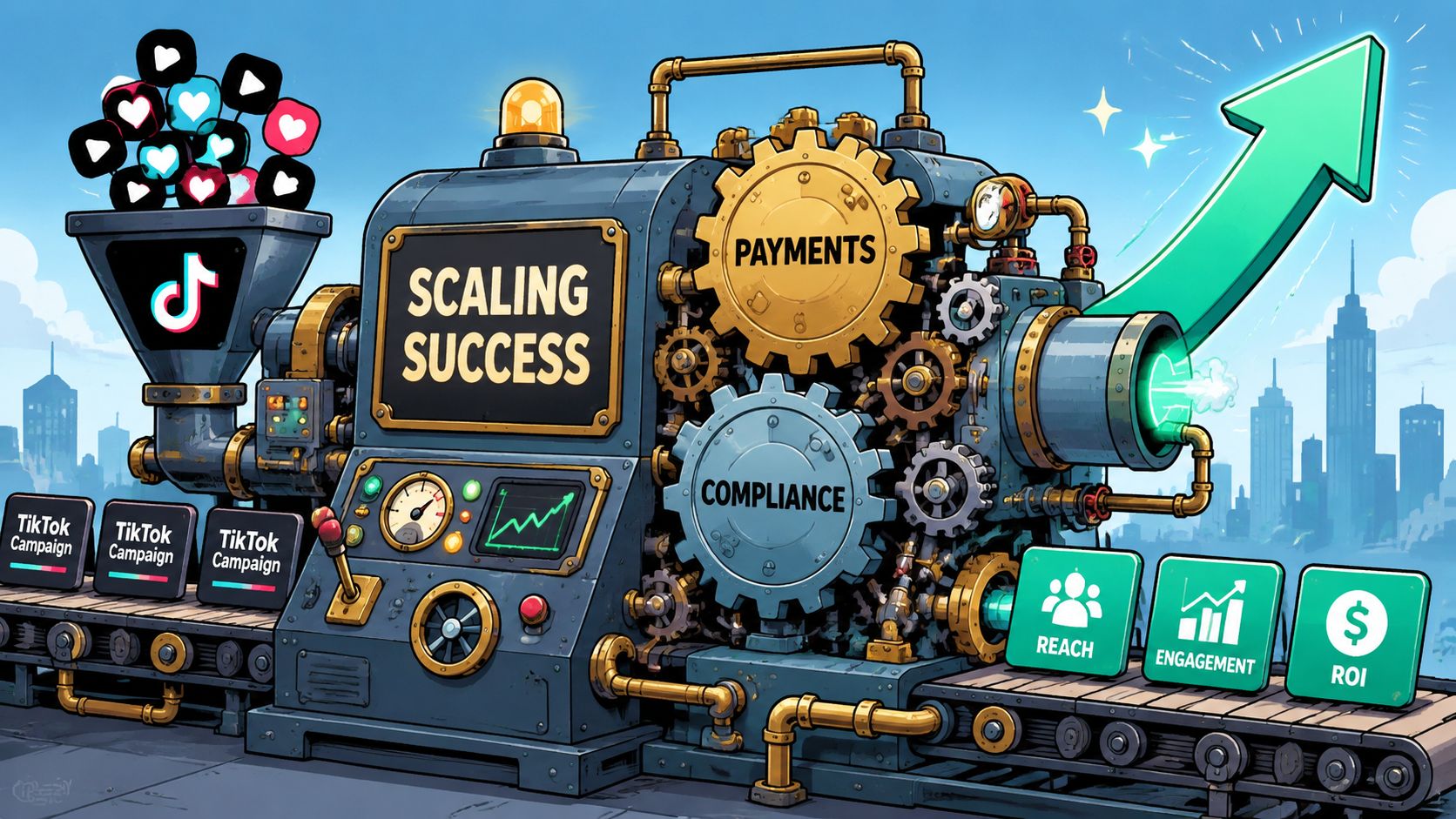
The team adds more creators. More content goes live. Then the admin load spikes. Payment terms live in email threads, tax forms arrive after finance asks for them, usage rights are buried in old contracts, and one missed invoice turns into three angry follow-ups in DMs. That is the point where campaign management stops being a creator sourcing problem and becomes an operations problem.
Scaling requires a roster you can run repeatedly.
Build a repeatable roster, not a revolving door
Creators who already know your approval process, brand guardrails, and turnaround expectations are easier to brief and easier to bring back. Reuse should be intentional, not automatic. Fresh faces help prevent creative fatigue, but proven partners reduce training time and operational risk.
A workable roster strategy usually includes a few simple records that teams often skip:
- Reliability notes: who hits deadlines, who needs reminders, who handles revisions well
- Admin status: signed agreement, tax details, payment method, usage rights
- Content patterns: which hooks, formats, and posting styles fit the brand
- Reuse potential: who is worth rebooking quickly when a campaign needs more volume
Performance still matters, but scaling decisions get easier when operational reliability is tracked alongside content output. A creator who performs well and creates constant admin cleanup is harder to scale than their numbers suggest.
Payments shape creator retention
Reliable payment operations affect whether strong creators want to work with the brand again.
Creators remember when the scope changed after approval. They remember when invoice instructions were unclear. They remember when payment dates slipped because nobody could confirm whether the post had been approved, published, or reconciled internally.
Those issues create real drag for the brand team too. Account managers end up chasing banking details in chat. Finance asks for missing documentation after the invoice is already due. Campaign leads waste time confirming whether a deliverable is complete before payment can be released.
A structured payout workflow removes a lot of that friction. A dedicated influencer payment automation tool helps standardize approvals, payout steps, and recordkeeping so creator payments do not depend on whoever happens to be online that day.
Compliance gets expensive when it is treated as cleanup
Compliance work rarely feels urgent at the start of a campaign. It becomes urgent at the exact moment the team is busiest.
The common failure points are predictable. Usage rights were never logged clearly. Disclosure requirements were assumed, not checked. Tax forms were requested after the invoice arrived. Contract language changed from one creator to the next because the team was working from old files.
A practical setup keeps a few items locked down:
Standard agreement templates
Keep deliverables, revisions, usage rights, and posting expectations consistent.Early collection of tax and payment details
Get the required information before content is live and before finance gets involved.Disclosure review inside approvals
Check sponsored content requirements before a post is cleared, not after it is published.Campaign closeout records
Save live links, confirm final deliverables, log rights status, and mark payment completion in one place.
Teams usually do not lose control because one creator is difficult. They lose control because campaign workflow, finance, and compliance live in separate systems with no clear handoff.
That is the core scaling problem.
If your team is still managing TikTok campaigns through spreadsheets, inboxes, and scattered creator messages, REACH is built for the part of influencer marketing that usually breaks after discovery. It gives brands and agencies one place to organize campaign workflow, track deliverables, centralize communication, and manage payments and compliance without turning every launch into an admin project.