 Skip to content


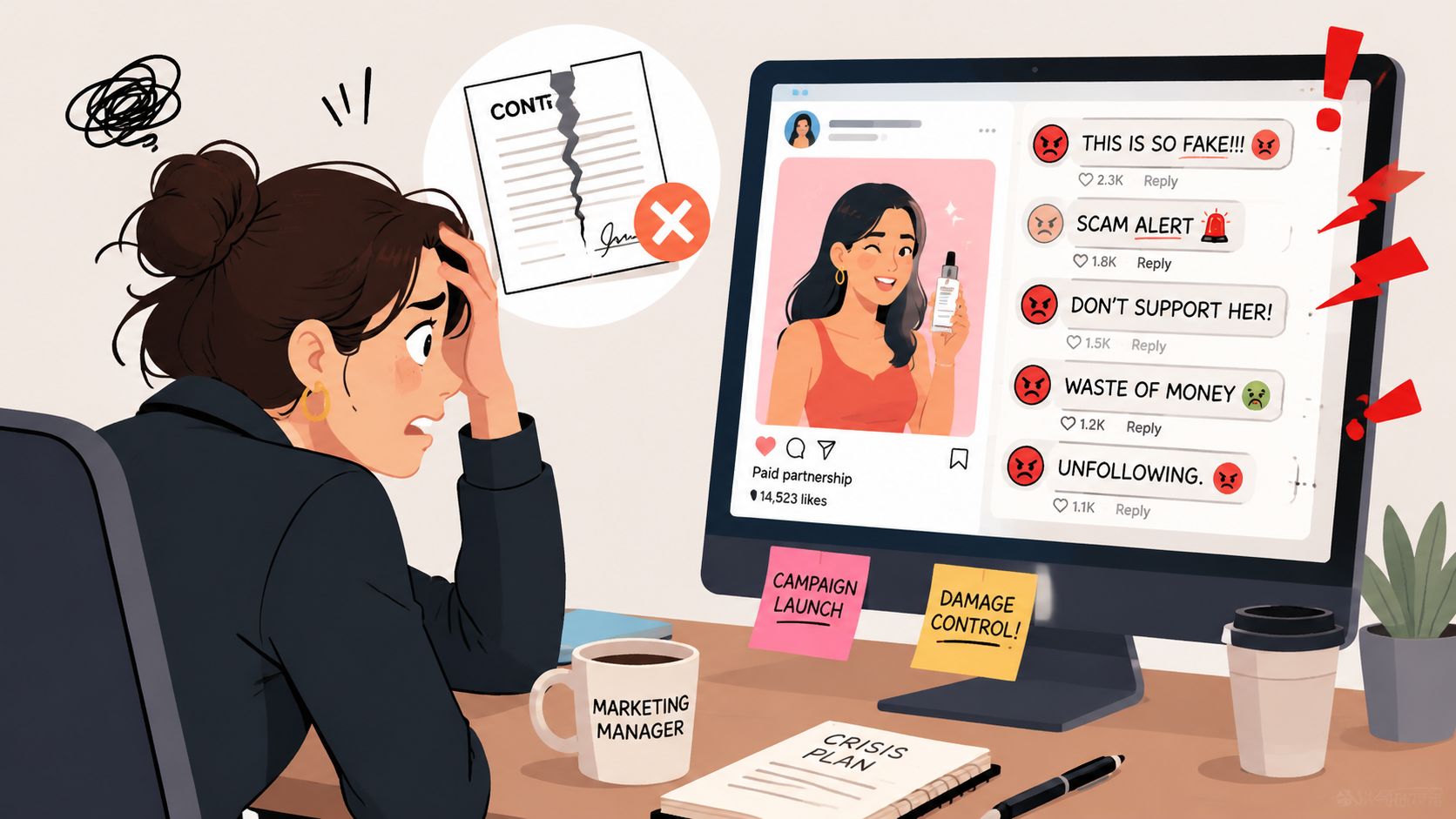
A creator misses the content deadline. The revised TikTok comes back off-brief. Finance says payment is on hold because the usage rights in the agreement are unclear. The influencer insists the brand changed scope after approval. Your team is now chasing screenshots across email, Slack, DMs, and a shared drive named “final_v2_REAL.”
That's how most influencer disputes start. Not with some dramatic legal showdown, but with confusion, delay, and a missing paper trail.
A dispute resolution process fixes that. It gives both sides a path: what gets discussed first, what gets documented, when the issue escalates, and who decides if the parties can't agree. That structure matters because unresolved workplace conflict isn't cheap. One widely cited estimate found that defense and settlement costs averaged $160,000 per case, with disputes taking an average of 318 days to resolve, according to a law-and-economics discussion of dispute resolution costs and delays.
In influencer marketing, the stakes usually look different from a courtroom battle, but the operational damage is familiar. Launches slip. Paid media plans stall. Teams burn hours on avoidable cleanup. And if your agreement is weak from the start, you're already behind. A solid influencer agreement contract checklist does more than protect legal rights. It sets the rules for resolving friction before the campaign blows up.
Why Your Influencer Campaigns Need a Dispute Resolution Process
Most campaign managers don't need a lecture on conflict. They need a way to stop small problems from turning into expensive ones.
The common failure pattern is predictable. A brief leaves room for interpretation. A creator posts something the brand sees as noncompliant. The brand asks for changes without tying the request back to contract language. The creator pushes back because they think they already delivered what was approved. At that point, the issue isn't just content quality. It's process failure.
What chaos looks like in practice
When there's no dispute resolution process, teams improvise. That usually means:
- Scattered communication across DMs, text messages, inboxes, and comment threads
- Shifting standards because nobody can point to the exact approval or deliverable requirement
- Payment friction when finance, legal, and marketing all use different definitions of “complete”
- Escalation by emotion instead of evidence
The result is a campaign manager stuck playing detective.
Keep this rule in mind. If you can't reconstruct the timeline in ten minutes, you don't have a dispute process. You have a memory contest.
What a real process changes
A working system does three things right away.
First, it separates normal campaign feedback from an actual dispute. Not every revision request needs escalation.
Second, it defines who owns the next move. If a creator misses a deliverable, someone sends the formal notice. If the brand changes scope, someone documents the amendment.
Third, it turns “he said, she said” into a review of facts. What was contracted, what was submitted, what was approved, what changed, and what remedy is available.
That's the difference between a frustrating campaign and a manageable one.
Understanding the Dispute Resolution Process
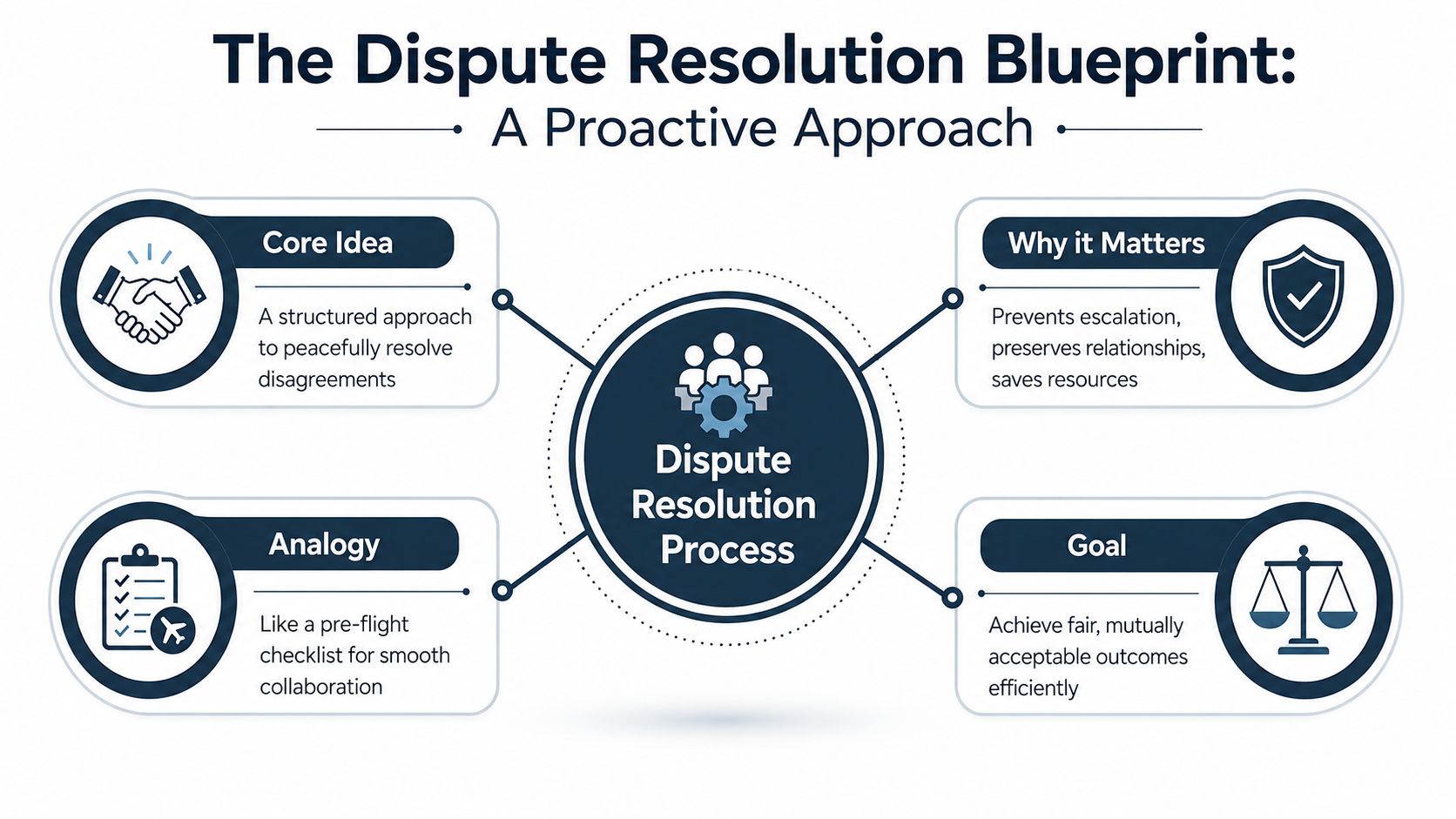
A good dispute resolution process is like a fire escape plan. You hope you won't need it, but if the problem hits, nobody should be inventing the route on the fly.
At its core, a dispute resolution process is a structured way to handle disagreement fairly, quickly, and with the least operational damage possible. In influencer marketing, that means more than legal protection. It means preserving launch timing, protecting brand standards, and keeping workable creator relationships intact when possible.
The process needs stages
The strongest systems don't treat every disagreement the same way. The most effective design choice is to separate informal de-escalation, facilitated negotiation, and binding adjudication into distinct stages, because each uses different decision rights and evidence thresholds, as outlined in the IDEA dispute-resolution framework summary from the ECTA Center.
That matters in campaigns.
A late draft with minor caption issues should move through quick clarification and revision. A payment dispute tied to alleged breach needs documentation, timeline review, and possibly third-party help. A serious contract breakdown may need formal adjudication because the parties no longer trust each other's account.
What the process is trying to achieve
A useful framework aims for several outcomes at once:
- Fairness: Each side gets heard against the actual agreement, not against whoever sent the longest email.
- Speed: Teams need a path that avoids endless debate loops.
- Cost control: The method should fit the size of the dispute.
- Relationship preservation: Some creator relationships are worth saving. Some aren't.
A lot of marketers borrow useful conflict habits from outside marketing. For example, this comprehensive guide to K-8 conflict resolution is built for schools, but its emphasis on clear channels, calm escalation, and role clarity translates surprisingly well to creator partnerships.
Unstructured arguments don't scale
When teams skip structure, they usually rely on personality. The loudest person wins. The most senior person decides. Or everyone avoids the issue until it becomes a legal or reputational problem.
That's avoidable. Clear corporate social media policies help define expectations before a campaign starts, but they only work if the dispute path is just as clear as the posting rules.
A dispute process isn't red tape. It's a decision system for moments when trust drops and pressure rises.
Common Methods for Resolving Disputes
Not every brand-creator conflict needs the same tool. Some issues need a direct conversation. Some need a neutral facilitator. A few need a binding decision because the relationship has broken down completely.
Large organizations have already moved in that direction. A survey of Fortune 1000 corporations found a shift away from binding arbitration and toward mediation and other informal approaches, reflecting a preference for methods that are faster, cheaper, and better at preserving business relationships, as discussed in this analysis of the Fortune 1000 mediation and arbitration survey.
Negotiation
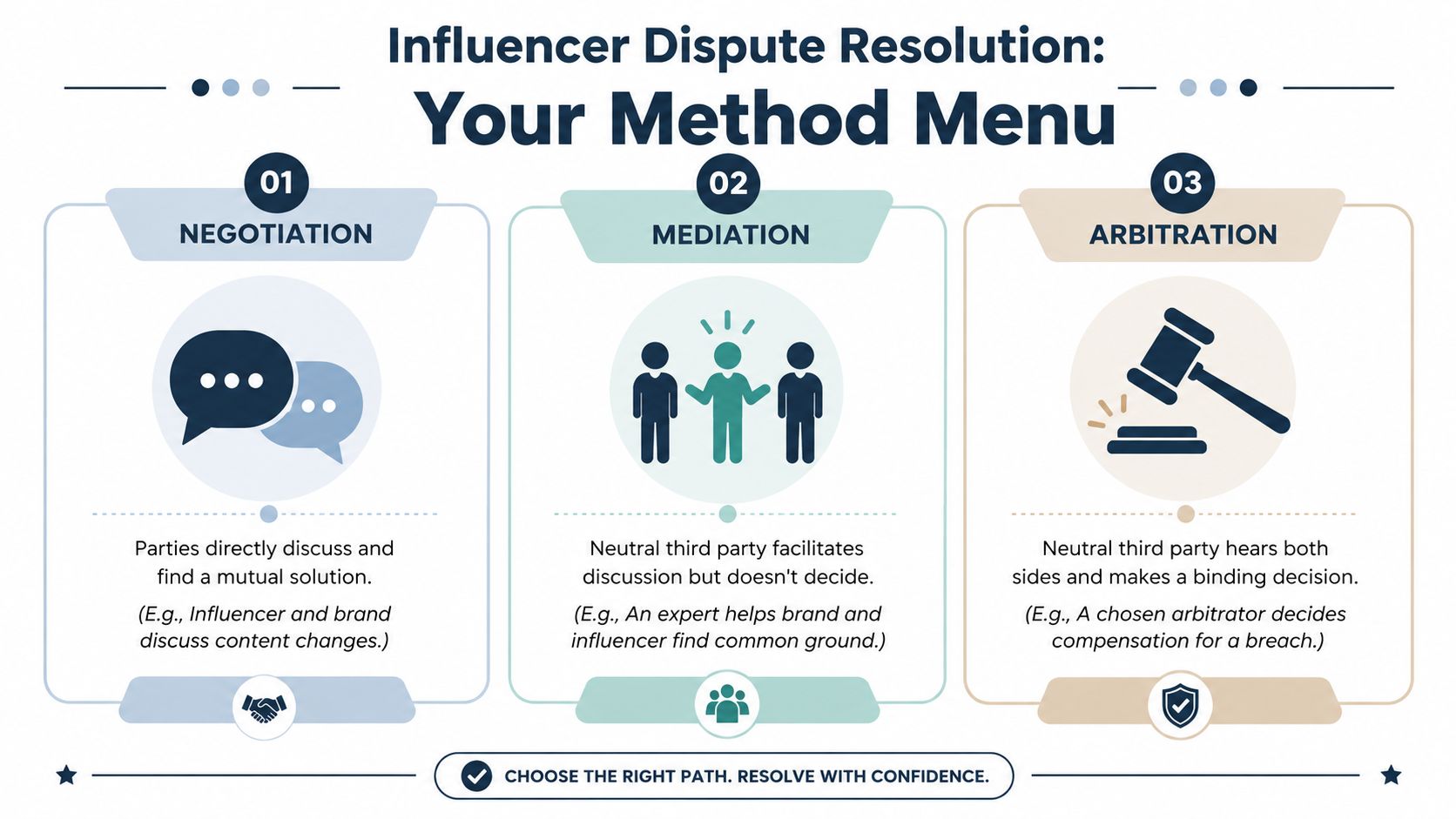
This is the first and most common option. The brand and creator work it out directly.
In influencer marketing, negotiation fits issues like a missed submission date, disputed edit rounds, usage clarification, or replacing one deliverable with another. It works best when both sides still trust the relationship enough to compromise.
What works:
- Tie the issue to the agreement
- Offer a practical remedy
- Set a response deadline
What doesn't work is vague frustration. “This isn't what we expected” is weak. “The draft doesn't match the approved brief section on product claims, so please revise by Thursday” is usable.
Mediation
Mediation adds a neutral third party who helps the sides reach a voluntary resolution. The mediator doesn't impose the outcome.
This is often the best move when the facts are mostly known but the relationship is tense. Think payment disputes, exclusivity disagreements, or arguments over whether the brand's revision requests changed scope.
If both sides still want a business solution, mediation usually beats turning the issue into a winner-take-all fight.
Arbitration
Arbitration is more formal. A neutral arbitrator hears both sides and makes a decision that is often binding under the contract.
This method fits more serious problems: breach of exclusivity, undisclosed sponsorship conflicts, failure to deliver after payment, or unauthorized use of content outside licensed terms. It's heavier, less flexible, and usually harder on the relationship.
Comparison of Dispute Resolution Methods
| Method | Cost | Speed | Formality | Outcome Control | Best For |
|---|---|---|---|---|---|
| Negotiation | Lower | Faster | Low | High, both sides shape the result | Revision disputes, timing issues, minor scope disagreements |
| Mediation | Moderate | Often faster than formal adjudication | Medium | Shared, with a neutral facilitator | Payment disagreements, strained communication, salvageable relationships |
| Arbitration | Higher | More structured | High | Lower, arbitrator decides | Serious breach, high-value disagreements, failed settlement efforts |
Campaign managers should also reduce the number of disputes that reach this point. A clean content approval workflow closes one of the biggest loopholes in influencer campaigns: confusion over what was approved and when.
A Step-by-Step Influencer Dispute Resolution Process
Teams generally don't need a legal memo. They need a playbook they can use on a Tuesday afternoon when a campaign is going sideways.
The strongest process is sequential. It starts with clarification, moves to formal notice when needed, brings in help if direct talks fail, and preserves a record the whole way. That record matters because technically effective dispute systems rely on deadlines and document requirements. Some federal processes require disputes to be filed within 45 days and dismiss incomplete or untimely requests, showing that procedural compliance and a complete record can matter as much as the merits, according to the CMS Section 1011 dispute resolution process guidance.

Step 1 Identify the issue and freeze the facts
Start by defining the problem in one sentence.
Not “the creator has been difficult.” Try “the creator submitted content that omitted the required disclosure and missed the agreed delivery date.” Then gather the contract, brief, approval messages, revision requests, invoices, and submission timestamps.
Use this quick check:
- Issue statement: What exactly happened?
- Contract reference: Which clause or deliverable is involved?
- Evidence file: What messages, drafts, approvals, or invoices prove the timeline?
- Desired remedy: Revision, partial payment, replacement post, refund, or termination?
Step 2 Send an initial resolution message
Handle the first round like an operator, not a litigator.
Keep the message short. State the issue, cite the relevant term, ask for the other side's account, and propose a path to fix it. This should happen in writing, even if you also discuss it live.
A practical template:
We're flagging a dispute regarding [deliverable/payment/usage term]. Our records show [brief fact summary]. Under the agreement, the relevant requirement is [contract term]. Please confirm your position by [date], so we can resolve this without further escalation.
Step 3 Issue formal written notice if needed
If the direct message goes nowhere, move to formal notice.
Many teams get sloppy at this point. They write a long emotional email instead of a clear notice. Good notice documents the issue, prior attempts to resolve it, requested remedy, response deadline, and next step if unresolved.
For managers who want a broader conflict-handling model beyond marketing, Paradigm International's conflict resolution guide is useful for its focus on written clarity and managerial discipline.
Step 4 Use mediation before you jump to formal adjudication
If the relationship still has value, bring in a neutral third party. This can be counsel, an outside consultant, or another agreed mediator familiar with sponsorship and creator work.
Mediation works best when both sides can still make decisions and the core facts are documented. If one side is withholding basic evidence or refusing to engage at all, formal adjudication may be the cleaner route.
Step 5 Close the matter and update your operating rules
Whatever the outcome, memorialize it.
- Record the resolution: What was agreed, who signed off, and by when.
- Fix the root cause: Was the brief vague, the approval process loose, or the payment trigger undefined?
- Update templates: Change your contract language, intake checklist, or campaign SOP so the same issue doesn't repeat.
The best dispute files don't just end the argument. They improve the next campaign.
How Proactive Management Prevents Disputes
The best dispute resolution process is the one you rarely have to use.
Most influencer disputes aren't caused by bad actors. They come from ambiguity. A weak brief. A loose approval chain. Unclear payment triggers. Undefined usage rights. A manager who approved something in Slack that legal never saw. Prevention means tightening those points before the campaign goes live.
Readiness beats speed
Practitioner guidance on mediation warns against starting too early, before key facts are gathered or financials are clear. The practical lesson is simple: readiness matters more than rushing. That point is emphasized in this practitioner discussion of when mediation is too early in coverage disputes.
In creator campaigns, the same logic applies. Don't “work it out later” on scope, reshoots, whitelisting, or exclusivity. If the record is fuzzy before launch, the dispute will be worse after posting.
Prevention controls that actually work
Teams reduce conflict when they operationalize the boring stuff well.
- Clear creative briefs: Define deliverables, messaging boundaries, claim restrictions, disclosure requirements, and revision limits.
- Specific payment milestones: Tie payment to concrete triggers such as submission, approval, posting, or reporting completion.
- Centralized communication: Keep campaign decisions in one auditable place instead of scattered channels.
- Approval discipline: Record who approved what version, and whether that approval was conditional.
- Scope control: If the brand changes requirements midstream, document it as a change, not as “feedback.”
Most disputes are process debt
Campaign managers often think they have a people problem when they have a system problem.
A creator who “ignored the brief” may have received three different versions. A finance delay may trace back to missing tax paperwork, not conflict. A usage-rights argument may come from language that everyone read differently.
That's why prevention matters. It reduces the volume of conflict, and it also makes the disputes that do happen much easier to resolve.
Upgrading Your Dispute Resolution Process with REACH
A messy influencer dispute usually looks complicated from the outside. Once you line up the contract, brief, approvals, messages, deliverables, and payment status, it often becomes simple. The problem is that the necessary records are often not kept in one place when required.
That's what separates a fragile process from a durable one. A durable dispute resolution process doesn't depend on memory, screenshots, or whoever happens to still have the old email thread. It runs on documented expectations, visible workflow stages, and a clean record of what happened.
For influencer marketing teams, that structure matters more than abstract legal theory. Campaigns move fast. Multiple stakeholders touch the work. A single missed detail can create brand risk, payment disputes, or creator fallout. The fix isn't just “communicate better.” The fix is to systemize how agreements, approvals, deliverables, and payments are handled so the evidence exists before there's ever an argument.
If your current process still lives across spreadsheets, inboxes, DMs, and finance follow-ups, you're not just disorganized. You're creating the conditions for preventable disputes.
The teams that handle this well treat dispute prevention and dispute resolution as one operating system. Clear campaign setup. Clear checkpoints. Clear escalation path. Clear final record.
REACH gives brands and agencies that operating system. It centralizes campaign workflows, creator communication, deliverables, approvals, payments, and compliance tasks so disputes are easier to prevent and far easier to review when they happen. If you want a cleaner way to run influencer campaigns without the usual chaos, explore REACH.