 Skip to content

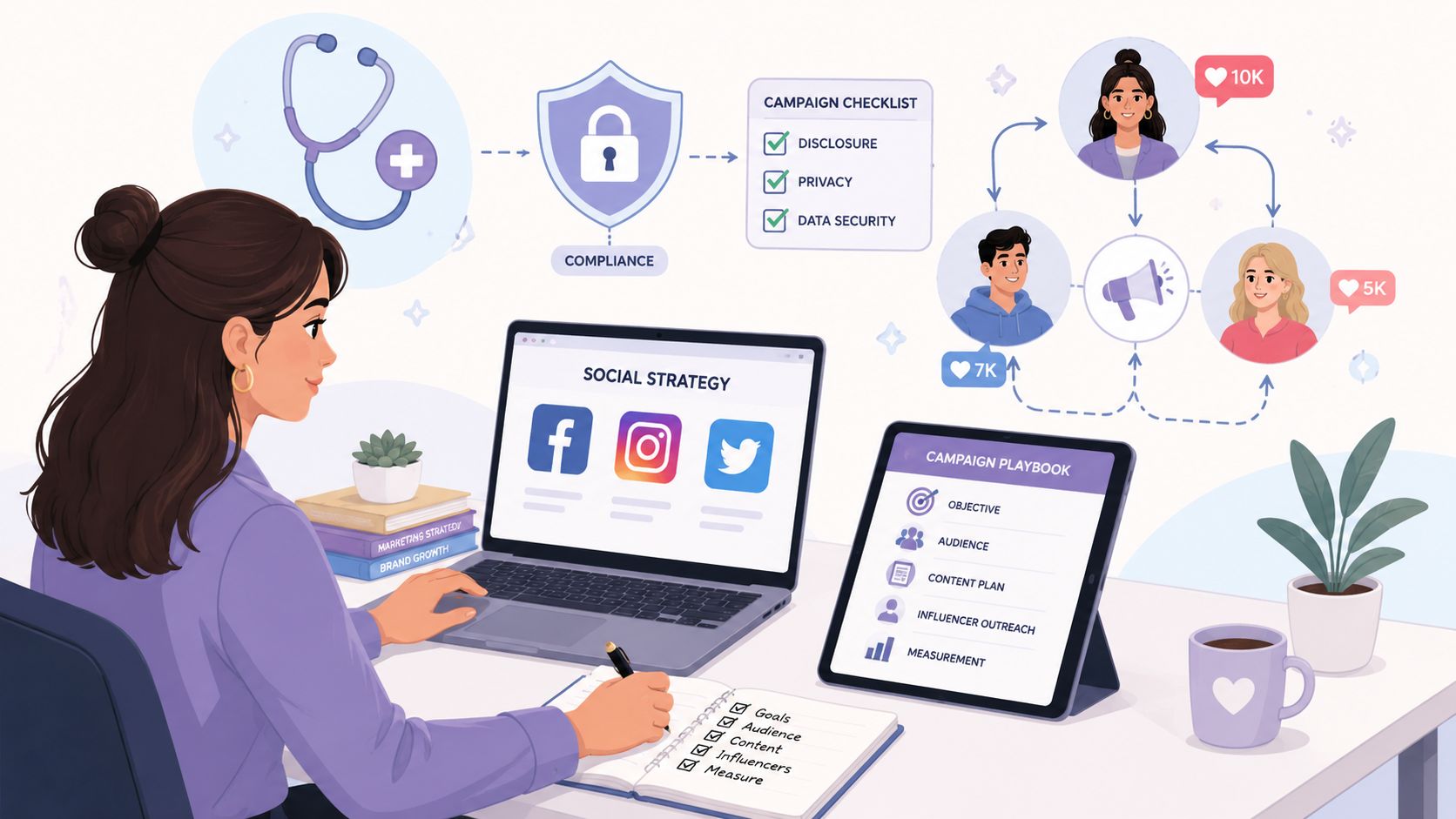
Your social team probably isn't struggling with ideas. It's struggling with execution.
A campaign starts with a straightforward goal: educate patients, promote a service line, support awareness, or work with a trusted creator. Then the work fragments. Copy lives in one document. Images sit in a shared drive. Approvals move through email. Legal feedback arrives late. Someone from compliance asks whether a comment reply created risk. A physician wants edits after the post is scheduled. Meanwhile, the audience expects fast, clear, helpful communication.
That's the core tension in healthcare social media marketing. Social channels are too important to ignore, but they're also unforgiving when process is loose. Teams need speed, but healthcare demands review, documentation, and judgment. If you're also experimenting with AI-assisted planning, this guide on generative AI for marketing strategy is useful context for building smarter systems without letting automation outrun oversight.
The Modern Healthcare Marketing Challenge
Healthcare marketing has moved decisively into digital. In the U.S. healthcare and pharmaceutical industry, over 72% of total advertising budgets were allocated to digital ads as of 2024, and social media accounted for 11.5% of marketing budgets, ahead of traditional advertising at 9.5% according to the verified industry survey summarized above. That shift matters because social is no longer a side channel. It now sits inside the core media mix.
But healthcare teams don't operate like consumer brands selling sneakers or cosmetics. A delayed reply can frustrate a patient. A loose testimonial process can expose private information. A casual caption can create legal review headaches if it implies a claim that the organization can't support.
Why social feels harder in healthcare
The work gets complicated because every post carries two jobs at once. It has to earn attention and protect trust.
That creates trade-offs that many teams underestimate:
- Speed versus review: Fast-moving channels reward timely content, but healthcare needs signoff discipline.
- Human tone versus clinical precision: Plain language performs better, but oversimplification can create risk.
- Engagement versus privacy: Comments and direct messages invite connection, but they also invite oversharing.
- Distributed input versus ownership: Clinical, legal, brand, and operations teams all want a voice. Too many voices can stall production.
Social media works best in healthcare when the process is boring. Clear owners, clear rules, clear escalation paths.
What actually breaks campaigns
In practice, most failures come from operations, not creativity. Teams post inconsistently because no one owns the calendar. They miss questions because inboxes are split across platforms. They recycle generic awareness content because building approved educational assets takes too much effort. They over-focus on likes because appointment intent, service inquiries, and community trust are harder to track.
A stronger playbook starts with workflow. Build around audience needs, create a content mix you can sustain, define review rules before launch, and measure outcomes that matter outside the social dashboard.
Building Your Foundation A Smart Content Strategy
A hospital marketing team spends two weeks building a diabetes awareness campaign. The creative is strong. The clinicians approve the facts. Then performance stalls because the posts answer questions patients are not asking, the call to action is vague, and no one planned how to turn comments and clicks into booked visits.
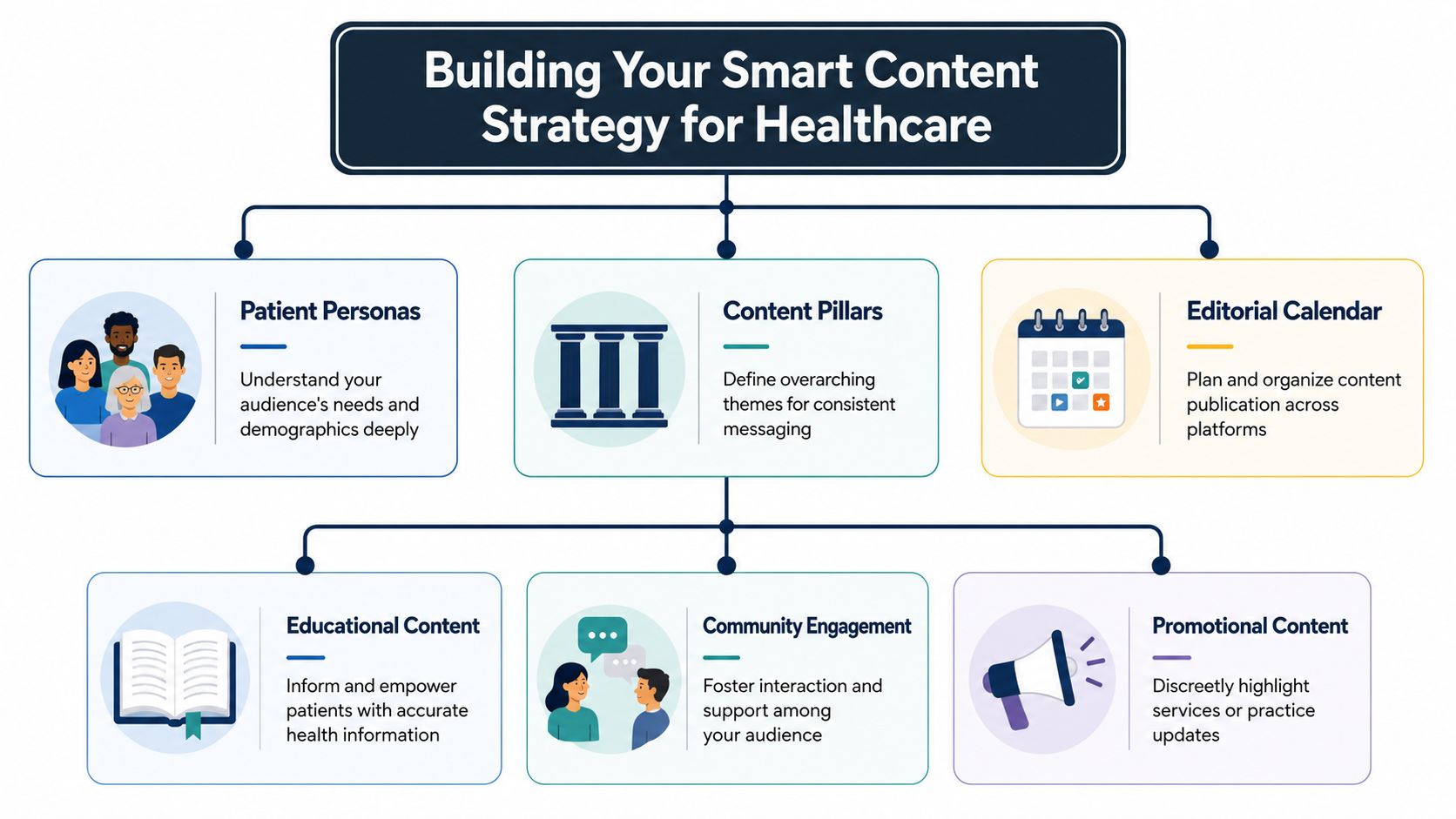
That failure starts upstream. Content strategy in healthcare social media marketing works when it begins with patient intent, service-line priorities, and a review process your team can keep up with week after week. The goal is not a full calendar. The goal is a content system that produces useful posts, clears review, and supports measurable actions.
Start with patient personas, not platform trends
Useful healthcare personas answer production questions, not just branding questions. Age, gender, and zip code have some value, but they rarely tell a social team what to publish on Tuesday morning.
Build personas around four operational inputs:
- The immediate problem: Is the person comparing providers, preparing for a procedure, worried about symptoms, or looking for preventive guidance?
- The content format they will finish: Short myth-versus-fact graphics, physician video clips, FAQs, carousels, or event reminders.
- The next step you want them to take: Book, call, download prep instructions, register for an event, or ask a non-clinical question.
- The hesitation blocking action: Fear, confusion about cost, stigma, transportation, timing, or lack of trust.
These details shape better content briefs. They also reduce internal debate because the team can judge each post against a defined audience need instead of individual stakeholder opinions.
Use a content mix your team can sustain
A practical calendar usually balances three jobs. It needs to educate, stay timely, and leave room for real-world developments.
I recommend planning around evergreen education, seasonal or service-line moments, and a smaller block of responsive content. The exact ratio can shift by organization. A multi-location primary care group may need more seasonal reminders. A specialty practice may invest more heavily in evergreen education because patient research cycles are longer.
Here's a simple model to work from:
| Content type | What it does | Example use |
|---|---|---|
| Evergreen health information | Builds authority and gives the team reusable assets | symptom education, care prep, preventive guidance |
| Seasonal updates | Connects content to current patient needs | allergy season, school physicals, holiday safety |
| Responsive content | Keeps the brand present in the community | local events, staff moments, urgent clarifications |
Promotional content still has a place, but it should sit inside this mix, not dominate it. If every post pushes a service, engagement drops and trust weakens.
Build content pillars with approval in mind
Strong teams save time by choosing a limited set of content pillars, documenting what claims are allowed in each one, and turning repeat topics into templates.
A workable pillar set might include patient education, care navigation, provider credibility, community trust, and service-line promotion. Each pillar should have approved examples, visual rules, and standard calls to action. That gives writers and designers room to produce quickly without improvising risky language.
For any post that includes a creator, testimonial, or sponsored partner, build disclosure into the brief before production starts. Teams that wait until posting day usually end up rewriting captions and delaying launch. A clear FTC compliance workflow for healthcare influencer campaigns prevents that scramble.
Build a repeatable editorial system
Good healthcare social media is built in batches because batch production lowers review friction and exposes gaps early.
Use a simple operating rhythm:
- Monthly planning: Set themes by service line, season, campaign priority, and known patient questions.
- Weekly production: Draft captions, short-form video scripts, creative briefs, and CTAs in one block.
- Review routing: Send high-risk topics to legal or clinical reviewers, while low-risk educational posts follow a faster path.
- Scheduling and response prep: Load approved posts and prepare response language for common comments, DMs, and escalation scenarios.
- Measurement check: Review which topics drove saves, site visits, form fills, and appointment intent, then feed that back into the next batch.
This is also where tools like REACH help. Centralized briefs, creator coordination, approval tracking, and reporting reduce the execution chaos that causes missed deadlines and inconsistent compliance records.
If your team also manages X or other fast-moving channels, this resource on how to master your Twitter content is useful for tightening editorial discipline and cadence. The same planning habits carry over even when X is not a primary patient acquisition channel.
Navigating The Regulatory Maze A Compliance Checklist
Compliance is where many healthcare teams become overly cautious or recklessly informal. Neither approach works. If every post becomes a legal project, the channel dies from delay. If review is loose, trust erodes fast.
The better approach is to turn compliance into a production system. Ethical and professional guardrails aren't optional. Peer-reviewed literature notes that healthcare social media expands communication, but it also creates problems including misinformation, patient-confidentiality breaches, and unprofessional conduct, which is why ethical and professional guidelines matter for public trust.
The checklist every team should operationalize
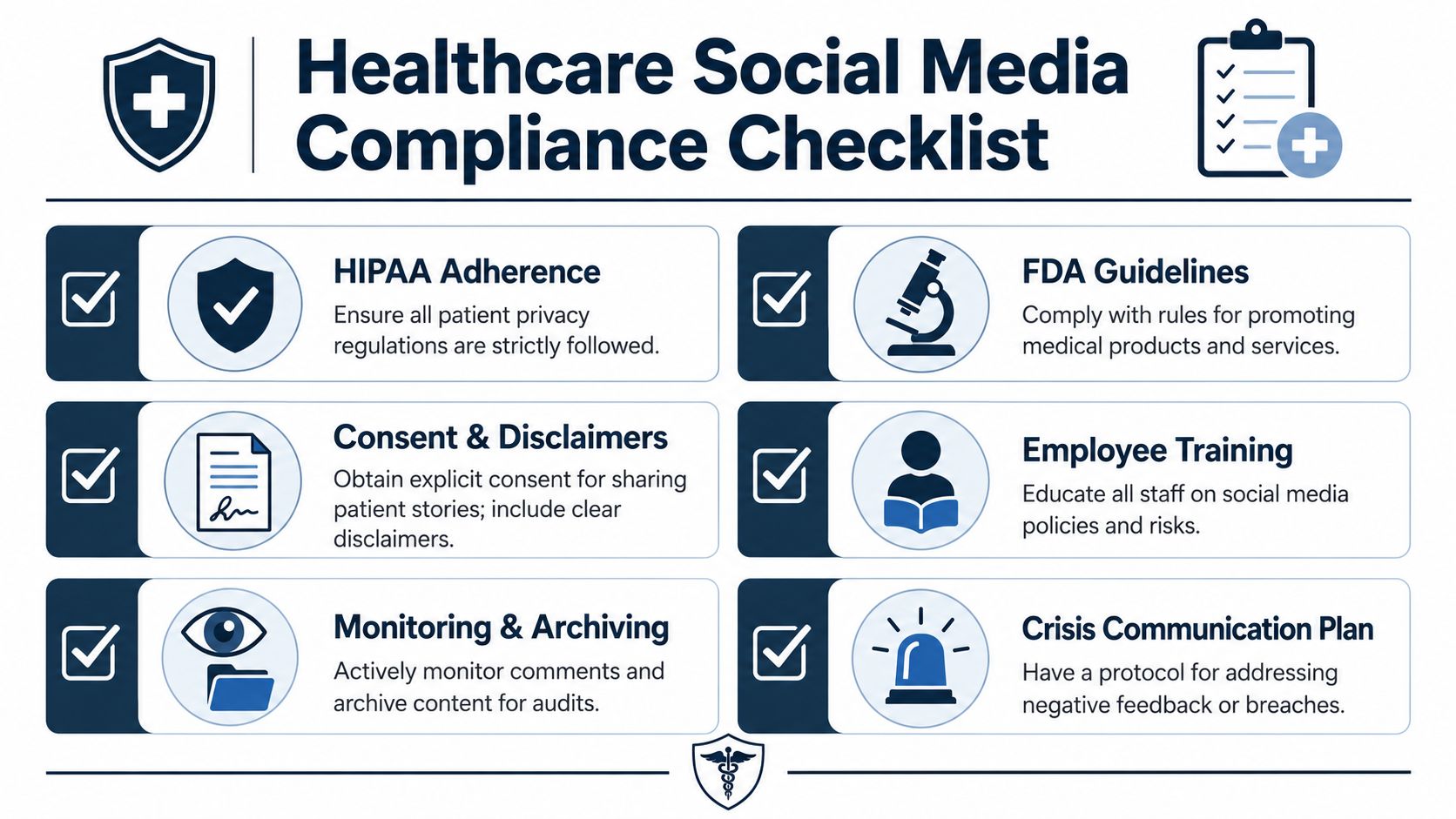
A strong compliance process usually includes these controls:
- Privacy review: Remove or avoid any detail that could expose patient identity or protected information.
- Claim review: Check treatment language, outcomes language, and any implied promise in captions, graphics, or creator scripts.
- Consent controls: Use explicit consent documentation before sharing testimonials, patient stories, or identifiable imagery.
- Comment triage: Route sensitive comments, crisis language, and personal disclosures to trained staff with a documented escalation path.
- Archiving and version control: Keep records of what was approved, what changed, and what ultimately went live.
None of this needs to be theatrical. It needs to be consistent.
What teams often miss
The hidden risk isn't only the post itself. It's the surrounding conversation. A social media manager may write a perfectly safe caption, then answer a comment too specifically. A physician may jump into replies with good intentions but no platform guidelines. A creator may ad-lib language that shifts from educational to promotional.
That's why healthcare social media marketing needs governance, not just policy.
Use written rules for:
| Area | Operational standard |
|---|---|
| Roles | Identify who drafts, who reviews, who approves, and who responds |
| Escalation | Define what goes to legal, compliance, clinical leadership, or PR |
| Response boundaries | Tell staff when to move users off-platform and what not to discuss publicly |
| Creator disclosures | Require clear disclosure, approved talking points, and documented signoff |
For influencer-specific disclosure and claim management, teams should align with established guidance on FTC compliance in influencer marketing.
A short training video can help teams align around these basics before campaigns start.
Compliance can strengthen the brand
The brands that handle healthcare social media well don't sound cautious in a sterile way. They sound reliable. They answer clearly, avoid overstatement, and know when not to answer publicly.
Strong governance makes content easier to ship because reviewers stop debating the same issues every week.
That's the point of a checklist. It reduces rework, protects the organization, and gives the team confidence to publish.
Choosing Your Channels for Healthcare Social Media Marketing
Healthcare teams waste time when they try to maintain every platform at once. The better move is to choose channels based on format fit, audience behavior, and internal capacity.
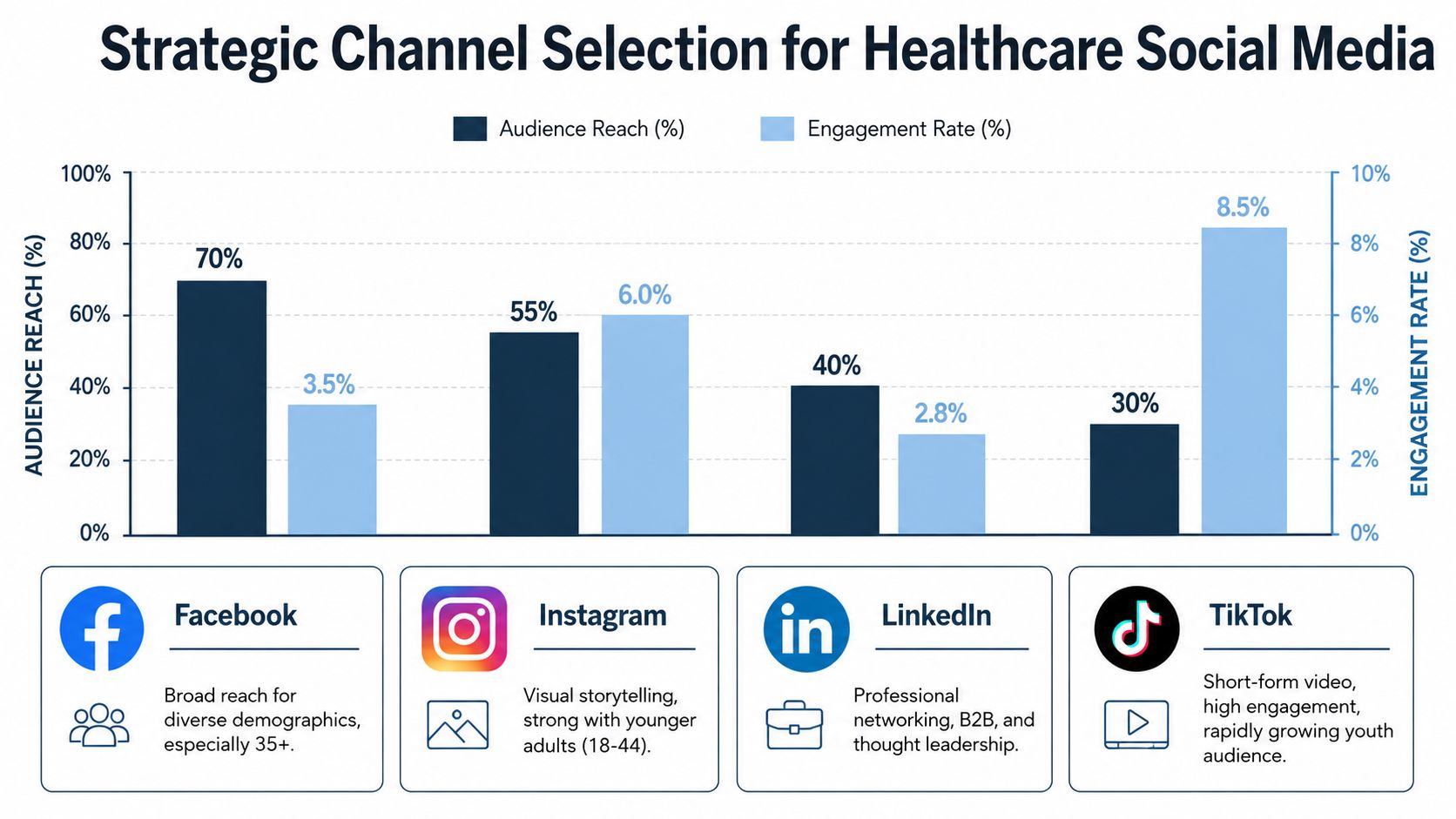
The media mix has already shifted. Social media accounts for 11.5% of U.S. healthcare marketing budgets, surpassing traditional advertising at 9.5%, Facebook is used by 98% of U.S. healthcare marketers, and Instagram's average engagement rate is 5% compared with Facebook's 1.9%, according to the verified data provided above. That doesn't mean every brand should prioritize Instagram first. It means channel selection should be deliberate.
How to think about channel fit
Some platforms are better for depth. Others are better for familiarity and repetition.
Here's a practical way to evaluate them:
- Facebook: Useful for broad community reach, local updates, event promotion, and service-line visibility. It often works well for established practices and community health systems.
- Instagram: Better for visual education, clinician visibility, short videos, and carousel-based explainers. It rewards clear design and tight messaging.
- YouTube: Best for longer educational content, procedure explainers, physician interviews, and evergreen patient questions.
- TikTok: Useful when the audience skews younger and the team can create short, plain-language videos without sacrificing accuracy.
- LinkedIn: Strong for employer brand, recruitment, partnerships, and thought leadership rather than direct patient marketing.
Match the platform to the job
A mistake I see often is using the same creative idea everywhere. That usually produces mediocre performance on every channel.
A better model looks like this:
| Goal | Best-fit channel approach |
|---|---|
| Patient education | YouTube for depth, Instagram for short explainers |
| Local awareness | Facebook for community updates and practical reminders |
| Recruitment and partnerships | LinkedIn for professional messaging |
| Youth-facing awareness | TikTok or Instagram Reels with tight scripting |
| Reputation support | A steady mix across Facebook and Instagram with strong moderation |
Don't confuse presence with strategy
A dormant profile does more harm than good. It signals neglect. If your team can only support two channels well, choose two.
Channel rule: Pick the platforms your team can maintain with approved content, active moderation, and a realistic response standard.
Healthcare social media marketing works when each channel has a role. One channel can educate. Another can humanize staff. Another can support recruiting. Trying to make every channel do everything usually produces generic content and missed follow-up.
Activating and Managing Compliant Influencer Campaigns
Influencer work in healthcare can drive trust fast, but only when the organization vets creators with the same seriousness it applies to clinical messaging. A loose partnership process creates unnecessary exposure.
The opportunity is real. 63% of healthcare consumers trust health information shared by influencers, and 50% of Americans have purchased a health product after seeing it on social media, based on the verified data provided above. Trust is especially high for sensitive topics such as anxiety and weight loss, which is exactly why creator selection matters.
Who counts as a strong healthcare creator
The best healthcare influencers aren't always the loudest. They're the ones whose content habits support credibility.
Look for signals like:
- Clear expertise or lived relevance: Licensed clinicians, patient advocates, caregivers, educators, or creators with a well-defined health niche.
- Consistent tone: They explain clearly, avoid sensationalism, and don't overstate outcomes.
- Audience fit: Their followers align with the population or condition area you're trying to reach.
- Professional discipline: They can follow briefs, meet deadlines, and accept script or claim review.
Red flags show up quickly too. Watch for creators who promise results, speak beyond their expertise, resist disclosures, or have a pattern of making polarizing health claims for attention.
Structure the campaign before outreach
Teams often rush into influencer partnerships because the creator seems like a fit. That's backward. Set the operating rules first.
A practical sequence is:
- Define the campaign boundary. Decide what can be discussed, what needs exact language, and what topics are off limits.
- Create approved message pillars. Give creators room for authentic delivery, but not room to invent claims.
- Require draft review. Captions, talking points, visuals, and disclosures should be checked before publishing.
- Document usage rights and payment terms. Don't leave reposting rights, whitelisting, or edits to assumptions.
For teams building campaigns in regulated categories, this guide to influencer marketing for health brands is a useful reference point.
Keep creators human, not scripted robots
The point of influencer content is credibility through voice and connection. If the script reads like compliance wrote every sentence, the audience will feel it.
That said, healthcare brands can't hand over the mic without guardrails. The solution is controlled flexibility. Give the creator:
- a defined brief
- approved facts
- phrases to avoid
- examples of compliant disclosure
- a review deadline that leaves room for edits
In healthcare, the best creator brief doesn't ask for “authenticity” in the abstract. It tells the creator exactly where personal storytelling is welcome and where precision is mandatory.
That balance is what separates useful creator partnerships from risky ones.
Your Campaign Workflow From Launch to Reporting
Launch week is where weak healthcare social media systems break. A creator submits late, legal wants a wording change, the clinic asks to swap the landing page, and nobody is sure which file is final. The teams that stay on track are not better at improvising. They run a tighter operating process.
A good workflow protects three things at once: timing, compliance, and reporting quality. If one slips, the campaign usually gets expensive fast. Delays create rushed reviews. Rushed reviews create approval mistakes. Poor reporting makes the next campaign harder to improve.
A workable campaign sequence
For healthcare social media marketing, I recommend a workflow that maps ownership before content starts moving. That matters even more when creators, service lines, and reviewers are all involved.
| Stage | What must happen |
|---|---|
| Briefing | Define audience, approved themes, blocked claims, deliverables, timeline, and escalation contacts |
| Onboarding | Share brand guidelines, privacy rules, disclosure expectations, and approval steps |
| Draft submission | Collect captions, scripts, visuals, and posting plans in one place |
| Review and revision | Route to marketing, compliance, and clinical reviewers only when needed |
| Publishing | Confirm final assets, schedule timing, and response ownership |
| Reporting | Compare platform activity with real-world outcomes such as inquiries or appointments |
The table is the simple version. The operational version is stricter.
Briefing should answer two questions before a creator produces anything: what the campaign must achieve, and what language cannot be improvised. Onboarding should document where files live, who can approve what, and what triggers escalation. Draft review should happen inside one system, not across email, text, and direct messages. Publishing should include a final compliance check on caption, disclosure, link, and comment-response owner.
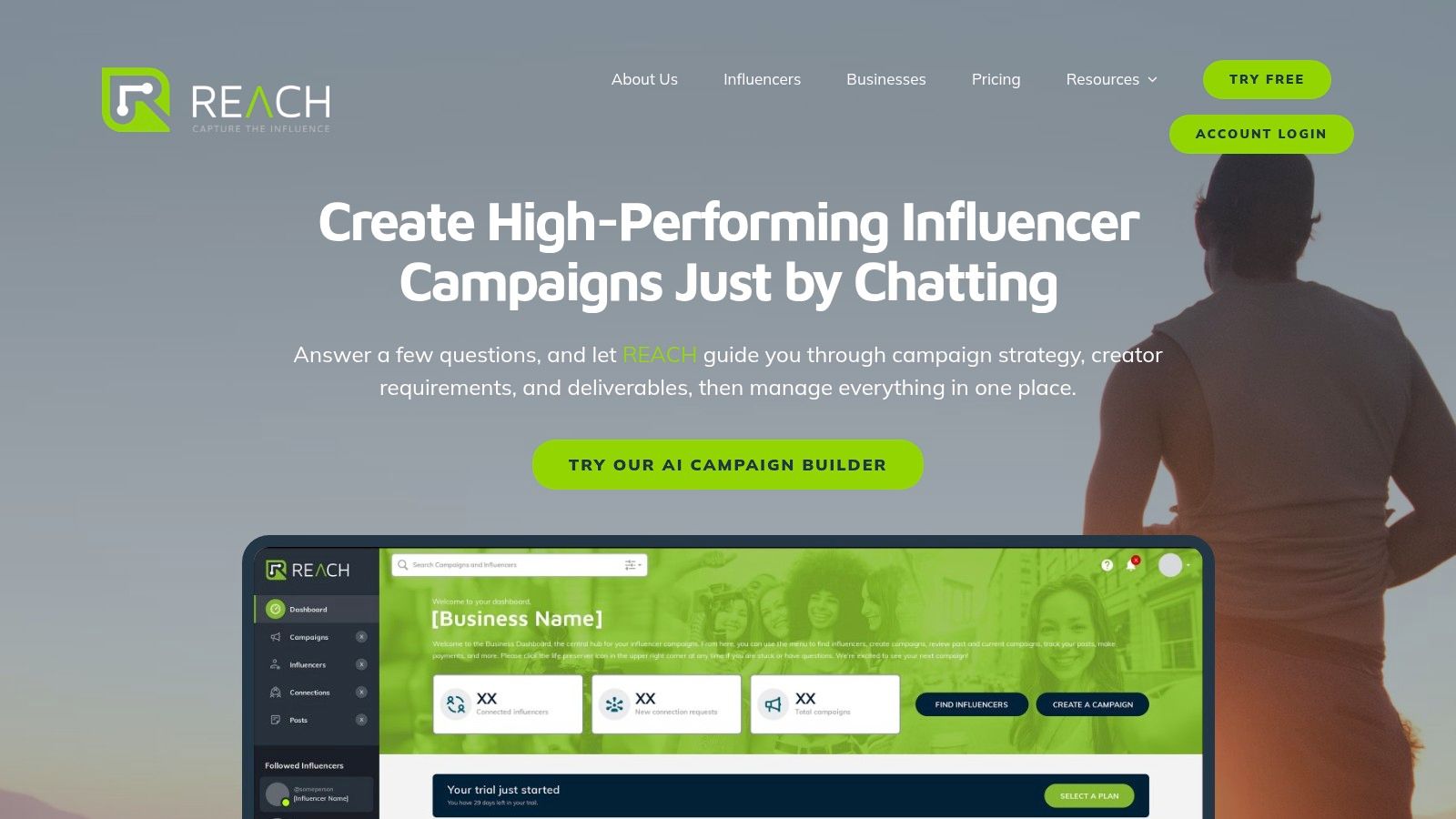
This is also where execution platforms earn their keep. REACH helps teams keep briefs, drafts, approvals, deliverables, and reporting in one operating environment, which cuts down the version-control problems that slow regulated campaigns.
Measure what the organization can act on
Too many healthcare reports stop at engagement. That is useful, but only as an early signal.
A useful report answers operational questions:
- Did the campaign increase qualified inquiries?
- Did a priority service line receive more relevant questions?
- Did local audiences respond to the messaging?
- Did the content reveal confusion that future education should address?
Separate awareness metrics from business metrics every time. A post can generate strong reach and still fail to support appointments, referrals, or service-line demand. The reverse happens too. A campaign that looks average on-platform can still produce high-value local action.
For teams that need tighter review control, a documented content approval workflow for regulated marketing teams reduces missed steps, duplicate edits, and approval bottlenecks.
Keep the system repeatable
Healthcare teams get into trouble when the process becomes too elaborate to use under pressure. Extra fields, extra approvers, and exception-heavy rules usually lead to workarounds.
Keep the operating model lean:
- One campaign brief template
- One approval path by content type
- One place for final assets
- One owner for publication
- One reporting view tied to business questions
That is how compliant healthcare social media scales. Clear ownership, fewer handoffs, and reporting that improves the next campaign instead of just documenting the last one.
If your team is tired of juggling influencer outreach, approvals, deliverables, and payments across spreadsheets and DMs, REACH is worth a close look. It gives brands and agencies a centralized way to run creator campaigns with more structure, clearer accountability, and less operational friction. For healthcare marketers especially, that kind of organized workflow can make compliant execution much easier.