 Skip to content


Forget one-off campaigns. A network of influencers is something much more powerful: a hand-picked group of creators who partner with your brand for the long haul. This isn't just a list of names for a single product launch. Think of it as a living, breathing community of authentic voices who genuinely connect with your target audience and are always ready to share your story.
Building this asset is one of the most effective ways to generate consistent ROI, but managing it requires the right strategy and tools. Platforms like REACH Influencers are designed to solve this exact challenge, providing a centralized hub to discover, manage, and measure your creator partnerships at scale. This guide will walk you through the essential steps to build your own powerful network of influencers.
Table of Contents
- What Is a Network of Influencers Anyway?
- Why Authenticity Is Your Network's Superpower
- Choosing the Right Model for Your Influencer Network
- Your Step-by-Step Guide to Building Your Network of Influencers
- How to Manage and Scale Your Network of Influencers
- Measuring the True Impact of Your Influencer Network
- Frequently Asked Questions
What Is a Network of Influencers Anyway?
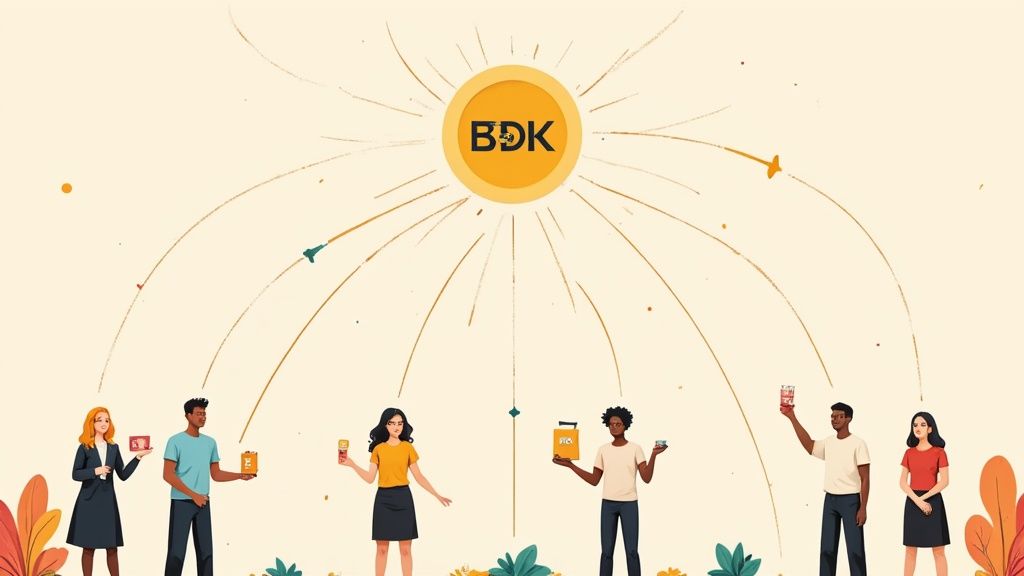
Imagine having your own dedicated marketing team, except this team already has the complete trust and attention of your ideal customers. That's a network of influencers. It turns cold outreach into warm, personal introductions.
Instead of scrambling to find new influencers every time you have something to promote, you’re nurturing a reliable group of brand advocates. This move from short-term transactions to long-term relationships is the secret to building real brand loyalty and a genuine community.
The Power of a Connected Ecosystem
A well-built network of influencers is basically a supercharged word-of-mouth engine. Each creator adds their voice to a bigger brand story, creating a steady and believable presence across all the social platforms where your customers hang out. To really get why this is so effective, you have to understand what word-of-mouth marketing entails. When people hear positive things from multiple people they trust, the effect is magnified.
This connected approach gives you some serious advantages:
- Scalability: You can activate dozens of creators at once for a big, coordinated push.
- Consistency: Your brand maintains a constant, authentic drumbeat of content in the market.
- Efficiency: You'll spend way less time and money constantly searching for new influencers.
Why This Model Is Exploding in Popularity
Let's be real: trying to manage all these relationships with spreadsheets and emails is a nightmare. This is exactly why platforms like REACH Influencers are becoming so essential. They give you the tools to build, manage, and track your influencer network from one central spot.
The numbers don't lie. The global influencer marketing market is expected to hit a staggering $32 to $33 billion by 2025—that's almost three times what it was in 2020. This growth shows that a network of influencers is no longer a "nice-to-have"; it's a core piece of modern marketing.
When you build a dedicated network, you're not just running a campaign; you're investing in a valuable asset that pays you back over and over. As you dig into the principles of social influence marketing, you'll see it’s about more than just getting eyeballs on your product. It’s about making your brand a natural part of the communities that truly matter.
Why Authenticity Is Your Network's Superpower

We live in a world overflowing with ads and carefully crafted corporate messages. Because of this, trust has become the most valuable currency a brand can have. Today’s consumers, particularly Gen Z, have a built-in radar for sponsored content that feels fake or forced. They want real connections, not another commercial.
This is exactly where a network of influencers proves its worth. It’s not about just grabbing the biggest names with the most followers. It’s about partnering with creators who have built genuine, hard-earned trust within their communities. When they recommend something, it feels less like an ad and more like getting solid advice from a friend who knows their stuff.
The Rise of Relatable Creators
The old playbook of relying on celebrity endorsements is getting dusty. While A-list names still have a role, the real engine of a powerful network of influencers is often found in the nano and micro-influencers. They might have smaller audiences, but their engagement levels are often through the roof.
Think about it: their communities are close-knit, built on shared passions and real respect. A recommendation from them lands differently because their followers know it comes from a place of genuine belief, not just a paycheck. That's where you find authentic influence.
An influencer network's true strength is measured in the depth of its community trust, not just the breadth of its follower count. When authenticity leads, conversions follow.
It's not just a hunch. A staggering 63% of marketers say that content from influencers performs better than the content their own brand creates. This shift points to a simple truth: people trust other people more than they trust ads. You can discover more insights on influencer marketing effectiveness from Sprout Social to see the data for yourself.
How to Identify True Authenticity
Spotting a genuinely authentic creator means looking past the obvious numbers. A huge follower count can be deceiving, especially with so many bots and ghost accounts floating around.
Instead, you need to dig deeper and look for the real signals of connection:
- Engagement Quality: Don't just count the comments; read them. Are people having actual conversations, or is it just a wall of fire emojis? Real back-and-forth is a sign of a healthy, engaged community.
- Audience Sentiment: How do followers respond when the creator posts sponsored content compared to their usual posts? If the positivity and trust remain consistent, you know their audience values their recommendations.
- Content Alignment: Does the creator’s vibe and values actually match your brand? A mismatched partnership is easy for anyone to spot, and it can hurt both your credibility and theirs.
Building a network of influencers on a foundation of authenticity isn't just a nice idea—it's a core strategy for success. That’s why platforms like REACH Influencers provide tools that let you analyze audience sentiment and engagement patterns with precision. This helps ensure every creator you bring on board can reach the right people with a voice that’s both trusted and effective.
Choosing the Right Model for Your Influencer Network
Building an influencer network is one thing; managing it effectively is a whole different ballgame. The path you choose—whether you go it alone, hire help, or use smart tools—will shape your budget, your control over the process, and how fast you can grow.
Let’s walk through the three main ways to get it done: handling it all in-house, bringing in an agency, or using a specialized platform. Each has its perks and pitfalls, so it's all about matching the model to your brand's resources and goals.
The In-House Approach
Going the in-house route means you own every part of the process. Your team is on the front lines, building genuine, one-on-one relationships with creators. This gives you unparalleled control, ensuring every collaboration feels authentic and perfectly aligned with your brand's voice.
But make no mistake, this path demands a serious commitment. You'll need a dedicated team to manage influencer discovery, outreach, contracts, content approvals, payments, and everything in between. It's a fantastic way to start, but it can quickly become an administrative nightmare as you try to scale.
Outsourcing to an Agency
Don't have the time or team to do it yourself? An influencer marketing agency can step in and take the reins. Agencies bring their own rolodex of trusted creators and deep industry knowledge to the table, which can get you up and running almost overnight. They run the campaigns, you focus on the big picture.
The trade-off? You give up some direct control, and it costs more. You're paying a premium for their expertise and connections, and communication might not be as immediate as it would be with your own team. This is a great option for brands that need to move fast and don't have the internal bandwidth.
Leveraging a Dedicated Platform
The third way is a modern hybrid: using an influencer marketing platform like REACH Influencers. Think of it as getting the control of an in-house program with the efficiency and power of an agency.
These platforms are built to handle the heavy lifting. They give you all the tools you need to discover, manage, and measure your network from a single dashboard. You still build those direct relationships with creators, but you get to automate the tedious tasks that eat up all your time.
A platform-based approach puts powerful data and streamlined workflows at your fingertips, transforming a complex management challenge into a scalable, data-driven strategy.
This is the sweet spot for brands that want to own their influencer relationships but need the right tech to manage them effectively. A platform provides the backbone for everything—from finding the perfect mix of macro vs. micro-influencers to sending payments and tracking your return on investment. It’s how you build a program that lasts.
Comparing Influencer Network Management Models
To help you decide, let's put these three models side-by-side. The right choice often comes down to what you value most: control, cost, or convenience.
| Feature | In-House Management | Agency/MCN | Influencer Platform (e.g., REACH) |
|---|---|---|---|
| Control | Total Control over relationships and creative. | Limited Control; you rely on the agency's process. | High Control with direct creator relationships. |
| Cost | High internal overhead (salaries, time). | Highest Cost due to service fees and commissions. | Flexible Cost (SaaS subscription model); very scalable. |
| Relationships | Direct, personal, and long-term. | Indirect; relationships are owned by the agency. | Direct relationships owned by the brand, managed via the platform. |
| Scalability | Difficult to scale without a large team. | Easy to scale up or down based on campaign needs. | Highly Scalable through automation and streamlined workflows. |
| Data & Analytics | Requires manual tracking or multiple tools. | Reports are provided by the agency. | Centralized, real-time analytics and ROI tracking. |
| Best For | Brands with dedicated teams and a focus on deep, authentic partnerships. | Brands needing quick execution, specialized expertise, or without internal resources. | Brands wanting ownership, scalability, and data-driven insights. |
Ultimately, there's no single "best" answer. An in-house team is great for authenticity, an agency is great for speed, and a platform is built for scalable, data-backed success. By understanding these trade-offs, you can pick the model that sets your brand up for long-term growth.
Your Step-by-Step Guide to Building Your Network of Influencers
Building a powerful network of influencers isn’t something that just happens. It takes a clear, methodical plan that breaks a big ambition down into small, achievable steps. This framework will walk you through the entire process, from figuring out your goals to hitting "send" on that first outreach email.
Think of it like building a house. You'd never start hammering nails without a blueprint, right? The same logic applies here. A solid plan ensures every creator you bring on board helps build a stronger, more effective marketing structure for your brand.
Step 1: Define Your Campaign Goals
Before you even start looking for influencers, you need to be crystal clear on what you want to accomplish. Are you trying to get your brand name out there? Drive direct sales? Launch a new product? Or maybe you just want a steady stream of user-generated content.
Your goals will shape every single decision you make from here on out.
For instance, if your main goal is to drive sales, you’ll need influencers who are absolute pros at creating compelling calls-to-action and content that actually converts. But if you’re just focused on brand awareness, you might look for creators with massive reach and a real talent for telling great stories.
Defining clear, measurable goals is the most critical first step. Without a destination in mind, you can't possibly draw the map to get there. This clarity informs every subsequent decision you make.
Step 2: Identify Your Ideal Creator Persona
Once your goals are locked in, it's time to picture your ideal creator. This is way more than just basic demographics. You need to create a detailed persona that outlines exactly what a perfect-fit influencer looks like for your brand.
Think about these factors:
- Niche and Content Style: Does their content theme feel like a natural home for your product or service?
- Audience Demographics: Do their followers line up with your target customer in terms of age, location, and what they're into?
- Engagement Quality: Don't just look at follower counts. Look for real conversations, a sense of community, and genuine loyalty.
- Brand Values: Do their personal values and public image vibe with what your brand is all about?
This persona becomes your north star, helping you sift through the noise and spot the right partners fast. This is where platforms like REACH Influencers can be a game-changer. Their discovery tools let you filter creators by these specific criteria, which can save you dozens of hours of manual searching.
This diagram illustrates the evolution of influencer management, from siloed in-house teams to a more connected, platform-driven approach.
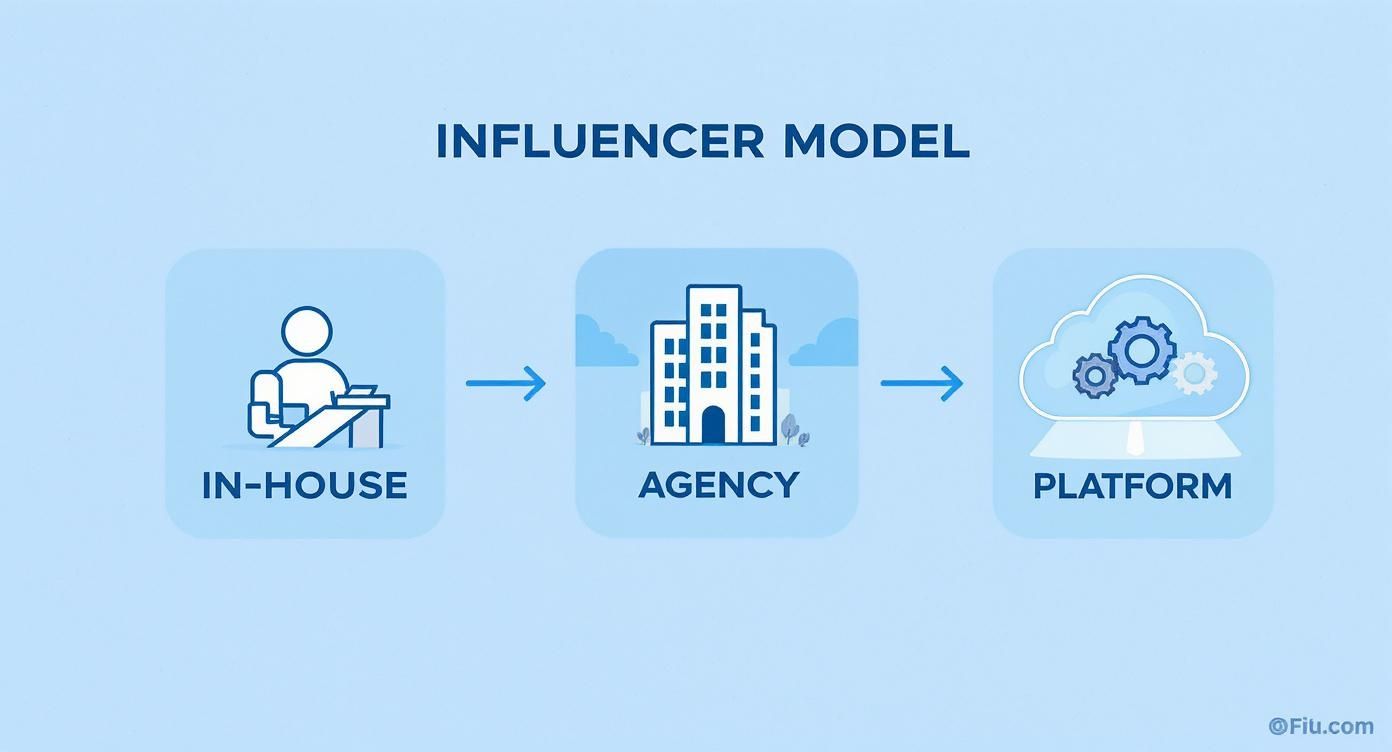
As you can see, platforms bring everything under one roof, automating the tedious tasks that used to be spread across teams or outsourced to pricey agencies. It just makes the whole process smoother.
Step 3: Master Your Outreach Strategy
You’ve got your goals and you know who you’re looking for. Now, it's time to actually reach out. A word of warning: generic, copy-paste messages are a one-way ticket to the trash folder. Your outreach has to feel personal and professional, showing you’ve actually done your homework.
A great first move is to engage with their content organically for a bit before you slide into their DMs or inbox. When you do make your pitch, clearly explain why you think a partnership would be a fantastic fit for their audience. Briefly lay out your campaign idea and propose a collaboration that benefits everyone.
The goal here isn't to make a demand; it's to start a conversation. Building your network of influencers starts with that very first positive connection.
How to Manage and Scale Your Network of Influencers
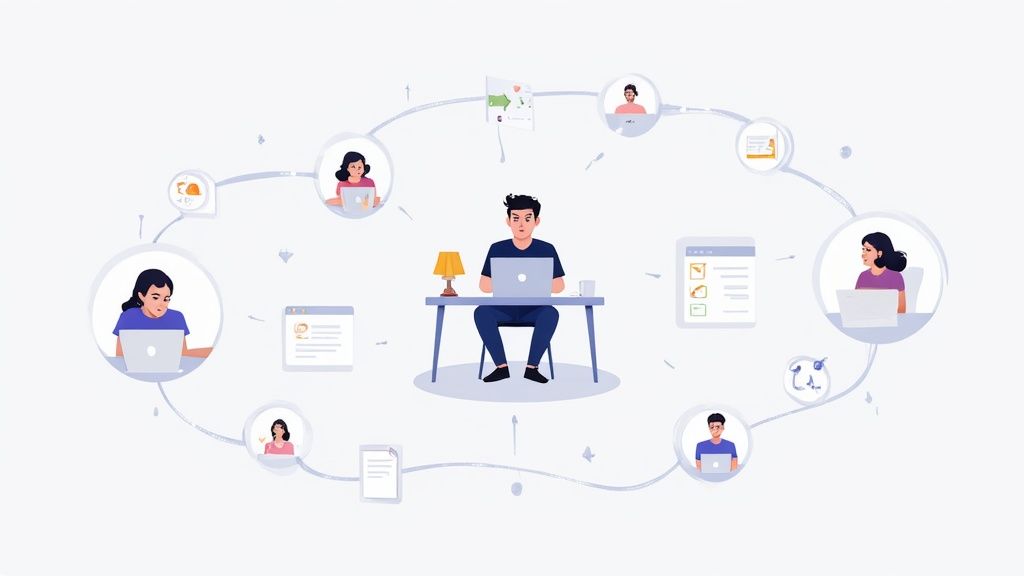
Finding that first group of creators is a great start, but it's just the beginning. The real challenge—and the real opportunity—comes next. A strong network of influencers is built on solid, ongoing relationships, not just a series of one-off projects.
As you expand from working with a few creators to several dozen, the logistics can get messy. Fast.
Suddenly, you're drowning in administrative work: chasing content for approval, tracking who posted what, processing invoices, and making sure everyone gets paid on time. Each task gets more complex with every new creator you bring on board. This is where a lot of influencer programs hit a wall, bogged down by manual work.
From Collaborators to Brand Ambassadors
The smartest brands see their influencer network as part of their team. They move beyond simply sending out free products and focus on building real connections. This is how you turn a one-time collaborator into a long-term brand ambassador who genuinely cares about your brand's success.
So, how do you do that without hiring a huge team?
- Create a Central Hub for Communication: Ditch the endless email chains. Set up one place where all campaign chats, feedback, and approvals happen. It keeps everyone in the loop and avoids confusion.
- Automate the Annoying Stuff: Take manual tasks like contracts and payments off your plate. When creators know they'll be paid promptly and without hassle, it builds a massive amount of trust.
- Offer More Than Just Money: Give them a reason to stick around. Share insider info, let them try new products before anyone else, or highlight their best work on your brand’s official channels. Make them feel like a partner, not just a contractor.
The Role of a Centralized Platform
Trying to scale a network of influencers with spreadsheets and email is a recipe for burnout. It’s just not sustainable. This is exactly why dedicated platforms are so crucial.
A centralized platform like REACH Influencers handles all the operational grunt work. It frees you up to do what really matters: building authentic, lasting relationships with your creators.
Imagine managing everything from a single dashboard—from that first outreach email to the final payment. That kind of efficiency is how you grow your network from 10 creators to over 100 without sacrificing the personal touch that makes these partnerships work.
A strong foundation in influencer relationship management is what separates a program that scales from one that sputters out. By putting the right tools in place, you build a system that fosters loyalty and delivers consistent results.
Measuring the True Impact of Your Influencer Network
Building a network of influencers is a serious investment. And just like any other business investment, you have to be able to measure its return.
It's easy to get caught up in likes and views, but those are just vanity metrics. They feel good, but they don't tell you the real story about how your network is impacting your business. True success is found in the numbers that actually move the needle.
This means digging deeper than surface-level stats and focusing on key performance indicators (KPIs) tied directly to your bottom line. To really know if your network is working, you need to track the right things. You can learn more about the essential social media KPIs that matter most. This is how you prove the tangible value your network is creating.
Focusing on Business-Centric Metrics
To figure out the real ROI of your influencer program, you have to connect what your influencers are doing to actual business results. Luckily, there are some simple and incredibly effective ways to do this. Giving each creator a unique discount code or a custom affiliate link is a great start. This lets you see exactly which sales and conversions came from their efforts.
Here are a few key metrics you should be watching:
- Engagement Rate: This shows you how much an audience is actually interacting with the content. It’s a good sign of genuine interest.
- Cost Per Engagement (CPE): How much are you paying for each comment, share, or meaningful interaction? This helps you understand the efficiency of your spend.
- Conversion Rate: This is the big one. How many followers actually took the action you wanted, like clicking a link or making a purchase?
- Return on Investment (ROI): The bottom line. Are you making more money from the program than you're putting into it?
Using Technology for Clear Insights
Trying to track all this data by hand, especially as your network grows, is a recipe for headaches and missed insights. It's practically impossible to do it well. This is exactly where a platform like REACH Influencers becomes a game-changer.
Its built-in analytics dashboard gives you a clear, real-time look at how every campaign is performing. You can instantly see which creators are driving the most sales, what type of content is hitting home with your audience, and your overall ROI at a glance.
With the right tracking in place, the returns from influencer marketing can be huge. Top-performing campaigns have been known to bring in as much as $20 in revenue for every $1 spent. Today's platforms make it easier than ever to fine-tune your campaigns for the best possible results.
This data-first approach takes the guesswork out of the equation. It gives you the hard numbers you need to prove the value of your network of influencers to stakeholders and make smarter decisions to improve your strategy over time.
Frequently Asked Questions
Diving into influencer marketing can feel like learning a new language. Let's clear up some of the most common questions brands have when they start building their own network of influencers.
How Many Influencers Should I Have in My Network?
There’s no one-size-fits-all answer here. A small, specialized brand might see amazing results with a dedicated crew of just 10-20 highly-vetted micro-influencers. On the other hand, a huge consumer goods company might need hundreds of creators to keep their marketing engine running.
The smart move? Start with a smaller, manageable group. This lets you focus on building genuine relationships and nailing down your process. Once you have a solid system in place, you can start scaling up. This is where a tool like REACH Influencers really shines, making it easy to grow without the chaos.
What's the Difference Between an Influencer Network and an Affiliate Program?
This is a big one. The key difference comes down to their main purpose and how people get paid.
- An influencer network is all about creating great content that gets people talking about your brand. The goal is awareness and connection. Payment is usually a mix of fees, free products, or some combination of both.
- An affiliate program is purely about driving sales. Creators get a special link, and they only earn a commission when someone clicks it and makes a purchase. It's a straightforward performance deal.
The best brands often blend these two. They use their network of influencers to see who genuinely moves the needle, then invite those top performers into a more exclusive affiliate program.
How Much Does It Cost to Build a Network of Influencers?
The costs can be all over the map. It really depends on who you're working with, what you're asking them to do, and the overall size of your campaign. Nano-influencers might be happy to partner in exchange for free products, while top-tier macro-influencers can charge thousands for a single post.
Your main expenses will be paying the creators and the cost of your team's time (or the tools you use) to manage everything. Using a platform helps you keep a tight grip on these costs by streamlining your workflow and showing you exactly what you're getting for your money.
Ready to build, manage, and scale your network of influencers with confidence? REACH Influencers provides the tools you need to discover perfect-fit creators, automate tedious tasks, and prove your ROI. Book a demo today!