
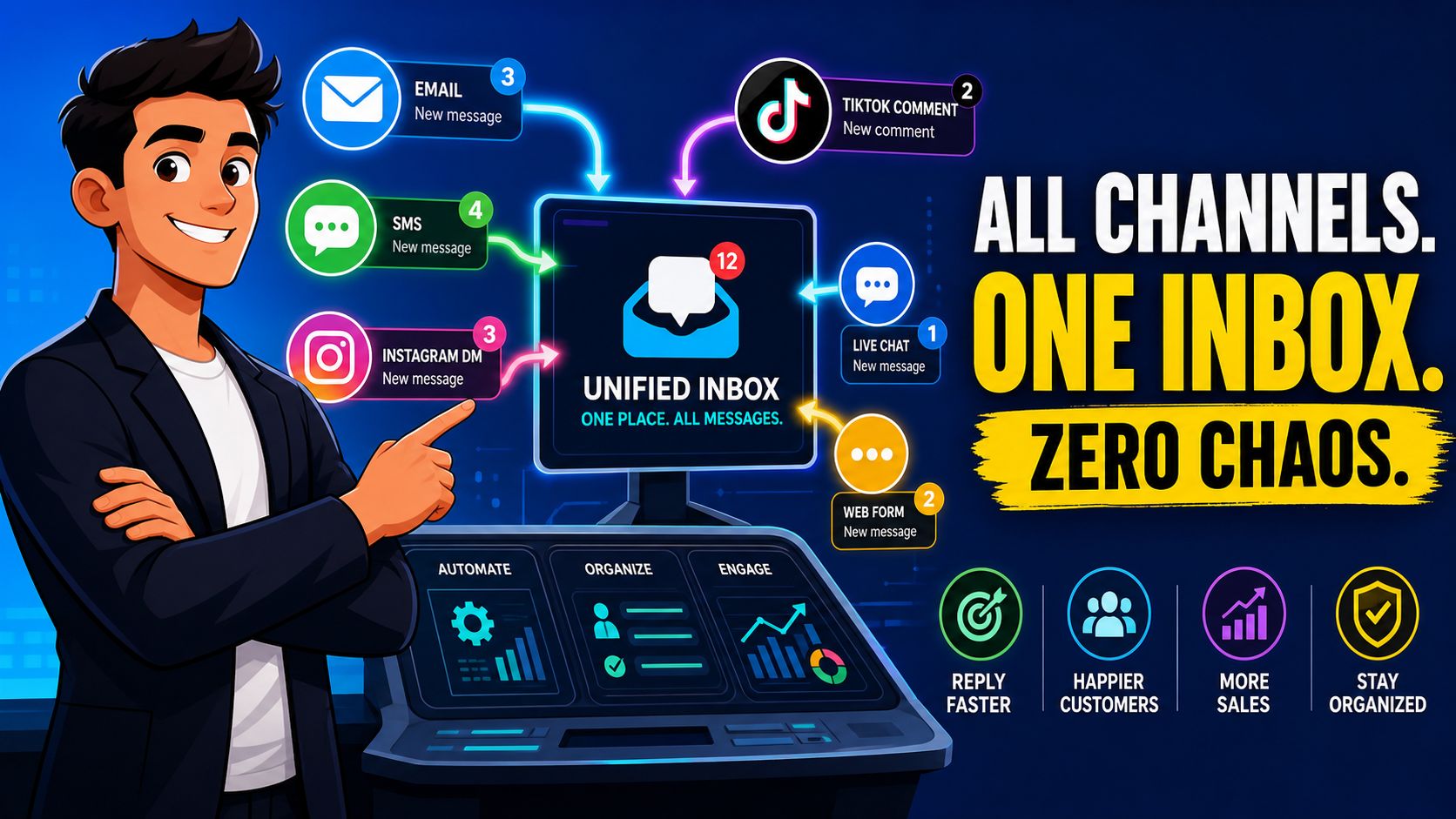
Influencer campaigns rarely fail because a brand can't find creators. They fail in the messy middle. One brief goes out by email. A rate question lands in Instagram DMs. A shipping address sits in a spreadsheet comment. A revision request gets buried in a Slack thread. By the time content is due, nobody is sure which message counts as the final one.
That mess is what a unified messaging system is supposed to fix.
For marketers, the term sounds technical, but the core idea is simple. Stop letting campaign communication live in disconnected places. Put it where the whole team can see it, search it, and act on it. That shift matters even more in influencer marketing, where communication is the work. Outreach, negotiation, briefs, approvals, reminders, and payment follow-up all depend on clean message flow.
The End of Communication Chaos in Marketing
Most marketing teams don't have a communication problem. They have a fragmentation problem.
A single influencer campaign can spread across inboxes, Instagram, TikTok, text, internal chat, and tracking sheets. The result isn't just annoyance. It creates missed approvals, duplicate replies, unclear ownership, and awkward creator relationships. If you're managing multiple creators at once, that sprawl compounds fast.

Why the old setup breaks under campaign pressure
Spreadsheets can track status, but they can't hold the full context of a live conversation. Social DMs are convenient for creators, but they're poor systems of record. Email works for formal approvals, but not when the creator responds somewhere else.
That gap is why marketers keep rebuilding the same campaign memory by hand.
Practical rule: If your team has to ask "Did anyone reply to this creator yet?" more than once a week, your communication stack is already costing you campaign quality.
The broader communications market has moved in this direction too. Recent coverage increasingly frames messaging as one part of a wider communications stack that includes calling, meetings, collaboration, and customer engagement, rather than a standalone tool, as noted by Visual Edge IT's overview of unified communication systems. For marketers, that same pattern shows up in vertical tools that act like a command center instead of just another inbox.
If you're also juggling multiple brand accounts and publishing workflows, ShortsNinja's social media guide is a useful read because it shows how quickly channel sprawl creates operational drag.
What control actually looks like
In influencer marketing, control doesn't mean forcing creators into stiff corporate workflows. It means your team can see the conversation history, tie communication to campaign actions, and resolve disputes without digging through screenshots. That's especially important when expectations or deliverables get challenged later, which is why a documented process like a campaign dispute resolution workflow matters.
A unified messaging system gives marketing teams one place to work from. Not one place to do everything, but one place where the campaign's communication truth lives.
Defining the Unified Messaging System
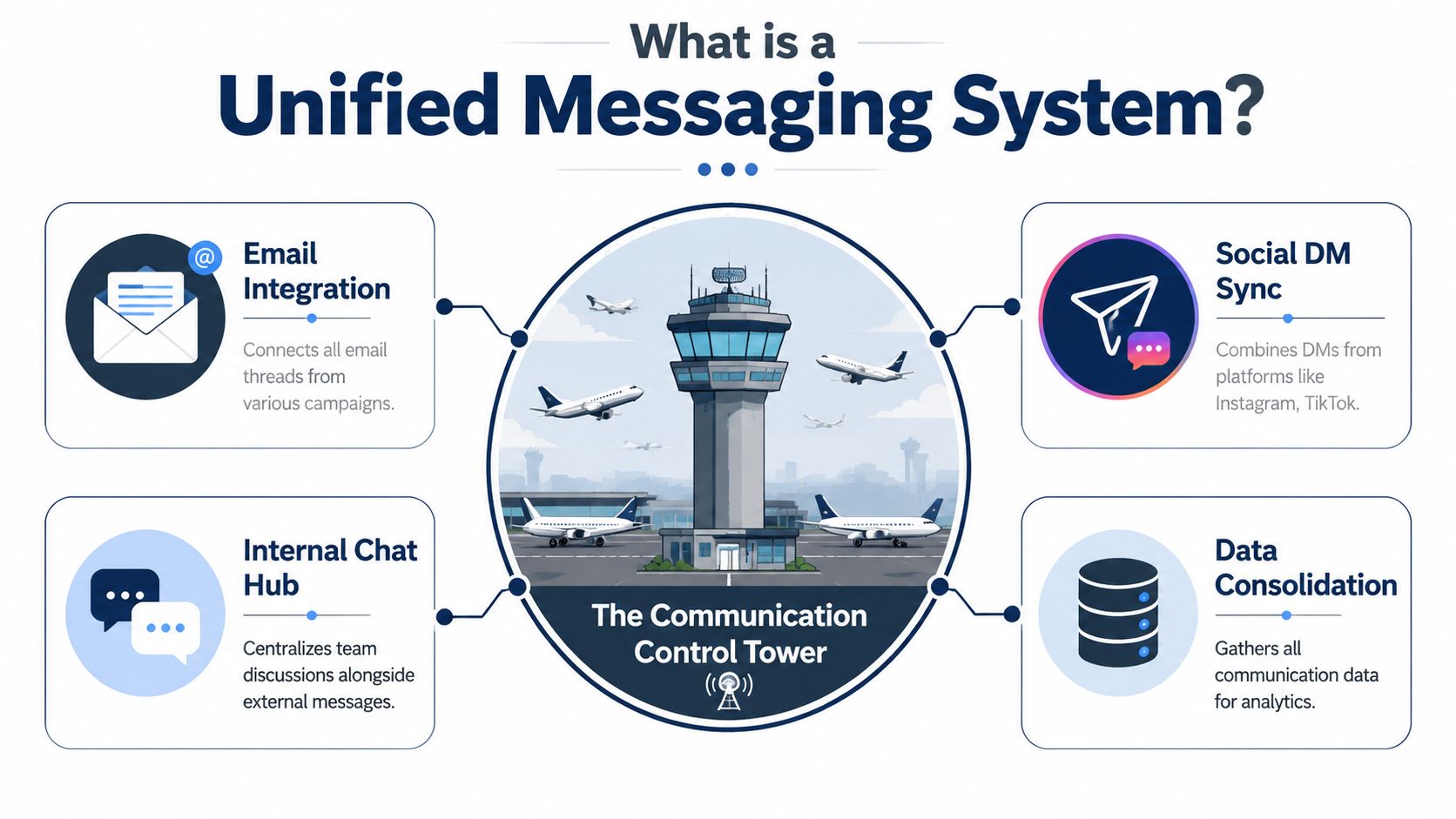
The cleanest way to understand a unified messaging system is to think about a single mailbox with one key. Different message types arrive there, but you don't need to visit separate buildings to retrieve them.
That was the original business idea behind unified messaging. By design, unified messaging typically consolidates at least four major channels, voicemail, email, SMS/text, and fax, into one inbox or user interface, shifting communication from multiple disconnected systems into a single message store, according to TrueConf's unified messaging explanation.
What that means for marketers
Marketers don't usually care about voicemail and fax. They care about campaign conversations scattered across email, social DMs, notes, comments, and internal handoffs. The principle is the same. A unified messaging system pulls communication into one searchable operating layer.
Instead of this:
- Email for briefs: The formal instructions live in one thread.
- Instagram for follow-ups: The creator asks a deadline question somewhere else.
- Spreadsheet for status: The team logs "waiting on content" with no message context.
- Internal chat for fixes: A colleague promises to handle it, but nobody updates the campaign record.
You want this:
- One conversation record: Outreach, replies, approvals, and exceptions sit together.
- Shared team visibility: Anyone stepping in can understand what happened.
- Campaign-linked context: Messages connect to deliverables, deadlines, and content status.
The difference between unified messaging and just having many tabs open
A lot of teams think they're "centralized" because they copied links into a Notion page or built a tracker in Airtable. That's better than nothing, but it still relies on manual memory.
A real unified workflow turns communication into an operational system. The messages aren't floating beside the campaign. They are part of the campaign. That's why a strong social media campaign dashboard matters more than another status sheet.
If your team also distributes content across multiple channels, PostOnce's crossposting guide is a helpful companion read because publishing fragmentation and messaging fragmentation usually come from the same root problem.
The test is simple. Can a teammate open one record and understand who said what, what was approved, and what still needs action without asking around?
If the answer is no, you don't have a unified messaging system. You have a collection of tools.
Essential Components for Marketing Campaigns
A useful unified messaging system for influencer work needs more than a combined inbox. It needs structure that supports execution.
Cisco describes unified messaging architecture as normalizing heterogeneous message types into a single message store and directory, which reduces switching costs and enables one access layer across devices. Cisco also notes that carrier-class implementations can scale to millions of subscribers when built on open packet telephony rather than legacy messaging stacks, in its unified messaging architecture discussion. Marketers don't need carrier infrastructure, but they do need the same design logic. One access layer. One record. Less switching.
The components that actually matter in campaign operations
| Component | What it solves | What fails without it |
|---|---|---|
| Centralized inbox | Keeps creator communication in one place | Team members hunt through email and DMs |
| Thread-to-campaign linking | Connects each message to a specific deliverable or milestone | Conversations drift away from execution |
| Templates and saved replies | Standardizes outreach, reminders, and approval language | Teams rewrite the same messages and introduce inconsistency |
| Ownership and assignment | Makes clear who responds next | Two people reply, or nobody does |
| Approval-linked messaging | Proves what brief, feedback, or revision request was sent | Disputes become opinion fights |
What strong systems include
Some features sound small until you're in a live campaign.
- Message templates: Helpful for outreach, follow-ups, revision requests, and payment reminders. Templates don't replace judgment, but they cut delay and keep brand language consistent.
- Automated reminders: Especially useful when creators miss a draft date or haven't acknowledged a brief.
- Internal notes beside external messages: Your team can coordinate without losing the creator-facing thread.
- Status tied to communication: If content is pending approval, the communication history should show why.
Many teams break the workflow by centralizing messages without connecting them to approvals and deliverables. A proper content approval workflow closes that gap.
What doesn't work
A shared inbox alone won't fix campaign confusion. Neither will forcing every creator into email if they naturally respond faster elsewhere. The system has to respect real creator behavior while giving the brand a clean record.
For teams producing creator assets at scale, lightweight production help can also reduce the back-and-forth around revisions. Tools like LunaBloom AI's video app can help speed content iteration, which matters because fewer revision cycles often mean fewer fragmented conversations.
Key Benefits for Influencer Campaign Management
The biggest gain from a unified messaging system isn't convenience. It's operational clarity.
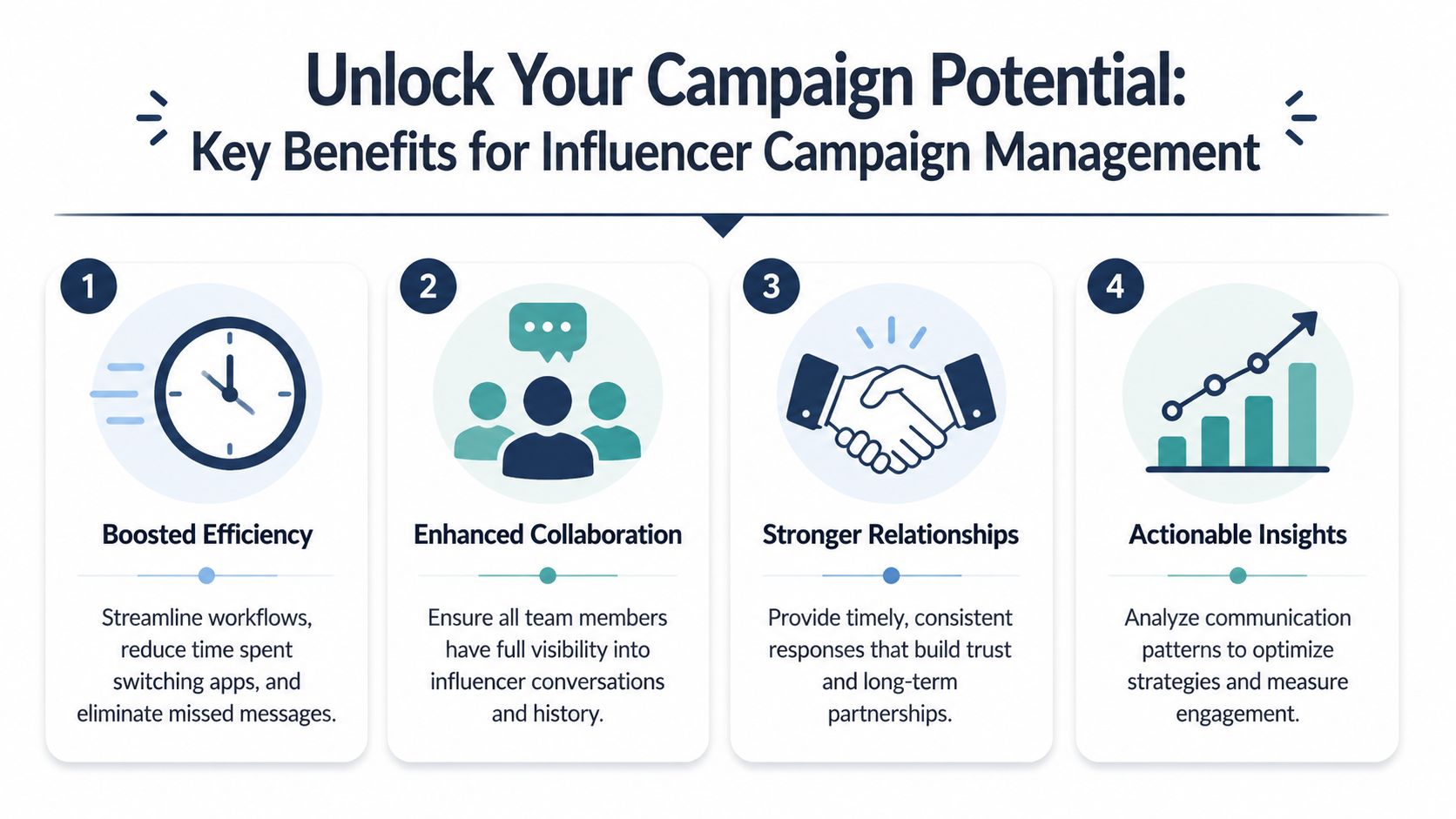
When communication lives inside a controlled workflow, marketers stop wasting energy reconstructing context. They answer faster, hand off work cleanly, and catch problems earlier. That changes how campaigns feel day to day.
Faster action with less context switching
Nextiva notes that, operationally, actions taken on one device propagate to all others in real time, and intelligent routing can automatically direct messages based on rules, improving response handling and reducing missed messages in distributed teams in its unified messaging overview. For marketing teams, the practical takeaway is straightforward. Communication doesn't stall because one person handled it on the "wrong" device or in the wrong place.
That matters when a creator sends a shipping update from a phone, a manager reviews from a laptop, and an account lead needs the latest status before a client call.
Better team collaboration without duplicate replies
A unified messaging setup gives everyone the same history. New team members can step into a campaign without asking for forwarded threads or screenshot recaps.
That removes one of the most common agency and in-house failures: parallel communication. One manager follows up by email while another sends an Instagram DM, and the creator gets conflicting direction.
A creator doesn't experience your internal org chart. They experience one brand voice, or a messy one.
Stronger creator relationships
Creators notice when brands are organized. They can tell when the team remembers prior decisions, sends clear next steps, and doesn't ask for the same asset twice.
That doesn't mean every interaction becomes formal. It means the brand's side of the relationship becomes reliable. Reliability builds trust faster than polished language ever will.
Cleaner visibility for campaign decisions
A unified communication record also makes review easier.
- Find approvals quickly: No digging through inbox search and Slack snippets.
- Check accountability: You can see whether the brief was sent, viewed, and followed up on.
- Spot bottlenecks: If several creators stall at the same stage, your process may be the issue.
- Reduce deadline misses: Teams catch unanswered questions before due dates slide.
The hidden benefit is confidence. When the campaign lead asks what happened with a creator, the team can answer from the record instead of from memory.
How REACH Unifies Influencer Communications
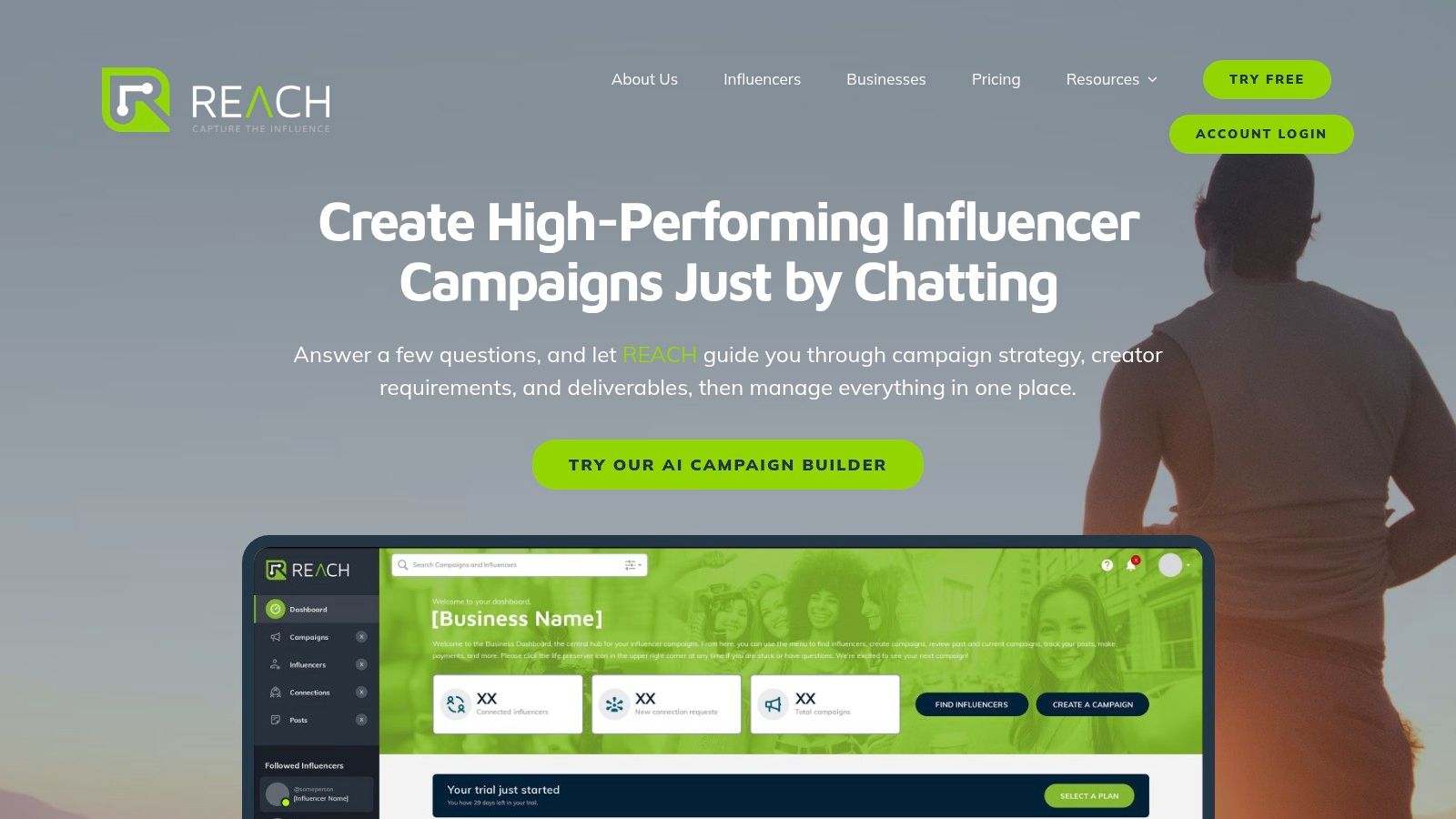
The modern version of a unified messaging system in influencer marketing isn't a generic enterprise inbox. It's a campaign command center built around the way brands and creators work.
That means the communication layer has to sit next to outreach, content tracking, approvals, deliverables, and payments. Otherwise, the team is still stitching the campaign together by hand.
What modern campaign control looks like
In practice, teams need one place to launch campaigns, monitor creator activity, and keep every conversation attached to the right work item. That's the difference between an inbox and a system.
A platform built for influencer operations should help with:
- Campaign setup: Build the campaign structure before the messages start flying.
- Creator-level communication logs: Keep each relationship organized.
- Content tracking across platforms: Monitor what was posted, approved, revised, or still pending.
- Deliverable oversight: Tie deadlines and output to actual message history.
- Payment and compliance follow-through: Keep post-content admin from becoming a separate mess.
Purpose-built software holds an advantage over patching together Gmail, Slack, Google Sheets, and screenshots. Those tools can support a campaign. They can't act as the campaign's memory.
Why this matters after creator discovery
Discovery tools help you identify creators. They don't run the campaign after the shortlist is approved. The hard part starts later, when the team has to manage expectations and keep dozens of conversations moving at once.
A working example of this model is a platform that combines campaign building, centralized tracking, organized creator records, and operational follow-through in one environment. That's the practical shape of unified messaging for marketers. Not a technical abstraction. A live system that keeps communication attached to execution.
For a quick product walkthrough, this video shows how a centralized influencer workflow can operate in one place instead of across disconnected apps.
Field note: The best communication system is the one your team will actually use during a deadline crunch. If it needs manual copying, people will skip steps. If it keeps campaign context attached automatically, adoption gets easier.
A strong influencer platform also needs to support teams managing multiple clients or multiple product lines at once. That means the dashboard can't just show messages. It has to show what those messages are about. Which creator is blocked. Which post is waiting on approval. Which deliverable is late. Which payment is still unresolved.
When all of that sits in one operating environment, marketers stop playing detective and start managing the campaign.
Your Unified Messaging Implementation Checklist
A unified messaging system usually fails for one simple reason. The team tries to change tools before it fixes process.
For influencer marketers, implementation starts with a hard look at where campaign communication lives today. That includes email threads, Instagram DMs, TikTok messages, comments, Slack, spreadsheets, approval notes, and payment follow-up. If a missed message in that channel can delay a post, cause a revision loop, or hold up payment, it belongs in the review.
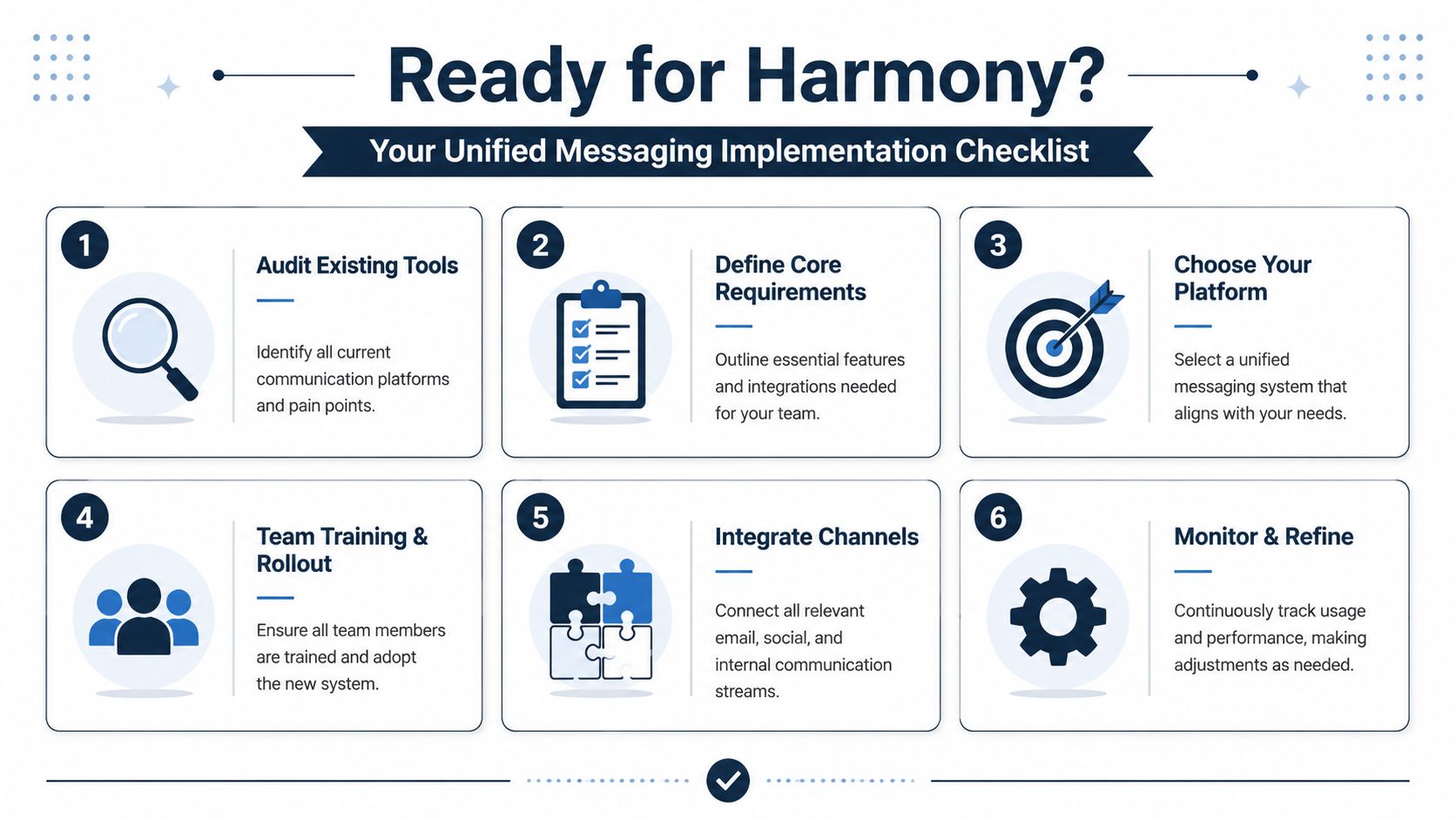
The checklist that keeps campaigns organized
Audit current channels
Map the actual communication flow. List where creators contact your team now, where account managers reply, and where approvals or payment questions end up.Define what must be tracked every time
Set the fields your team cannot afford to miss. In influencer campaigns, that usually means briefing status, content submissions, revision history, approvals, posting deadlines, usage rights, and payment status.Choose one command center
Pick one system to hold the full communication record. If messages live in one tool, approvals in another, and creator status in a spreadsheet, the team will keep losing context during handoffs.Set message standards
Create templates for outreach, follow-ups, revision requests, approval notes, and late-payment responses. Templates save time, but they also make sure creators get consistent direction across campaigns.Assign ownership clearly
Define who replies, who approves, who updates creator records, and who clears payment blockers. Shared inboxes without ownership create delays fast.Run a post-campaign review
Check which conversations still happened outside the system, where the team had to chase missing context, and which steps should be tightened before the next launch.
What good implementation feels like
You can see the difference quickly. Handoffs stop breaking. New team members can pick up a creator conversation without asking for a Slack recap. A manager can check the status of a deliverable, approval, or payment issue without opening five tabs and guessing which note is current.
That is the standard marketers should use when evaluating a platform like REACH. It should keep communication tied to campaign execution, not sitting beside it in a disconnected inbox.
If you want to see that operating model in practice, book a REACH demo and evaluate whether it fits your campaign workflow.