 Skip to content

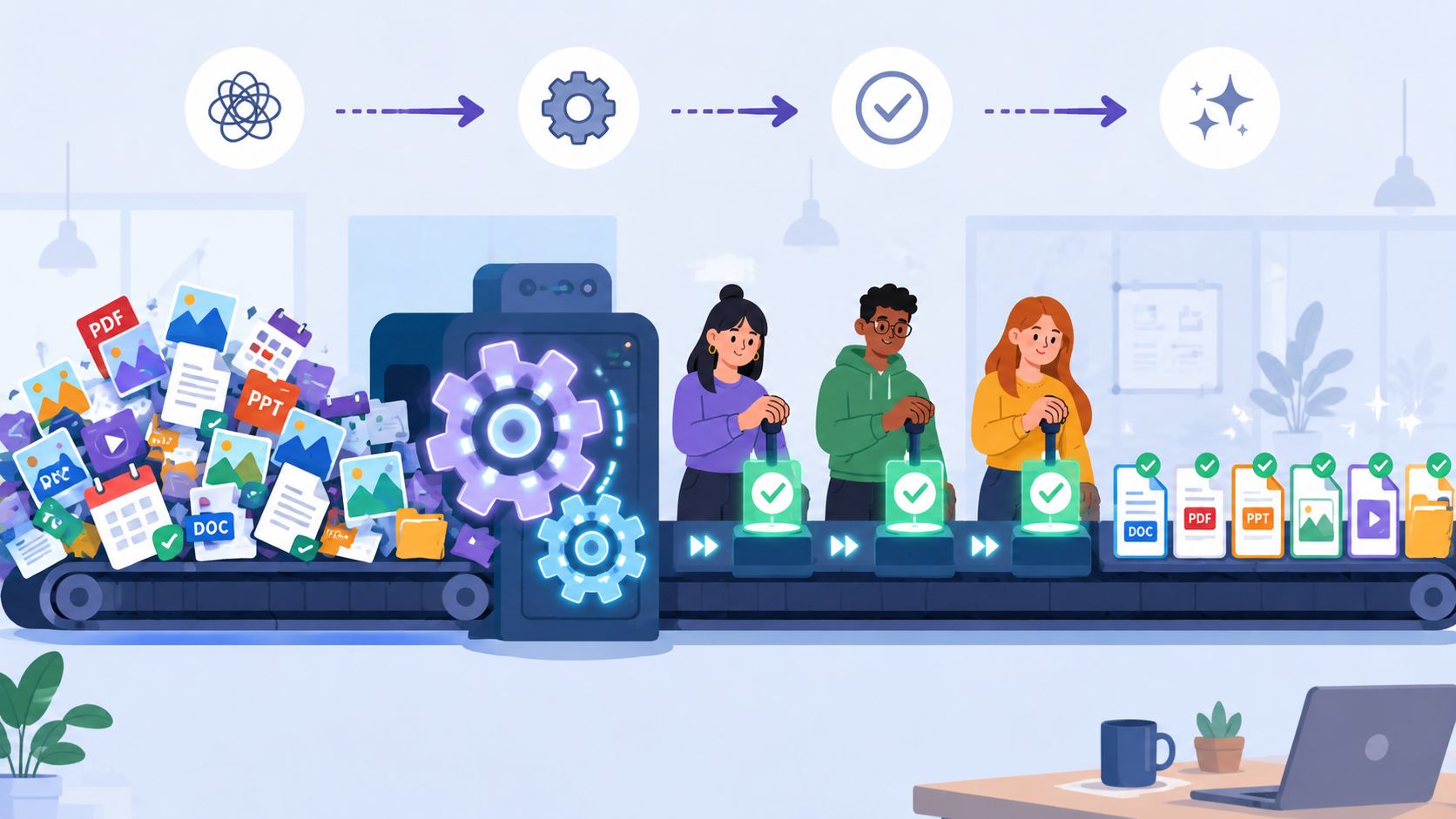
A campaign manager approves an influencer brief in email. Legal sends contract edits in a PDF attachment. The creator drops a revised draft in Drive. Brand comments come through Slack. Finance is waiting on the final scope before releasing payment. Nobody is looking at the same version, and nobody is fully sure who owns the next step.
That's what approval work looks like in a lot of marketing teams. Not because people are careless, but because campaign work moves fast and touches too many functions at once. Influencer marketing makes that worse. One campaign can require sign-off on messaging, usage rights, compensation, timelines, disclosures, deliverables, and final content across multiple channels.
When teams try to manage that with spreadsheets and inboxes, delays stop being isolated mistakes. They become the operating model. Approval process automation fixes that, but only when it's designed around real marketing workflows instead of generic admin tasks.
The Hidden Cost of Manual Approvals
A typical influencer campaign starts simple enough. The team identifies creators, drafts a brief, aligns on budget, and starts moving. Then the approvals begin.
The brief needs brand review. The contract needs legal review. The payment terms need finance review. The draft post needs social review. If the creator mentions a product claim, compliance may need to weigh in too. Each reviewer has a valid reason to be involved. The problem is that manual coordination turns a normal process into a scavenger hunt.
By the time the campaign manager reaches the content review stage, the record of decisions is scattered across email threads, Slack replies, comments in docs, and filenames like final_v2_final_REAL. That's when teams start missing handoffs.
What the chaos actually looks like
Manual approvals usually break down in a few predictable ways:
- Feedback gets fragmented: One stakeholder leaves comments in the doc, another replies in chat, and someone else forwards an email with “looks good” but never specifies which version.
- Ownership gets fuzzy: Everybody assumes someone else already approved the caption, the talking points, or the usage terms.
- Deadlines slip: Nobody sees the full chain, so requests sit in someone's inbox until launch is suddenly too close.
- Status reporting turns into admin work: The campaign manager spends time chasing updates instead of shipping the campaign.
If that sounds familiar, the pattern behind many ad creative approval delays is the same. The issue usually isn't one bad approver. It's a process that depends on people remembering what to do next.
A content team also loses visibility when approvals happen outside the place where work is managed. That's why many teams move toward a structured content approval workflow instead of treating sign-off as a string of one-off messages.
Manual approvals rarely fail in dramatic ways. They fail through small delays, partial context, and missing records.
Why marketing feels this pain faster
Marketing teams don't have the luxury of static inputs. Assets change. Offers change. creator timelines shift. Paid and organic plans diverge. What looked approved on Tuesday may need a fresh review on Thursday because the caption changed, a claim was added, or a contract term got revised.
In that environment, spreadsheets don't create control. They create the appearance of control. The team sees rows and checkmarks, but the actual decision trail still lives somewhere else.
That's the hidden cost. Not just slower approvals, but weaker accountability at exactly the moment the work gets more expensive and more visible.
What Is Approval Process Automation
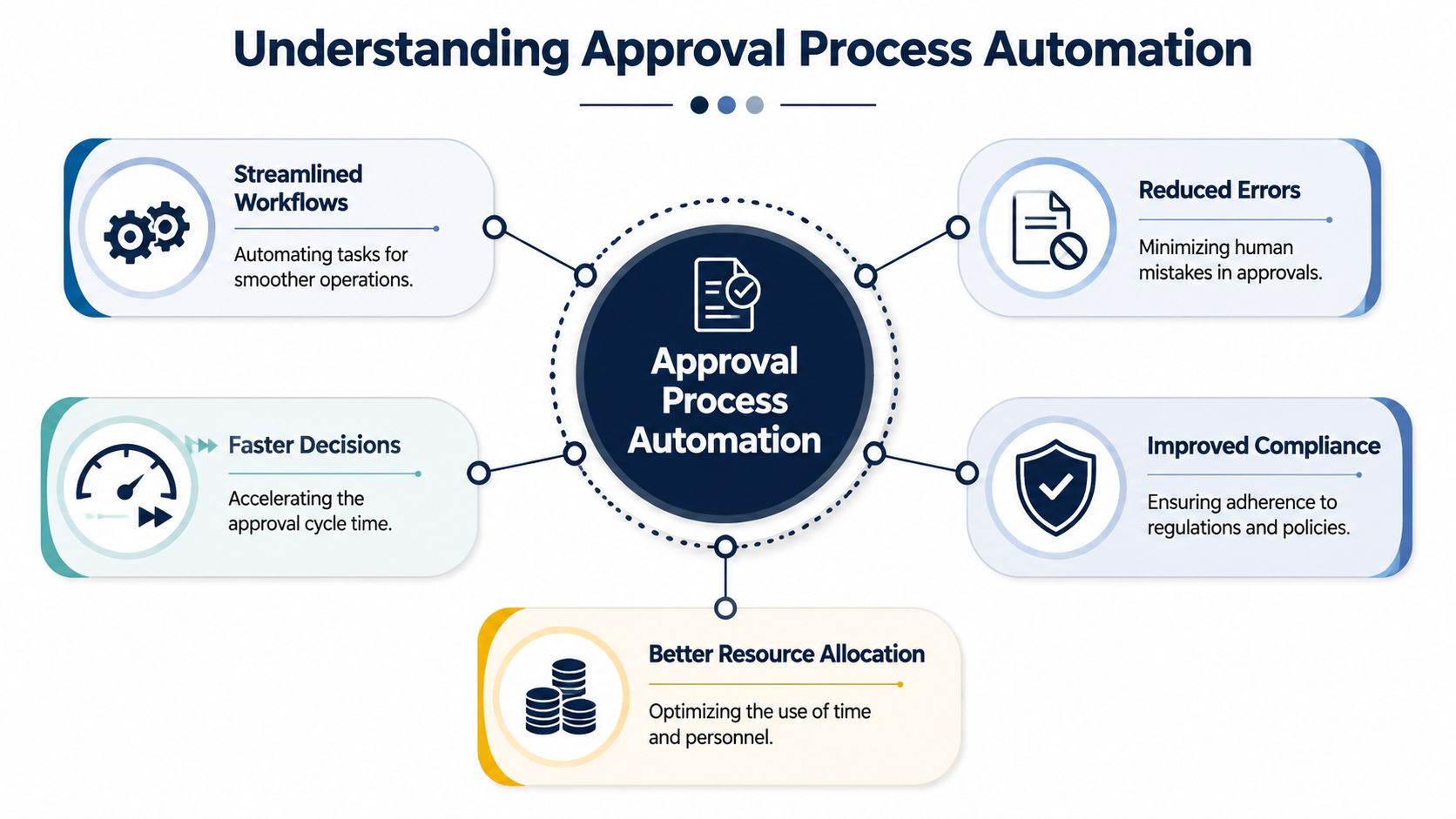
Approval process automation is a system that routes work to the right people, in the right order, using rules instead of reminders. Instead of a campaign manager manually forwarding documents, tagging reviewers, and asking for updates, the workflow handles the routing, notifications, and status tracking.
The easiest way to think about it is this. Manual approvals are like driving with a screenshot of directions. Automated approvals work more like GPS. The destination is the same, but the path updates based on rules, dependencies, and exceptions.
Early in the process, teams often look for a platform that can manage campaign operations after discovery. One example is REACH, which centralizes influencer campaign execution, deliverable tracking, communication, and payments so approvals don't have to live across disconnected tools.
What the system actually does
In practice, approval process automation usually includes a few core behaviors:
- Automatic routing: A contract goes to legal if certain terms apply. A payment request goes to finance once the required fields are complete.
- Ordered reviews: Some decisions need to happen sequentially. Others can happen in parallel.
- Notifications and reminders: Reviewers don't need a campaign manager to chase them for status.
- Escalation paths: If someone doesn't act, the system can move the request according to predefined rules.
- Recordkeeping: The team can see what was approved, by whom, and when.
According to Kissflow's business process automation market summary, the market was $8 billion in 2020, is expected to reach $19.6 billion by 2026, and is projected at $23.9 billion by 2029. The same source says the market has grown at an average annual rate of 21% since 2019. That matters because it shows this is no longer a niche back-office setup. Teams now treat workflow automation as operating infrastructure.
What automation is not
It isn't about removing judgment from approvals. Marketing still needs human review for brand voice, legal risk, creator fit, and campaign quality. Automation handles the routing and coordination so people can spend their time on the decision itself.
Practical rule: If your team still needs a project manager to explain who should approve what, the workflow isn't defined well enough yet.
The strongest systems don't force every request through the same chain. They apply rules only where needed. That keeps the process controlled without making every campaign feel bureaucratic.
The Tangible ROI of Approval Process Automation
The return on approval process automation shows up first in time, then in accuracy, then in execution quality. Marketing teams usually notice the time savings immediately because follow-up work drops. Fewer “just checking on this” messages. Fewer status meetings to ask where something stands. Fewer hours spent reconciling comments from different places.
The more important gain is consistency. When the workflow routes work the same way every time, teams stop relying on memory.
Where the value comes from
Effective approval process automation combines conditional routing, parallel or sequential reviewer assignment, notifications, and escalation rules, which lets requests move through the right approval chain without email back-and-forth and reduces data-transfer errors while shortening cycle times, as described by Altaflow's overview of approvals automation.
For a marketing team, that translates into practical improvements:
- Fewer manual handoffs: The system pushes work forward instead of waiting for someone to forward an email.
- Less rekeying: Data entered once can move into downstream steps without copy-paste mistakes.
- Cleaner visibility: Everyone can see whether an item is pending, approved, rejected, or blocked.
- Faster launches: When parallel reviews are possible, creative and operational reviews don't have to queue behind one another.
Manual vs Automated Approval Workflow
| Metric | Manual Process (Spreadsheets & Email) | Automated Process (Using a Platform) |
|---|---|---|
| Routing | Handled by a campaign manager or coordinator | Triggered automatically by rules |
| Visibility | Split across inboxes, chat, and files | Centralized status tracking |
| Version control | Easy to lose track of approved files | Approval tied to the current record or asset |
| Follow-up work | Frequent reminders and status chasing | Automated notifications and escalation |
| Error risk | Higher when data is copied between tools | Lower when approved data moves downstream automatically |
| Review speed | Dependent on manual coordination | Faster when sequential and parallel paths are defined clearly |
What doesn't work
Automation doesn't deliver value if you digitize a messy process. A bad workflow inside software is still a bad workflow. Teams run into trouble when they:
- Over-approve everything: Low-risk tasks get sent through unnecessary layers.
- Ignore exception paths: The normal process is defined, but urgent or unusual cases have no clean route.
- Treat status as the goal: A dashboard can look neat while the underlying rules still confuse reviewers.
A better approach is to automate only the decisions that benefit from consistency and traceability. Brand-sensitive content, contract approvals, usage-rights changes, and payment release are strong candidates. Minor edits usually aren't.
The best approval workflow is not the one with the most steps. It's the one that gets the right decision with the least avoidable friction.
Approval Workflows for Influencer Marketing
Influencer marketing creates a specific kind of approval problem. The work isn't just internal, and it isn't just creative. It sits across brand, creator, legal, finance, and social teams at the same time.
A normal campaign might require approval on the brief, the creator shortlist, the contract, the draft asset, the final post, and the payment release. Each step depends on the previous one, but not always in a straight line. A generic task board can track that work. It usually can't manage the approval logic cleanly enough.
A realistic campaign flow
Start with the brief. The campaign lead defines audience, deliverables, timing, usage expectations, and brand guardrails. That document may need internal sign-off before any creator receives it.
Next comes the contract. Legal may need to review terms around usage rights, exclusivity, brand safety, or content ownership. Finance may need to approve payment structure. Once the creator submits a draft, social and brand teams review the asset itself. If the creator revises the content, the approval may need to reopen rather than sit as “approved” from the first pass.
That's the point where a centralized workflow matters most.
What a purpose-built setup changes
In a campaign platform, the team should be able to see deliverables, approval status, communication history, and payment readiness in one place. That's especially useful when the same campaign includes TikTok, Instagram, and YouTube assets on different timelines.
For teams planning content around publication windows, pairing approvals with social media scheduling software helps prevent a common problem. Content gets approved in one system but misses its publishing handoff because nobody connected the operational steps.
Here's what a stronger influencer approval workflow looks like in practice:
- Brief approval happens before outreach: The creator gets aligned instructions the first time.
- Contract review is triggered by the deal terms: Higher-risk agreements can route differently than standard ones.
- Creative feedback stays attached to the asset: Reviewers comment in context instead of across email and chat.
- Final approval enables the next action: Publishing, reporting, or payment can move forward without another manual handoff.
Some teams also use automation upstream for content generation. If you're producing more ad variants or creative drafts, tools for ShortGenius automated ad generation can increase output volume quickly. That only makes approvals more important. More creative throughput without a controlled review path just creates a faster bottleneck.
Why generic workflows break here
Influencer campaigns involve outside collaborators, moving deliverables, and rights-related decisions. A standard procurement flow or internal ticketing process usually misses those realities. It may route a request, but it doesn't keep the campaign context close to the decision.
That's why marketing teams need approval process automation built around the asset, the creator relationship, and the launch calendar, not just around a form submission.
Your Roadmap to Implementing Automation
Organizations don't need a giant transformation project. They need a clear first workflow, a set of decision rules, and a tool that can enforce them without adding overhead.
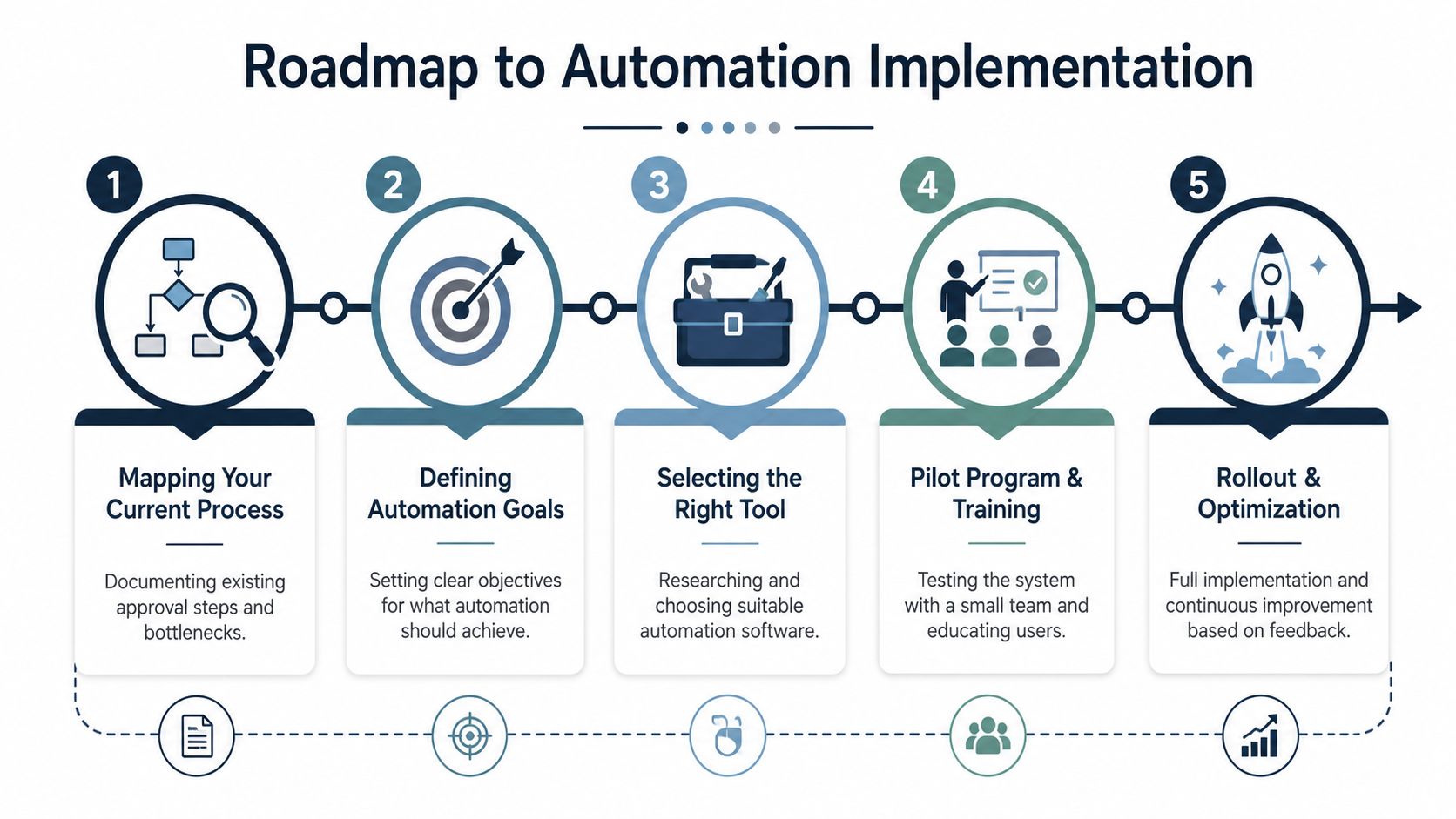
The roadmap below works because it starts with the process itself, not the software.
Map the current process
Write down how approvals happen today. Include every handoff, reviewer, file location, and exception path. Don't document the ideal version. Document what the team does when a campaign is live and under pressure.
Look for three things:
- Repeated bottlenecks: Where does work routinely wait?
- Duplicate review: Which approvals happen twice because nobody trusts the first record?
- Missing criteria: Where do people ask, “Does this need legal?” because the rules aren't written down?
Define approval rules
A well-structured workflow is built around explicit criteria such as pricing thresholds, discount levels, contract terms, or compliance requirements, and those rules help prevent unnecessary approvals while preserving control, as explained in Atlassian's guide to approval workflows.
For marketing teams, those criteria often include:
- Contract conditions that trigger legal review.
- Content categories that require brand or compliance review.
- Payment or scope changes that need finance approval.
- Usage-rights changes that reopen approval even if the original content was cleared.
Don't automate who shouts the loudest. Automate the rules the team agrees on.
A connected marketing automation workflow is useful here because campaign approvals rarely exist alone. They affect scheduling, reporting, billing, and creator communication.
A quick explainer can help teams align on the implementation basics before rollout:
Pilot, then refine
Start with one workflow that hurts enough to matter but isn't so complex that it stalls adoption. Influencer content approval is often a good candidate because the team feels the pain quickly and can see the improvement fast.
Then refine based on observed behavior:
- Shorten paths where low-risk work is over-routed
- Add escalation when requests sit too long
- Tighten form fields if reviewers keep asking for the same missing details
What matters is not launching the perfect workflow. What matters is creating a workflow people will use, then improving it with real operating feedback.
Measuring Success and Avoiding Common Pitfalls
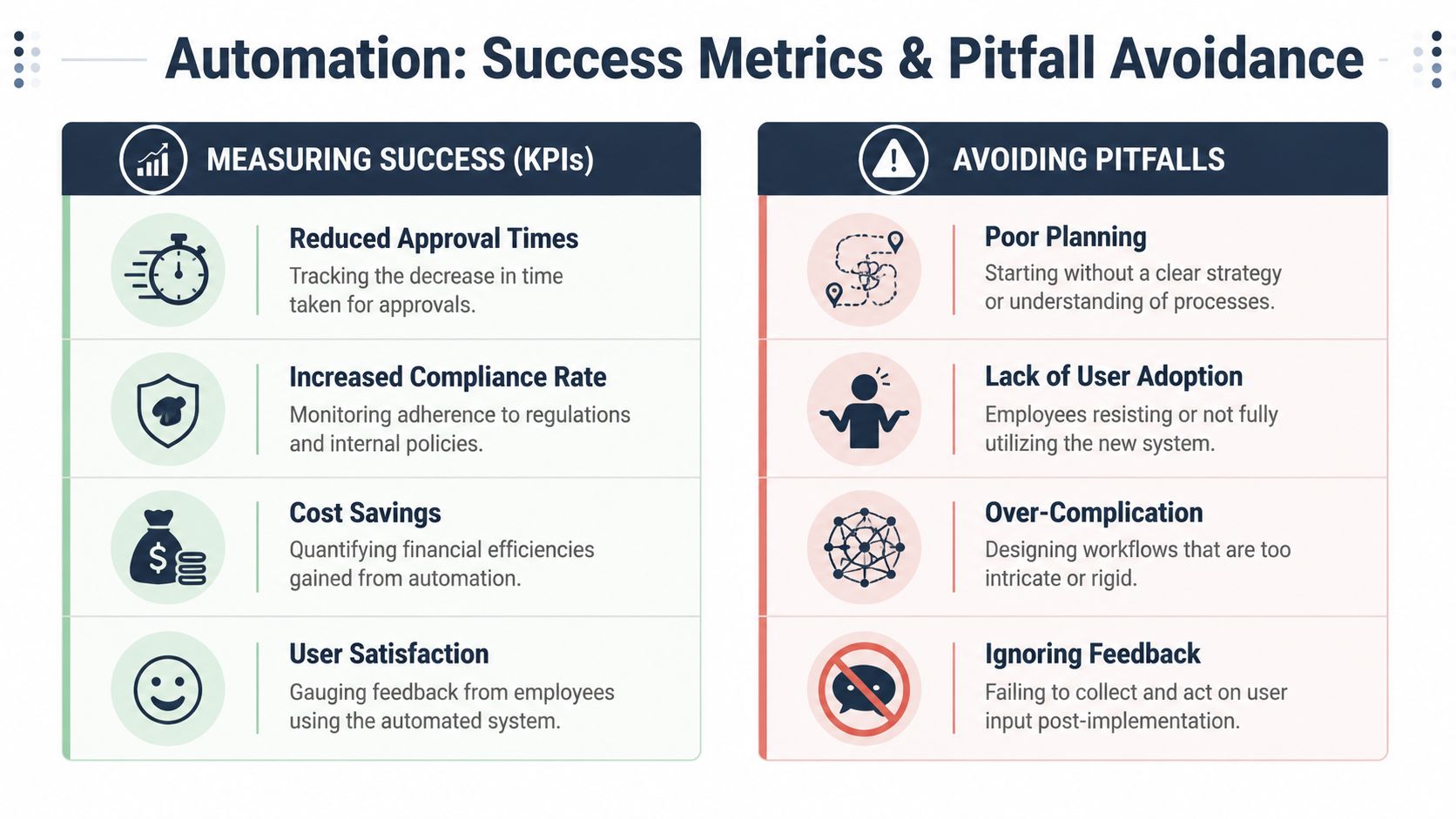
Once approval process automation is live, the work shifts from building the workflow to managing it well. The strongest teams track whether approvals are moving faster, but they don't stop there. They also track whether control got weaker as speed improved.
What to measure
Use a small set of operating metrics your team can act on:
- Approval cycle time: How long a request takes from submission to decision.
- Touches per request: How many manual interventions the team still needs.
- On-time delivery rate: Whether approved assets are ready when campaign deadlines hit.
- Rework patterns: Which approvals get reopened often, and why.
- Reviewer responsiveness: Where requests slow down consistently.
The goal isn't a reporting dashboard for its own sake. It's to identify where the workflow still depends on heroics.
The trap most teams miss
A major challenge in automation is balancing speed with governance risk, especially in cross-functional workflows involving finance and legal. Systems need traceability, authorization levels, and audit trails to maintain control as complexity grows, which Bizagi highlights in its guidance on automated approvals and governance.
That tradeoff matters in marketing more than many teams expect. A faster approval path is not a better one if nobody can prove which version was cleared, who approved payment, or whether policy exceptions were documented.
If you work in content-heavy channels, the same principle shows up elsewhere too. The discussion around is YouTube automation truly dead? gets at a related point. Scaling output without tightening systems usually increases failure, not performance.
Fast approvals help campaigns launch. Traceable approvals help teams keep trust.
Approval process automation works when the team can move quickly and still answer basic governance questions without digging through inboxes.
If your team is still managing influencer approvals through spreadsheets, DMs, and disconnected tools, it's time to centralize the work. REACH helps teams manage campaign operations, track deliverables, organize communication, and keep post-discovery execution from falling apart during review and approval.