 Skip to content


When a brand pays a creator to post about their product, that’s an Instagram brand deal. It’s a simple concept, but it's the lifeblood of the creator economy. For creators, it’s a path to a real income. For brands, it's a direct line to building trust and driving sales with an engaged audience. Landing your first brand deals on Instagram can feel daunting, but with the right strategy, it's the key to turning your creative passion into a sustainable career.
This guide will break down the exact steps to go from aspiring creator to a professional partner that brands are eager to work with. We'll cover everything from optimizing your profile and setting your rates to negotiating contracts and proving your ROI—all while leveraging powerful tools like the REACH influencer marketing platform to streamline the entire process.
Table of Contents
- Why Instagram Is Still the King of Brand Collaborations
- The A-to-Z Lifecycle of a Brand Deal
- Prepare Your Profile for High-Value Brand Deals on Instagram
- Pricing and Pitching: How to Land Your First Instagram Brand Deal
- Nail the Details: Contracts and Campaign Management for Instagram Deals
- Measure Your Impact and Scale Your Instagram Partnerships
- Frequently Asked Questions About Brand Deals on Instagram
Why Instagram Is Still the King of Brand Collaborations
New apps pop up all the time, but when it comes to brand deals, Instagram is still the undisputed champion. The numbers don't lie. For brands and creators alike, understanding the platform's dominance is key to crafting a successful strategy for brand deals on Instagram.
Take a look at the data that shapes how brands and creators plan their collaborations for the coming year.
Instagram Brand Deal Quick Stats for 2026
| Metric | Statistic | Why It Matters |
|---|---|---|
| Platform Preference | 57.1% of brands prefer Instagram for influencer marketing. | Despite the noise from other platforms, Instagram is where the majority of brand partnership budgets are being spent. |
| Return on Investment (ROI) | Brands average $4.12 in return for every $1 spent on Instagram. | This incredible ROI proves that well-executed Instagram campaigns are a reliable driver of business results. |
| Market Dominance | It remains the top platform for influencer marketing campaigns. | For creators, this means Instagram offers the most opportunities. For brands, it offers the largest pool of proven talent. |
These figures, highlighted in recent reports from industry trackers like Meltwater and Sprout Social, show why top brands consistently invest in Instagram. The return is simply too good to ignore.
This is also why so many in-house marketing teams now rely on platforms like REACH to manage their campaigns. It's all about efficiency—finding the right creators, handling approvals without endless email chains, and tracking results in one place. If you're looking for a deeper dive into making money on the platform, this guide on how to monetize Instagram is a fantastic resource.
The A-to-Z Lifecycle of a Brand Deal
A great partnership is much more than just a transaction. It’s a process that, when done right, creates value for everyone involved. Here’s what this playbook will walk you through, step by step:
- Getting Ready: We'll start by polishing your creator profile or conducting a brand audit to make sure you’re attracting the right kind of partners.
- Making the Connection: Learn how to find your ideal collaborators, whether you’re sending cold pitches or using discovery tools to find warm leads.
- The Negotiation: This is where we talk money. You'll learn how to price your work, build packages, and lock in a solid contract.
- Running the Campaign: From content approvals to going live, we’ll cover how to execute a flawless campaign with clear communication.
- Measuring What Matters: Finally, we'll show you how to track your campaign's performance, prove your value, and turn one-time deals into long-term relationships.
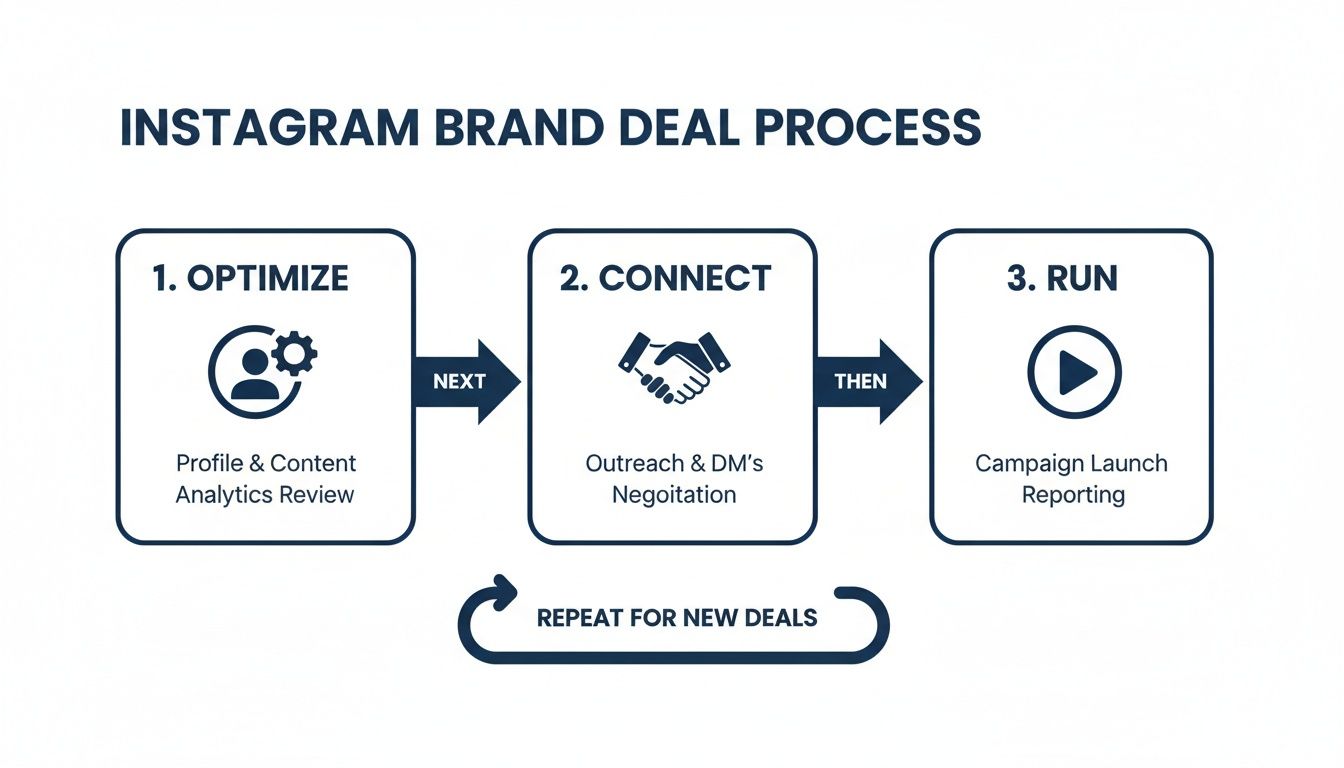
As you can see, every solid partnership follows this flow: get your house in order, find the right partners, run a great campaign, and then do it all over again. Getting brand deals on Instagram right means being strategic and organized. In a crowded market, using a dedicated platform like REACH to manage the moving parts isn’t just a nice-to-have; it’s essential for scaling up. It provides the structure you need to turn one-off projects into a steady, predictable source of income.
Prepare Your Profile for High-Value Brand Deals on Instagram
Before you ever send a pitch or even think about pricing, you need to look at your Instagram profile through the eyes of a brand manager. It's your digital storefront, your resume, and your first impression all rolled into one. A messy, unfocused profile is the quickest way to get passed over for the kind of brand deals on Instagram you're aiming for.
Think about it: if a brand manager lands on your page and can't figure out who you are, what you do, and who you do it for in about three seconds, they're gone. Let's make sure they stick around.
Nail Your Niche and Bio
The biggest mistake creators make is trying to be everything to everyone. Brands aren't looking for a "lifestyle" creator; they're looking for the "vegan foodie for busy parents" or the "sustainable fashion enthusiast on a budget." A sharp niche tells a brand exactly whose attention they're buying when they partner with you.
Once you know your niche, shout it from the rooftops—or, you know, your bio. Your bio is prime real estate. It needs to clearly and concisely answer:
- Who are you? (e.g., "NYC-based travel creator on a budget.")
- What problem do you solve for your audience? (e.g., "Helping you see the world for less.")
- How can they work with you? Put a professional email address right there. Don't make them hunt for it.
This isn't just about looking professional; it's about being discoverable. For brand managers, this is where tools like REACH become invaluable. Instead of endlessly scrolling, they can filter for creators by incredibly specific niches, audience data, and even keywords in their bios, putting a perfectly aligned profile like yours right in front of them.
Do a Brand-Readiness Audit on Your Content
Okay, your bio got their attention. Now they're scrolling your feed. What they see in your last 9-12 posts is your portfolio. This is where they decide if you’re a pro or just playing around. They aren't just looking for pretty pictures; they're assessing your consistency and authenticity.
A brand-ready profile shows you're a reliable partner. Your visual style, tone, and posting schedule should tell a clear story. If your feed is a random mix of topics and you post sporadically, it screams "unpredictable," which is a major red flag for brands.
Take 10 minutes and do a quick audit. Be honest with yourself:
- Visual Vibe: Do your photos have a consistent look? You don't need to be a pro photographer, but using a similar filter or editing style makes your feed look polished and intentional.
- Quality Control: Are your photos and videos blurry? Poorly lit? If it looks low-effort, brands will assume your campaign content will be, too.
- Real Talk: Look at your comments. Are people having actual conversations, or is it a sea of "Great post!"? Brands want to see a real community, not just vanity metrics.
- Give 'em the Goods: Does every post entertain, educate, or inspire your audience? That's what keeps them coming back and what shows a brand you've built a loyal following.
Build a Media Kit That Does the Selling for You
A media kit is your secret weapon. It’s a professional PDF that instantly elevates you from a hobbyist to a serious business owner. Attaching one to your pitch shows you're prepared and understand the game. If this is new territory, our guide on how to build a killer Instagram profile and media kit will walk you through it.
Here’s what every winning media kit needs:
- The Hook: A short bio that re-sells your niche and brand story.
- The Numbers: Your follower count, engagement rate, and monthly impressions/reach.
- Audience Intel: This is the money slide. Include screenshots from your Instagram Insights showing your audience's age, gender, and top locations. This data is what brands crave.
- Social Proof: Logos of past brand partners and any glowing testimonials you have.
- The Menu: A clear list of your services (Reels, Story sets, static posts) and your starting rates.
For brands, a creator's media kit is a great start, but savvy marketers will cross-reference it. An influencer marketing platform like REACH provides a crucial layer of verification. Its deep analytics can flag suspicious follower growth or engagement from pods, ensuring the creators they choose have genuine influence. This is how brands protect their investment and drive real ROI with brand deals on Instagram.
Pricing and Pitching: How to Land Your First Instagram Brand Deal

Okay, you've done the prep work. Your profile is looking sharp, and you have a media kit packed with all your best stats. Now for the exciting (and sometimes nerve-wracking) part: actually getting paid.
This is where you move from just creating content to running a business. It’s all about figuring out your rates, learning how to pitch, and securing those first few brand deals on Instagram. Getting this right is what separates creators who end up with a drawer full of free products from those who get paid what they're truly worth.
Figuring Out What to Charge
"How much should I charge?" It's the million-dollar question, and honestly, there's no single answer. Your pricing will shift based on your niche, audience engagement, the type of content you create, and of course, your follower count. But don't worry, you don't have to guess.
A good starting point many people talk about is the 1% rule, which suggests charging about $100 for every 10,000 followers. Think of it as a loose guideline, not a law. The real value comes from digging a bit deeper.
Here’s what really matters to brands:
- Engagement Rate: A creator with 5,000 followers and a stellar 8% engagement rate is often way more valuable than someone with 50,000 followers and a 1% rate. High engagement means you have an audience that actually listens.
- Content Format: Videos are king. A well-produced Reel that took you hours to shoot and edit should cost significantly more than a single Instagram Story that vanishes in 24 hours.
- Usage Rights: Is the brand going to use your photo in a Facebook ad? Or on their website? That’s extra value you’re providing, and you absolutely need to charge for it.
Always offer packages. Bundling deliverables like one Reel, two static posts, and five Stories completely changes the conversation. It moves from "How much for one thing?" to "Which package will get us the best results?" This helps brands see more value and usually means a bigger paycheck for you.
How to Craft a Pitch That Actually Gets a Response
A generic, copy-and-paste message is a one-way ticket to the "ignored" folder. Personalization is everything. Your pitch is your chance to show a brand you've actually been paying attention and aren't just spamming every email address you can find.
For brands, sifting through hundreds of DMs is a huge pain point. That’s why many brand managers use platforms like REACH to streamline the whole process. They can find creators who are a good fit, send personalized outreach, and manage the entire conversation in one dashboard. It makes things efficient without feeling robotic. If you're on the brand side, you might want to look at our guide for a brand collaboration proposal template.
The Art of the Cold Pitch
So, you have a dream brand you want to work with? Reaching out cold can work, but you have to be smart about it. Your pitch needs to be short, confident, and focused entirely on them, not you.
Here’s a simple structure that works:
- The Hook: Open with a genuine compliment about something specific. "I loved the messaging in your recent campaign for the new XYZ product!" This shows you're a real fan.
- The Connection: Connect the dots for them. Briefly explain why your audience is their audience. Use a real stat. "My audience of women aged 25-34 in the U.S. is a perfect match for your target customer."
- The Idea: Don't just say "I'd love to collaborate." Pitch a concrete idea. "I have a great concept for a Reel showing how your travel backpack fits everything for a weekend trip—my followers are always asking for packing tips."
- The Call to Action: Keep it simple. Attach your media kit and suggest a quick call to chat more about your ideas.
Of course, there’s an easier way. For creators, platforms like REACH flip this whole dynamic on its head. Instead of you doing all the chasing, you get access to a marketplace of brands that are already looking for partners. You can see their campaign briefs and budgets upfront and apply for gigs that are a perfect fit. It saves a ton of time and dramatically increases your odds of landing those high-value brand deals on Instagram.
Nail the Details: Contracts and Campaign Management for Instagram Deals
You’ve landed the deal. The initial excitement of a "yes" from a brand is awesome, but don't pop the champagne just yet. A verbal agreement or a few DMs back and forth is not a deal. This is where the real professionals stand out, turning that "yes" into a smooth, successful partnership.
It all boils down to having a rock-solid contract. Think of it as the official playbook for your collaboration. It’s what prevents those dreaded misunderstandings, protects you and the brand, and puts everyone on the same page about what a "win" actually looks like. Many creators get burned by scope creep or delayed payments simply because they didn't have a signed agreement.
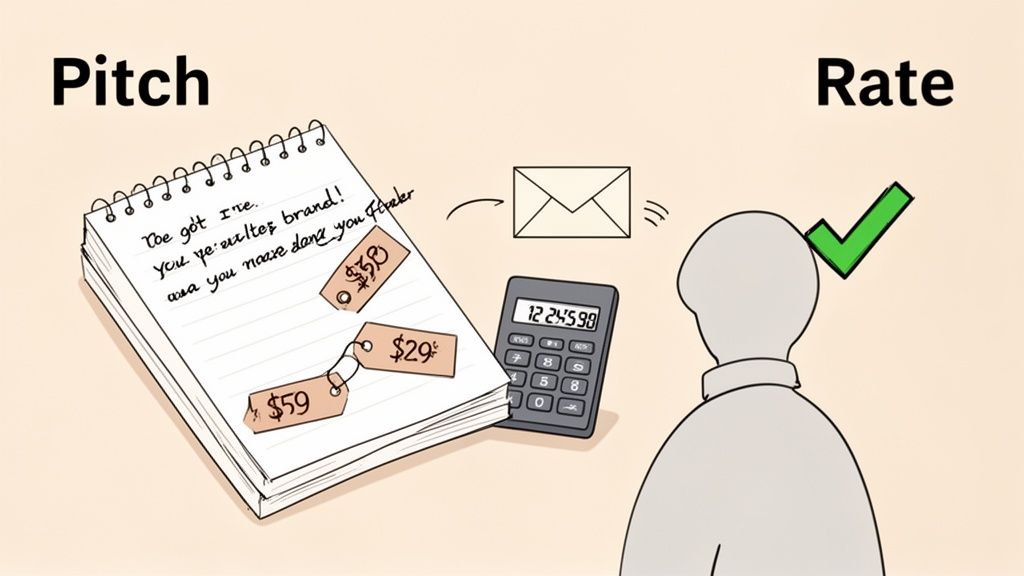
What Every Good Contract Needs
A good contract doesn't leave anything up for debate. Whether you're a creator reading one or a brand sending one, clarity is your best friend. It builds trust and shows you’re serious about the partnership.
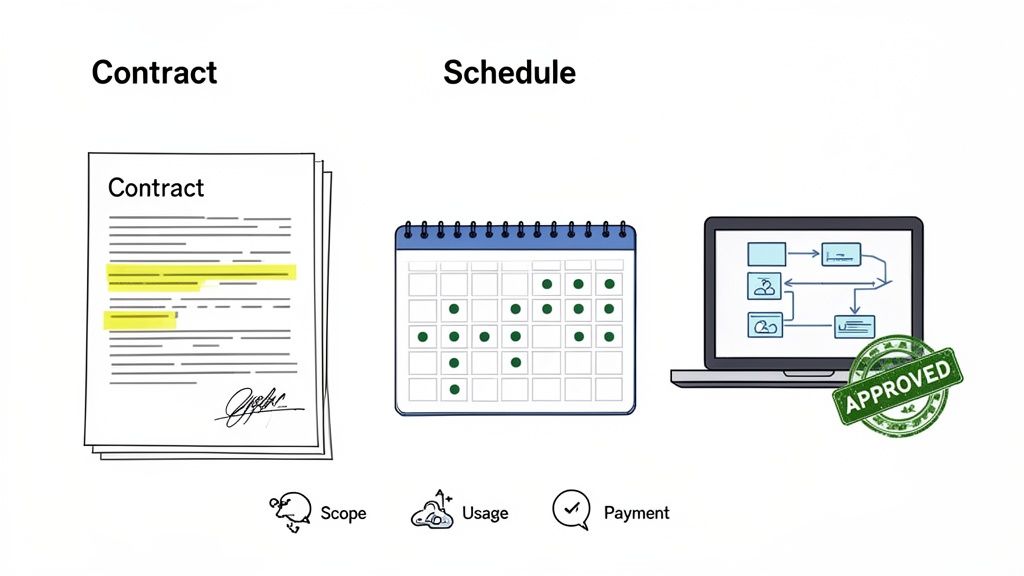
Before you sign anything, make sure you can tick off these five non-negotiables:
- Scope of Work (The Deliverables): This is the "what." It needs to be crystal clear. Don't just say "Instagram content." Specify exactly what you’re creating: one Reel and three Stories? One carousel post with at least five photos? The more specific, the better.
- Content Usage Rights: This is huge. It defines how the brand can use your content after it's posted. Can they just repost it on their own Instagram feed? Can they run it as a paid ad? And for how long? Broader rights mean more value, so your price should reflect that.
- Exclusivity Clause: It’s pretty standard for a brand to ask you not to work with their direct competitors for a little while (say, 30 days before or after the campaign). Just make sure the timeline is reasonable and you're clear on who they consider a competitor.
- Approval and Revision Process: How will the brand review your drafts? How many chances do they get to ask for changes? One or two rounds of revisions is a common and fair standard. This little clause is your best defense against endless editing cycles.
- Payment Schedule and Terms: Get the money details in writing. The contract must state the total pay, how you’ll be paid, and when you’ll be paid. Common terms are 50% upfront and 50% on completion, or full payment within 30 days of your final post (also known as Net-30).
A contract is your safety net. It’s the document you'll both go back to if questions pop up about deadlines, content rights, or getting paid. Never, ever start creating content without a signed agreement in your hands. If you're not sure where to begin, our guide includes a content creator contract template that breaks down all the essential clauses.
Keeping the Campaign on Track
Once the ink is dry, it's time to bring the campaign to life. Honestly, this is where many brand deals get messy. Trying to manage feedback through endless email chains, chasing approvals in DMs, and manually tracking post schedules is a recipe for disaster.
This is where a centralized platform can be an absolute lifesaver for both creators and brand managers. Just imagine having a single, organized dashboard for every single part of the campaign.
This is exactly what platforms like REACH were designed for. Instead of inbox chaos, you get a clean, transparent workflow:
- Content Submission: You upload your draft posts, Reels, and Stories directly to the platform for the brand to see.
- Feedback & Approvals: The brand manager gets a notification, looks at the content, and can leave specific, actionable comments right there (e.g., "Love this, but can we change the caption to include our #SummerGlow hashtag?").
- Scheduling: As soon as the content is approved, it’s scheduled to go live. No more last-minute scrambles.
This kind of organized process cuts out the confusion and saves everyone hours of admin work. For brand managers juggling multiple brand deals on Instagram, it's a clear overview of everything in flight. For creators, it means getting clearer feedback and faster approvals, so you can focus on what you do best—creating amazing content.
Measure Your Impact and Scale Your Instagram Partnerships
The content is live, the likes are pouring in, and your DMs are buzzing. But the real work isn't over yet. The final, most crucial step is figuring out what actually worked. Forgetting to measure your results is the difference between a one-time gig and a long-term, profitable partnership.
For brands, this is about tying influencer campaigns to real business outcomes. And for creators, understanding these numbers is how you prove your worth, command higher rates, and turn this into a career.
What to Track to Prove Your Campaign Worked
To get the full picture, you need to look beyond vanity metrics. A mix of awareness, engagement, and conversion numbers tells the complete story of your campaign’s success.
Here's a breakdown of the key metrics that truly matter when evaluating the success of an Instagram brand deal, showing what they measure and how you can track them.
Key Metrics for Measuring Instagram Campaign ROI
| Metric | What It Measures | How to Track It |
|---|---|---|
| Reach & Impressions | Brand awareness. Reach is the number of unique accounts that saw your post; impressions are the total views. | Found in Instagram Insights for your post, Reel, or Story. |
| Engagement Rate | Audience resonance. It shows how many people interacted with your content relative to its reach. | (Likes + Comments + Shares + Saves) ÷ Reach. High engagement means a loyal, interested audience. |
| Click-Through Rate (CTR) | Audience intent. The percentage of viewers who clicked the link in your bio or swiped up on a Story. | Use trackable links (like Bitly) or look at "Link Clicks" in your Instagram Story Insights. |
| Conversions & Sales | Direct business impact. The number of sales, sign-ups, or downloads from your campaign. | Use unique promo codes (e.g., “ALIYA15”) or custom UTM links to attribute sales directly to your efforts. |
Tracking these numbers gives you a clear, data-backed narrative of your campaign's performance.
For brand managers juggling multiple creators, trying to pull all this data manually is a recipe for a headache. This is where a dedicated platform like REACH can be a lifesaver. Its dashboard consolidates all these metrics in one place, giving you live reports on which creators are driving clicks and which content is actually leading to sales. It makes proving the value of your work to the higher-ups incredibly simple.
Showing the Financial Power of Instagram Deals
Well-executed Instagram brand deals aren't just for looks—they deliver serious financial results. Industry studies show that for every $1 spent on influencer marketing, brands see an average return of $5.78. Even specific to Instagram, that number is a powerful $4.12.
What does that mean in practice? It means this is one of the most efficient marketing channels available. In fact, a staggering 94% of brands report that influencer marketing ROI is just as good, if not better, than other marketing channels they use.
This data isn't just a fun fact; it's your negotiation power. When a DTC brand manager can walk into a meeting with a live report from REACH showing a 2x-3x return on their latest influencer campaign, they don't just get a pat on the back. They secure a bigger budget for the next quarter.
Moving From One-Off Gigs to Long-Term Ambassadorships
The best brand partnerships don't just stop after one post. Once you’ve run a successful campaign and have the numbers to back it up, it’s time to think bigger. This is how you transition from single projects into long-term ambassadorships, which create steady growth for brands and reliable income for creators.
An ambassadorship is a formal, ongoing partnership where a creator promotes a brand they genuinely use and believe in. This has some major advantages:
- Real Authenticity: When your audience sees you using a product over months, not just in one sponsored post, the trust is so much deeper.
- Always-On Exposure: The brand gets consistent visibility with your community, rather than a single spike in attention that quickly fades.
- Smarter Economics: Brands can often lock in better rates for long-term commitments, making it more cost-effective than booking a series of one-off deals.
A great way to scale these relationships is by layering in other revenue streams, like affiliate programs. This lets you earn a commission on sales you drive long-term, creating a performance-based income that perfectly complements your flat-fee deals. By combining ambassadorships with affiliate links, you’re building a smarter, more sustainable business—and that’s how you build a lasting career in this industry.
Frequently Asked Questions About Brand Deals on Instagram
Let's tackle some of the most common questions that pop up when you're navigating the world of brand deals on Instagram. Whether you’re a creator trying to land your first partnership or a brand manager refining your strategy, these are the sticking points we see time and time again.
My goal here is to cut through the noise and give you clear, straightforward answers. Think of this as your cheat sheet for turning confusion into confident, successful collaborations.
How Many Followers Do I Need for Instagram Brand Deals?
This is the big one, the question I get asked more than any other. And the answer might surprise you: there’s no magic number. The days of brands being obsessed with massive follower counts are fading fast. The real focus now is on audience quality and genuine engagement.
In fact, brands are finding incredible value in working with nano-influencers (1,000–10,000 followers) and micro-influencers (10,000–50,000 followers). Why the shift? Because smaller creators often have hyper-focused communities that hang on their every word. I’ve seen creators with just a few thousand followers land amazing paid deals simply because they built a powerful, trusting community around a specific niche.
The new currency isn't followers; it's trust. Brands would much rather work with a creator who has 5,000 engaged fans than one with 100,000 passive followers who barely see their posts.
This is where sophisticated discovery tools really shine. A brand manager using a platform like REACH can easily filter for creators with stellar engagement rates or specific audience demographics, completely ignoring follower count. It helps them uncover those hidden-gem creators who often drive a far better return on their investment.
What Should I Charge for an Instagram Post in 2026?
Pricing your work feels like throwing a dart in the dark, but it doesn't have to be. You've probably heard the old "1% rule"—charging $100 per 10,000 followers. Treat this as a very rough starting point, not a hard-and-fast rule. Your final rate is a blend of several key factors.
Here's a quick checklist I use to build out a quote:
- Engagement Rate: This is your proof of influence. A higher engagement rate absolutely justifies a higher price.
- Content Type: A Reel takes way more effort to shoot and edit than a few Stories. Price each deliverable based on the work involved.
- Production Costs: Did you need to buy props, travel, or hire an assistant? Don't forget to bake these real costs into your rate.
- Usage Rights: This is a big one. If a brand wants to use your content in their own ads or on their website, that's a separate line item. You must charge extra for those rights.
- Your Niche: If you're an expert in a specialized niche like biotech or personal finance, your expertise is in high demand, and you can charge a premium.
For a real-world gut check, see what creators in your space are charging. You can check out rate calculators, but an even better way is to look at campaign briefs on influencer platforms. On REACH, for example, brands often list their budget range right in the campaign description, giving you a direct look at current market rates for different brand deals on Instagram.
How Do I Find Brands to Work With on Instagram?
Sitting back and waiting for brands to slide into your DMs is not a strategy—it's a lottery ticket. To build a real business, you have to be proactive.
A great first step is to engage with the brands you already know and love. Comment on their posts and tag them when you use their products. This isn't about getting free stuff; it's about building an authentic, organic relationship that can naturally lead to paid work.
Once you have a professional media kit ready, the next step is to start pitching. Reach out to the marketing or social media managers at brands you genuinely want to work with. It shows you're a professional who takes initiative.
But honestly, the most efficient method is joining an influencer marketing platform. Think of a platform like REACH as your agent, matchmaker, and project manager all in one. Instead of you doing the cold outreach, brands post their paid campaigns, and you can apply directly. It connects you with companies that are actively looking for creators right now.
What Are the Biggest Mistakes to Avoid in Brand Deals?
Getting the deal is only half the battle. Executing it perfectly is what builds a long-term career. I’ve seen a few common mistakes completely derail a partnership, and they’re all avoidable.
Here are the three biggest pitfalls to watch out for:
- Not Using a Contract: A verbal agreement means nothing when there's a dispute. Always, always get every detail—deliverables, payment schedules, usage rights—in a signed contract.
- Partnering with the Wrong Brand: Chasing a quick paycheck from a brand that doesn't fit your values is the fastest way to lose your audience's trust. If it feels off, it will look inauthentic, and that can damage your credibility for a long time.
- Underpricing Your Work: This is especially common for new creators. You bring real value, influence, and effort to the table. Do your homework, know your worth, and don't be afraid to negotiate for a rate that reflects that.
Using a platform that formalizes the whole process can help you avoid these landmines. When contracts, payments, and approvals are all handled within a structured system, it protects both you and the brand.
Mastering the art of brand deals on Instagram is your ticket to a thriving creator business. By optimizing your profile, pitching effectively, and managing campaigns like a pro, you can secure valuable, long-term partnerships.
Ready to stop guessing and start connecting with your ideal brand partners? On the REACH platform, you can find vetted brands, manage campaigns in one place, and get paid on time, every time. Discover your next brand deal today.