 Skip to content
Running a successful digital marketing agency means moving faster, delivering better results, and proving ROI without getting buried in manual tasks. The right technology stack is no longer a luxury—it's the engine that powers efficiency and growth. From managing complex client campaigns to pinpointing the perfect influencer, the digital marketing agency tools you choose directly impact your profitability and client retention.
This guide breaks down the essential platforms you need to build a winning tech stack. We'll explore top-tier solutions for every agency function, from SEO and social media to paid ads and project management. We'll also cover how platforms like REACH Influencers streamline influencer marketing from discovery to payment, giving you a competitive edge in one of the fastest-growing channels. To ensure your agency is always equipped with cutting-edge capabilities, continually research the best tools for digital marketing to power your growth.
Our goal is simple: to help you move beyond generic feature lists and find the right software for your specific agency needs. Inside, you'll find a categorized roundup of must-have solutions with practical use cases, honest pros and cons, and implementation tips. Each recommendation includes screenshots and direct links to help you evaluate platforms quickly.
We've done the heavy lifting to help you assemble a powerful, integrated toolkit. Get ready to discover the tools that will help you scale operations, impress clients, and drive measurable results. Let's dive in.
Table of Contents
- REACH
- HubSpot Marketing Hub
- Semrush
- Ahrefs
- Sprout Social
- Mailchimp
- Google Marketing Platform
- Adobe Experience Cloud
- Moz Pro
- AppSumo
- G2 (Marketing Automation Category)
- Capterra (Marketing Automation Software)
- Comparison Table
- Conclusion
1. REACH Influencers
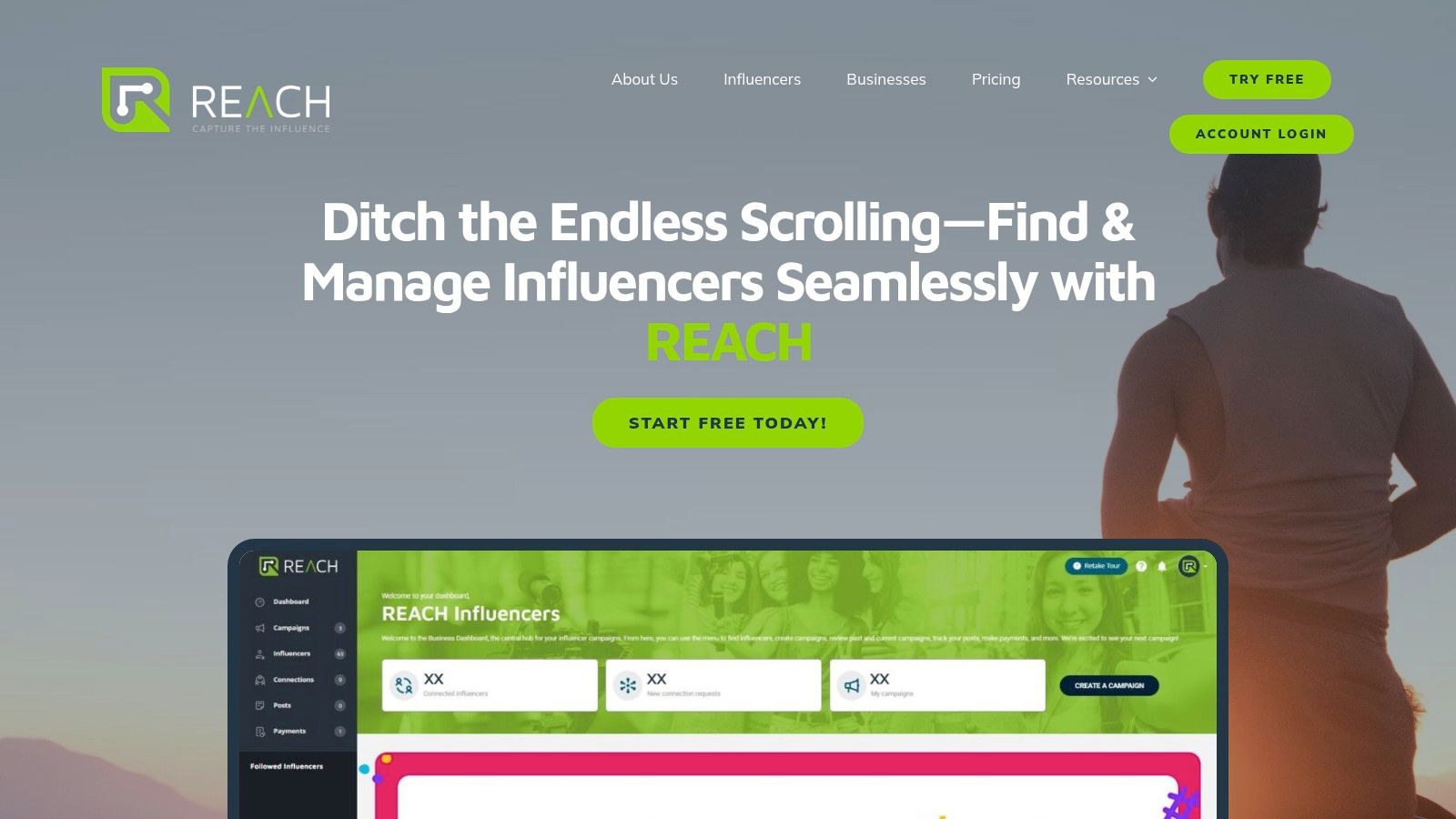
REACH Influencers stands out as a premier all-in-one influencer marketing platform, making it an indispensable asset among the best digital marketing agency tools. It's engineered to streamline the entire campaign lifecycle, from initial discovery to final ROI analysis. The platform effectively replaces the cumbersome spreadsheets and disjointed communication channels that often hinder agency efficiency.
For agencies managing multiple clients, REACH Influencers offers a centralized command center. Its primary strength lies in its powerful influencer discovery engine. Teams can move beyond simple keyword searches and apply granular filters like audience demographics, engagement rates, geographic location, and specific content niches. This precision ensures you find not just any influencer, but the right influencer whose audience perfectly aligns with your client's brand, whether it's a niche micro-creator or an A-list personality. For instance, an agency running a campaign for a sustainable beauty brand can use REACH Influencers to filter for creators in North America with an 80%+ female audience aged 25-40 and a proven history of high engagement on #ecobeauty content.
Key Features and Agency Use Cases
REACH Influencers consolidates campaign management into a single, cohesive workflow. The platform’s dashboard handles everything: outreach, content approvals, contract negotiations, and real-time click tracking. This end-to-end management is crucial for maintaining momentum and clarity across complex campaigns. A standout feature for agencies is the instant white-labeling, allowing you to present live, professional reports to clients under your own branding, which significantly enhances stakeholder trust.
The platform also integrates secure payments and tax compliance, solving a major administrative bottleneck. This ensures creators are paid quickly and reliably, building strong, long-term relationships while minimizing your team's back-office workload. For strategic planning, the built-in budget and ROI calculator lets you model campaign outcomes, providing data-driven projections on impressions, earned media value, and revenue to justify investment and secure client buy-in. These capabilities make it a comprehensive piece of digital agency management software designed for scale.
- Pros:
- Precision Discovery: Advanced filters to find highly relevant influencers quickly.
- End-to-End Workflow: Centralizes outreach, approvals, payments, and analytics.
- Agency-Centric: Unlimited campaigns, white-label reporting, and ROI modeling.
- Integrated Compliance: Handles payments and tax forms to reduce administrative friction.
- Cons:
- Limited Pricing Transparency: Full subscription costs are not publicly listed.
- Minimal Social Proof: Lacks extensive third-party testimonials or case studies on its website.
Website: https://reach-influencers.com
2. HubSpot Marketing Hub: Key Digital Marketing Agency Tools for Automation
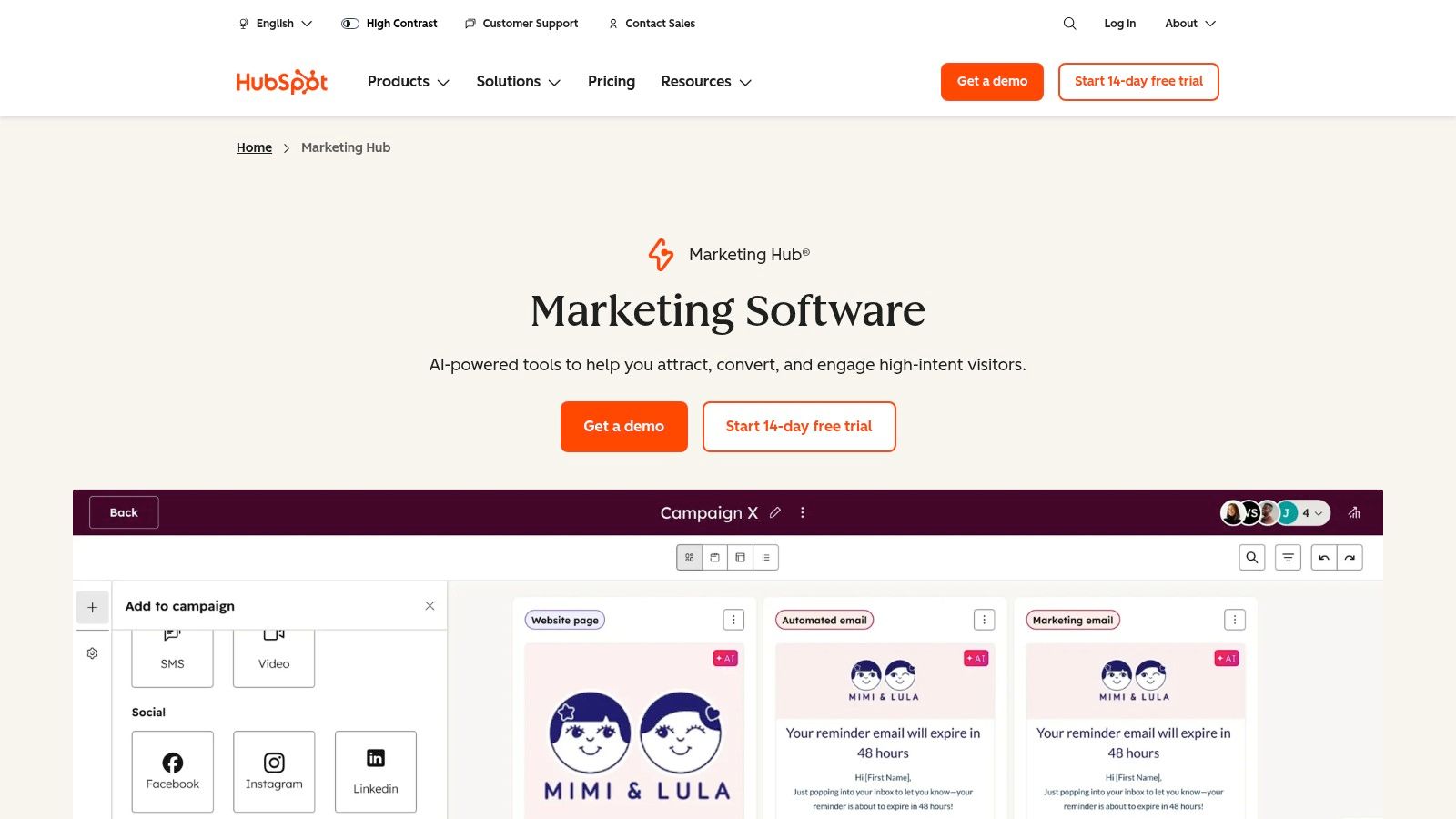
HubSpot Marketing Hub is an all-in-one marketing automation platform designed to help agencies manage multiple clients from a single, integrated ecosystem. Its core strength lies in its tight integration with the HubSpot CRM, creating a unified view of the entire customer journey, from first touchpoint to final sale. This makes it one of the most powerful digital marketing agency tools for agencies focused on lead generation and nurturing.
Instead of stitching together separate tools for email, landing pages, social media, and ads, agencies can orchestrate entire campaigns within one interface. This centralized approach simplifies reporting and makes demonstrating ROI to clients much more straightforward.
Key Features & Use Cases
- Omnichannel Automation: Build sophisticated workflows that trigger actions based on user behavior across email, ads, and your website. For agencies, this means you can set up automated lead nurturing campaigns that run seamlessly for each client. To see how this works in practice, you can learn more about building a robust marketing automation workflow.
- Built-in Reporting & Attribution: The platform offers multi-touch revenue attribution (in Enterprise tiers), allowing you to prove which marketing activities are generating the most revenue. This is a game-changer for client reporting.
- AI Content Assistance: Use AI tools to draft social posts, blog ideas, and email copy, speeding up content creation across your client roster.
Pricing and Onboarding
HubSpot’s pricing is tiered based on features and the number of marketing contacts. While there's a free tier, professional plans start at a significant investment. Agencies should be aware that the contact-based pricing can escalate quickly as client lists grow, and higher-tier plans often require a paid onboarding process, which is an important budget consideration.
- Pros: Single source of truth for marketing and sales data, excellent for inbound marketing agencies, and extensive template libraries.
- Cons: Can become very expensive at scale, and the best features are locked behind high-tier plans.
Website: https://hubspot.com/products/marketing
3. Semrush
Semrush is a comprehensive SEO and SEM platform that has become a staple for agencies needing a deep, data-driven approach to search marketing. Its core value lies in its extensive competitive analysis capabilities, allowing agencies to reverse-engineer competitor strategies for SEO, content, and paid advertising. This makes it one of the most powerful digital marketing agency tools for building and executing search-centric client campaigns.
Rather than just providing surface-level data, Semrush offers historical keyword and domain analytics, giving agencies the context needed to make informed strategic decisions. The platform consolidates toolkits for keyword research, site auditing, backlink analysis, and content marketing into a single subscription, streamlining workflows and providing a holistic view of a client's online visibility.
Key Features & Use Cases
- Competitive Intelligence: Use the Domain Overview and Backlink Analytics tools to uncover a competitor's top keywords, ad copy, and backlink profile. Agencies can use this data to identify strategic gaps and opportunities for their clients.
- Scalable Site Auditing & Tracking: Run comprehensive technical SEO audits and set up position tracking for thousands of keywords across multiple client projects. The ability to tag keywords and locations makes client-specific reporting simple.
- White-Label Reporting: Generate professional, white-label PDF reports directly from the platform. The Agency Growth Kit add-on further enhances this with branded client portals and automated reporting, saving significant administrative time.
Pricing and Onboarding
Semrush offers tiered pricing, starting with a Pro plan suitable for freelancers and small teams, and scaling up to Business plans for larger agencies. The cost increases with additional user seats and access to specialized add-ons like the Agency Growth Kit or Semrush .Trends. While the interface is feature-rich, its complexity presents a steeper learning curve for new users compared to more simplified tools.
- Pros: Broad and deep feature set covering SEO, PPC, and content marketing; excellent for competitive research; robust agency-specific reporting and management features.
- Cons: Can become expensive with additional users and add-ons; the sheer volume of tools can be overwhelming for beginners.
Website: https://semrush.com
4. Ahrefs: Leading Digital Marketing Agency Tools for SEO
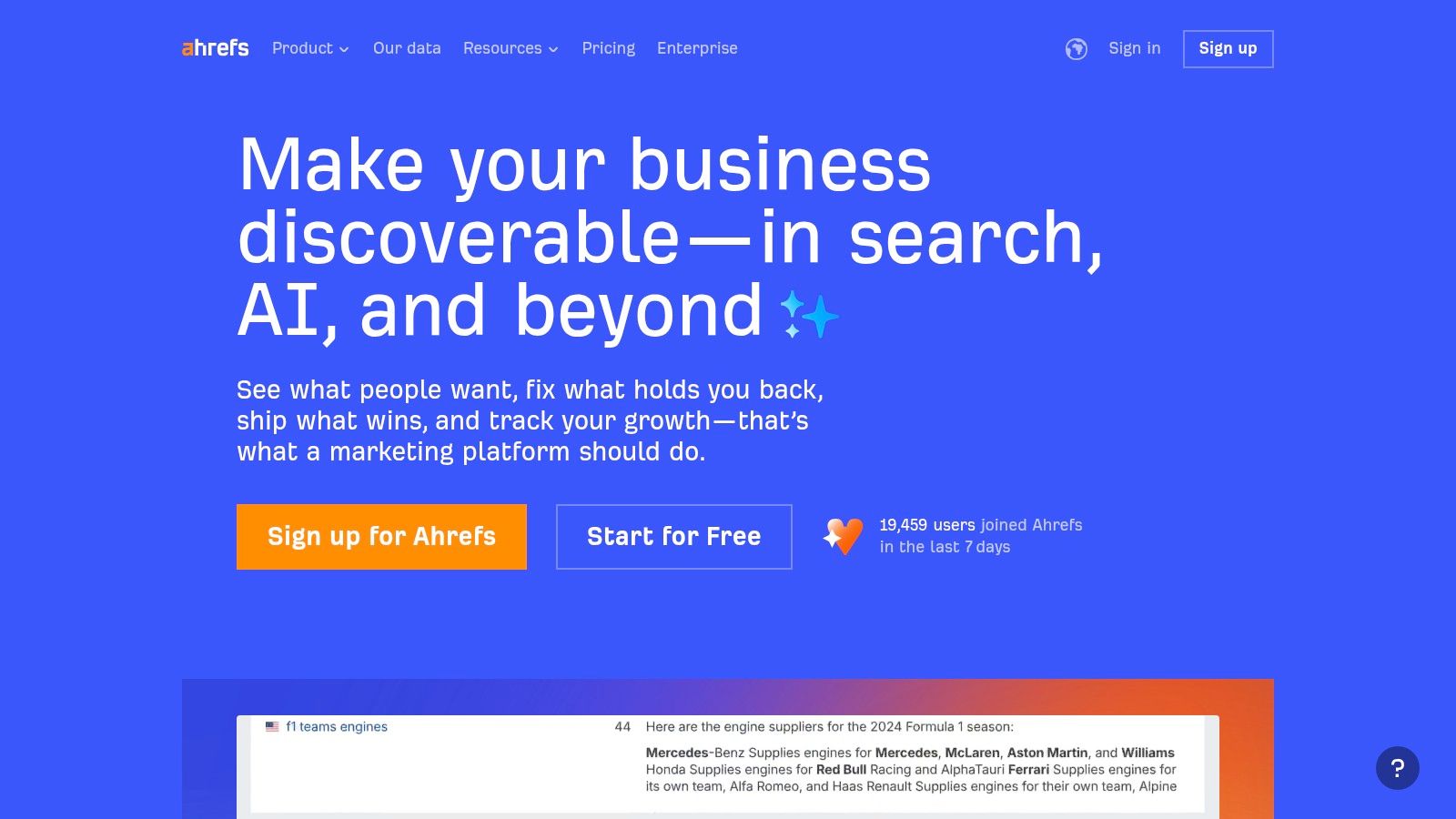
Ahrefs is a powerhouse SEO platform renowned for its industry-leading backlink index and comprehensive competitive analysis tools. For agencies specializing in technical SEO, content strategy, and link building, its robust dataset offers an unparalleled view of the competitive landscape. This makes it one of the most essential digital marketing agency tools for uncovering opportunities and diagnosing website performance issues for clients.
The platform consolidates several key functions into one interface, including site auditing, rank tracking, and content exploration, allowing agencies to manage the entire SEO workflow efficiently. This integrated approach helps teams move from data analysis to strategic execution without needing to switch between multiple disconnected tools.
Key Features & Use Cases
- Competitive Analysis: Use Site Explorer to dissect any competitor's backlink profile, top organic keywords, and paid search strategies. This is invaluable for pitching new clients and setting realistic campaign benchmarks.
- Technical SEO Audits: The Site Audit tool crawls a client's website to identify over 100 pre-defined technical and on-page SEO issues, providing actionable recommendations that agencies can implement to boost site health.
- Content & Keyword Research: Keywords Explorer and Content Explorer help you find low-competition keywords and identify content gaps, providing a data-driven foundation for your clients' content marketing strategies.
Pricing and Onboarding
Ahrefs offers several tiered subscription plans, and while there is no free tier, new users can access Ahrefs Webmaster Tools for free to monitor their own sites. Agency plans can become costly, especially with add-ons for more frequent data updates or AI features. The pricing model is based on usage limits and features, so agencies must carefully select a plan that matches their client load and reporting needs.
- Pros: Exceptional backlink and competitor data quality, powerful and intuitive suite of integrated tools, and flexible add-ons for enhanced capabilities.
- Cons: Pricing can be a significant investment for smaller agencies, and it is a web-only platform with no dedicated desktop or mobile apps.
Website: https://ahrefs.com
5. Sprout Social
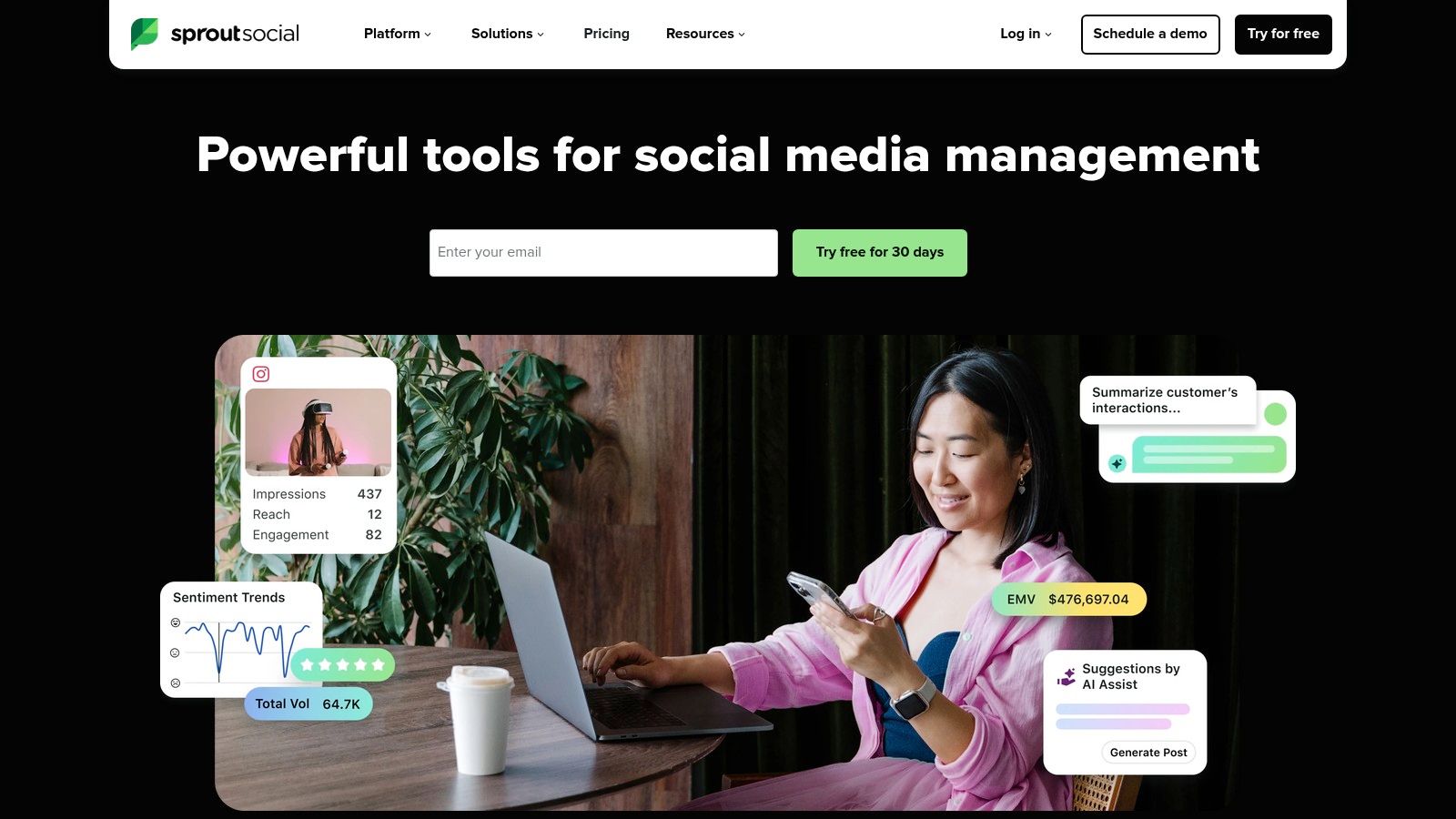
Sprout Social is an enterprise-grade social media management platform designed for agencies that require sophisticated publishing, engagement, and reporting capabilities across numerous client accounts. Its strength lies in its unified Smart Inbox and robust governance controls, which allow teams to manage multiple brands from one centralized hub while maintaining brand safety and consistency. This makes it one of the top-tier digital marketing agency tools for agencies managing complex, cross-functional social media operations.
By consolidating publishing, monitoring, and analytics into a single dashboard, agencies can streamline workflows and eliminate the need for multiple disparate tools. This unified approach simplifies client reporting, providing clear, presentation-ready insights into performance across every social profile.
Key Features & Use Cases
- Unified Publishing & Calendar: Schedule and publish content across all major social networks from a single, intuitive calendar. Features like ViralPost use data to determine the optimal times to post for each client's audience, maximizing reach.
- Social Listening & Analytics: Monitor brand mentions, track competitors, and identify industry trends with advanced listening tools (available in higher tiers). The reporting suite allows agencies to build custom, white-labeled reports to demonstrate value to clients.
- Engagement & Customer Care Workflows: Manage all incoming messages and comments in a unified "Smart Inbox." Assign tasks, apply client-specific tags, and use collision detection to prevent multiple team members from responding to the same message. An influencer marketing module is also available for campaign management.
Pricing and Onboarding
Sprout Social uses a per-user, per-month pricing model, which can become a significant expense for larger agency teams. The most powerful features, such as advanced analytics, social listening, and premium integrations, are reserved for the higher-priced Professional and Advanced plans. Agencies should carefully evaluate their required feature set against the per-seat cost to ensure it aligns with their budget and client needs.
- Pros: Clean UI and powerful reporting across profiles, scales well with permission controls, and offers excellent customer support.
- Cons: Per-seat pricing can become costly for larger teams, and key features are gated to more expensive plans.
Website: https://sproutsocial.com
6. Mailchimp
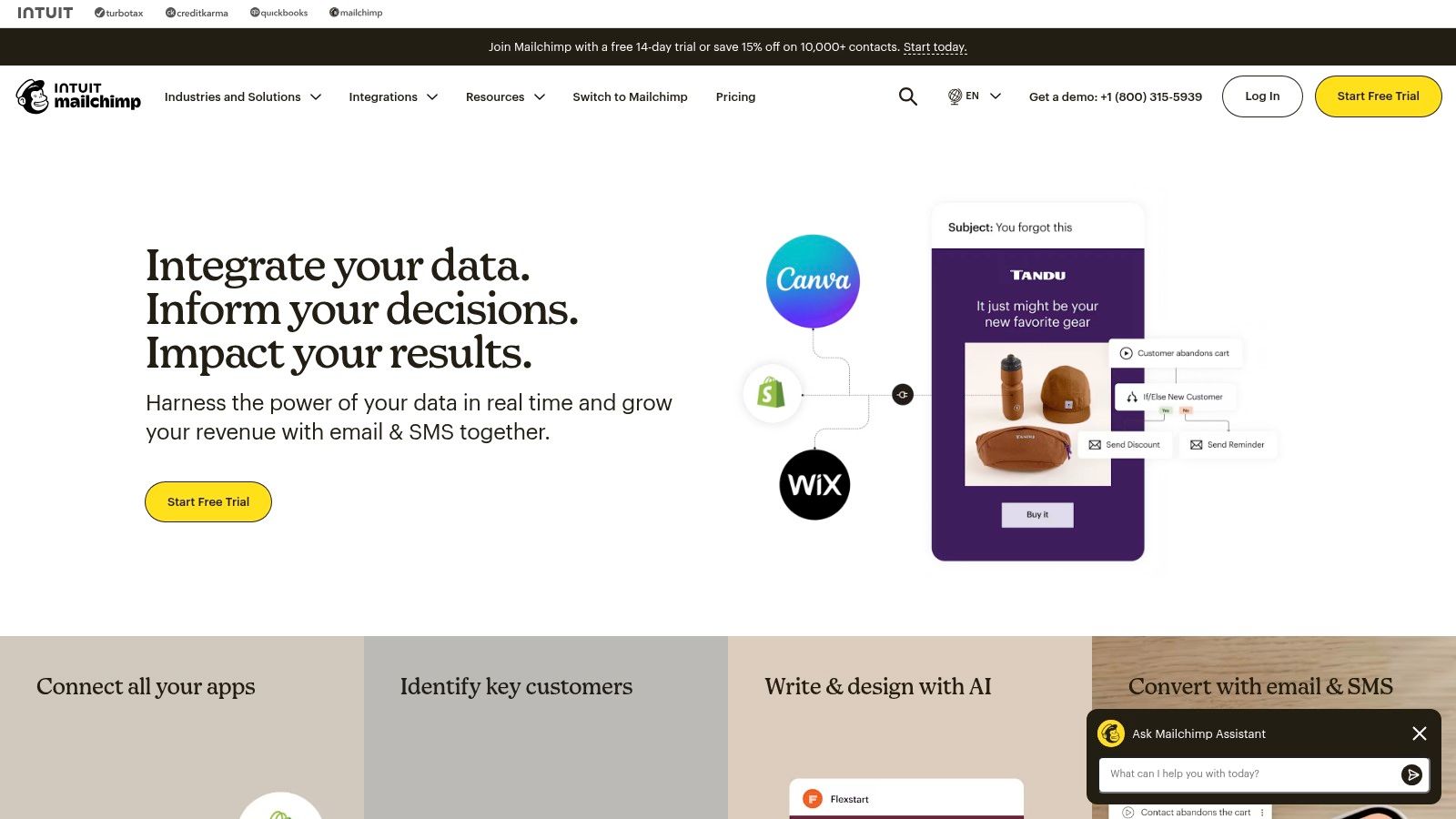
Mailchimp is a widely recognized email and marketing automation platform, often serving as the entry point for agencies managing clients with straightforward email marketing needs. Its core strength is its user-friendly interface and drag-and-drop builder, which allows for quick creation of campaigns, landing pages, and automated customer journeys. This makes it an ideal choice among digital marketing agency tools for servicing small to medium-sized businesses.
The platform simplifies email marketing by consolidating key functions like list management, campaign analytics, and basic automation into one accessible dashboard. With a vast ecosystem of integrations, agencies can easily connect Mailchimp to a client's e-commerce store or CRM, creating a seamless data flow for targeted campaigns.
Key Features & Use Cases
- Drag-and-Drop Builders: Easily create professional-looking emails, landing pages, and customer journey workflows without needing to code. This is perfect for agencies that need to produce assets quickly across multiple client accounts.
- Extensive Integrations: Mailchimp connects with hundreds of popular apps like Shopify, WooCommerce, and Zapier, allowing agencies to sync customer data and trigger automated campaigns based on e-commerce activity.
- Templates & Analytics: Access a library of pre-built templates to speed up campaign creation and use the built-in analytics to track open rates, click-throughs, and revenue generated from email campaigns for client reports.
Pricing and Onboarding
Mailchimp offers a tiered pricing model that is primarily based on the number of contacts in your list. While a free plan exists, it's quite limited with strict sending caps and mandatory Mailchimp branding. Paid plans provide more features and higher limits, but costs can escalate quickly as a client's subscriber list grows. Agencies must carefully monitor contact counts to avoid unexpected overage charges.
- Pros: Very easy to learn and use, extensive integration ecosystem, and provides a clear upgrade path as client needs expand.
- Cons: The free plan is restrictive for professional use, and the contact-based pricing can become costly at scale.
Website: https://mailchimp.com
7. Google Marketing Platform
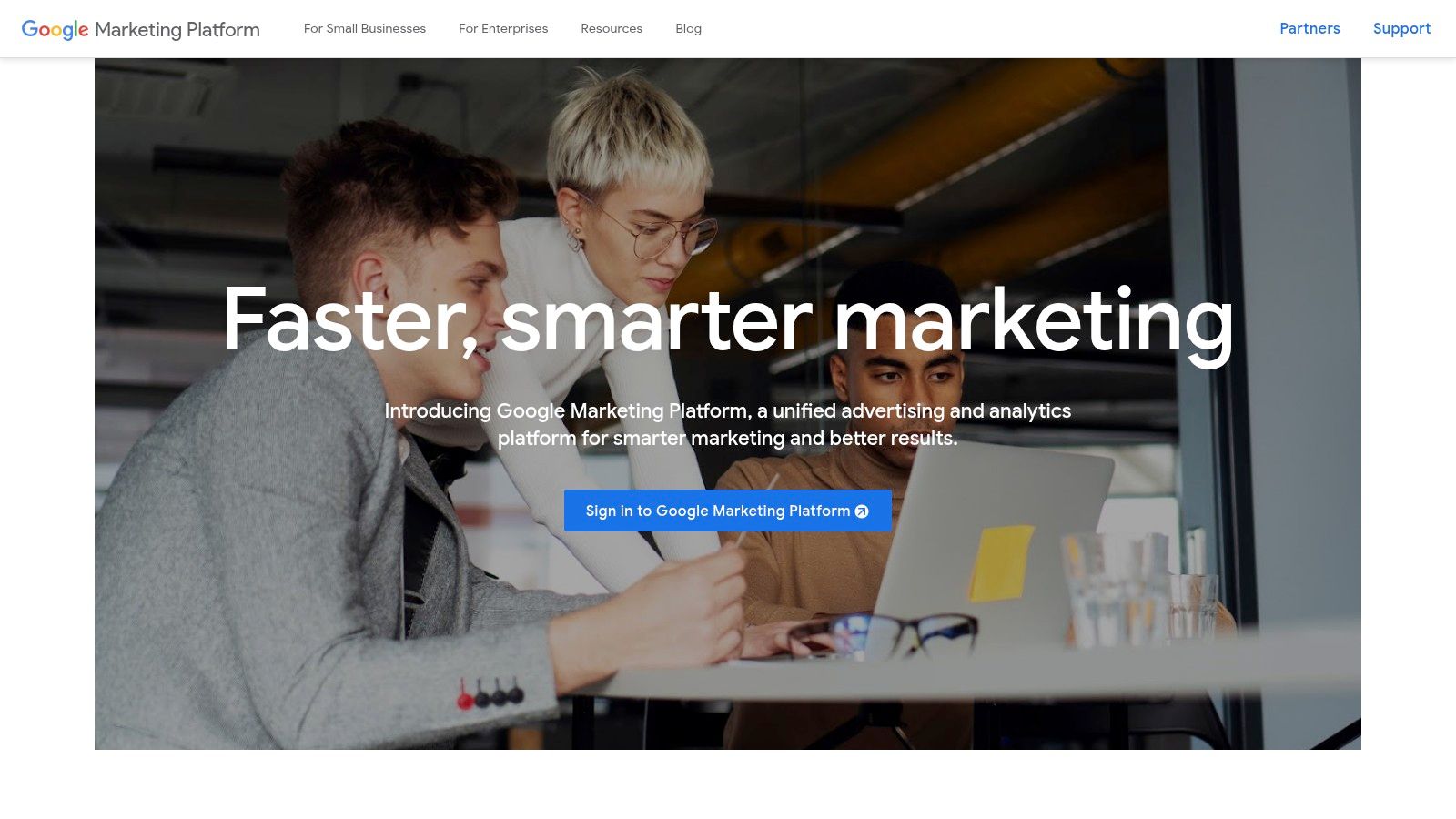
Google Marketing Platform is Google’s unified advertising and analytics solution, providing the foundational measurement tools most agencies rely on. It combines formerly separate products like Google Analytics, Tag Manager, and Looker Studio (formerly Data Studio) into a more integrated suite. For many, it serves as the central source of truth for website traffic, user behavior, and campaign performance, making it one of the most essential free digital marketing agency tools available.
Its power lies in providing a comprehensive, no-cost stack for tracking, instrumentation, and reporting that integrates seamlessly with Google Ads. This allows agencies to manage core analytics and reporting functions for all clients without significant initial investment, forming the bedrock of most marketing data strategies.
Key Features & Use Cases
- Core Measurement Suite: Use Google Analytics 4 for deep audience and conversion analysis, Google Tag Manager to deploy tracking codes without developer help, and Looker Studio to build custom, shareable client dashboards.
- Enterprise Advertising Tools: For larger clients, the GMP 360 suite (including Campaign Manager 360, DV360, and Search Ads 360) offers advanced, cross-channel media buying and measurement capabilities.
- Unified Reporting: Looker Studio is a standout feature for agencies, allowing you to pull data from various sources into a single view. You can see how this compares to other platforms by exploring other powerful digital marketing reporting tools.
Pricing and Onboarding
The core components of the platform (Google Analytics 4, Tag Manager, and Looker Studio) are completely free, making it accessible to agencies of all sizes. The enterprise-level 360 suite, however, is a significant investment that requires direct contracts with Google or working through a certified sales partner. While the free tools are intuitive for basic use, mastering advanced configurations requires a considerable learning curve.
- Pros: Industry-standard for web analytics, core tools are free and powerful, and offers tight integration with the entire Google Ads ecosystem.
- Cons: The enterprise 360 products are expensive and have high barriers to entry, and advanced features can be complex to implement correctly.
Website: https://marketingplatform.google.com/about/
8. Adobe Experience Cloud
Adobe Experience Cloud is an enterprise-grade suite of marketing and customer experience tools designed for large-scale, data-driven organizations. It offers a powerful, albeit complex, ecosystem for agencies managing clients with sophisticated customer journeys and massive data sets. Its strength lies in unifying real-time customer data with advanced personalization, analytics, and campaign orchestration.
Unlike more siloed platforms, Adobe provides a deeply integrated environment that connects its Real-Time CDP, Marketo Engage, and Analytics solutions. For an agency, this means you can build a comprehensive view of a client’s audience and activate highly personalized experiences across every touchpoint, from web to email to paid media. This makes it one of the most robust digital marketing agency tools for enterprise-level client work.
Key Features & Use Cases
- Real-Time Customer Profiles: Aggregate data from disparate sources to create unified, dynamic customer profiles. Agencies can use this to segment audiences with extreme precision for clients.
- Cross-Channel Journey Orchestration: Use Journey Optimizer to map and automate complex, personalized customer journeys that adapt in real-time based on behavior.
- Advanced Analytics and Personalization: Leverage Adobe Analytics and Target to conduct deep-dive analysis, A/B testing, and AI-powered personalization at scale, proving campaign impact with granular data.
Pricing and Onboarding
Adobe Experience Cloud uses a quote-based pricing model, and the total cost of ownership is substantial, reflecting its enterprise focus. Implementation is a significant undertaking that typically requires a dedicated technical team or a specialized partner. This platform is best suited for large agencies with clients who have the budget and internal resources to support such a comprehensive system.
- Pros: Unmatched depth in data management and personalization, strong integration with Adobe Creative Cloud, and a mature partner ecosystem for support.
- Cons: High total cost of ownership, significant learning curve, and overkill for small or mid-sized clients.
Website: https://business.adobe.com/products/experience-cloud
9. Moz Pro
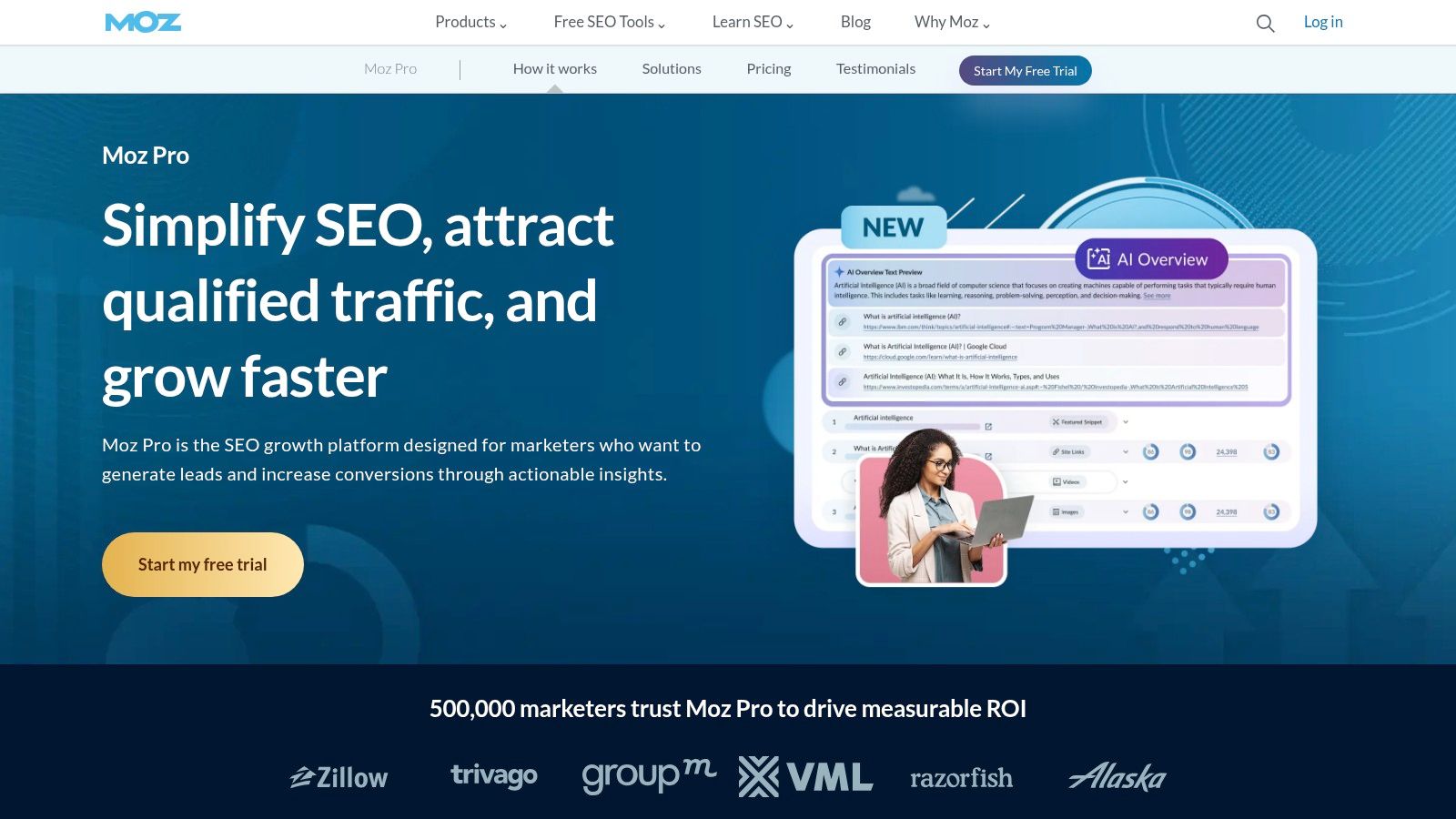
Moz Pro is a comprehensive SEO platform designed to make search engine optimization accessible and effective for agencies of all sizes. It stands out for its user-friendly interface and strong educational resources, making it an excellent choice for teams that need robust SEO capabilities without the steep learning curve often associated with other enterprise-level digital marketing agency tools. Its predictable pricing and clear data presentation simplify client management and reporting.
The platform provides a complete suite of tools covering keyword research, link building, site audits, and rank tracking. This integrated approach allows agencies to manage the core pillars of SEO for multiple clients from a single, cohesive dashboard, streamlining campaign execution and performance analysis.
Key Features & Use Cases
- Keyword Explorer: Identify high-impact keywords for clients by analyzing search volume, difficulty, and organic click-through rates. Agencies use this to build data-driven content strategies and target the most valuable search terms.
- Link Explorer: Analyze backlink profiles for clients and their competitors. This is crucial for identifying link-building opportunities and monitoring off-page SEO health.
- Site Crawl Audits: Schedule automated site audits to find and fix technical SEO issues like broken links, missing title tags, and crawl errors, ensuring clients' websites are optimized for search engines.
- Custom Reporting: Create branded, templated reports that are easy for clients to understand. This feature helps agencies demonstrate progress and prove the value of their SEO efforts efficiently.
Pricing and Onboarding
Moz Pro offers tiered pricing plans based on the volume of keywords tracked, pages crawled, and reports generated. The plans are known for being straightforward and predictable, which helps agencies budget effectively. Its onboarding process is famously simple, supported by a wealth of tutorials and an active community, making it easy to get new team members up to speed.
- Pros: Easy onboarding and strong educational resources, and clear quotas and predictable pricing.
- Cons: Data depth can trail Ahrefs and Semrush in some use cases, and enterprise-level features may require additional tools.
Website: https://moz.com/products/pro
10. AppSumo
AppSumo is a marketplace for discounted software deals, often featuring lifetime access for a one-time price. For agencies operating on a tight budget or those looking to experiment with emerging technologies, it’s an invaluable resource. This platform allows you to discover and acquire powerful digital marketing agency tools for SEO, content creation, social media management, and analytics at a fraction of their standard cost.
Rather than committing to expensive monthly subscriptions for unproven software, agencies can use AppSumo to test new tools across their client portfolios with minimal financial risk. The curated deals and user reviews provide a community-vetted layer of assurance, helping you identify promising solutions before they become mainstream. This makes it an essential stop for building a cost-effective and agile tool stack.
Key Features & Use Cases
- Discounted Software Deals: Gain access to lifetime or heavily discounted annual deals on a wide range of marketing software. Agencies can equip their teams with new tools for tasks like AI content generation or video editing without adding recurring monthly expenses.
- Discovery Platform: AppSumo is excellent for finding niche and up-and-coming tools that solve specific client problems, giving your agency a competitive edge.
- User Reviews & Q&A: Each deal includes extensive reviews and a question-and-answer section with the software founder. This allows you to vet the tool’s stability, support, and roadmap directly from the community before purchasing.
Pricing and Onboarding
AppSumo’s model is based on one-time payments for software licenses, though some deals are structured as discounted annual plans. Pricing varies significantly per deal, from under $50 to several hundred dollars, often with tiered options for more features or users. While the upfront savings are the main draw, be mindful that the vendor's long-term stability is not guaranteed.
- Pros: Incredible cost savings on software, a great way to discover and test new marketing technology affordably.
- Cons: Vendor quality and long-term support can be inconsistent, and the best deals are often for newer, less-established products.
Website: https://appsumo.com
11. G2 (Marketing Automation Category)
G2 is a leading software marketplace and review platform where agencies can research, compare, and validate technology choices. Instead of being a tool itself, it functions as a critical research hub, aggregating real-user reviews, vendor data, and comparison grids. For agencies evaluating new software, G2’s Marketing Automation category provides an unbiased, third-party perspective that cuts through vendor marketing claims, making it one of the most valuable research-focused digital marketing agency tools available.
By leveraging its extensive database, agencies can create shortlists of potential tools based on specific criteria like company size, user satisfaction scores, and feature sets. This process de-risks the significant investment required for new platforms by providing peer-driven insights into a tool’s actual performance, implementation challenges, and customer support quality. It’s an essential first stop before committing to a long-term software contract for any client.
Key Features & Use Cases
- Grid Reports & Rankings: View dynamically updated "Grid" reports that plot vendors based on market presence and user satisfaction, helping you quickly identify category leaders and niche players.
- Side-by-Side Comparisons: Directly compare up to four different marketing automation platforms on features, pricing models, and user ratings to see how they stack up against each other.
- Verified User Reviews: Read detailed, verified reviews from real users that often highlight practical pros and cons not mentioned on a vendor’s website. This is invaluable for understanding day-to-day usability.
Pricing and Onboarding
Accessing reviews and comparison reports on G2 is completely free for users. The platform is monetized through vendors who pay for premium profiles, lead generation, and sponsored placements. Agencies should be mindful that sponsored listings can influence visibility, but the core review data remains user-generated and unbiased. No onboarding is required to use the site for research.
- Pros: High volume of authentic user reviews, excellent for validating vendor claims and creating shortlists, and powerful filtering capabilities.
- Cons: Sponsored placements can sometimes skew search results, and pricing information on listings may not always be up-to-date.
Website: https://www.g2.com/categories/marketing-automation
12. Capterra (Marketing Automation Software)
Capterra isn't a single tool, but rather a comprehensive directory and review platform that helps agencies find the right software for their needs. Specifically, its Marketing Automation Software category is an invaluable resource for comparing a wide range of digital marketing agency tools in one place. Instead of visiting dozens of vendor websites, agencies can create a shortlist based on verified user reviews, feature sets, and pricing models.
This platform is especially useful for agencies that serve diverse clients with unique needs, from small businesses to enterprise-level corporations. By using Capterra's filters, you can quickly narrow down options by specific capabilities like A/B testing, CRM integration, or lead scoring, saving countless hours of manual research and discovery. It acts as a crucial first step in the tool-vetting process.
Key Features & Use Cases
- Advanced Filtering: Sift through hundreds of platforms using specific feature filters like "SMS Marketing," "CRM," or "Social Media Automation." This helps an agency quickly identify solutions that match a specific client's campaign requirements.
- Verified User Reviews & Insights: Read reviews from other marketing professionals to understand the real-world pros and cons of a tool before committing to a demo. This provides an unbiased perspective that marketing materials often lack.
- Buyer Guides & Category Overviews: Use Capterra’s expert-written guides to understand the marketing automation landscape and learn what features are most important for your agency's goals.
Pricing and Onboarding
Capterra itself is free to use for buyers. However, the pricing information listed for each software can be generalized and may not reflect the exact cost for your agency's specific needs. Agencies should always use the platform for initial discovery and then visit the vendor's site for precise quotes and to inquire about partner programs or onboarding processes.
- Pros: Broad coverage of tools from SMB to enterprise, detailed filtering accelerates shortlisting, and verified reviews offer genuine user feedback.
- Cons: Sponsored listings can influence placement, and aggregated pricing may be out of date, requiring you to cross-check specs on vendor sites.
Website: https://capterra.com/marketing-automation-software
Top 12 Digital Marketing Agency Tools Comparison
| Product | Core features | UX & Rating | Value & Pricing | Target audience | Unique selling points |
|---|---|---|---|---|---|
| REACH Influencers 🏆 | Influencer discovery, campaign hub, payments & compliance, ROI calculator | ★★★★☆ — Intuitive dashboard, mobile-friendly | 💰 Example 9% platform fee shown; "Start Free" option | 👥 Agencies, brands, creators | ✨ End-to-end influencer workflow + white‑label & tax compliance |
| HubSpot Marketing Hub | Omnichannel automation, CRM tie‑in, reporting, landing pages | ★★★★☆ — Polished UI, strong onboarding | 💰 Tiered contact pricing; can scale costly | 👥 SMBs to enterprises, agencies | ✨ CRM + marketing stack in one vendor |
| Semrush | Keyword & backlink analytics, site audit, client reporting | ★★★★☆ — Powerful, steeper learning curve | 💰 Subscription tiers; add‑ons increase cost | 👥 SEO/PPC agencies, in‑house SEO teams | ✨ Competitive intel & white‑label reporting |
| Ahrefs | Backlink index, Site Explorer, rank tracking, content tools | ★★★★☆ — Fast crawler, web‑only interface | 💰 Predictable plans; add‑ons for AI/data | 👥 Technical SEO teams & agencies | ✨ Industry‑leading backlink data |
| Sprout Social | Publishing calendar, listening, engagement, reporting | ★★★★☆ — Clean UI, strong governance | 💰 Per‑seat pricing; higher tiers for advanced features | 👥 Multi‑brand social teams, agencies | ✨ Robust social care + listening |
| Mailchimp | Email builder, journeys, templates, SMS & ecommerce integrations | ★★★☆☆ — Easy start; basic UX for beginners | 💰 Free tier limited; pricing by contact volume | 👥 Small businesses, startups | ✨ Rapid email/CX setup with many integrations |
| Google Marketing Platform | GA4, Tag Manager, Looker Studio, enterprise ad tools | ★★★★☆ — Standardized, powerful but complex | 💰 Core tools free; GMP 360 enterprise pricing | 👥 Agencies & enterprises needing measurement | ✨ Tight Google Ads/analytics integration |
| Adobe Experience Cloud | CDP, Journey Orchestrator, Analytics, Marketo | ★★★★☆ — Enterprise‑grade, complex setup | 💰 Quote‑based, higher TCO | 👥 Large enterprises, CX teams | ✨ Deep personalization & content integration |
| Moz Pro | Keyword & link explorer, rank tracking, site audits | ★★★☆☆ — Approachable UX, good education | 💰 Predictable pricing & quotas | 👥 SMB SEO teams, agencies needing simplicity | ✨ Easy onboarding + strong learning resources |
| AppSumo | Curated SaaS deals, lifetime offers, user reviews | ★★★☆☆ — Marketplace UX, deal‑driven | 💰 High upfront savings; variable vendor risk | 👥 Cost‑conscious teams, early adopters | ✨ Discover discounted marketing tools |
| G2 (Marketing Automation) | Vendor reviews, comparisons, rankings | ★★★★☆ — High review volume, timely insights | 💰 Free to browse; vendor pricing links | 👥 Buyers shortlisting marketing tools | ✨ Large user review dataset & grids |
| Capterra (Marketing Automation) | Buyer guides, feature filters, verified reviews | ★★★★☆ — Broad directory, easy filters | 💰 Free to browse; aggregated pricing | 👥 SMB to enterprise buyers | ✨ Buyer guides + verified user insights |
Future-Proof Your Agency with the Right Technology
Choosing the right digital marketing agency tools is far more than an operational checklist; it's a strategic decision that dictates your agency's capacity for growth, efficiency, and client success. The landscape we've explored, from comprehensive platforms like HubSpot and Google Marketing Platform to specialized powerhouses like Semrush for SEO and Sprout Social for social media management, illustrates a clear truth: no single tool does it all. The most successful agencies build a cohesive, integrated ecosystem of software that empowers their teams and impresses their clients.
This tech stack becomes the central nervous system of your agency. It automates repetitive tasks, freeing up your talented strategists to focus on high-impact work. It provides the data-driven insights needed to pivot campaigns, justify budgets, and demonstrate clear ROI. And, perhaps most importantly, it creates a scalable foundation that allows you to onboard new clients seamlessly without your processes crumbling under the weight of increased demand.
From Individual Tools to a Unified Strategy
The real magic happens when you move beyond viewing these tools as isolated solutions and start architecting an interconnected workflow. An effective stack ensures data flows smoothly between platforms, providing a holistic view of the customer journey. For example, insights from Ahrefs can inform the content created in your CMS, which is then promoted via Mailchimp and tracked within Google Analytics.
This integration is critical for delivering the sophisticated, multi-channel campaigns clients now expect. It’s no longer enough to be good at just one thing. Modern agencies must prove their value across the entire marketing funnel, from initial awareness to final conversion and long-term loyalty. Your choice of digital marketing agency tools is the primary enabler of that capability.
Actionable Steps for Building Your Ideal Tech Stack
As you move forward, the goal isn't just to acquire more software. It's to build a leaner, more powerful, and cost-effective toolkit that directly aligns with your service offerings and business goals. Here are your next steps:
- Audit Your Current Tools: Start by evaluating what you already use. Identify redundancies (are you paying for two tools that do the same thing?), pinpoint workflow bottlenecks, and survey your team to understand what’s working and what’s causing friction.
- Prioritize Based on Client Needs: Which services are your most profitable or in-demand? Invest first in tools that enhance those core offerings. If influencer marketing is a key growth area, a dedicated platform like REACH Influencers is a non-negotiable investment, not a "nice-to-have."
- Think About Scalability and Integration: Before committing to a new tool, ask critical questions. Does it integrate with your existing project management software? Does it offer an API for future custom solutions? Will the pricing model cripple you as you add more clients or users? Choose platforms that can grow with you.
- Master the Strategy Behind the Tech: A powerful tool is only as effective as the strategy guiding it. To truly future-proof your agency, it's essential to not only select the right technology but also to master a clear YouTube content strategy framework that can adapt to evolving platforms and client demands.
Ultimately, the right technology stack is your agency's competitive advantage. It allows you to operate with the efficiency of a larger firm while maintaining the agility and client focus of a boutique agency. By making deliberate, strategic choices about your digital marketing agency tools, you aren't just buying software; you are investing in a more profitable, scalable, and resilient future for your business.
Ready to streamline your influencer marketing and build campaigns that deliver measurable ROI? REACH Influencers provides the end-to-end platform your agency needs to discover creators, manage collaborations, and report on performance, all in one place. See how the right tool can transform your workflow by starting for free with REACH today.