
Meta description: Learn how to build a high-ROI influencer marketing food program with practical campaign ideas, creator selection tips, compliance guidance, and ROI tracking.
{ “@context”: “https://schema.org”, “@type”: “BlogPosting”, “headline”: “Influencer Marketing Food: 2026 Strategy Guide”, “description”: “A practical guide to building an influencer marketing food program, from creator selection and campaign planning to FTC compliance and ROI measurement.”, “mainEntityOfPage”: “https://reach-influencers.com/influencer-marketing-food”, “author”: { “@type”: “Organization”, “name”: “REACH” }, “publisher”: { “@type”: “Organization”, “name”: “REACH”, “url”: “https://reach-influencers.com” }, “inLanguage”: “en”, “keywords”: [“influencer marketing food”, “food influencer marketing”, “restaurant influencer strategy”, “food brand influencer campaigns”] }URL slug: /influencer-marketing-food
Food brands don't have an attention problem. They have an execution problem.
Food influencer marketing expanded by 42% between 2019 and 2024, according to Amra & Elma’s food platform marketing statistics. That number matters because it confirms what most restaurant and consumer food teams already feel every day. Discovery now happens in feeds first, not on billboards, display ads, or even search alone.
That shift has made influencer marketing food a real operating discipline, not a side experiment. A strong program doesn't stop at sending free meals to creators and hoping for a few nice posts. It requires creator selection, clear briefs, usage rights, payment controls, legal review, and clean attribution.
The upside is obvious. The messy part is everything behind the scenes.
Teams that win in this category treat influencer work like a repeatable revenue channel. They know which creators bring local foot traffic, which formats drive saves and shares, what to approve before content goes live, and how to track a post back to orders, bookings, or retail movement.
The New Menu Influencer Marketing for Food Brands
The old version of food promotion was simple. Buy media, stage product shots, and push a message out.
The current version is more fragmented and more powerful. Food brands now compete inside recommendation loops where creators shape what people crave, cook, order, and talk about. That's why the phrase influencer marketing food now covers much more than sponsored posts. It includes creator-led launches, recipe content, tasting invites, affiliate programs, menu collaborations, whitelisted ads, and reusable user-generated assets that keep working long after the first post.
A useful way to think about this space is that food is unusually suited to creator-led marketing. It is visual, social, habitual, and emotional. People want to see texture, context, reaction, and proof. A polished brand ad can look good, but a creator showing the first bite, the steam, the pour, or the prep often does more to move someone from curiosity to action.
Many teams understand the opportunity but still struggle to build a system around it. Common friction points include:
- Creator fit: A large audience doesn't guarantee relevance.
- Operations: Email threads, approvals, invoices, and shipping details quickly become chaotic.
- Measurement: Without links, codes, or offer tracking, teams end up guessing.
- Compliance: Sponsored food content can create legal and reputational risk if disclosures or targeting rules are sloppy.
Practical rule: If your influencer program lives in DMs, spreadsheets, and scattered inboxes, it isn't a program yet. It's a series of one-off bets.
Food marketers also need a stronger filter for strategy advice. A lot of broad influencer marketing content is useful for understanding the channel, but food has its own buying triggers, production needs, and compliance concerns. Restaurant launches, packaged foods, beverages, grocery platforms, and local hospitality campaigns all behave differently.
The teams getting results aren't chasing creators at random. They're building a process that can be repeated, audited, and improved after every campaign.
Why Your Restaurant or Food Brand Needs Influencers
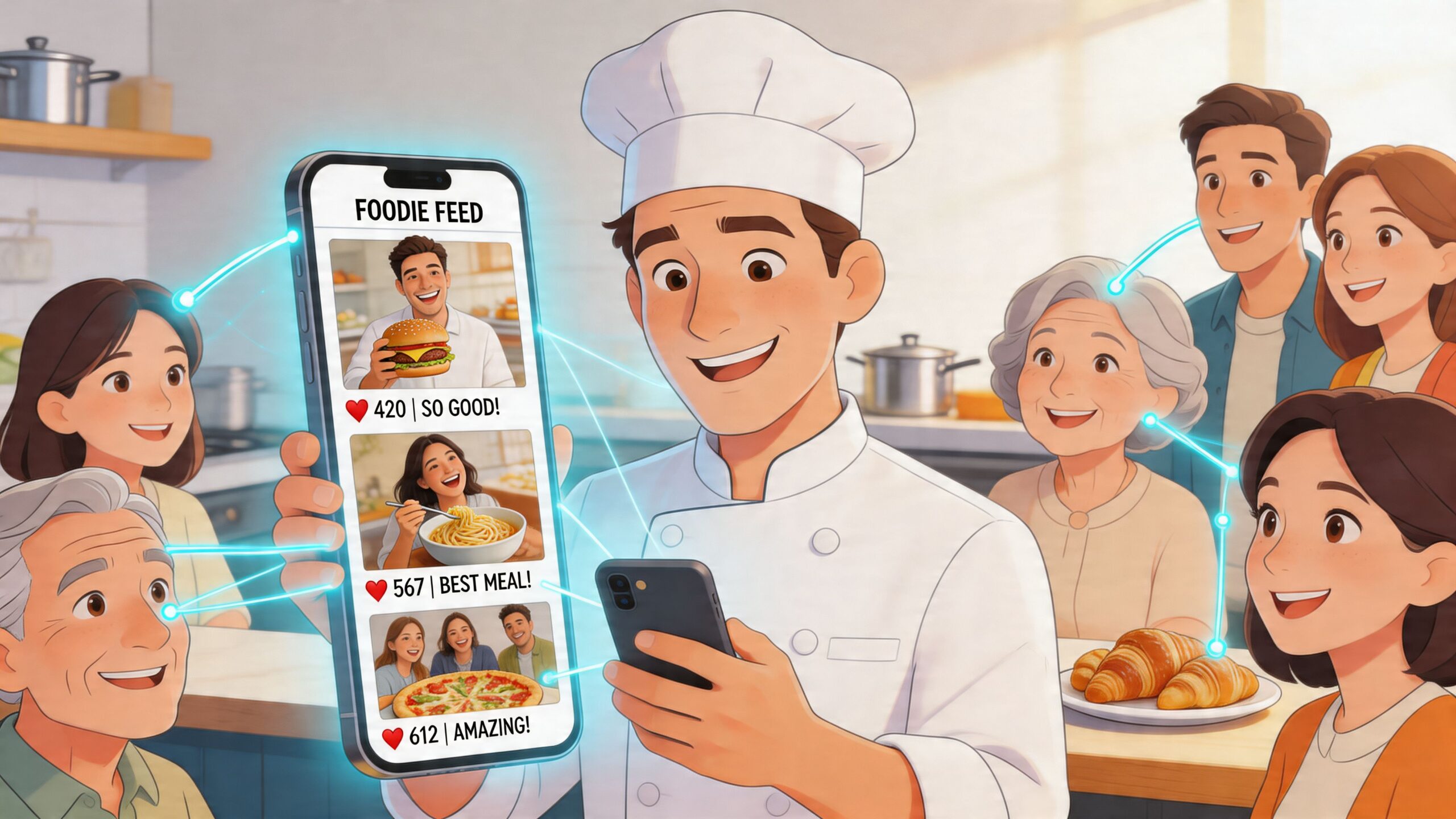
74% of diners choose restaurants based on social media presence, and 45% have tried a new restaurant after seeing a social post. Those numbers, cited earlier in this article, explain why influencer marketing sits closer to sales activation than brand awareness for food companies.
Food is judged fast. People want to see portion size, texture, plating, packaging, atmosphere, and the moment of first use. Creator content closes that gap better than polished brand creative because it answers the practical questions buyers ask before they spend money.
Social proof drives action faster than brand claims
Food purchases are emotional, but they are not careless. Diners and shoppers still look for proof that the experience matches the promise.
A creator can provide that proof in a format people already trust. A restaurant post can show wait time, lighting, crowd, portions, and service tone in under 30 seconds. A CPG post can show prep, taste reaction, ingredient use, and whether the product fits a real routine. A delivery-first brand can reduce hesitation by showing what arrived, how it was packaged, and whether the food still looked good out of bag.
That is why the right creator often outperforms a stronger production budget. Believability usually wins.
Food already fits how social platforms work
Food performs well on social because the category is visual and easy to share. Sprout Social’s social media benchmarks report that food and drink posts lead categories in engagement on TikTok at 3% across more than a million posts. For operators, that matters less as a vanity benchmark and more as a planning signal. You are not forcing product education into a platform that resists it. You are placing appetizing, habit-based content into feeds built for quick reaction and sharing.
For restaurants, hotels, and hospitality groups, creator content can influence discovery and booking intent in the same campaign. Teams building in that category should also review this guide to influencer marketing for hospitality brands.
A food post does not need expensive production. It needs to look credible, appetizing, and close enough to the real experience that someone acts on it.
Influencers improve weak points in the buying journey
Food brands usually lose momentum in one of three places. Discovery is too narrow. Consideration lacks trust. Conversion is hard to attribute.
Influencers can help across all three, but only if the program is built like a channel, not a one-off collab. A local restaurant launch might need creators who can drive map searches, reservations, and opening-week foot traffic. A snack brand in retail might need recipe creators, parent creators, and fitness creators, each with separate offer codes or retailer links. A beverage brand may need repeated exposure over several weeks before it shows up in cart behavior.
This is also where operations start to matter. Once a brand works with more than a handful of creators, the bottlenecks pile up fast. Vetting, contracting, content review, disclosure requirements, usage rights, shipping, payment, and performance reporting can eat more time than creative development. REACH solves those operational headaches directly by bringing discovery, workflow management, compliance support, payments, and ROI tracking into one system. That is the difference between a campaign you can repeat and one your team dreads rebuilding every quarter.
The current opportunity
Food decisions happen in public. People save restaurant videos, send menu posts to friends, repost product recipes, and compare reviews before ordering. One strong creator placement can produce direct traffic, branded search lift, customer content, and assets your team can reuse in paid social, email, and landing pages if usage rights are set correctly.
That last point gets overlooked. Rights, disclosures, and reporting are where many food influencer programs break down. The upside is real, but so is the administrative load. Brands that treat influencer marketing as an operating system, with clear creator selection criteria, approval flows, FTC controls, payment processes, and measurement rules, usually get better ROI than brands chasing isolated viral moments.
Finding the Perfect Influencers and Platforms
The fastest way to waste budget in influencer marketing food is to choose creators by follower count.
A better filter is fit. You want the right audience, the right content habits, and the right context for your product. A neighborhood bakery opening, a frozen meal launch, and a premium coffee concentrate each need very different creator profiles.
Start with audience match, not popularity
For local restaurant campaigns, geography often matters more than scale. A creator with a concentrated local audience can outperform a larger account whose followers live elsewhere.
For packaged goods, the key question is different. You need creators whose audience already cares about the use case. A protein snack may fit fitness and busy-parent creators. A dessert product may fit entertaining, family, or lifestyle creators. A specialty ingredient may perform best with recipe-focused home cooks.
Research summarized by Flaminjoy’s food influencer marketing ROI article notes that micro-influencers can deliver 20-30% higher engagement per follower. That lines up with what many food teams see in practice. Smaller creators often earn more trust because their audience still feels like a community instead of a crowd.
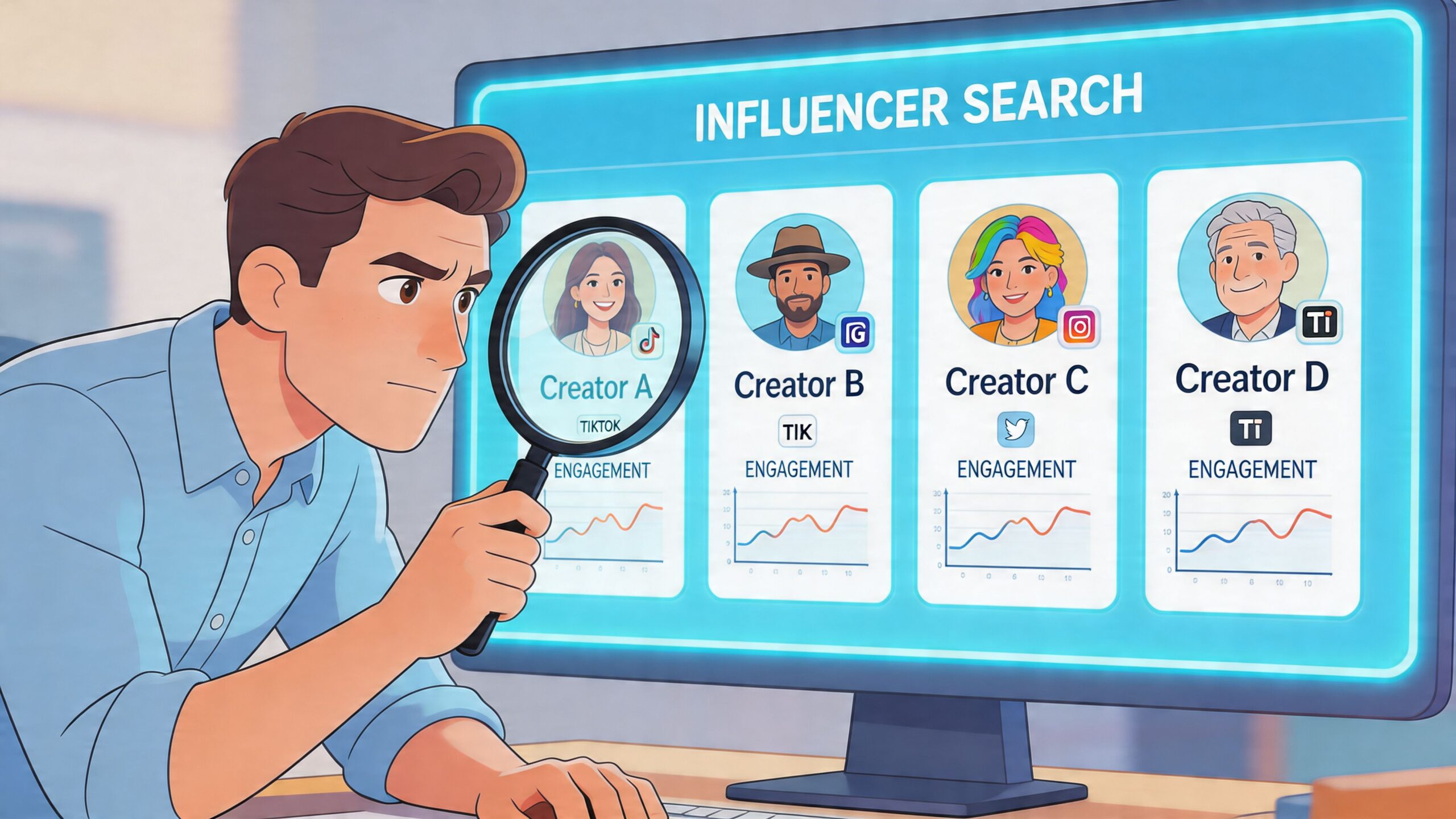
A practical creator vetting checklist
Before you reach out, review the account like an operator, not a fan.
- Audience relevance: Does the creator already speak to the people you want?
- Content style: Can they make food look appealing without overproducing it?
- Comment quality: Are people asking real questions, tagging friends, and reacting naturally?
- Brand safety: Would you be comfortable putting paid spend behind their content later?
- Consistency: Do they post regularly enough to keep the audience warm?
One weak point can be manageable. Several weak points usually predict campaign friction.
Match the platform to the campaign goal
Different channels do different jobs in food.
| Platform | Best use in food marketing | What to look for |
|---|---|---|
| Menu reveals, aesthetic product shots, local discovery, saves | Strong visuals, Stories usage, local comments | |
| TikTok | Trends, recipes, taste tests, fast discovery | On-camera personality, editing pace, strong hooks |
| YouTube | Deep reviews, cooking demos, product education | Clear presentation, longer watch value |
| Blogs | Search visibility, recipe integration, evergreen content | Writing quality, recipe credibility, SEO relevance |
A lot of brands spread too thin. It's usually smarter to pick one primary platform and one support channel. A bakery launch might prioritize Instagram and short-form video. A pantry staple might prioritize TikTok plus blog-based recipe content.
A useful walkthrough on creator evaluation and campaign setup is below.
Example of a smart local rollout
Say a casual restaurant is opening a second location. A weak approach would be paying one large metro creator for a polished recap.
A stronger approach would look like this:
- Identify local micro-creators whose audiences live within driving distance.
- Mix food-first creators with a few neighborhood lifestyle voices.
- Invite them across staggered preview windows instead of one crowded event.
- Give each creator a distinct angle, such as lunch value, date-night atmosphere, family appeal, or a signature menu item.
- Track bookings or walk-ins with creator-specific links, codes, or reservation notes.
Field note: The right creator often looks less impressive on a media kit than in a comments section.
That difference matters. Engagement quality often predicts action better than audience size alone.
Creative Campaign Ideas That Drive Engagement
Food campaigns work best when the creative idea matches a clear behavior you want from the audience. Saves, visits, trials, email clicks, and repeat purchases all respond to different formats.
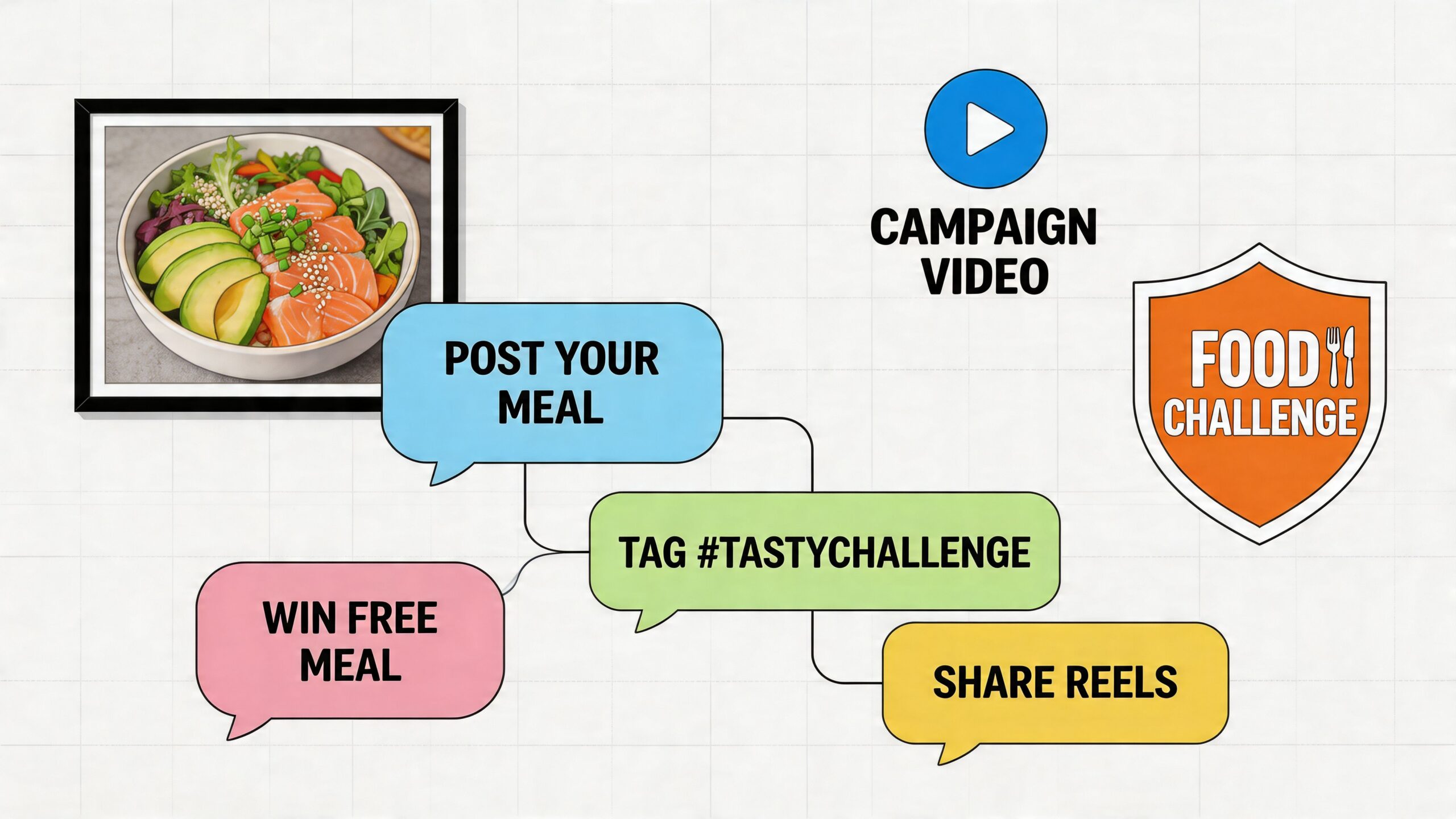
The mistake most brands make is asking every creator to publish the same post. Repetition may feel efficient, but it usually lowers authenticity. Better campaigns use a common strategy and let the expression vary.
Recipe integrations that feel native
For CPG food brands, recipe content is one of the most useful structures because it combines demonstration with utility. The audience doesn't just see the product. They learn how to use it.
The best recipe partnerships don't force chefs or creators into fake enthusiasm. They work when the product naturally fits the creator's style. A quick-prep creator should make a quick-prep recipe. A baker should bake. A nutrition-minded creator should explain where the product fits, without drifting into questionable health claims.
Research in this PubMed Central analysis of food and beverage advertising content found that video content with sound and authentic product demonstrations in relatable settings generates higher engagement than static images, and that brands see an average 20% increase in email CTRs when using influencer-generated video content. For food, that's a practical creative rule. Show the product in motion and in context.
UGC campaigns that build an asset library
A lot of influencer content underperforms because brands treat it as media only. They forget it can also become a reusable content engine.
A smart UGC-style campaign asks creators for platform-native content that the brand can later reuse across email, product pages, paid social, retail decks, or landing pages if usage rights are clearly negotiated. This works especially well for:
- Launches: Build a bank of first-impression content fast.
- Seasonal pushes: Refresh visuals without a full production shoot.
- Retention flows: Add creator proof to lifecycle email and remarketing.
If your team needs help identifying the right creator mix for this kind of asset-led campaign, this page on finding a food content creator is a useful reference.
Creative rule: Ask for fewer talking points and more proof points. Show the unboxing, prep, serving, tasting, and real reaction.
Tastings, menu drops, and local buzz
Restaurants often get the strongest results from controlled in-person creator experiences. Not giant events with a chaotic guest list. Small, intentional tastings.
A local launch might invite a handful of creators over several days. One focuses on cocktails, another on desserts, another on lunch value, and another on the room itself. That creates more angles, more posting windows, and less repetitive output.
What usually fails is overdirecting the room. If every creator is seated under the same neon sign and handed the same caption brief, the content starts to look staged.
Non-food influencers can widen the funnel
Some of the best food campaigns don't start with food creators at all. Travel creators, parent creators, fitness creators, and local lifestyle accounts can all bring new audiences into the category.
The key is role fit. A travel creator can frame a restaurant as a destination stop. A parenting creator can show convenience or family suitability. A fitness creator can focus on routine compatibility, as long as claims stay compliant and accurate.
Captions matter here more than many teams realize. Strong visuals get the stop. Good copy drives the next action. If your team wants inspiration on stronger hooks and post framing, this roundup of irresistible foodie captions for Instagram can help sharpen execution.
Your Influencer Marketing Campaign Planning Checklist
Food influencer campaigns rarely fail because the concept was weak. They fail in execution. A creator gets the wrong SKU. Legal reviews a draft after the posting date. No one confirmed usage rights, so the best-performing content cannot be turned into paid media. That is why campaign planning needs the same rigor as media buying.
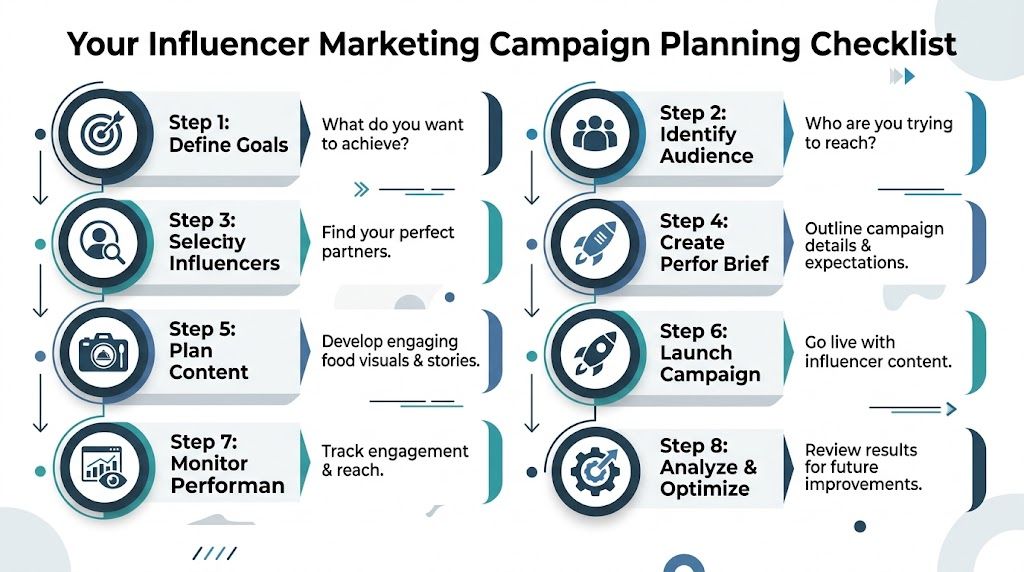
The core checklist
Define the business goal
Pick one primary outcome. Local foot traffic, trial of a new menu item, retail sell-through, email capture, app downloads, or a bank of reusable UGC are all valid goals. "Awareness" on its own is too broad to guide creator selection, briefing, or measurement.Identify the audience with buying context
Demographics are not enough. Narrow by geography, daypart, dietary preference, price sensitivity, purchase frequency, and the platform behavior that signals intent. A lunch-value campaign needs a different audience and creator mix than a premium tasting menu launch.Assign creators to clear roles
Some creators are strong for local discovery. Others explain product benefits well on camera. Others drive tracked sales because their audience trusts recommendations. Build the roster around roles, not follower count.Write a brief that leaves little room for confusion
Strong briefs cover the product story, target audience, must-show details, mandatory disclosures, restricted claims, deadlines, shot priorities, review process, and examples of on-brand execution. Food campaigns need extra care here because a casual claim about health, ingredients, or results can create compliance problems.
The approval and launch layer
This is the part brands often underestimate.
If content needs sign-off from social, legal, brand, and sometimes franchise or retail partners, set that path before creators start shooting. Late approvals create rushed revisions, missed posting windows, and strained creator relationships. I have seen solid creative underperform because it went live after the menu moment had passed.
A workable launch plan includes:
- Review windows with actual dates and times: "Submit by Tuesday" is vague. "Submit by Tuesday at 3 p.m. ET, feedback within 24 hours" is operational.
- One final approver: Too many reviewers create contradictory edits.
- Backup product and asset plans: Packaging changes, sold-out items, and substituted ingredients happen often in food.
- Paid usage decisions made before posting: If top content may be whitelisted, reposted, or cut into ads, get rights and file formats sorted early.
- Compliance checks built into workflow: Disclosure language, claim review, and required approvals should be part of the process, not a last-minute cleanup. Teams that need a tighter process can use a structured FTC compliance workflow for influencer marketing to reduce review risk.
Strong programs do not depend on one project manager chasing creators, internal reviewers, contracts, invoices, and links in separate spreadsheets. They use a system that keeps each step visible and assigned.
The final pre-launch check
Before content goes live, confirm the basics without exception:
| Item | Why it matters |
|---|---|
| Deliverables confirmed | Prevents disputes over what was promised |
| Disclosure language approved | Reduces FTC and platform risk |
| Product details accurate | Avoids corrections and negative comments |
| Usage rights documented | Protects repurposing and paid media plans |
| Payment terms agreed | Prevents delays and creator friction |
| Tracking links or codes set | Makes ROI analysis possible |
Post-launch work teams skip too often
Publishing is the midpoint, not the finish line.
Review performance against both the brief and the business goal. Look past surface engagement. Which creator drove map clicks, code redemptions, retail comments, saves, or questions about availability? Which hook got attention from the right audience, not just broad reach? Those answers should shape the next round of creator sourcing, compensation, and briefing.
Content reuse is another missed profit center. Good food creator assets can support PDPs, landing pages, email, paid social, retailer sell-in decks, and community management replies. This is also where operations matter. If the team cannot quickly find approved assets, confirm usage rights, match content to performance data, and pay creators on time, scaling the program gets expensive fast. Platforms like REACH help solve that operational mess by centralizing discovery, approvals, payments, and reporting in one workflow instead of splitting the program across email threads and spreadsheets.
Budgeting Compensation and FTC Compliance
Budget discussions in influencer marketing food often focus too narrowly on creator fees. That's only one line item.
You also need to account for product costs, shipping, event expenses, paid amplification, editing support, usage rights, agency time if applicable, and internal review hours. When teams don't plan for those pieces, they either overspend or cut corners in the wrong places.
Influencer compensation models compared
| Model | Best For | Pros | Cons |
|---|---|---|---|
| Flat fee | Defined deliverables and clear scopes | Predictable cost, easy to approve | May not align payment with performance |
| Product gifting | Seeding, early testing, low-risk outreach | Lower cash outlay, simple to start | Doesn't guarantee posting or quality |
| Commission or affiliate | Conversion-focused campaigns | Aligns incentives with sales activity | Harder for some creators to prioritize |
| Hybrid model | Brands balancing reach and accountability | Combines guaranteed output with upside | More admin work to structure and track |
The right model depends on campaign maturity. New products often benefit from a mix of gifting and paid placements to generate volume and learn what creator types fit. More established programs tend to use hybrids when they want both predictable content delivery and measurable conversion signals.
Compliance is not a small-print issue
Food marketing creates extra scrutiny because products are often consumed by broad audiences, including younger viewers. A PubMed review of food and beverage influencer content found that 89.2% of food and beverage products promoted by influencers on Instagram violate WHO guidelines for advertising to adolescents.
That should change how brands review campaigns.
At a minimum, your team should require:
- Clear sponsorship disclosure: Use unambiguous labels such as #ad or #sponsored where they are easy to notice.
- Claim control: Avoid unsupported health or nutrition messaging.
- Audience awareness: Review whether the creator's content and audience composition create added risk.
- Documentation: Keep records of briefs, approvals, contracts, and final posts.
If you need a practical framework for disclosures, approvals, and documentation, this guide to FTC compliance in influencer marketing is worth reviewing.
Compliance isn't the enemy of performance. Sloppy compliance is the enemy of durable performance.
Contracts, taxes, and payment hygiene
Food brands also need clean paperwork. Contracts should define deliverables, deadlines, payment terms, exclusivity if any, content usage rights, cancellation terms, disclosure requirements, and what happens if a post contains factual errors or unapproved claims.
On the finance side, keep influencer payment records organized and make sure your team handles tax documentation correctly. That sounds routine, but routine gaps are what create avoidable headaches later.
Measuring Success and Proving Campaign ROI
A food campaign only earns repeat budget if you can explain what happened in business terms.
That means moving past vanity metrics alone. Likes can be useful. So can comments and shares. But those signals need context. If the campaign was meant to drive bookings, online orders, retailer clicks, or email sign-ups, your reporting has to connect content performance to that goal.
Use a three-layer scorecard
A simple framework works well here:
- Awareness metrics: Reach, impressions, video views, profile visits
- Engagement metrics: Comments, shares, saves, completion signals, quality of audience response
- Conversion metrics: Clicks, sign-ups, reservations, purchases, code use, tracked orders
The most important setup step happens before launch. Every creator should have a defined attribution mechanism where possible. That may be a unique code, trackable link, booking note, landing page variation, or channel-specific offer.
Checkmate’s guide to food influencer marketing ROI emphasizes unique discount codes, trackable links, and booking references as the clearest way to establish direct causality between creator activity and sales outcomes. That's exactly right. Without attribution, post-campaign reporting becomes interpretation instead of measurement.
Repurpose the winners
The strongest creator content often keeps performing after the original campaign window. Repurpose high-quality assets across paid social, email, website galleries, and product pages if your rights allow it.
That matters because it changes how you calculate value. A creator partnership shouldn't be judged only by its original post metrics. It should also be judged by the quality and reusability of the assets produced, especially in a category like food where appetizing visuals have a long shelf life.
If you can't tell which creator drove the action you wanted, you don't have ROI. You have activity.
A good reporting habit is to review results at three levels: by creator, by content format, and by audience segment. That gives you a tighter answer to the questions stakeholders typically ask. Which creator types worked. Which platform earned the strongest response. Which content angle moved people closer to purchase.
Frequently Asked Questions
How should a brand handle negative feedback from an influencer
Respond professionally and quickly. Check the contract first, then review whether the issue is factual, subjective, or caused by operational failure such as a bad product sample or service lapse.
If the creator's criticism is fair, don't escalate emotionally. Address the underlying problem, document the exchange, and decide whether a correction, refund, remake, or public response makes sense. If the problem is a breach of contract, handle it through the agreed process.
What belongs in an influencer contract for food campaigns
At minimum, include deliverables, due dates, compensation terms, disclosure requirements, usage rights, revision policy, exclusivity terms if relevant, cancellation language, and product or claim restrictions.
For food specifically, add rules around factual accuracy. If nutritional, ingredient, safety, or availability statements matter to the campaign, spell out what creators may and may not say.
Can a brand repost influencer content on its own channels
Yes, but only if the contract or written agreement gives you that right. Never assume that paying for a post automatically gives you broad reuse rights.
Be specific. Organic reposting, paid usage, website placement, email use, and retailer presentations are different uses. If your team wants to turn creator content into ads later, get that permission in writing before launch.
What if a creator produces beautiful content but weak business results
Don't judge them only by aesthetics. Look at whether the campaign role matched the outcome you wanted. Some creators are stronger for awareness and branded asset creation than for direct conversion.
That's why role clarity matters. A creator can still be valuable if their content performs well in repurposing, even if they weren't the strongest direct-response partner.
If you're ready to operationalize influencer marketing food instead of managing it through scattered spreadsheets and inboxes, explore REACH. It helps brands, agencies, and creators handle discovery, campaign workflows, payments, tax compliance, and reporting in one place. That makes it easier to run creator programs that are organized, measurable, and built to scale.